The gods — a country where people become gods
The skeleton of the myths. This is enough to read the shrine pages.
- Izanagi and Izanami — the married creator gods who gave birth to the land and its gods.
- Amaterasu — the sun goddess. Angered by her younger brother's violence, she hid in a cave and the world went dark, in the Amano-Iwato myth. She is enshrined at Ise Jingu and regarded as an ancestor of the Imperial Family.
- Susanoo — the violent younger brother god. After his exile, he killed the eight-headed serpent Yamata no Orochi.
- Okuninushi — the god who built the land, then yielded it to the heavenly gods in the transfer-of-the-land myth. Izumo Taisha.
- Takeminakata — the god who resisted to the end in the transfer-of-the-land myth, was defeated and fled to Shinano. Suwa Taisha.
The mythic family tree — who is enshrined where
Solid boxes are kami, dashed boxes are the shrines that enshrine them.
Shintai — the sign where a kami is said to dwell
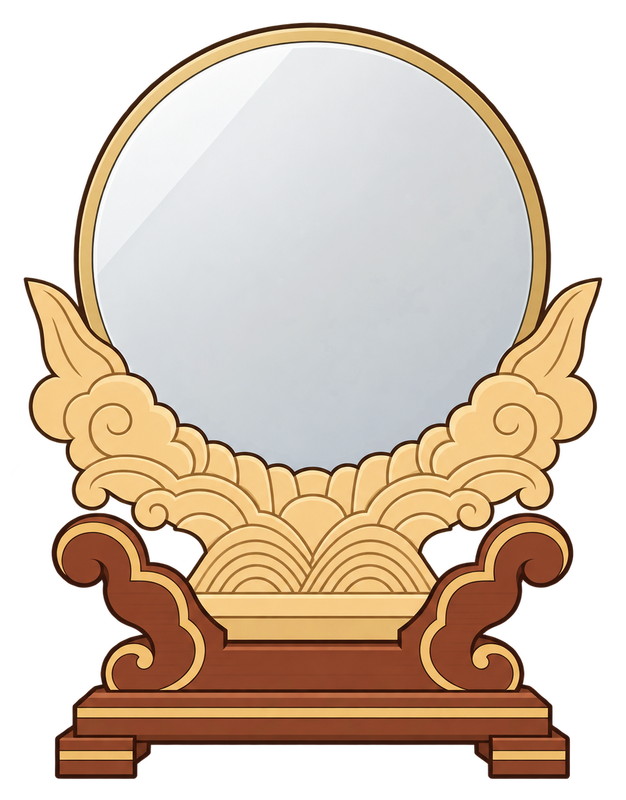
The kami itself is not shown. Deep inside the main sanctuary is a shintai — a mirror, a mountain, a rock. The Yata no Kagami, one of the Three Sacred Treasures, is regarded as the shintai of Ise Jingu.
⚡Examples of people becoming gods
- Emperor Ojin → Hachiman, said to be worshipped at about 40,000 shrines nationwide.
- Sugawara no Michizane → Tenjin, said to be worshipped at about 10,000 shrines. He lost a political struggle and was exiled. After his death, disasters struck the capital. He was enshrined as a god to quiet his grudge. That god is now prayed to by students as the god of learning.
- Taira no Masakado — a warrior who rebelled against the imperial court and was killed. He is enshrined at Kanda Jinja in Tokyo.
→ The idea of worshipping defeated figures and vengeful spirits as gods is one key to understanding Japanese shrines.
Once the gods are clear, the next question is the map's colours — shrine status.
Status — Jingu, Taisha, Ichinomiya, Ninomiya and Notable shrines
This map uses five colours for shrine status. Four come from outside this site — ranks and titles that took shape at different points in history, as each section explains. One was defined by this site. Start with that difference.
Same icons and colors as the map markers and the “?” comparison window.
Jingu (24 on this map)
Jingu is not a title any shrine can adopt. It is granted by imperial approval to shrines connected to deities of the Imperial Family, or to emperors themselves.
There is one marker. Only one shrine is simply called Jingu: Ise Jingu. Its formal name does not include Ise. Every other Jingu carries a place name or an emperor's name — Atsuta Jingu, Kashima Jingu, Meiji Jingu.
But the title does not mean the shrines share one rank. Ise Jingu is about 2,000 years old. Meiji Jingu was founded in 1920. Jingu is defined by a shrine's relationship with the Imperial Family, not its age.
Taisha (24 on this map)
This is the easiest part to misread. Taisha has two separate meanings.
One is rank — Kanpei Taisha and Kokuhei Taisha, from the system under which the state ranked shrines from the Meiji period until the war's end. The other is a title: Taisha as part of a shrine's name.
Before the war, Taisha meant one shrine: Izumo Taisha. Other shrines began using Taisha in their names after state control ended in the post-war period. Rank and title are different. Taisha in a shrine's name does not mean it once held a rank called Taisha.
Ichinomiya (92 on this map) · Ninomiya (30)
Ritsuryo provinces — geographical divisions established under the ritsuryo state. Japan had about 70. Within each province, the highest-status shrine became the ichinomiya, followed by the ninomiya and sannomiya.
The imperial court never drew up this hierarchy as one official list. The shrines provincial governors visited first after taking office gradually became established as ichinomiya. The system emerged on its own, so some provinces have more than one claimant. Disputes remain today.
The borders of the ritsuryo provinces do not match modern prefectures. Plot ichinomiya on a map, and the distribution looks uneven by prefecture.
This is where the system becomes useful to a traveller. Arrive somewhere unfamiliar and find the ichinomiya of the old province. It is likely to be among the oldest and historically weightiest shrines in the area.
Notable shrine
This category is different from the four above. No historical system defined it. This site did.
Kanda Jinja, Hie Jinja, Dazaifu Tenmangu, Yasaka Jinja — none fit the four status categories, but each is difficult to leave out when telling the story of its area.
This is an editorial decision, not an authority. The other four colours reflect decisions made in the past, outside this site. Only this colour can change with a judgement made now.
One last point — status is not a ranking of "good shrines"
A shrine is not inferior because it is not an ichinomiya. Status shows the strength of its historical relationship with the state. It does not measure the depth of belief, the beauty of the grounds or whether a visit was worthwhile.
It is a guide when deciding where to start. Nothing more.
Lineage is easily confused with status. Why do shrines with the same name appear all over Japan?
Lineage — why the same shrine names appear across Japan
Japan has about 80,000 shrines, but far fewer kinds of names. Inari, Hachiman, Tenjin, Sengen — the same names repeat thousands of times. Why?
The answer is kanjo, the transfer of a deity to a new shrine. The idea is that dividing a god does not diminish it. Bring a divided spirit from the head shrine, and the same god is present there too. Not a copy — the same god exists in several places at once. Without that premise, the rest makes no sense.
| Lineage | Head shrine | Approximate number | What kind of god? |
|---|---|---|---|
| Inari | Fushimi Inari Taisha (Kyoto) | About 30,000 | Originally a god of grain. From the medieval period, also a god of business. The thousand torii are donations made in thanks for wishes fulfilled. |
| Hachiman | Usa Jingu (Oita) | About 40,000 | Emperor Ojin. The Minamoto clan worshipped Hachiman as a god of war. The cult spread across Japan with warrior governments. |
| Tenjin | Dazaifu Tenmangu (Fukuoka) | About 10,000 | Sugawara no Michizane.A god first worshipped to quiet a grudge later became the god of learning.The other head shrine is Kitano Tenmangu in Kyoto. |
| Asama | Fujisan Hongu Sengen Taisha (Shizuoka) | About 1,300 | Mount Fuji itself. Worshipped to quiet its eruptions. |
| Sumiyoshi | Sumiyoshi Taisha (Osaka) | About 2,300 | Gods of seafaring |
| Suwa | Suwa Taisha Honmiya (Nagano) | About 25,000 | Takeminakata, the god who resisted to the end in the transfer-of-the-land myth |
| Kasuga | Kasuga Taisha (Nara) | About 3,000 | Tutelary gods of the Fujiwara clan |
| Kumano | Kumano Hongu Taisha (Wakayama) | About 3,000 | The three Kumano shrines. Medieval pilgrimage to Kumano. |
| Hikawa | Musashi Ichinomiya Hikawa Jinja (Saitama) | About 280 | Found only in part of Kanto. Shrine lineages have geographical biases. |
| Gion | Yasaka Jinja (Kyoto) | About 2,300 | Gods who ward off epidemics |
The figures are conventional estimates and have not been checked against primary sources. The wording stays with "said to be around X shrines", rather than presenting "about X" as a fact.
Divine messengers — the emblem of a lineage
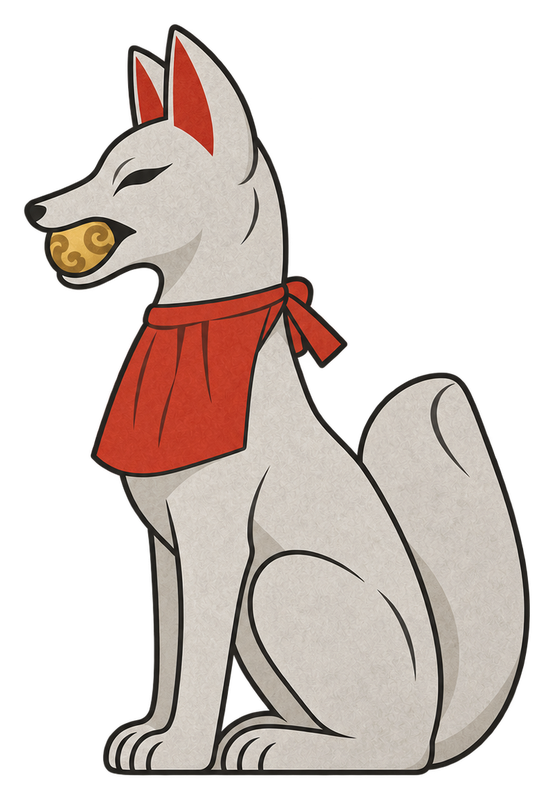
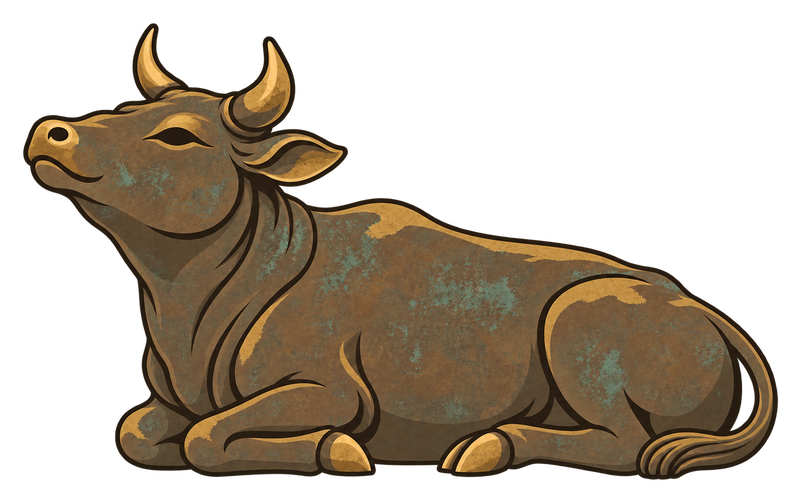
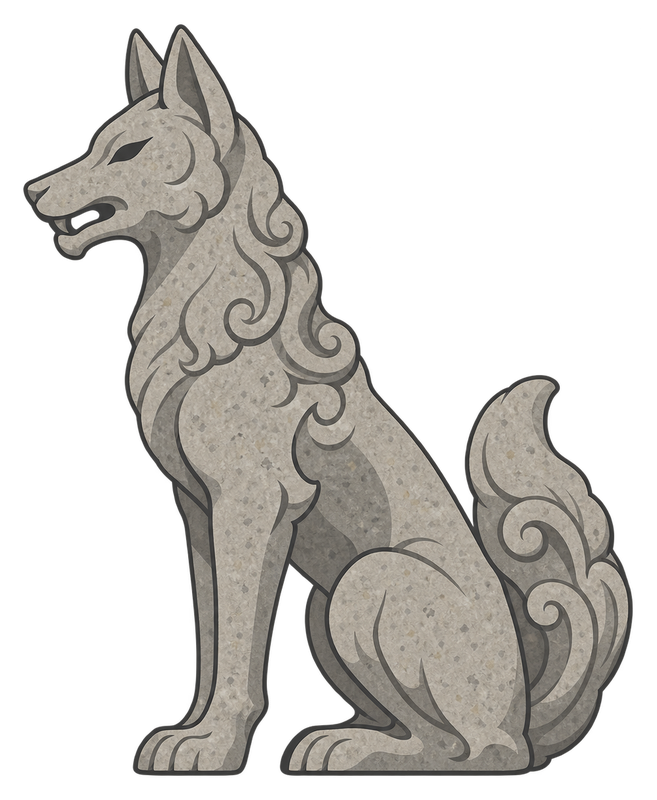
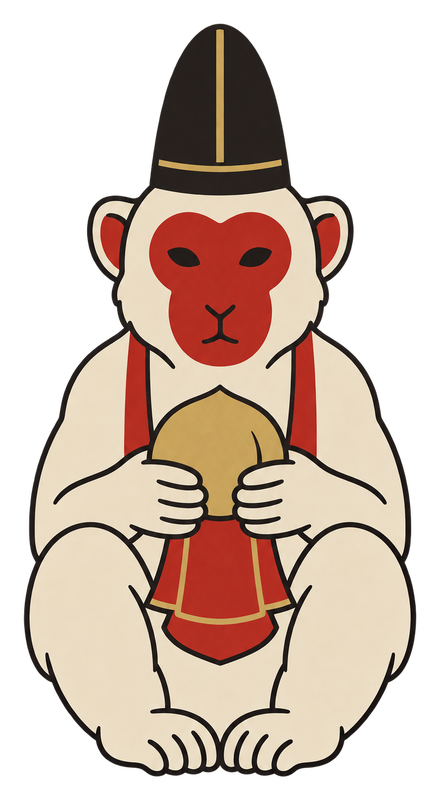
Not the god itself, but an animal that serves it. Shrines of the same lineage often share the same animal. The shrines named here have a page on this map.
Lineage is not a map filter. The reason is simple — understanding lineage requires prior knowledge, so it is not a useful way for first-time visitors to Japan to choose a shrine. Instead, most head shrines also rank highly under the status categories above. Start with the head shrine in the table, then follow the map from there.