Torii — beyond this point, the land is no longer ordinary human space
- Learn two forms and most torii become easy to identify. Shinmei torii: straight pillars and crossbeams, almost no decoration. The form associated with Ise Jingu. Myojin torii: the top crossbeam curves upwards, with a second beam beneath it. This is the more common form.
- Why vermilion? It is regarded as protective, but the pigment originally contained mercury and also preserved the wood. Practical use and belief came from the same material. Many torii are also unpainted wood or stone.
- The thousand torii of Fushimi Inari Taisha are not decoration. They are donations. People dedicate one after a wish is fulfilled. The back of each pillar bears the donor's name and date. New ones are still being added.
- Torii in the sea at Itsukushima shrine, and torii on mountain summits: when an island or mountain itself is sacred, the torii stands in front of it.
Shinmei and Myojin torii — how to tell them apart
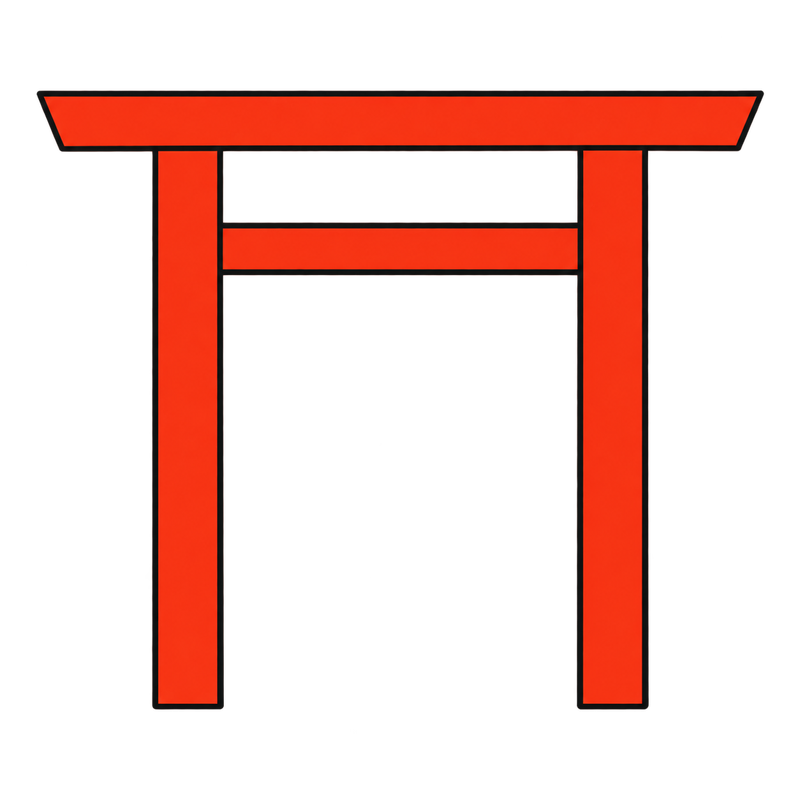
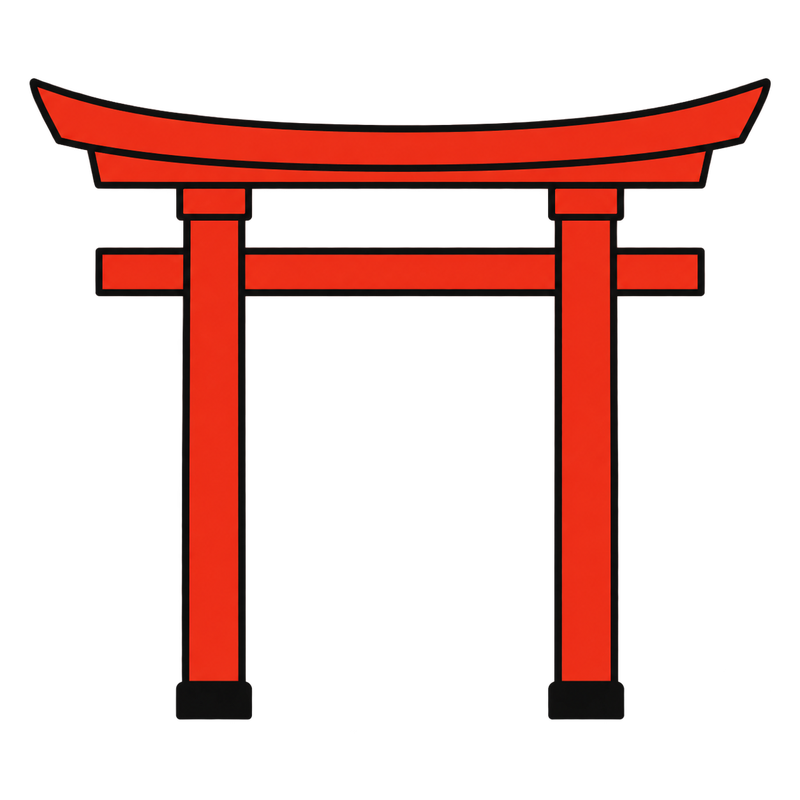
Shinmei: straight beams, no ornament (Ise Jingu's lineage). Myojin: the top beam curves upward and a second beam (shimagi) sits below it — most torii nationwide are this type.
Colour is not the distinction. Shinmei gates can be vermilion, Myojin gates plain wood.
After the torii, what is actually worth looking at inside the grounds?
Shrine grounds — built around what cannot be seen
The most important thing in a shrine cannot be seen. The shintai, the sacred object, is kept deep inside the main sanctuary. No one looks at it. Even the Emperor does not see the shintai of Ise Jingu. Once that is clear, the layout of the grounds makes more sense.
- Worship hall and main sanctuary: visitors go no farther than the front of the worship hall. The main sanctuary cannot be entered, and its interior cannot be seen. Look less at the size of the building and more at how many fences surround it.
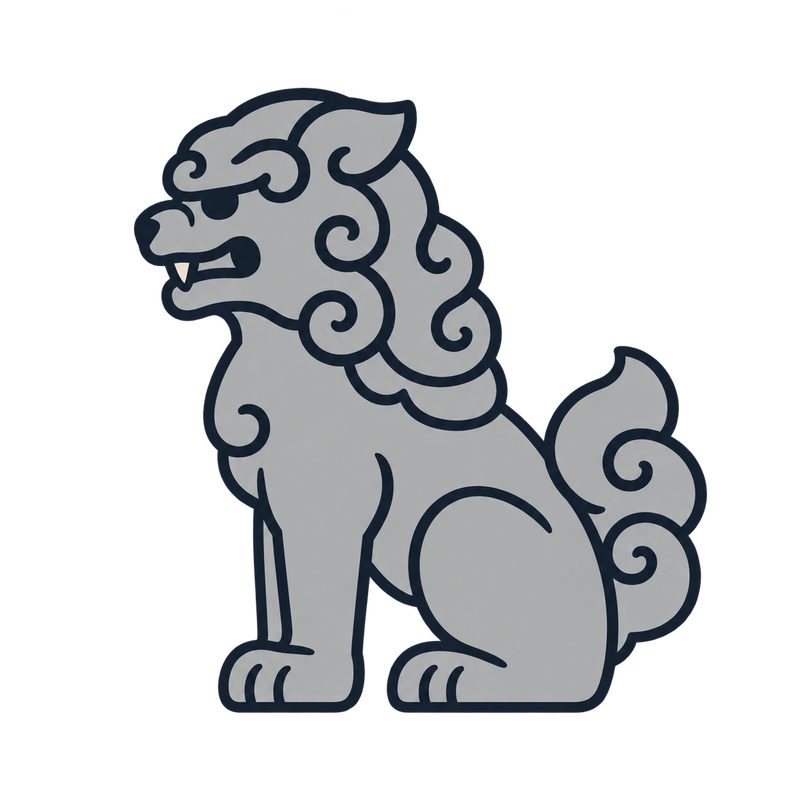
- Komainu: one often has its mouth open, the other closed, forming the a-un pair. ⚠️They are not always komainu. Inari has foxes, Kasuga Taisha has deer, Hiyoshi Taisha has monkeys. Divine messengers differ by shrine.
- Shimenawa: another boundary marker. The shimenawa at Izumo Taisha weighs 5 tonnes.
- Bells: ringing one is said to announce arrival. There are other explanations, including that the custom is relatively late.
- Sacred trees can be older than the shrine buildings. Buildings can be rebuilt. Trees cannot.
- Ema and omikuji: ema are wooden plaques for writing wishes. An unlucky omikuji is not a problem. It can be tied up and left in the grounds.
A route through the grounds
First torii
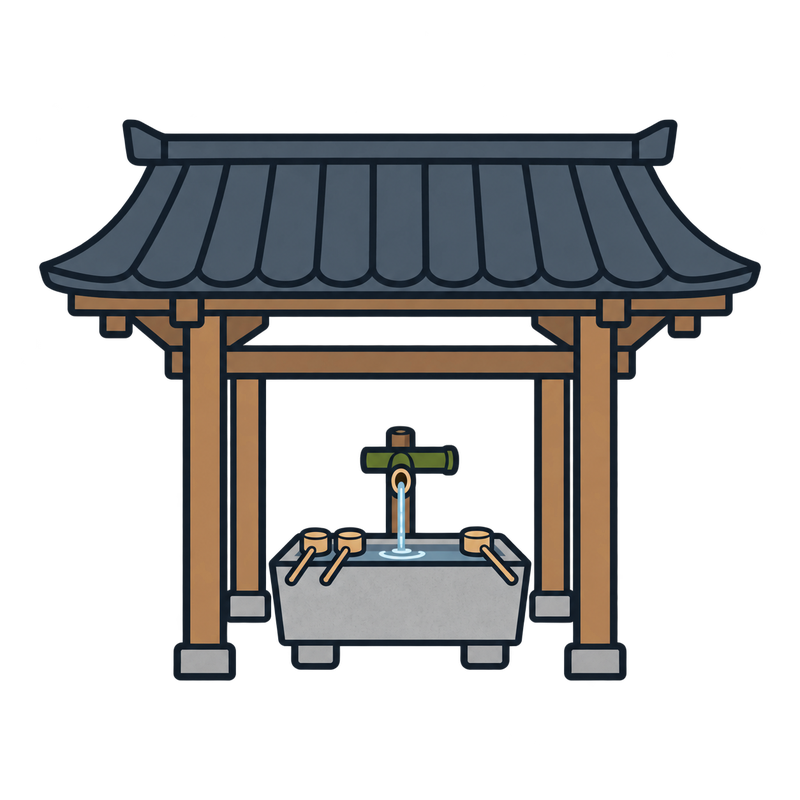 Temizuya (purification)
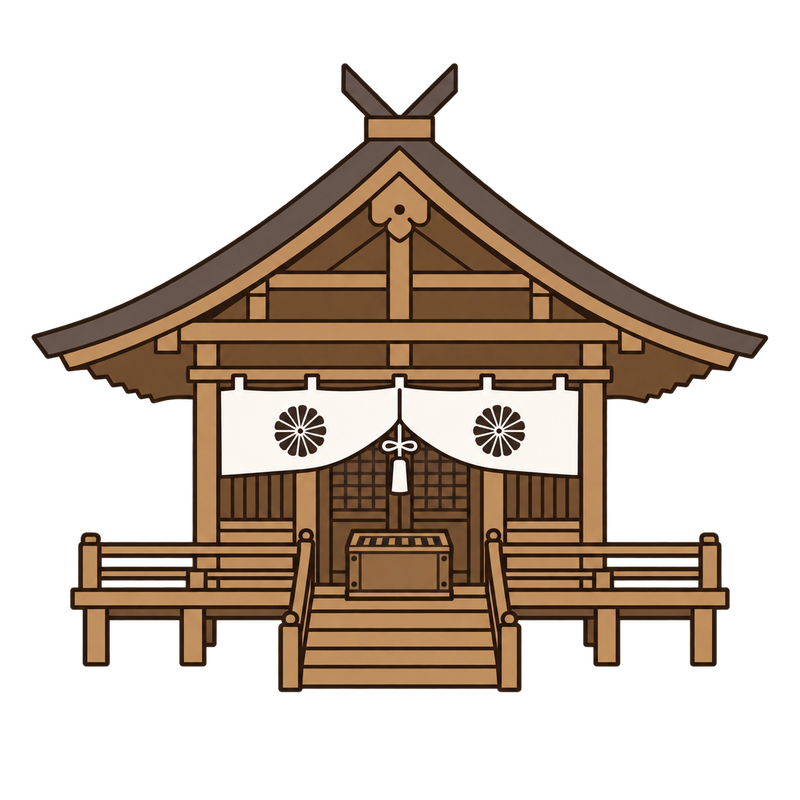 Haiden (worship hall)
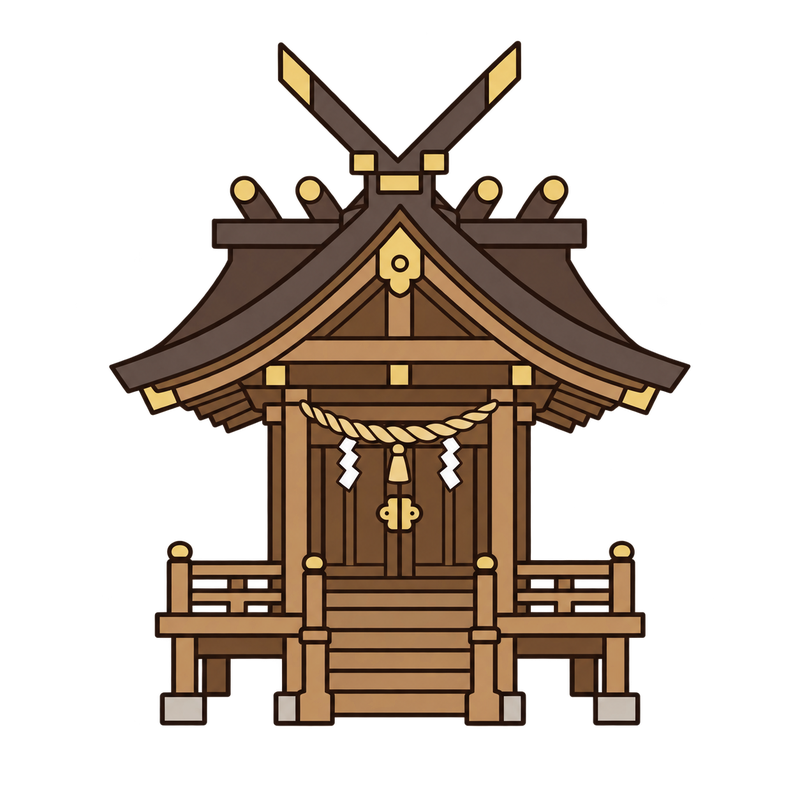 Honden (main hall) — off-limits
The approach is walked to one side — the centre is the kami's path.
Visitors can go as far as the front of the haiden (dashed line). The honden itself is not open, and often not even visible.