Shrine etiquette — mistakes do not get anyone told off
- Bow once before passing through the torii. On the way out, turn back and bow again.
- Do not walk down the centre of the approach. The centre is regarded as the path of the gods. Keep to the side.
- Chozuya, the purification basin — one ladleful does everything. Left hand → right hand → pour water into the left hand and rinse the mouth → left hand again → finally tip the ladle upright so water runs down the handle. Do not put the ladle directly to the mouth.
- At the worship hall: two bows, two claps, one bow. Make an offering. Ring the bell if there is one. Bow twice, clap twice, make the prayer, then bow once. There is no fixed amount for an offering. Five-yen coins are popular because go-en sounds like the word for a fortunate connection.
- ⚠️There are exceptions. Izumo Taisha and Usa Jingu use two bows, four claps, one bow. Assume the rule is universal, and it fails here.
How to use the chozuya — one ladleful does everything
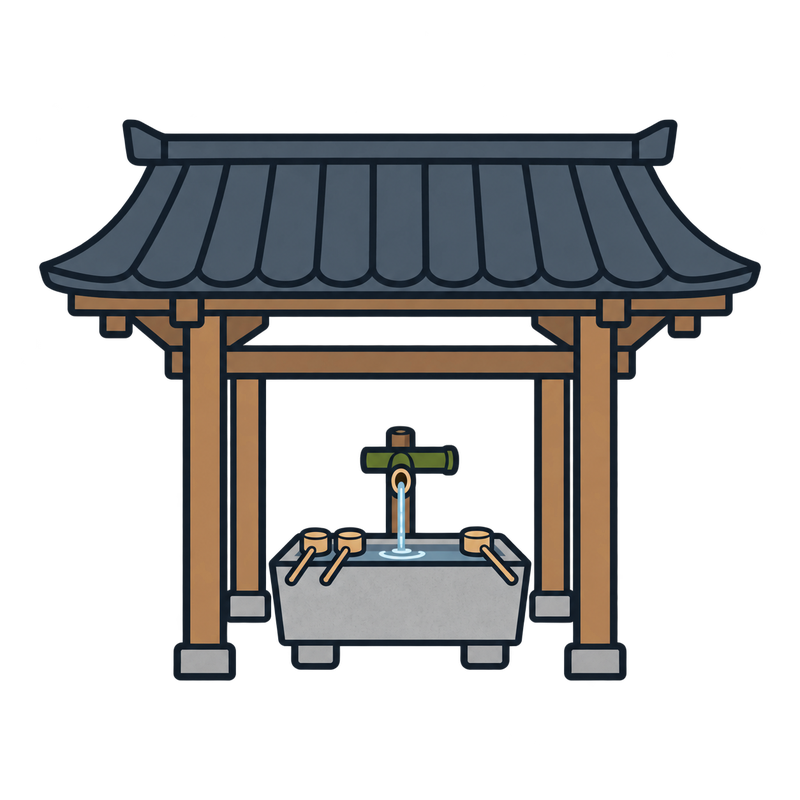
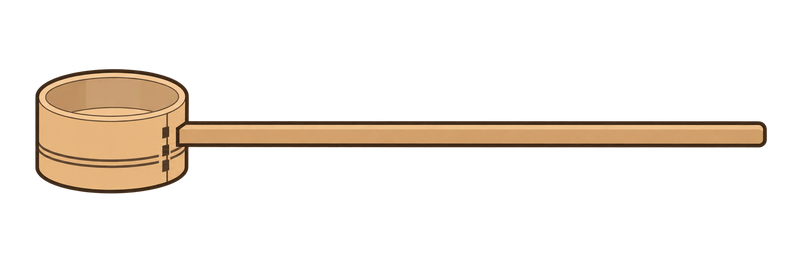
- ① Pour over the left hand
- ② Pour over the right hand
- ③ Rinse the mouth from water in the left hand (never touch the ladle to your lips)
- ④ Pour over the left hand once more
- ⑤ Stand the ladle upright to rinse the handle
At the worship hall — two bows, two claps, one bow
- ① Offer a coin
- ② Bow twice
- ③ Clap twice
- ④ Bow once, after your wish
⚠️Exception: Izumo Taisha and Usa Jingu use four claps instead of two.
Better not: photographing a ritual in progress / taking photographs where signs forbid it / entering the shrine buildings. The last is usually impossible anyway.
After worship, what is received and what is taken home?
Goshuin and amulets — received, not bought
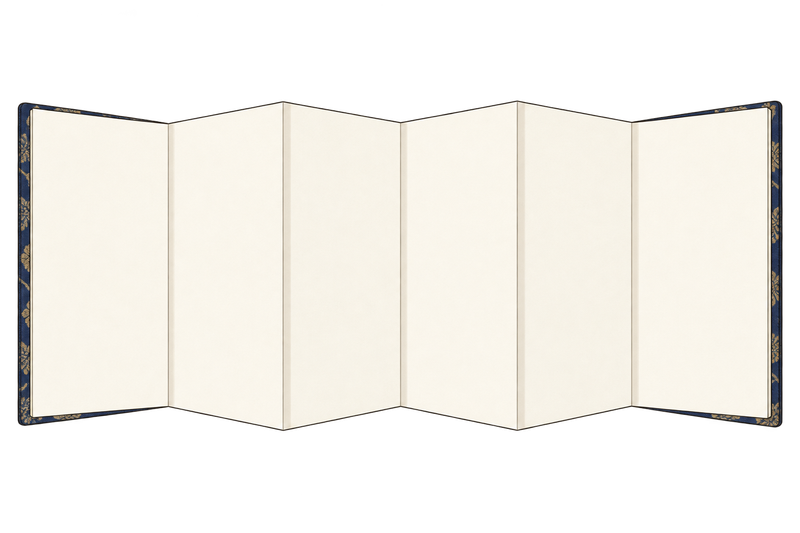 Goshuin
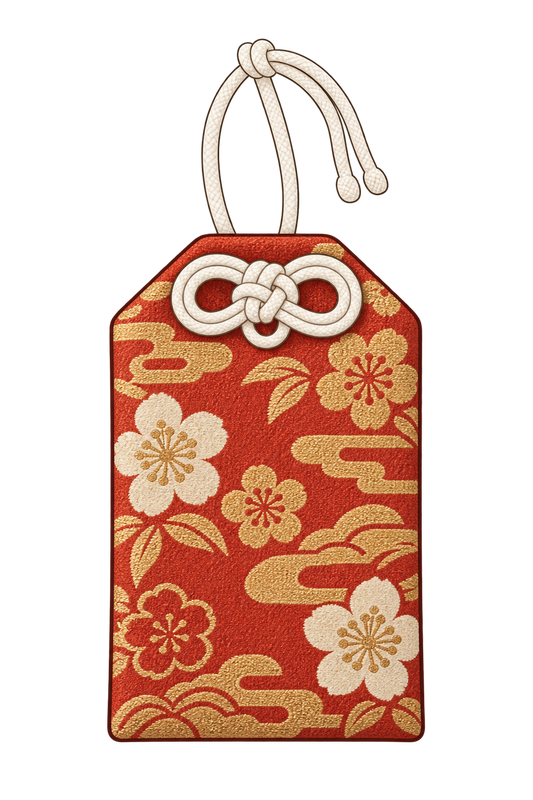 Omamori
None of these are treated as goods for sale. They have prices, but the shrine says "receive", not "buy"; "bestow", not "sell". It looks like a wording choice. It changes how the objects are treated.
- Goshuin: a calligraphed record of a shrine visit, written in ink and stamped in vermilion. ⚠️This is not a stamp rally. Worship first, then receive the goshuin. A dedicated goshuincho book is needed and can be obtained at many shrines. Usually ¥300–500. At busy times, or when no calligrapher is present, it may be kakioki — a sheet prepared in advance.
- Omamori: carried with you. The usual practice is to return it after one year — old ones are returned to a shrine and ritually burned.
- Ofuda: kept at home. If there is a kamidana household altar, it goes there.
- ⚠️How to return them: do not put omamori or ofuda in the rubbish. Shrines have a return place called a furusatsu-osamedokoro. Most will accept items received at another shrine.
- Taking them overseas: nobody will object if a return trip is impossible. They may be kept with gratitude or disposed of respectfully.