Visited in person · Original photography
History & Founding
The Inner Shrine (Kotai Jingu) is said to have been founded some 2,000 years ago, when Amaterasu-Omikami came to rest in Ise. The Outer Shrine (Toyouke Daijingu), dating back roughly 1,500 years, enshrines Toyouke-Omikami, who provides for Amaterasu's meals. Officially known simply as "Jingu," it stands at the spiritual center of Japan's roughly 80,000 Shinto shrines.
Since the Asuka period, the shrine has observed Shikinen Sengu — a ritual rebuilding held every 20 years in which the entire sanctuary, along with its sacred treasures and vestments, is renewed. The most recent took place in 2013; the next is planned for 2033.
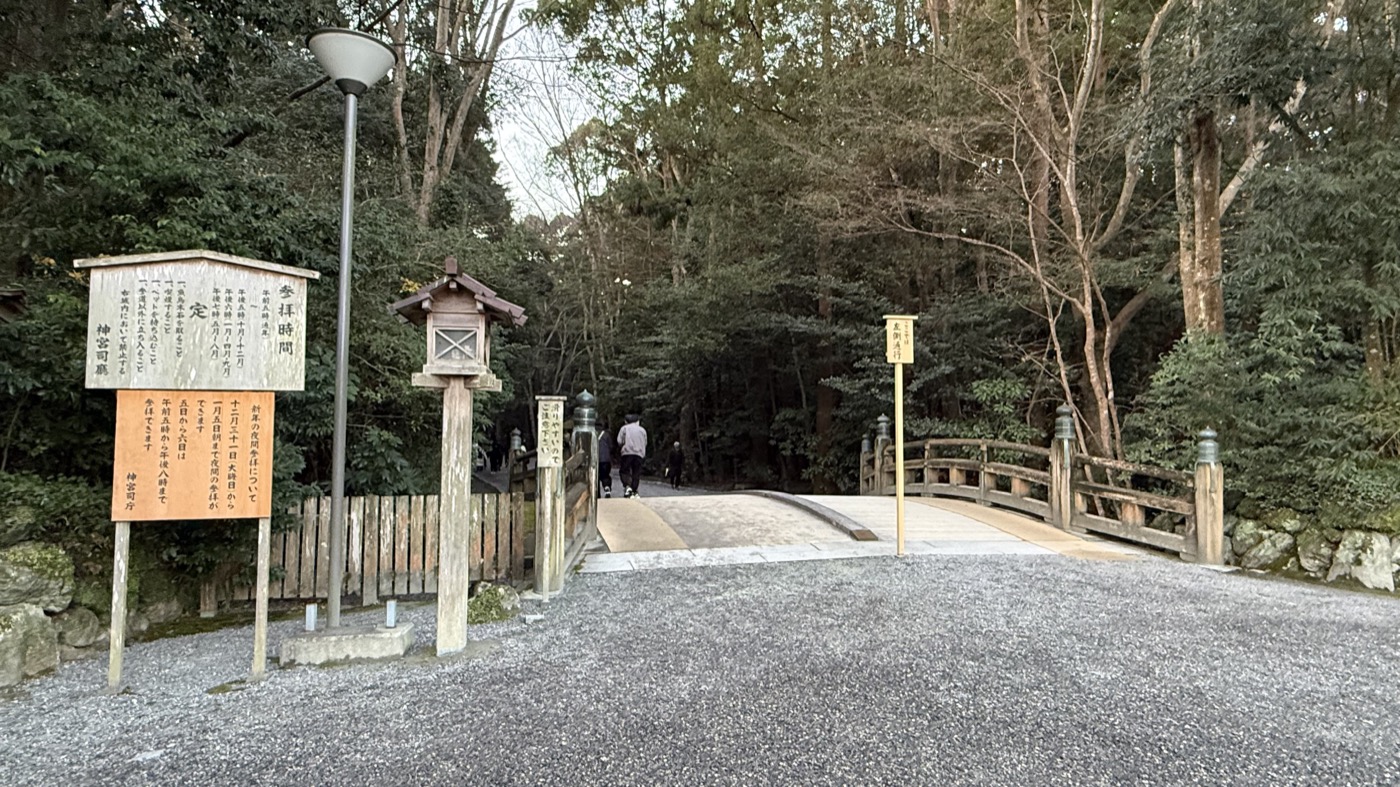
A bridge along the approach. The visit traditionally begins at dawn, at the Outer Shrine.
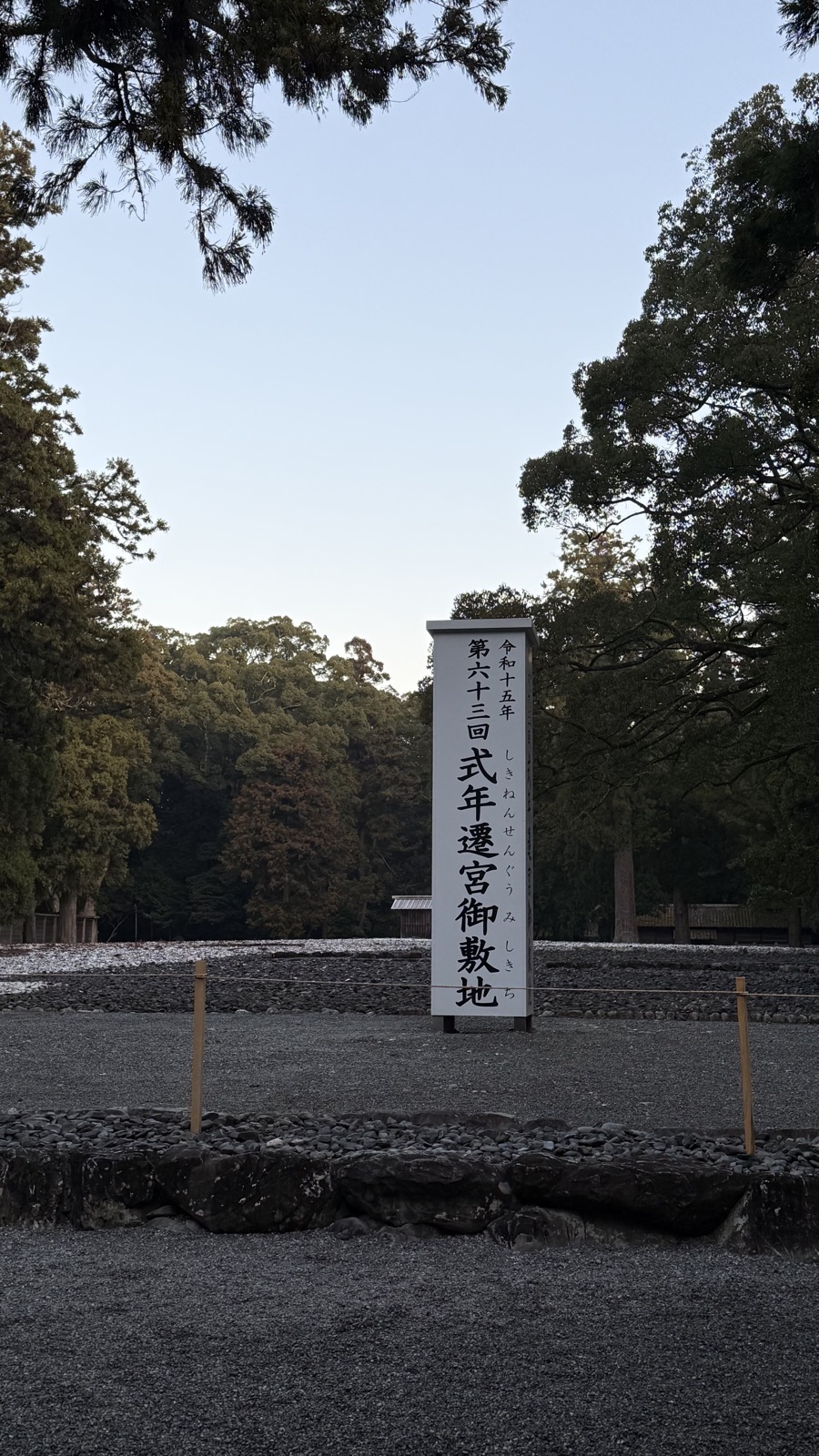
The vacant plot reserved for the next Shikinen Sengu. In twenty years, an identical sanctuary will rise here.
Highlights
Cross Uji Bridge to reach the banks of the Isuzu River. The shrine buildings, built in the shinmei-zukuri style of plain, unpainted wood, keep their pale beauty fresh with every rebuilding. Beyond the Inner Shrine's main sanctuary, the auxiliary shrines of Aramatsuri-no-Miya and Kazahinomi-no-Miya are equally worth the visit.
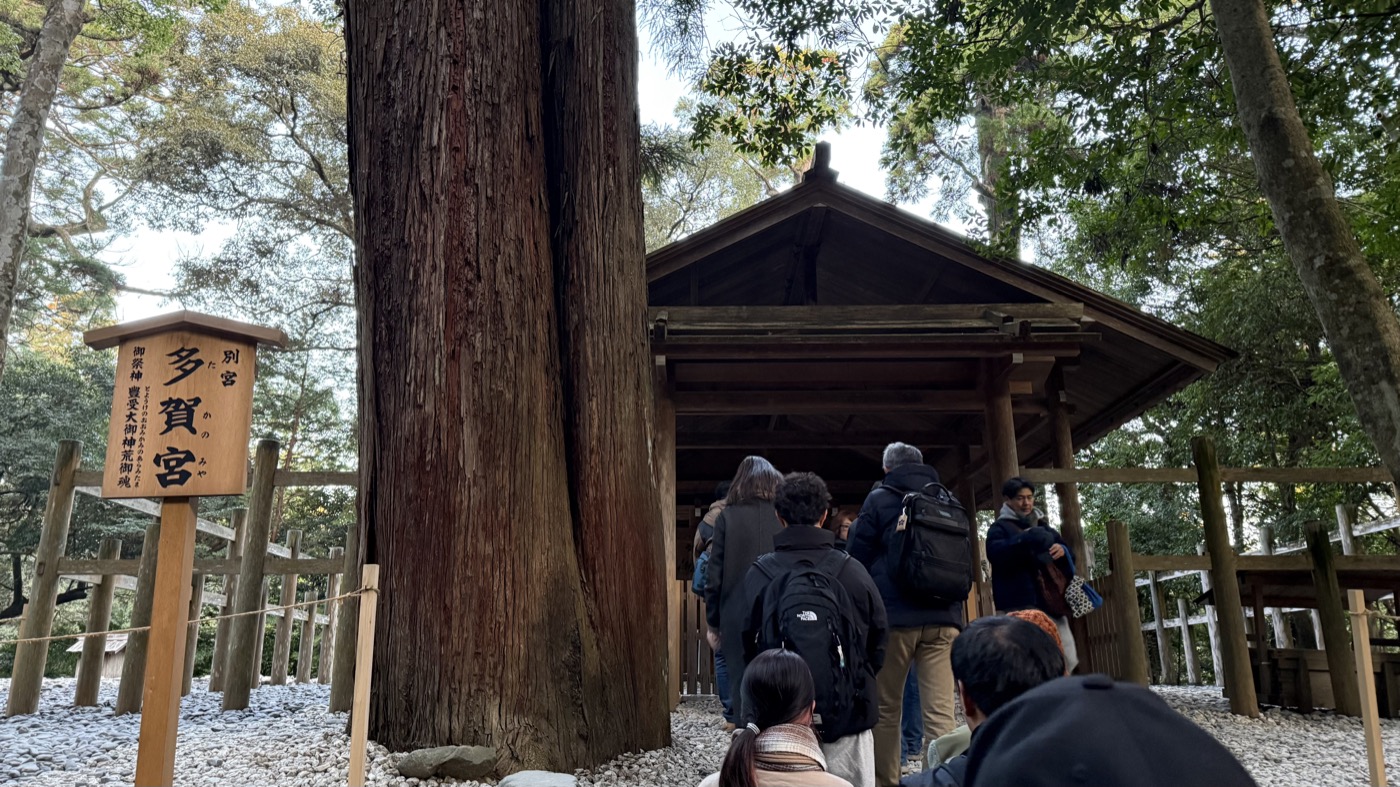
Taka-no-Miya, an auxiliary shrine of the Outer Shrine, enshrines the aramitama — the vigorous spirit — of Toyouke-Omikami.
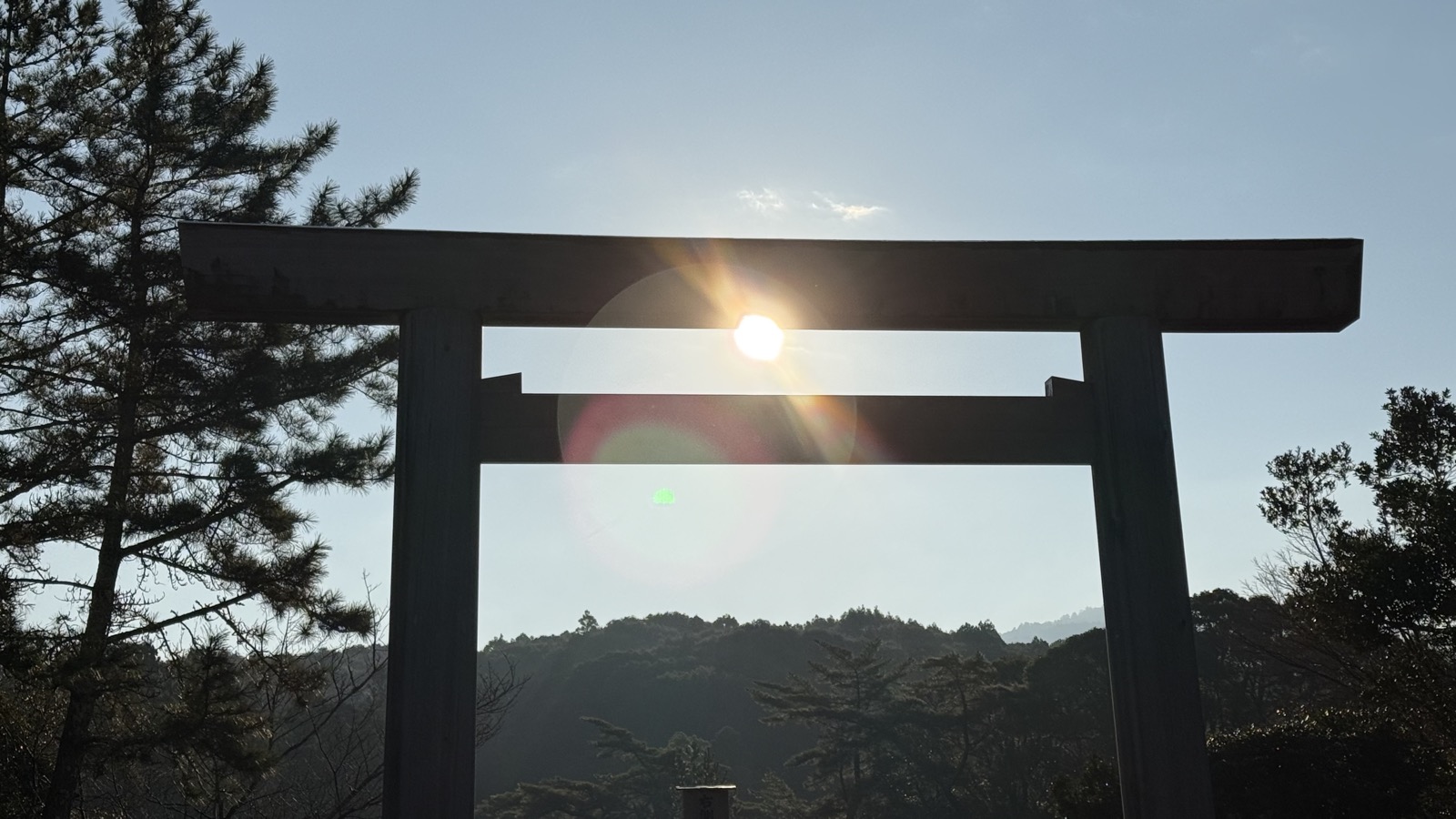
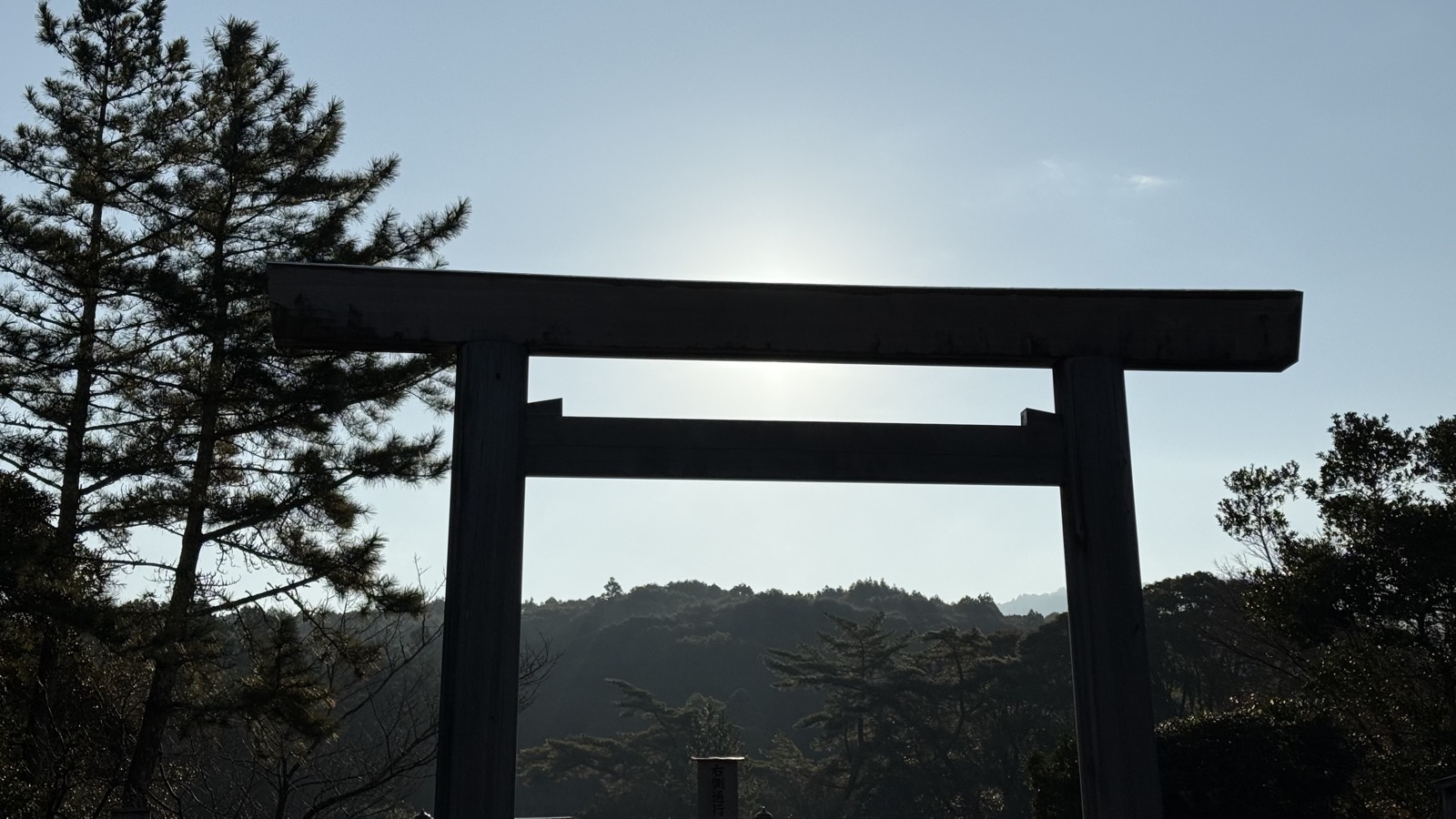
A torii silhouetted against the rising sun.
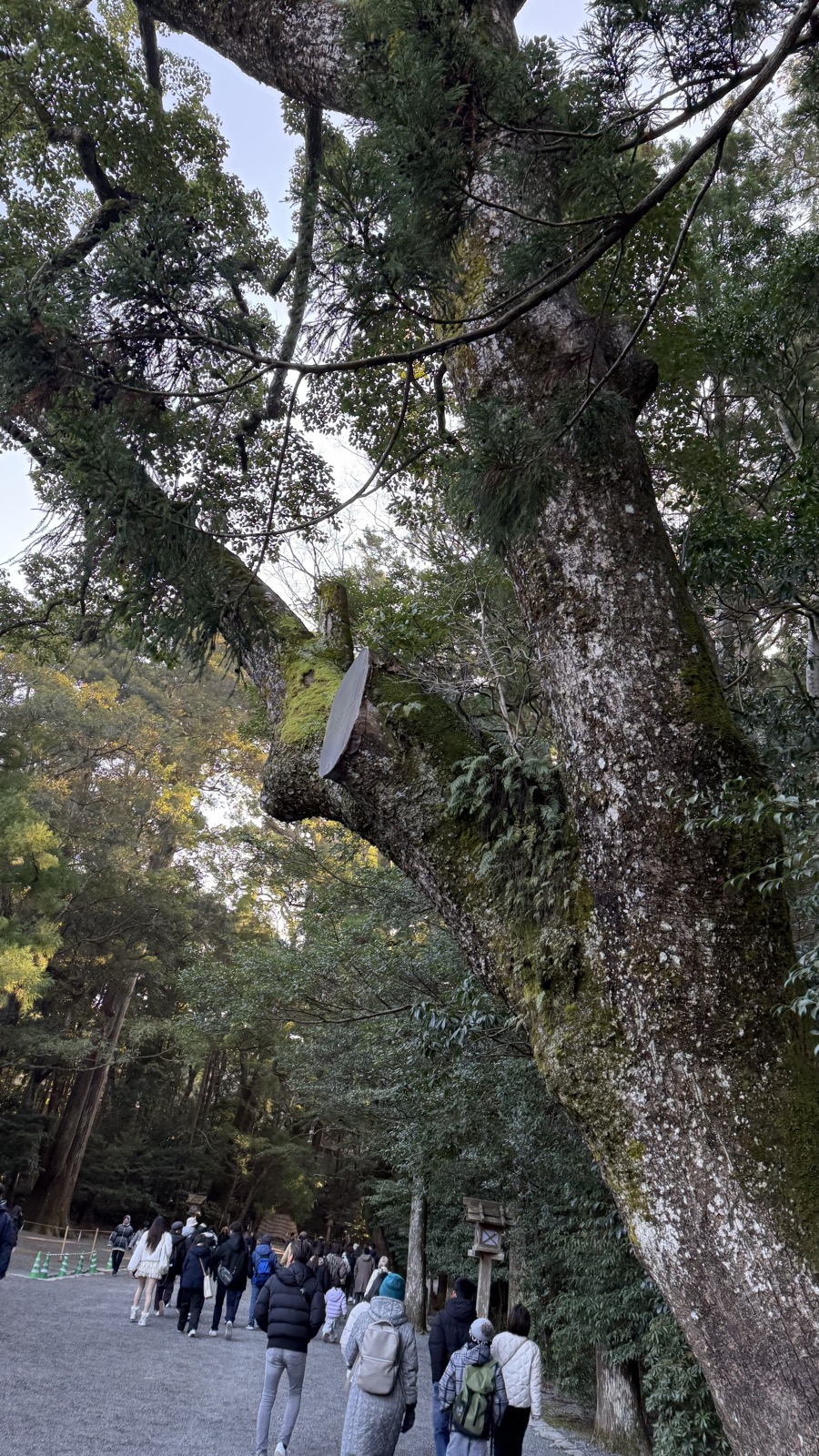
A sacred tree towering over the grounds. Many such trees have stood witness to generation after generation of Shikinen Sengu.
Visiting Tips
Tradition calls for visiting the Outer Shrine before the Inner Shrine. Arriving at 5am, when the gates open, rewards you with clear morning air and cedar-lined paths at their most beautiful. Goshuin stamps are issued separately at each shrine, so it's worth stopping at both.
The Outer Shrine is about a 5-minute walk from JR/Kintetsu Ise-shi Station; the Inner Shrine is roughly a 20-minute bus ride from the same station (nearest station: Isuzugawa). Buses also connect the two shrines — the distance between them makes public transport the practical choice over walking.
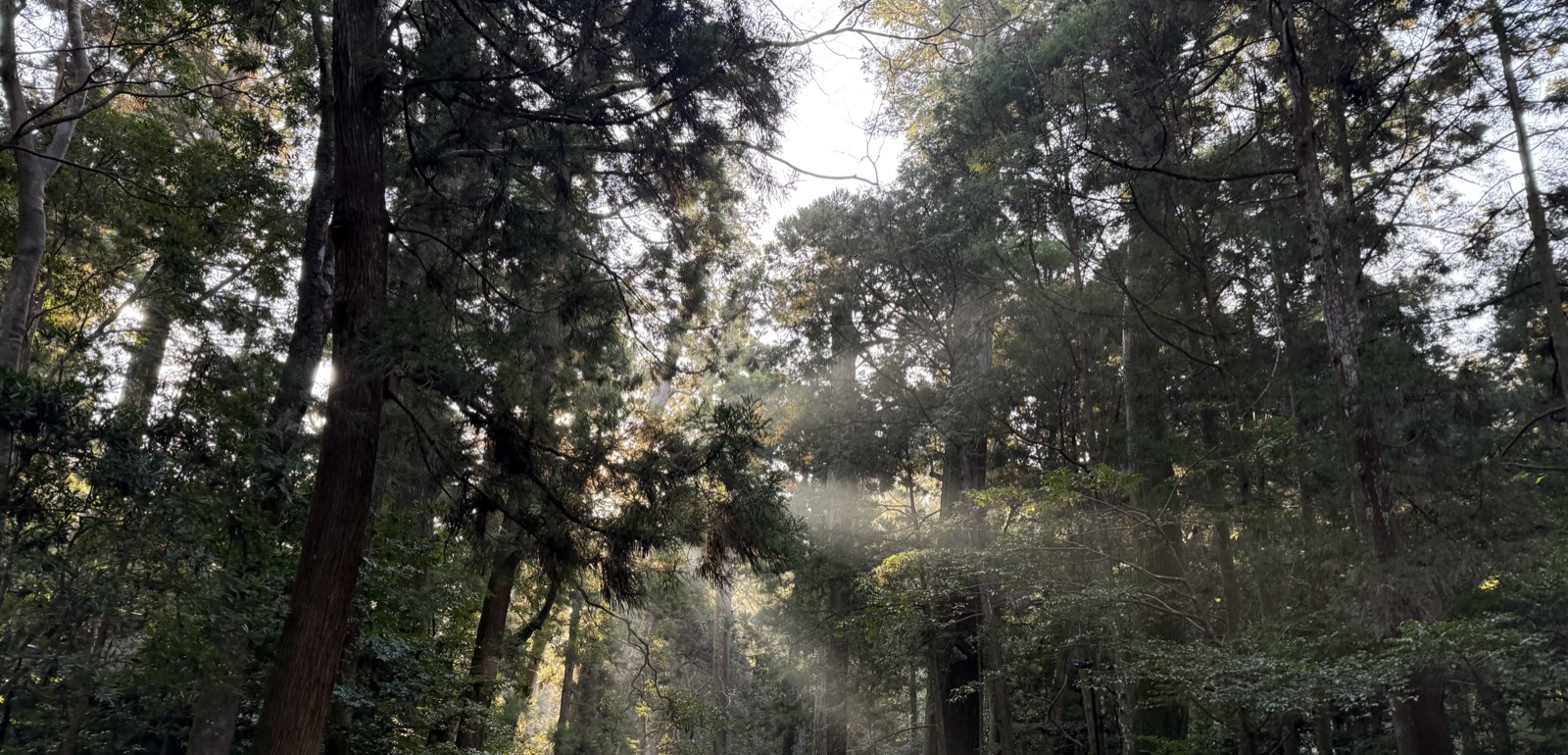
Light filtering through the cedar canopy. This quiet fills the approach in the early morning.
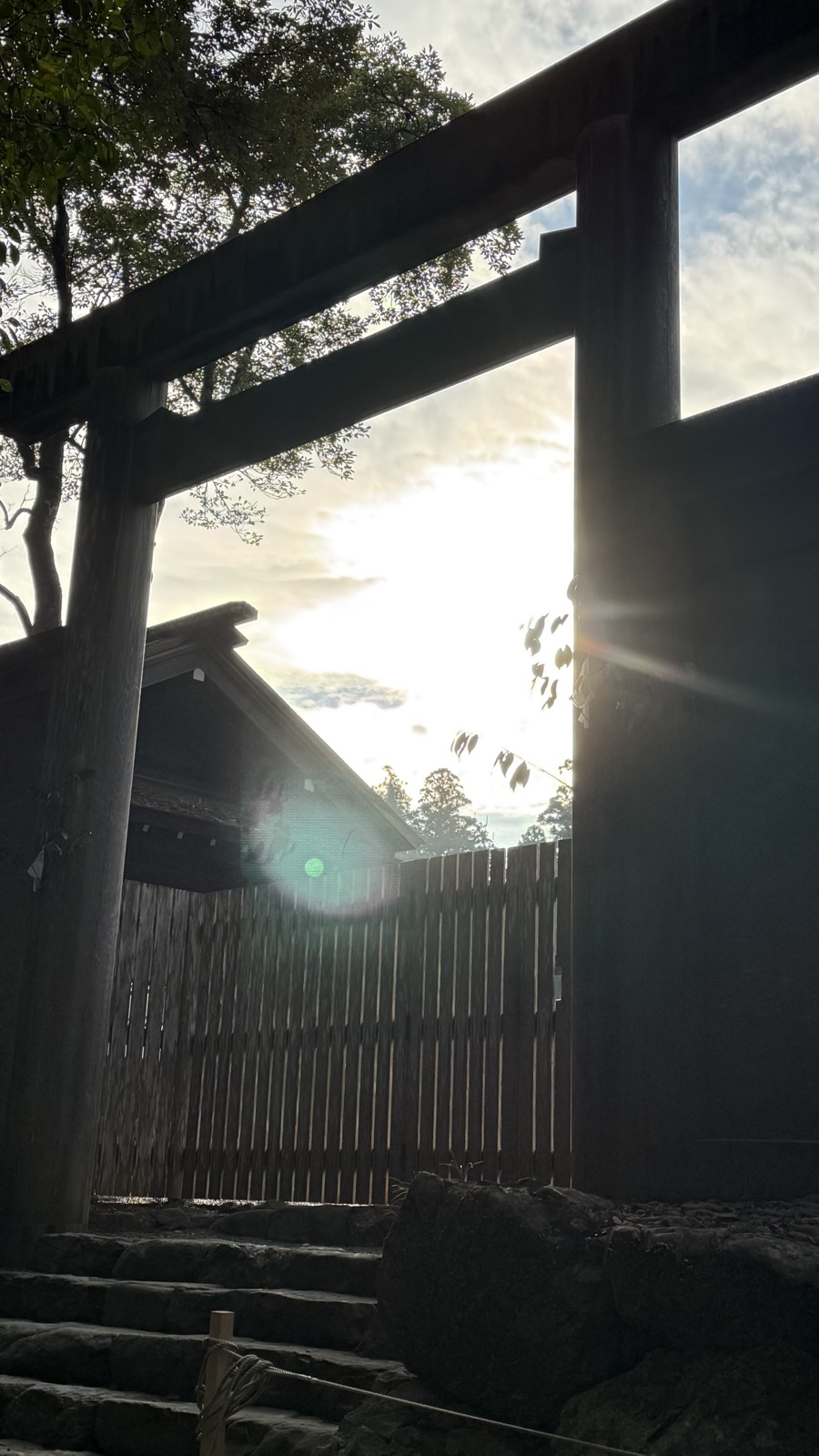
A torii and sacred fence along the approach.
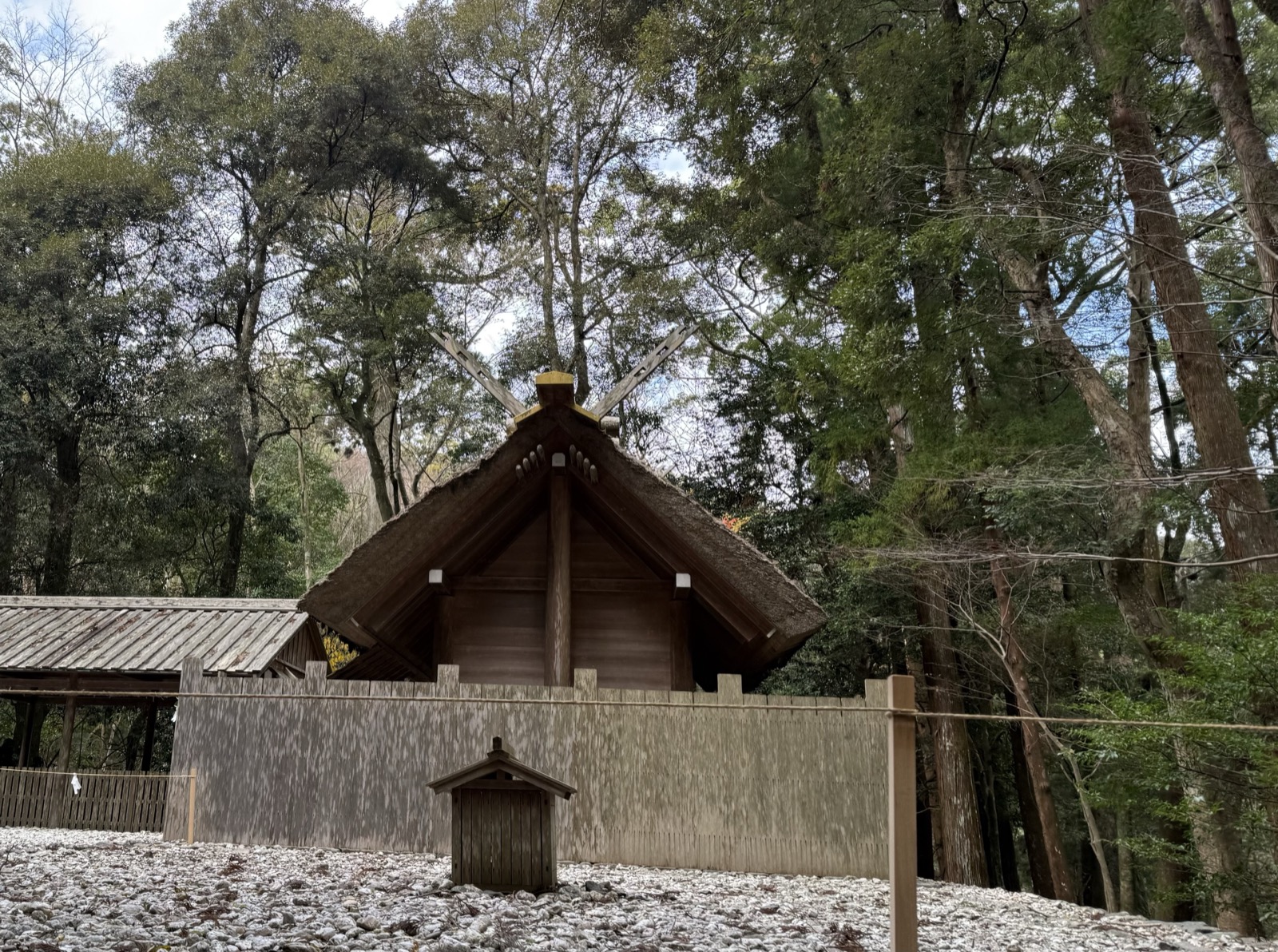
A shinmei-zukuri roof crowned with chigi and katsuogi beams, standing quietly amid the cedar forest.
Cultural Background
The word "Jingu" originally referred to Ise Jingu alone. Shikinen Sengu embodies the idea of tokowaka, or eternal renewal — rebuilding not just the structures but the sacred treasures and vestments as well, not to repair decay but to keep the shrine perpetually pure. During the Edo period, mass pilgrimages to Ise known as okage-mairi became a nationwide phenomenon.
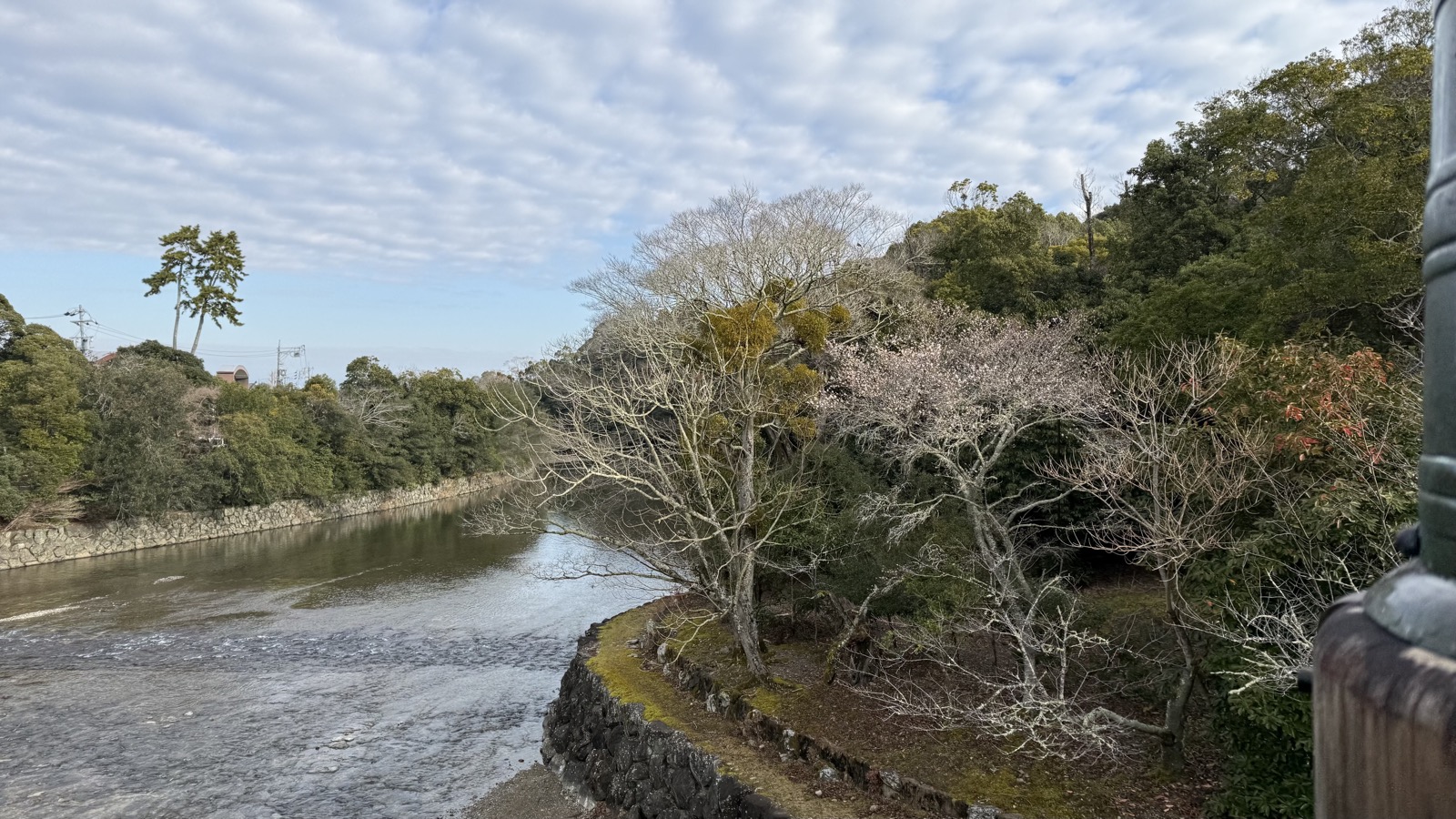
The lower reaches of the Isuzu River. As the plum blossoms open, the shrine grounds begin to change with the season.
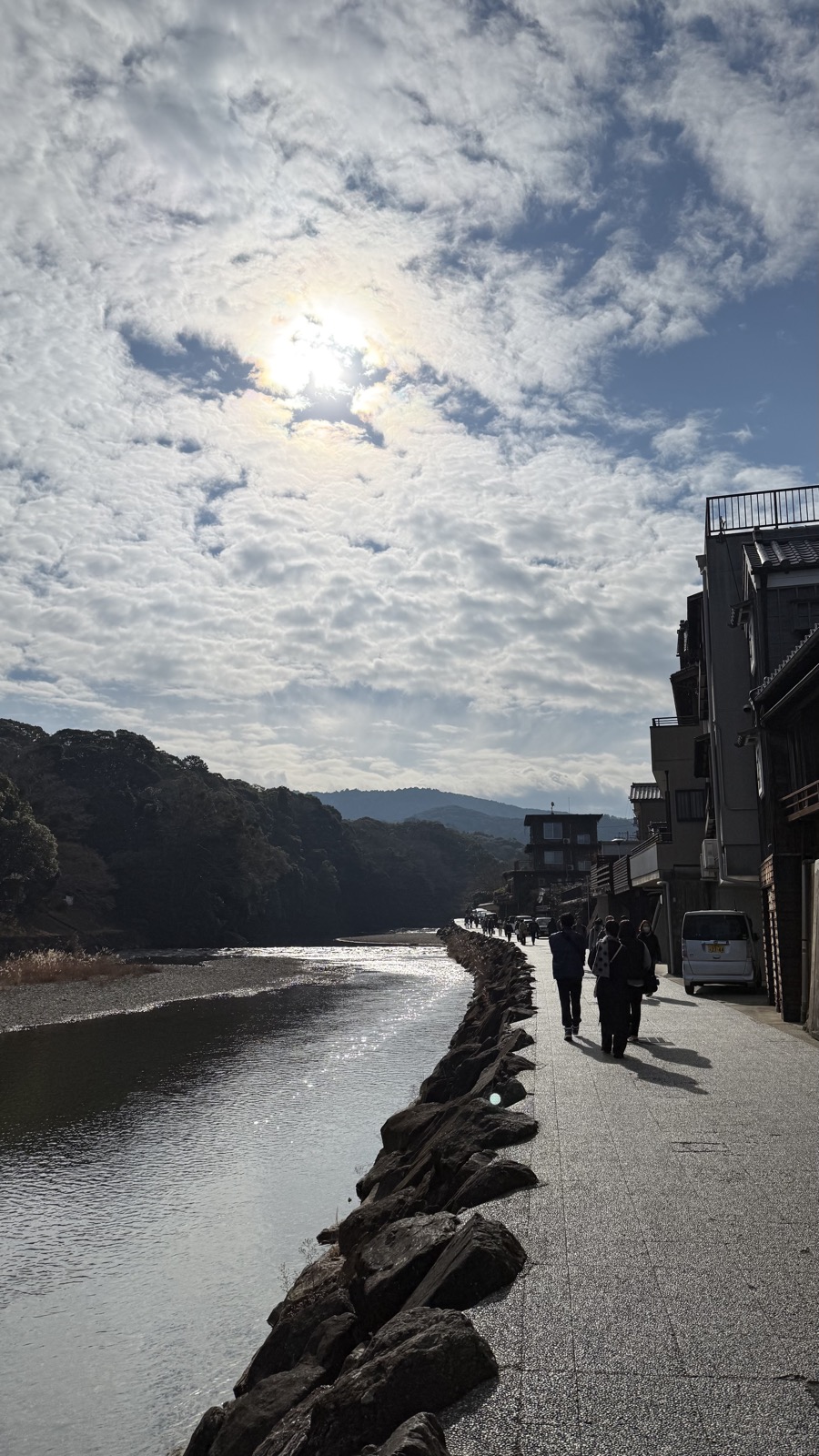
The riverside town along the Isuzu. On the walk back from worship, the water catches the light.