Visited in person · Original photography
Origins and founding
A branch shrine of Izumo Taisha in Shimane, enshrining Okuninushi and Kotoshironushi. It received a divided spirit of the deity from Izumo Taisha in 1888, and is known as “the Izumo-san of the Kanto”.
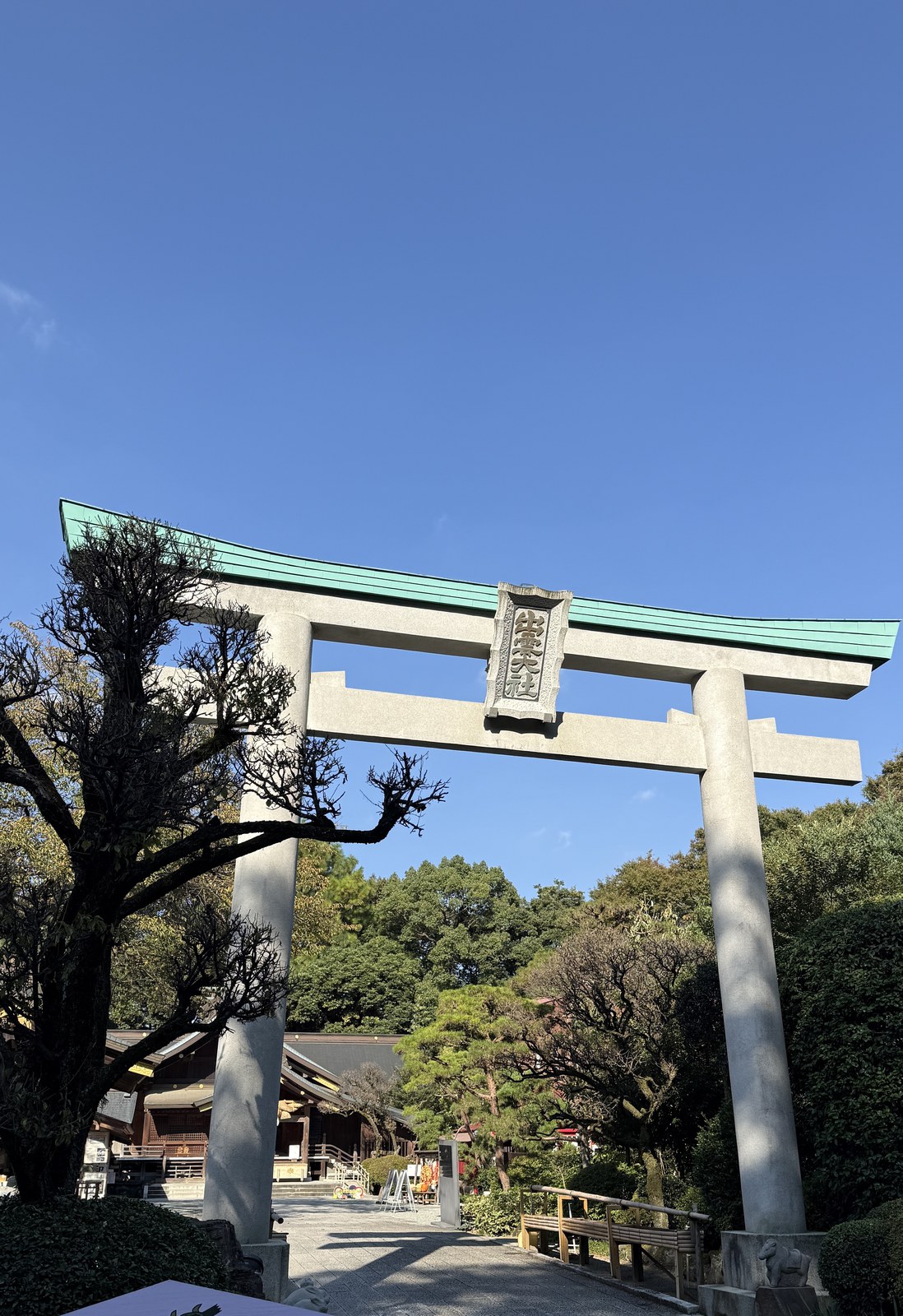
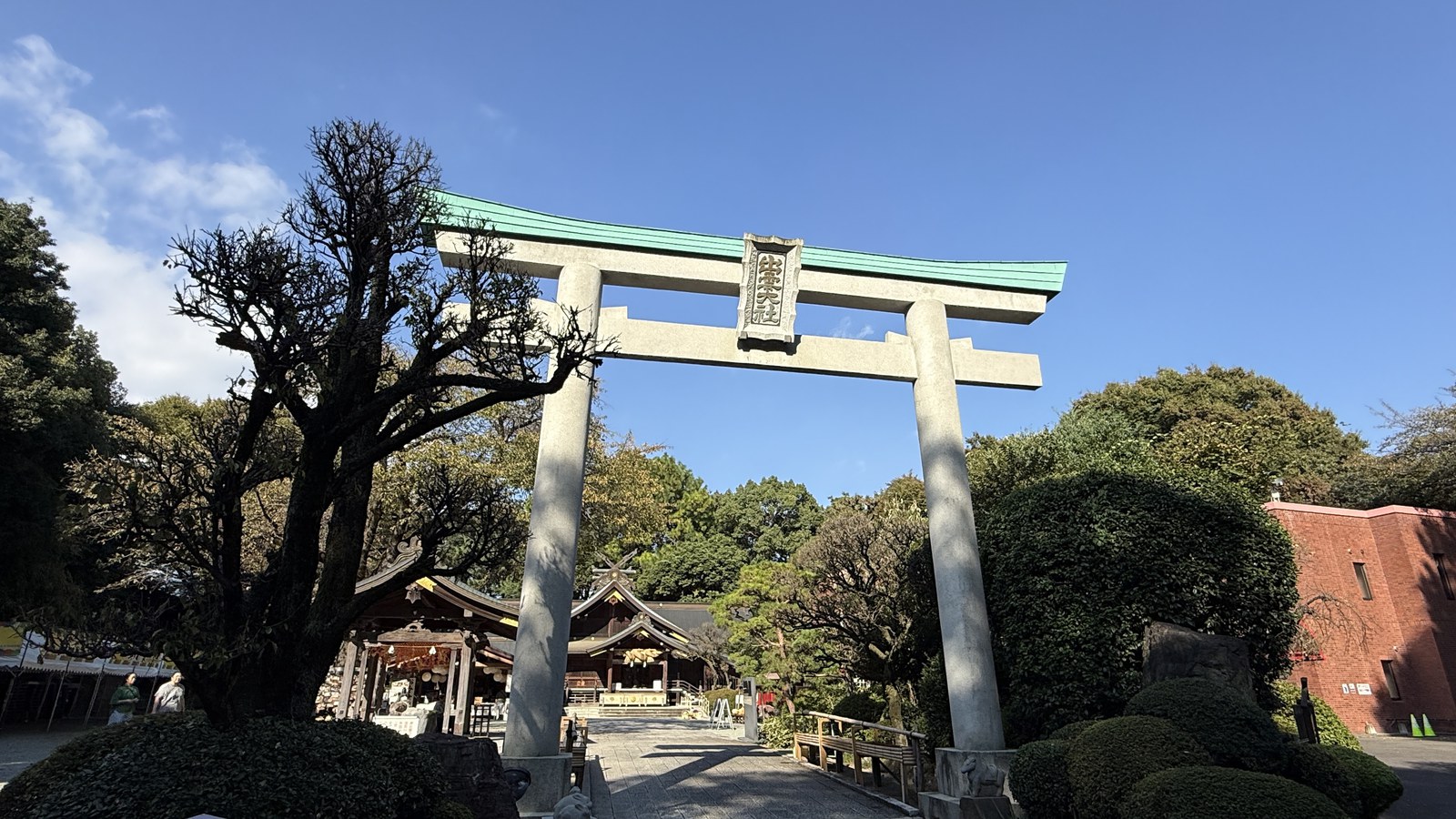
A large torii with a green top beam.
What to see
The approach begins as a tunnel of bamboo, and the grounds open out beyond a large torii. A great shimenawa hangs on the main hall. Deeper in the bamboo grove stands the Ryujashin no Yashiro, which enshrines the dragon-snake deity long venerated in the Izumo region, with a spring in front of it.
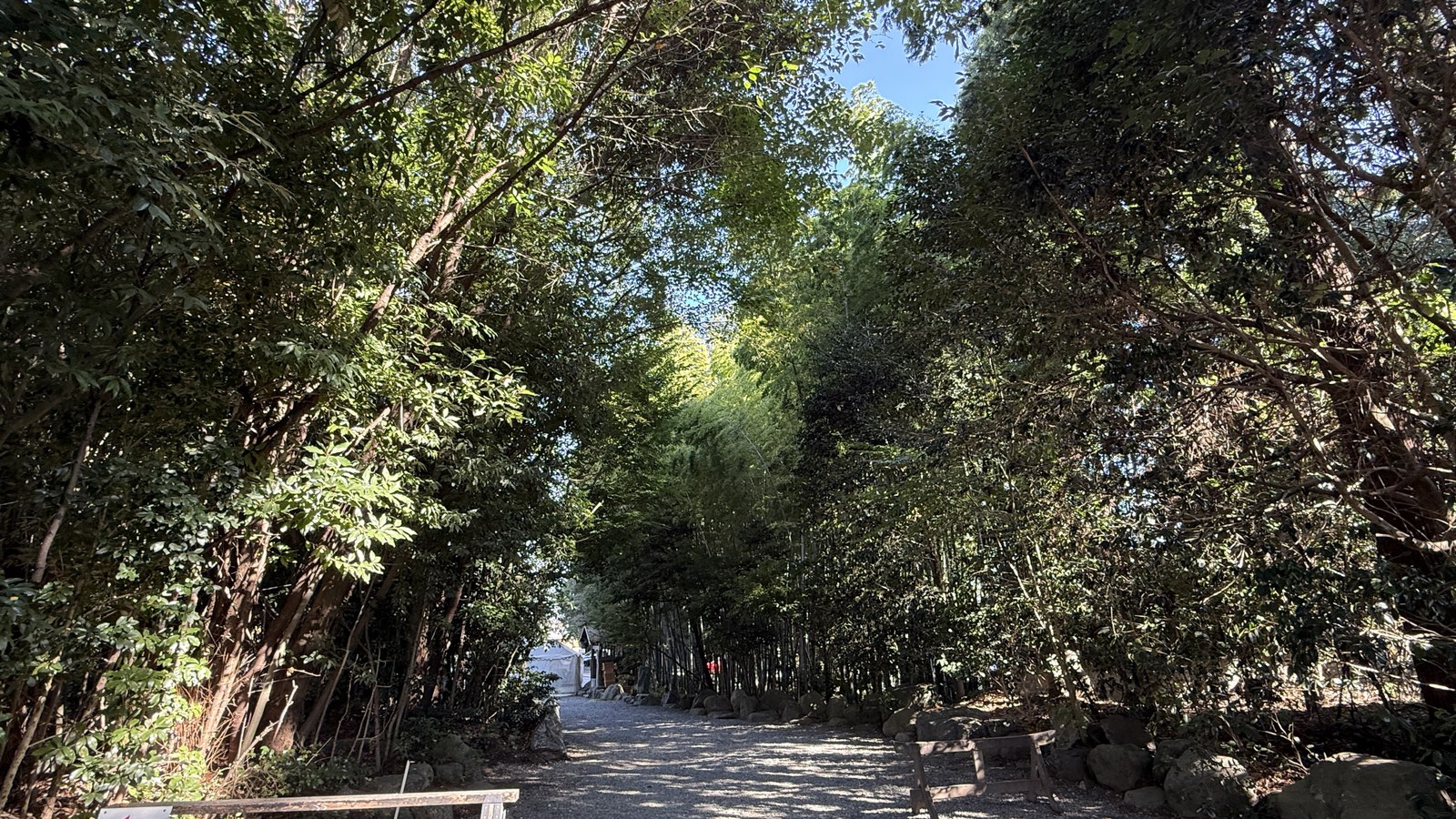
The approach through the bamboo grove.
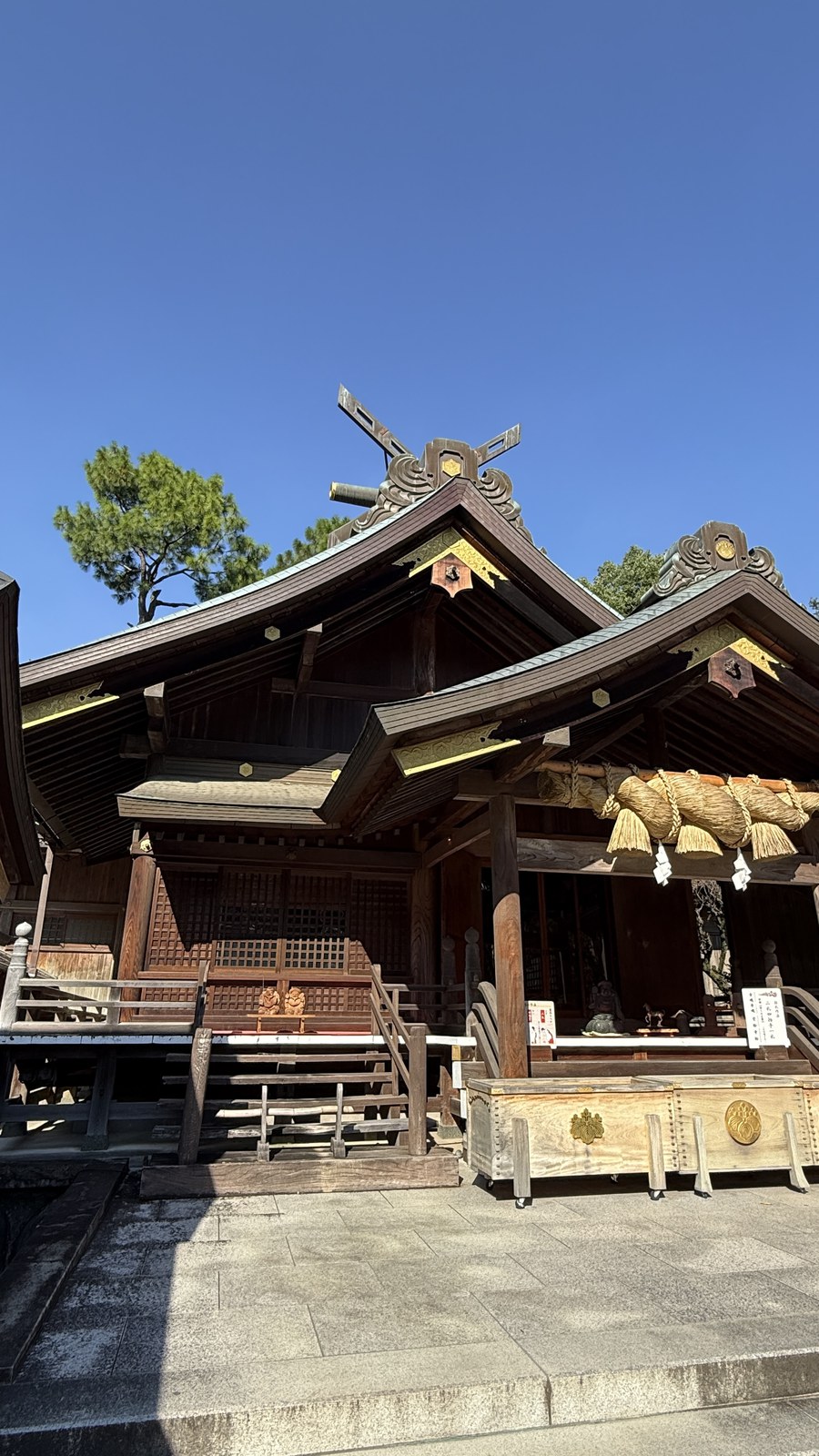
The main hall, hung with a large shimenawa.
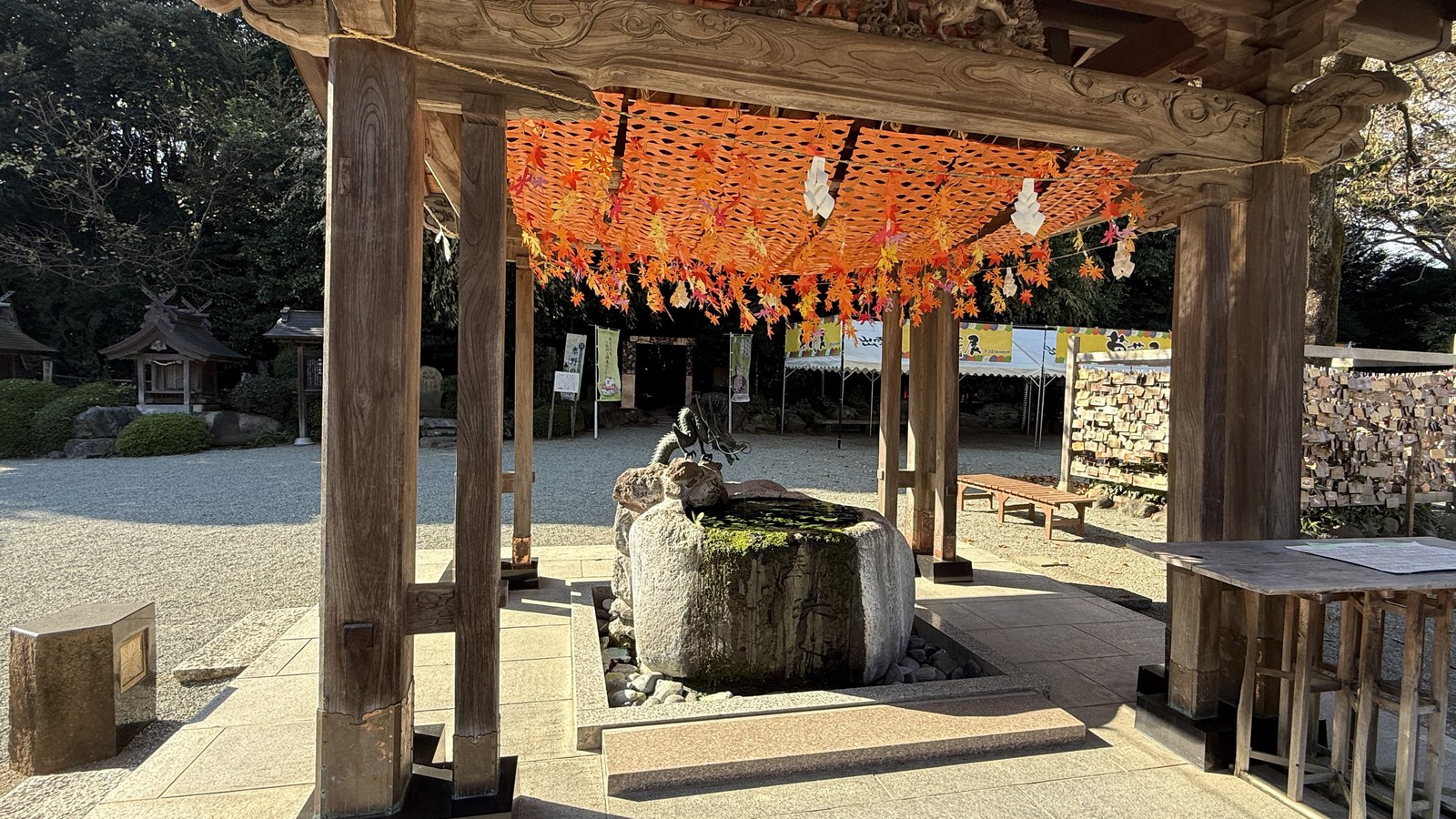
The purification pavilion, its ceiling covered with orange autumn decorations.
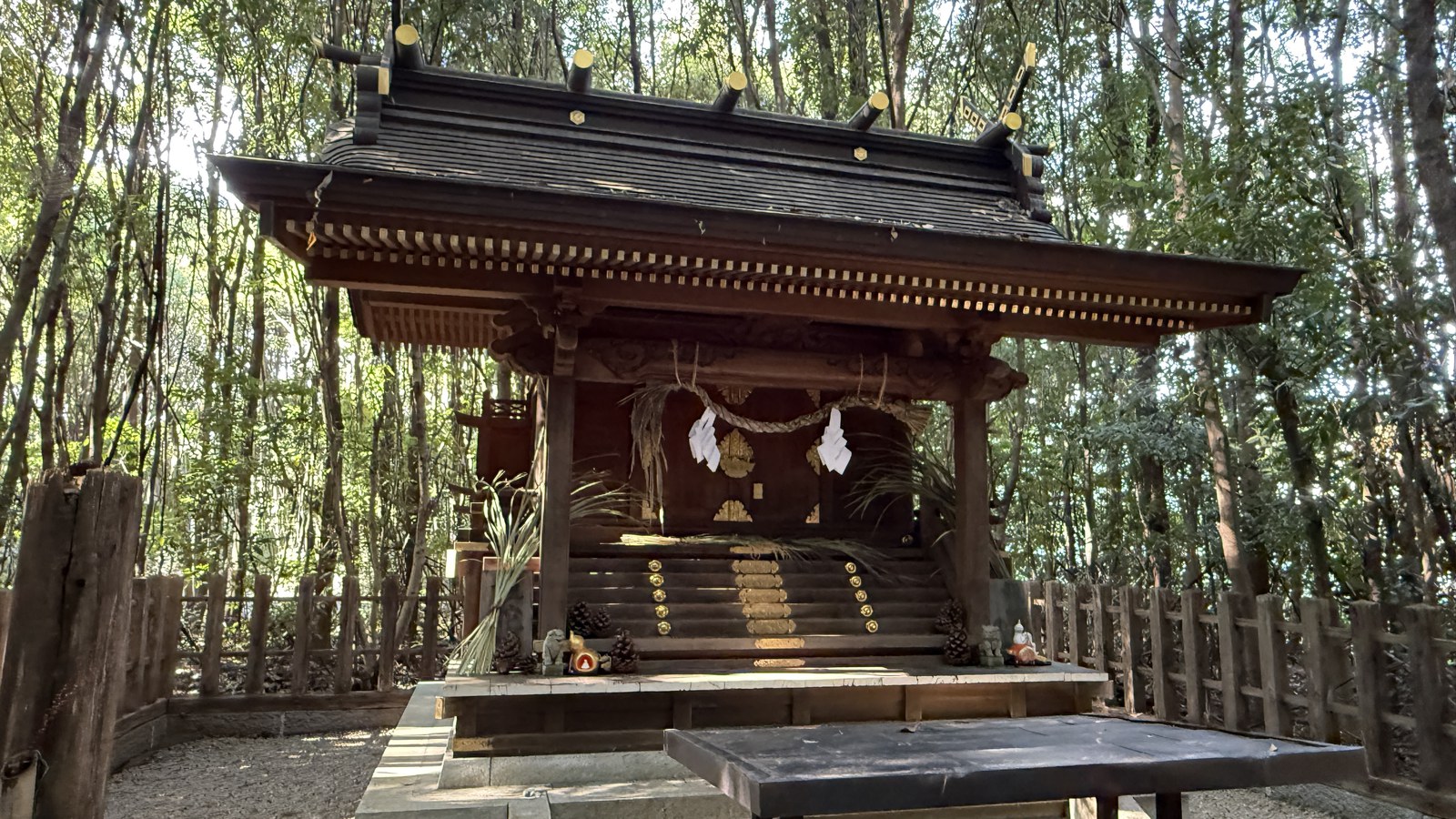
The Ryujashin no Yashiro in the bamboo grove.
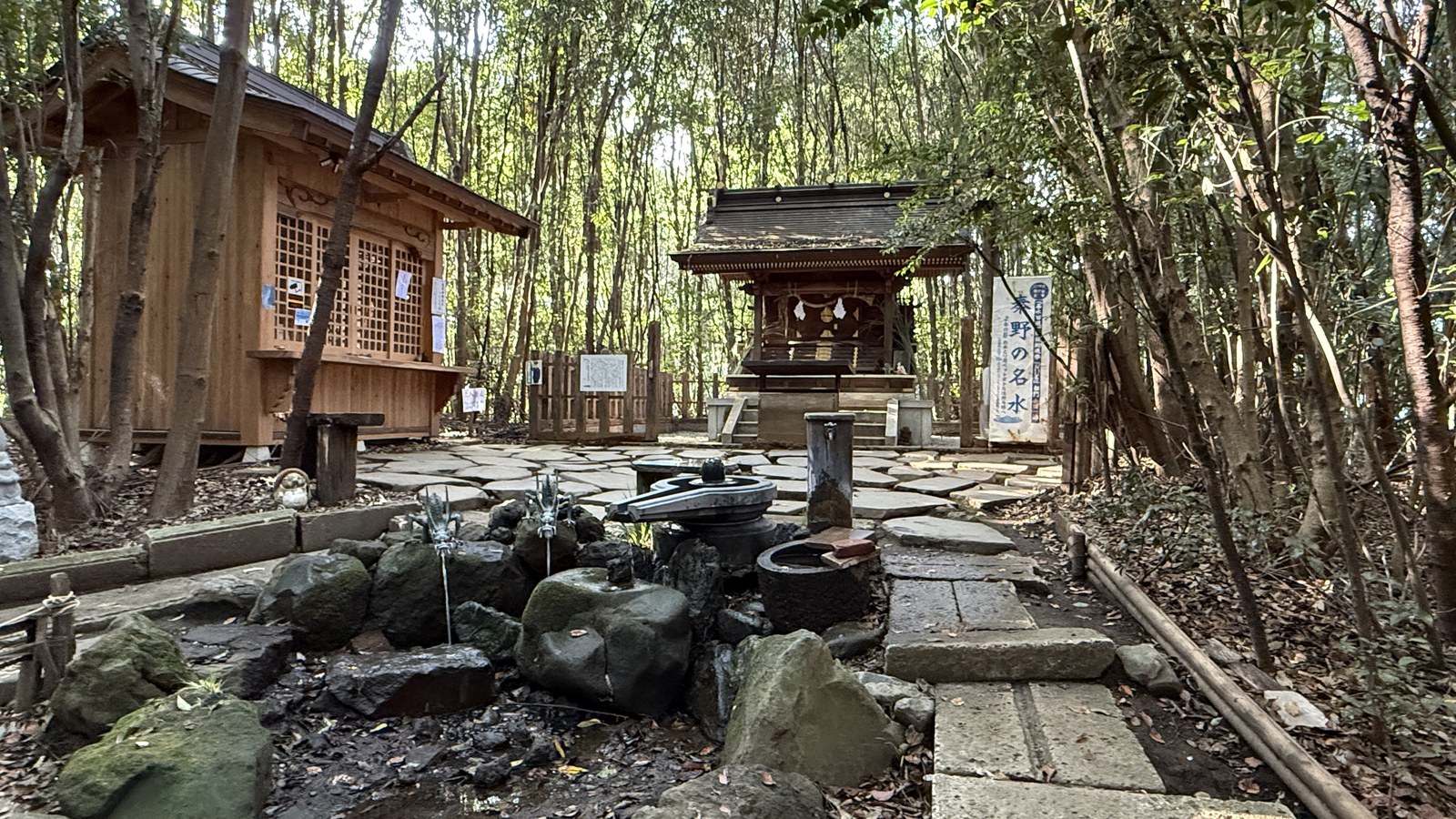
Spring water among stones, with small shrines beyond.
Also on the grounds
Other shrines stand on the same grounds, separate from Izumo Taisha Sagami Bunshi and outside its torii: Mitake Jinja and Yasaka Jinja. This Mitake Jinja is a different shrine from Musashi Mitake Jinja in Okutama.
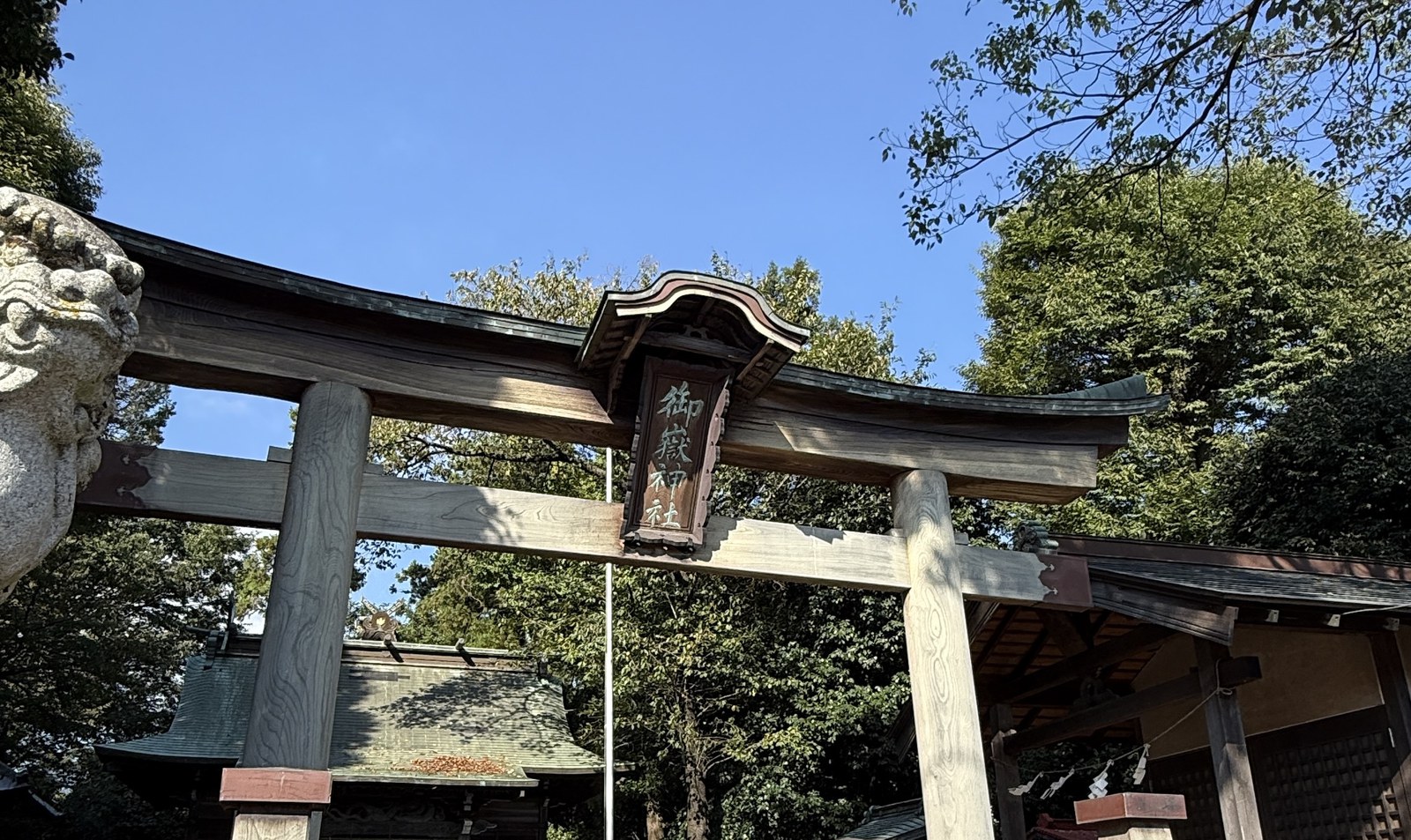
The torii of Mitake Jinja, whose plaque reads “Mitake Jinja”. It is a separate shrine from Izumo Taisha Sagami Bunshi.
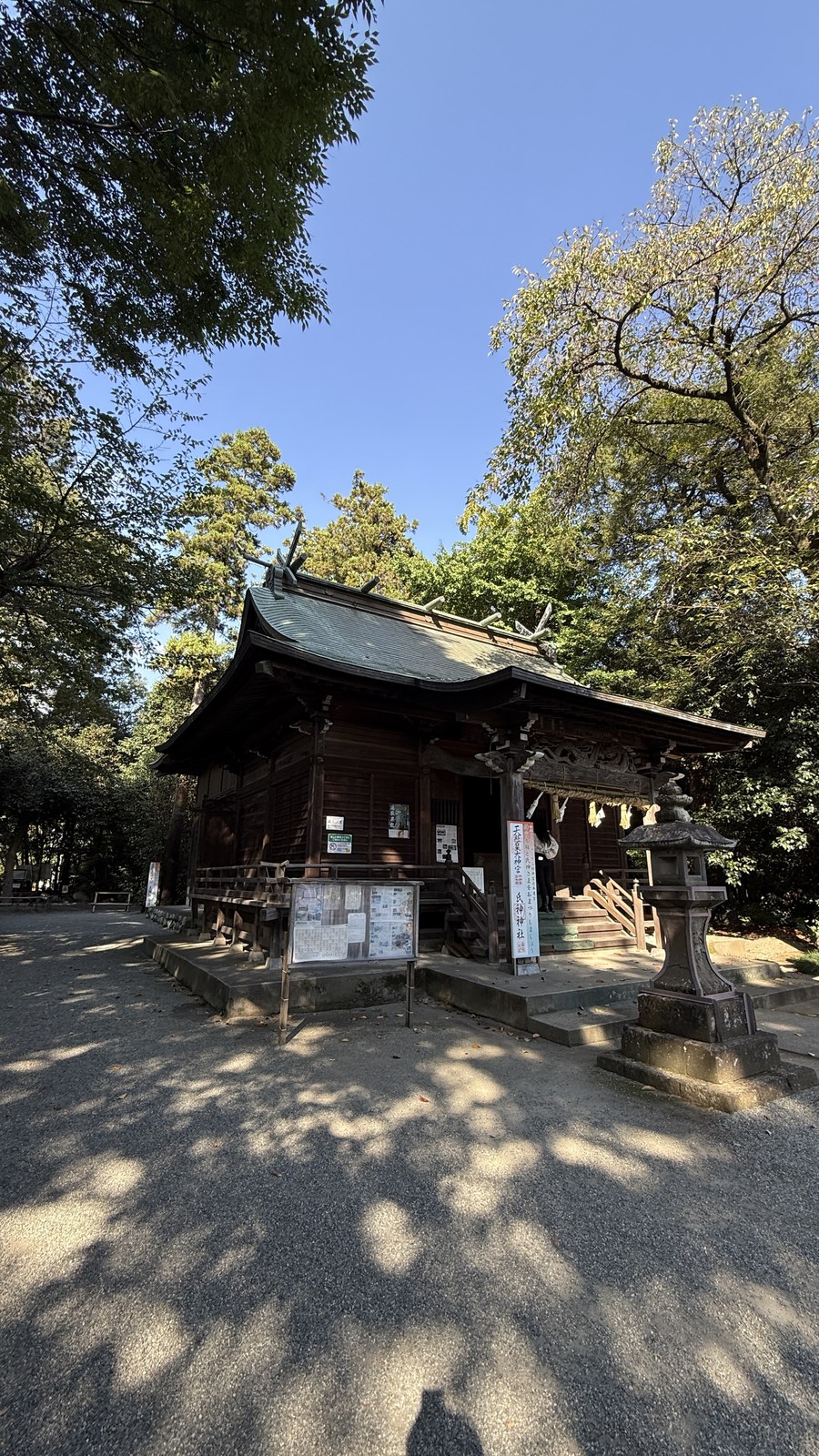
The hall of Mitake Jinja.
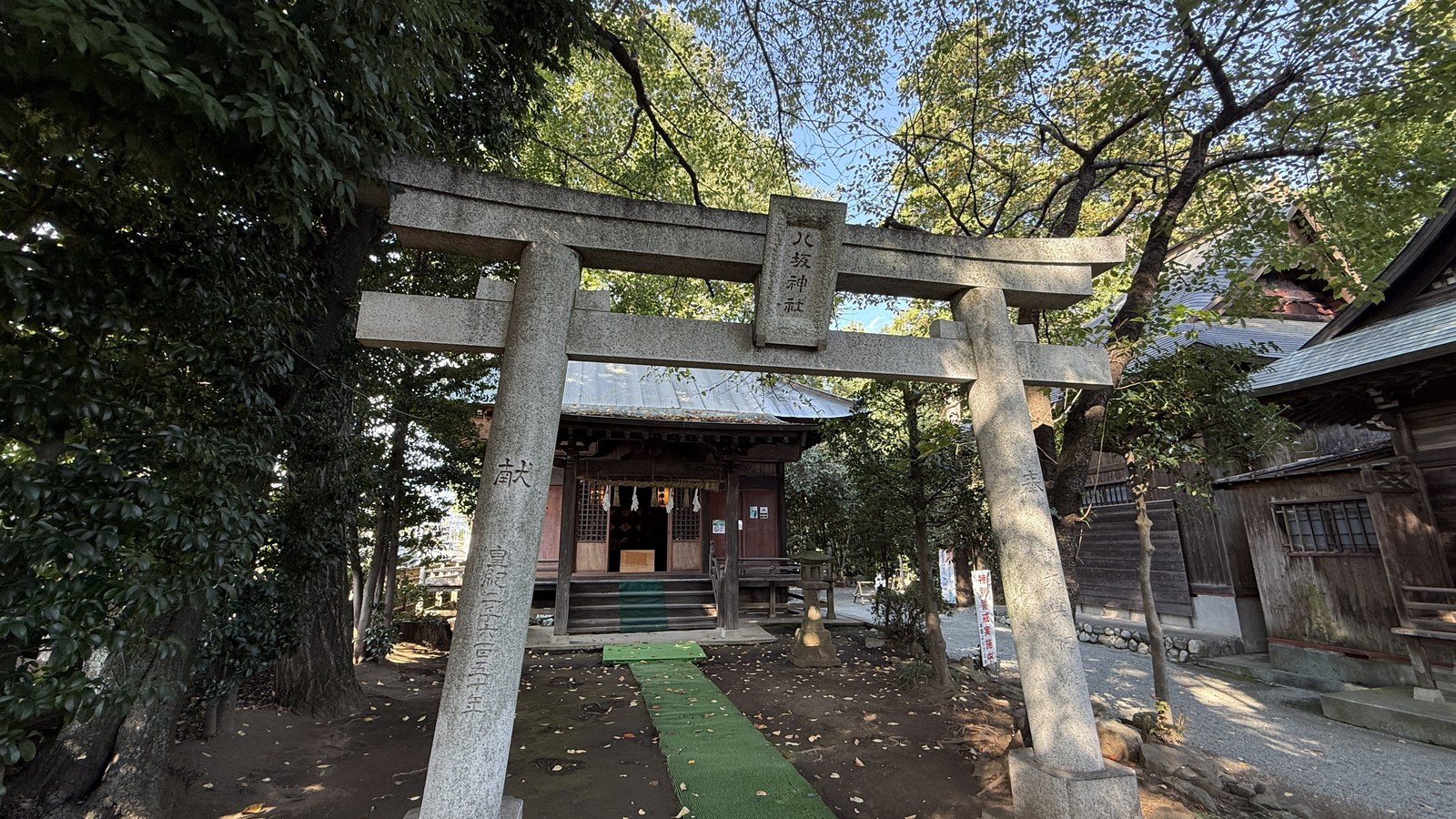
The torii and hall of Yasaka Jinja. The plaque reads “Yasaka Jinja”.
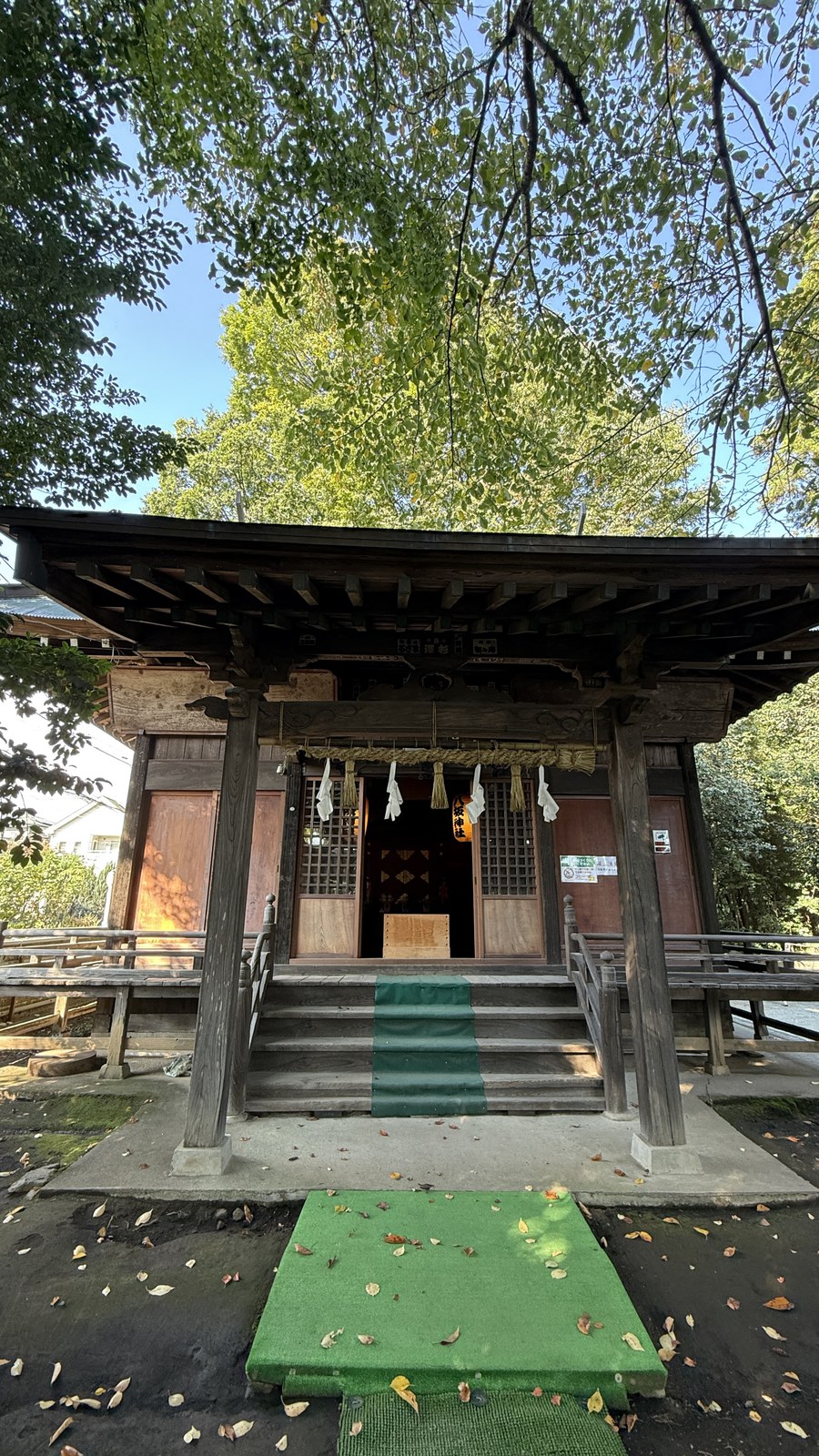
The hall of Yasaka Jinja, with a green mat laid on its steps.
Cultural context
The same god appears at several shrines of the Tokyo area. Okuninushi is regarded as the same deity as Onamuchi at Kanda Jinja, Okunitama at Okunitama Jinja and Onamuchi at Kawawa Jinja (→ Kami, ranks and lineages: Myths, on the transfer of the land).
Stone rabbits stand among the trees of the grove. Okuninushi is the god known from the myth of the white hare of Inaba.
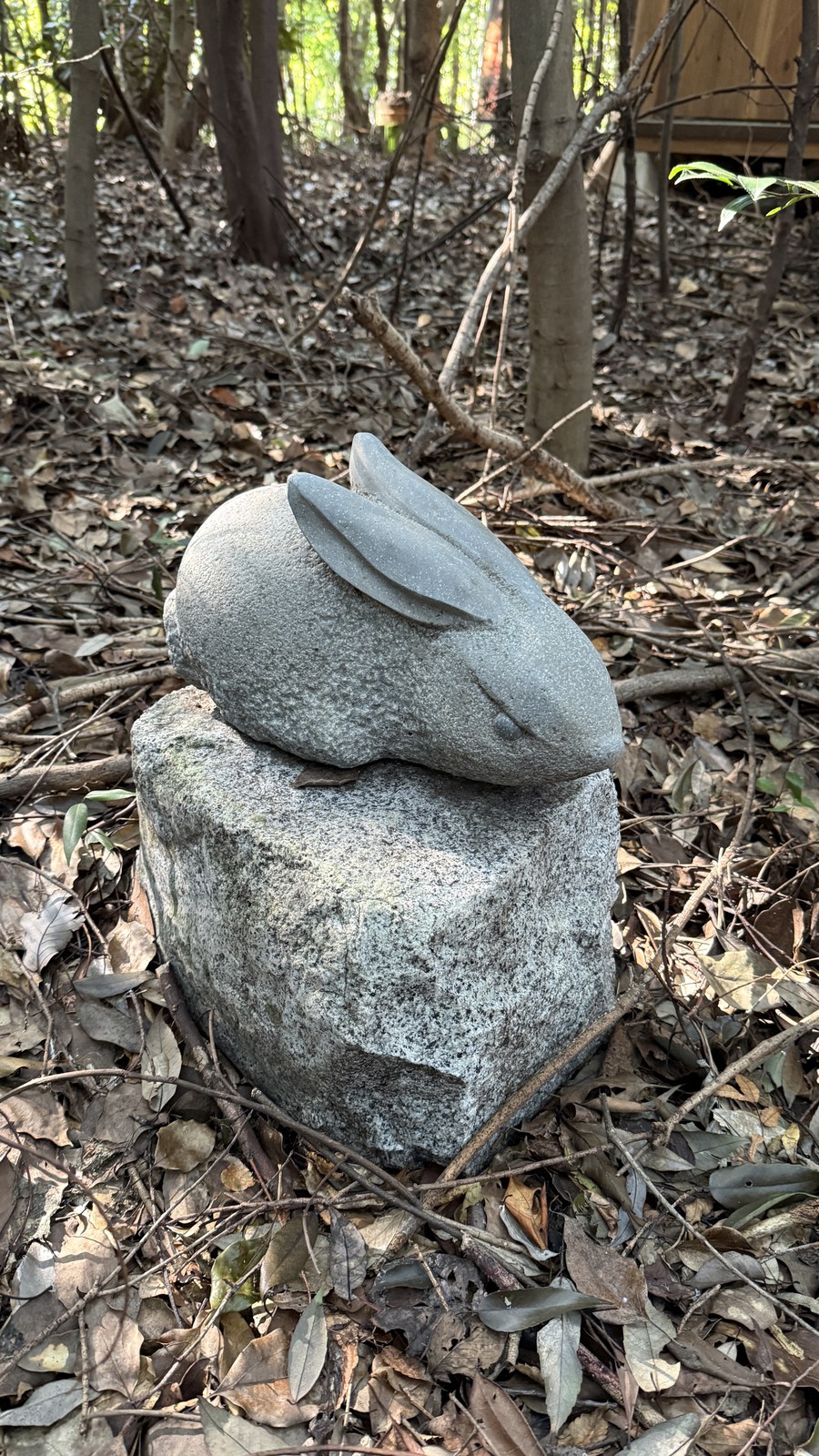
A stone rabbit.
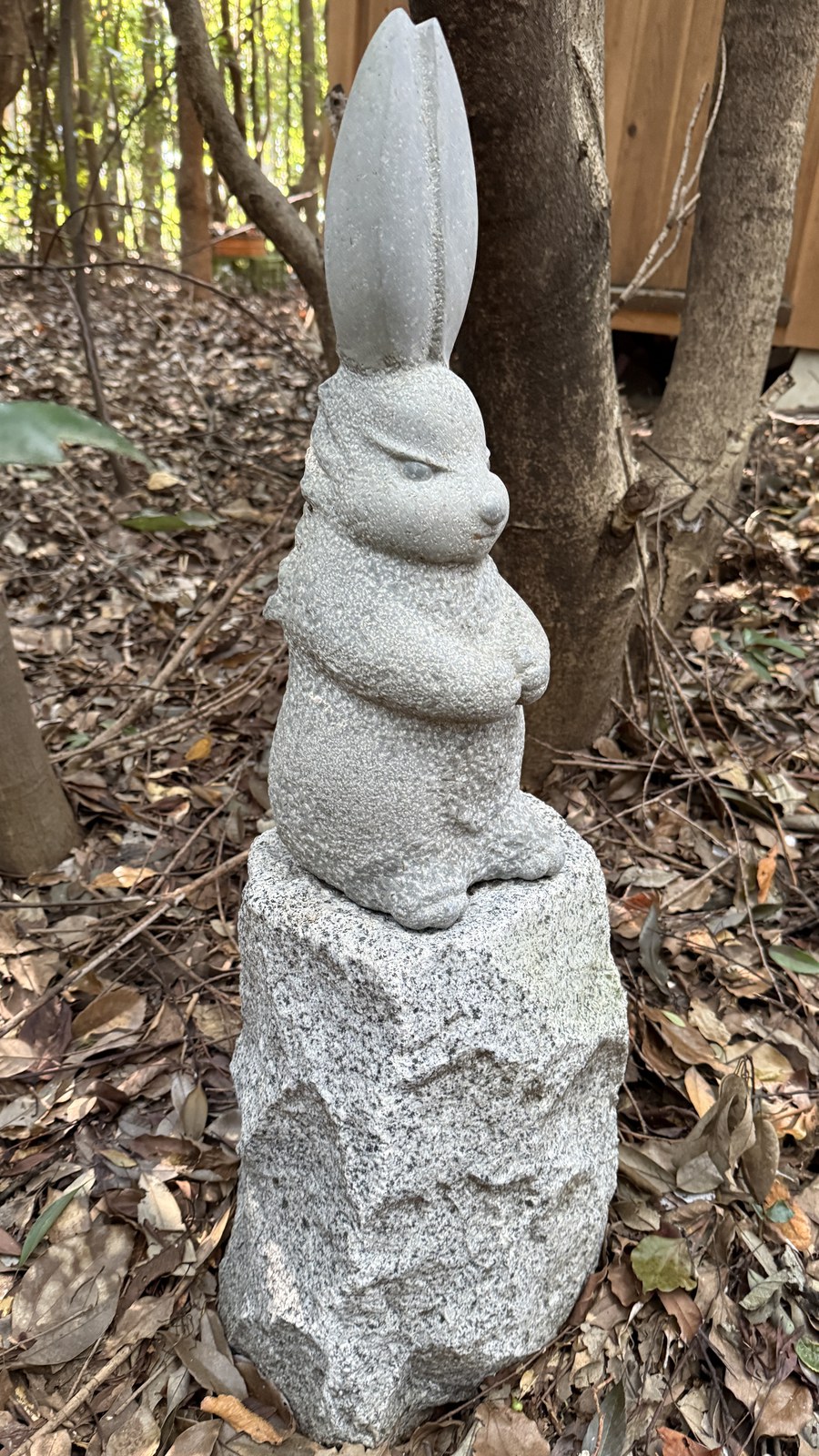
A stone statue of a standing rabbit.