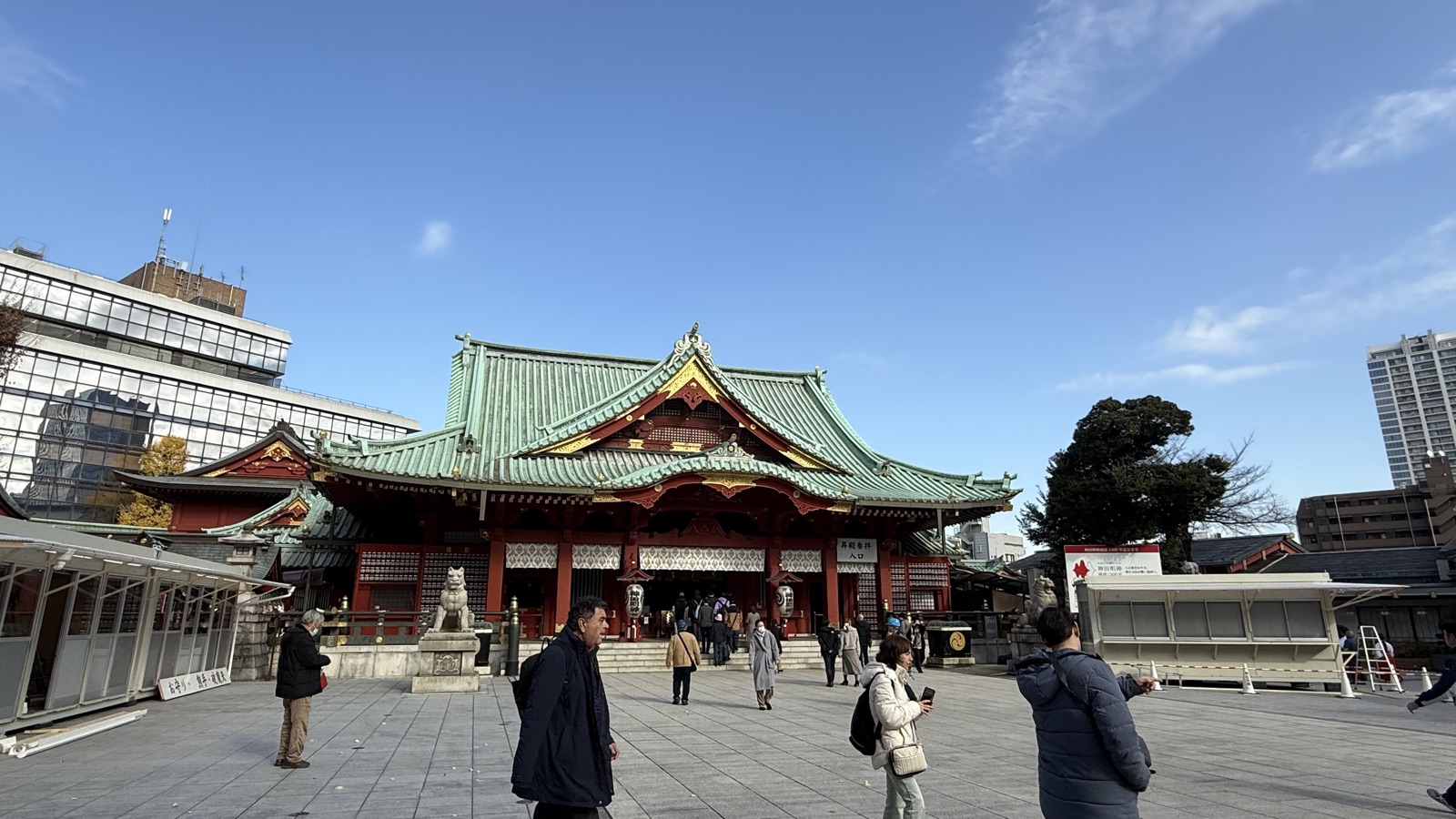
Visited in person · Original photography
Origins and founding
Traditionally founded in 730 as the guardian shrine of Edo. It stood on the omote-kimon, the unlucky north-east approach to Edo Castle. Natural disasters continued around the burial mound of Taira no Masakado and were feared as the work of his divine power, so the priest Shinkyo Shonin consoled his spirit and enshrined him at Kanda Myojin in 1309. In 1874 he was moved from the main hall to the Masakado Shrine within the grounds, and in 1984 he returned to the main hall. Worship of him was never interrupted.
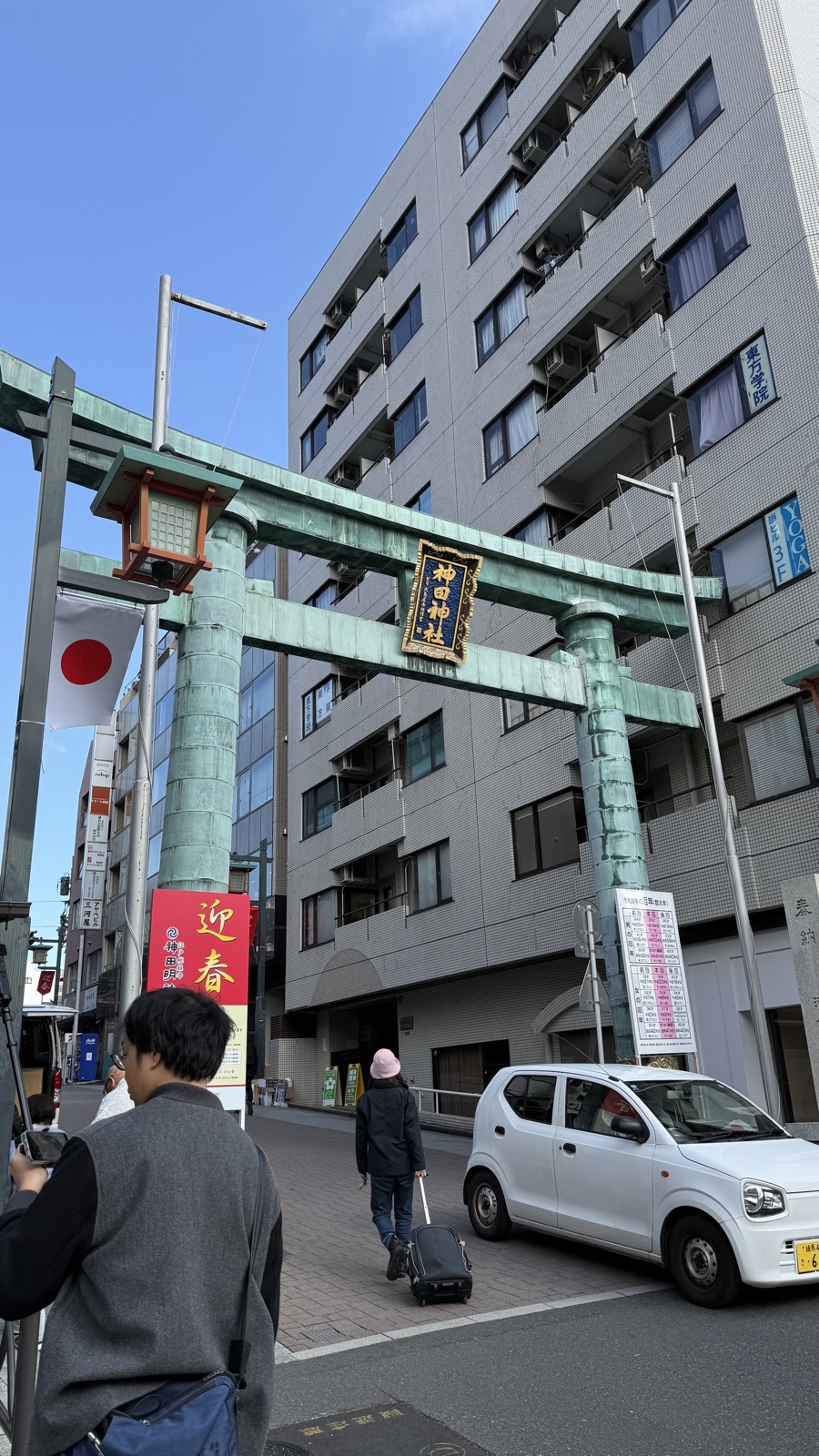
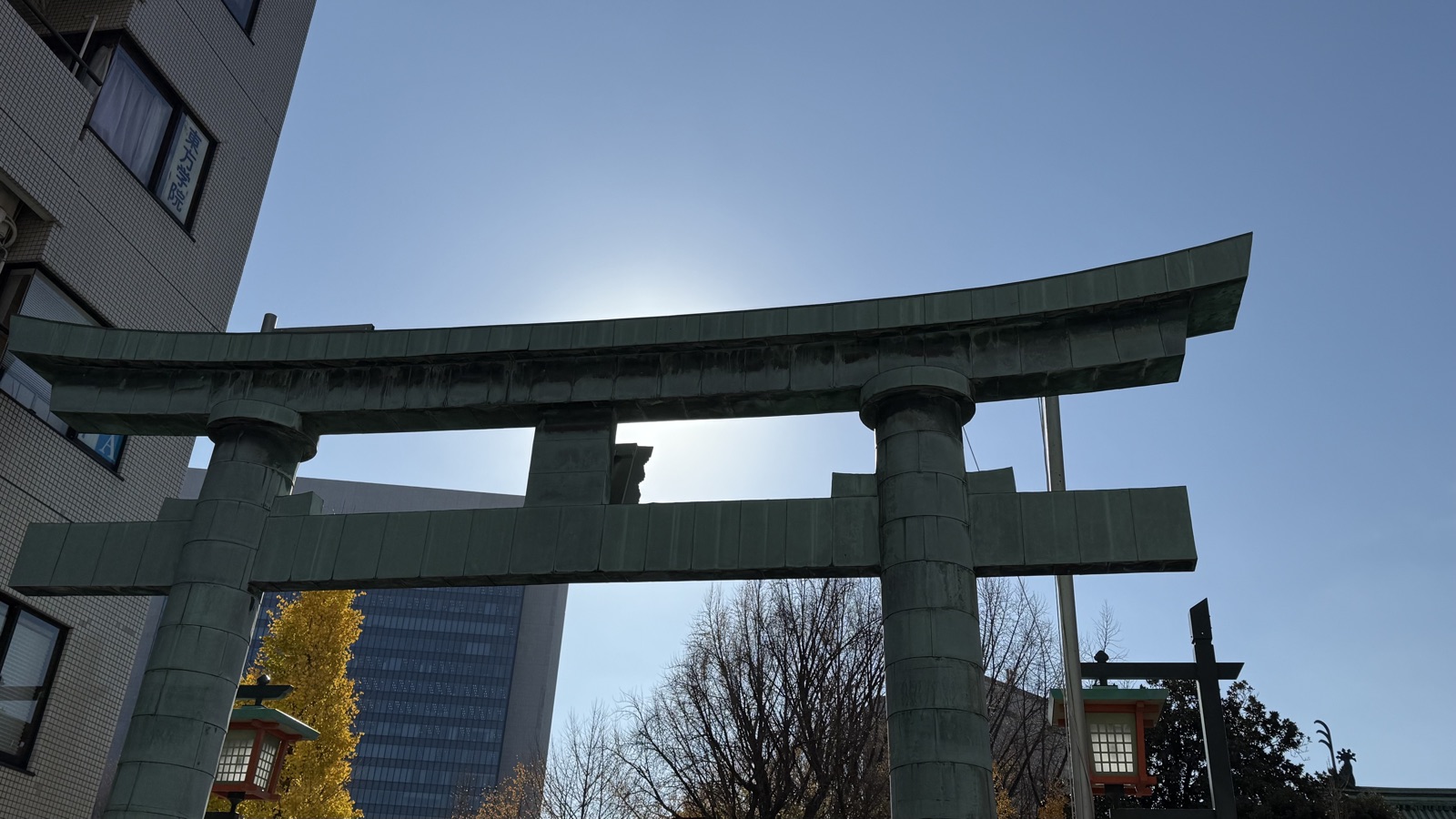
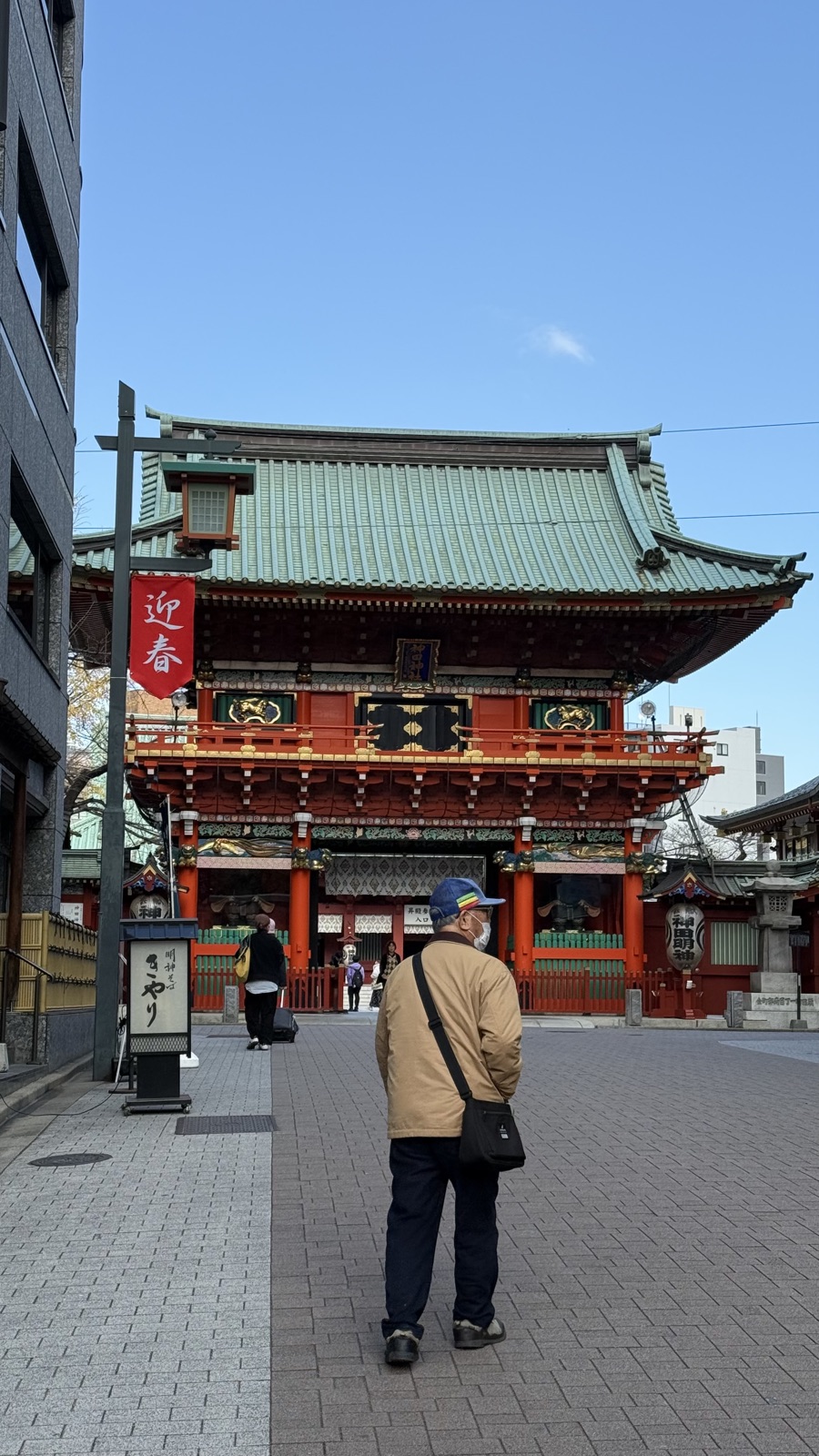
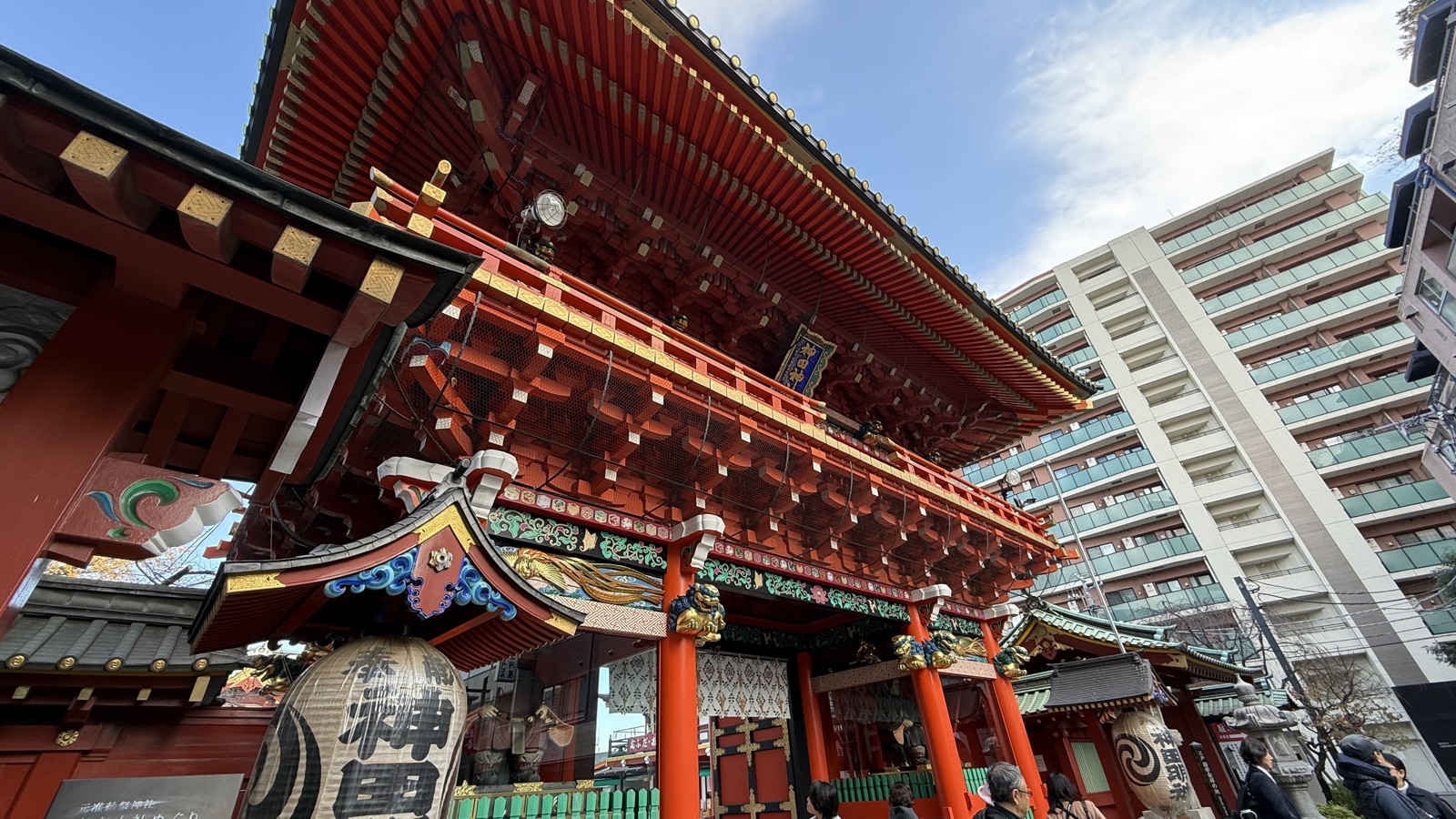
The Zuishinmon gate seen head-on. Banners read "Welcome Spring".
What to see
The vermilion Zuishinmon gate / the shrine buildings, rebuilt in steel-reinforced concrete in 1934 after the Great Kanto Earthquake, which came through the Tokyo air raids without major damage / prayers for success in IT, now common here with Akihabara only minutes away.
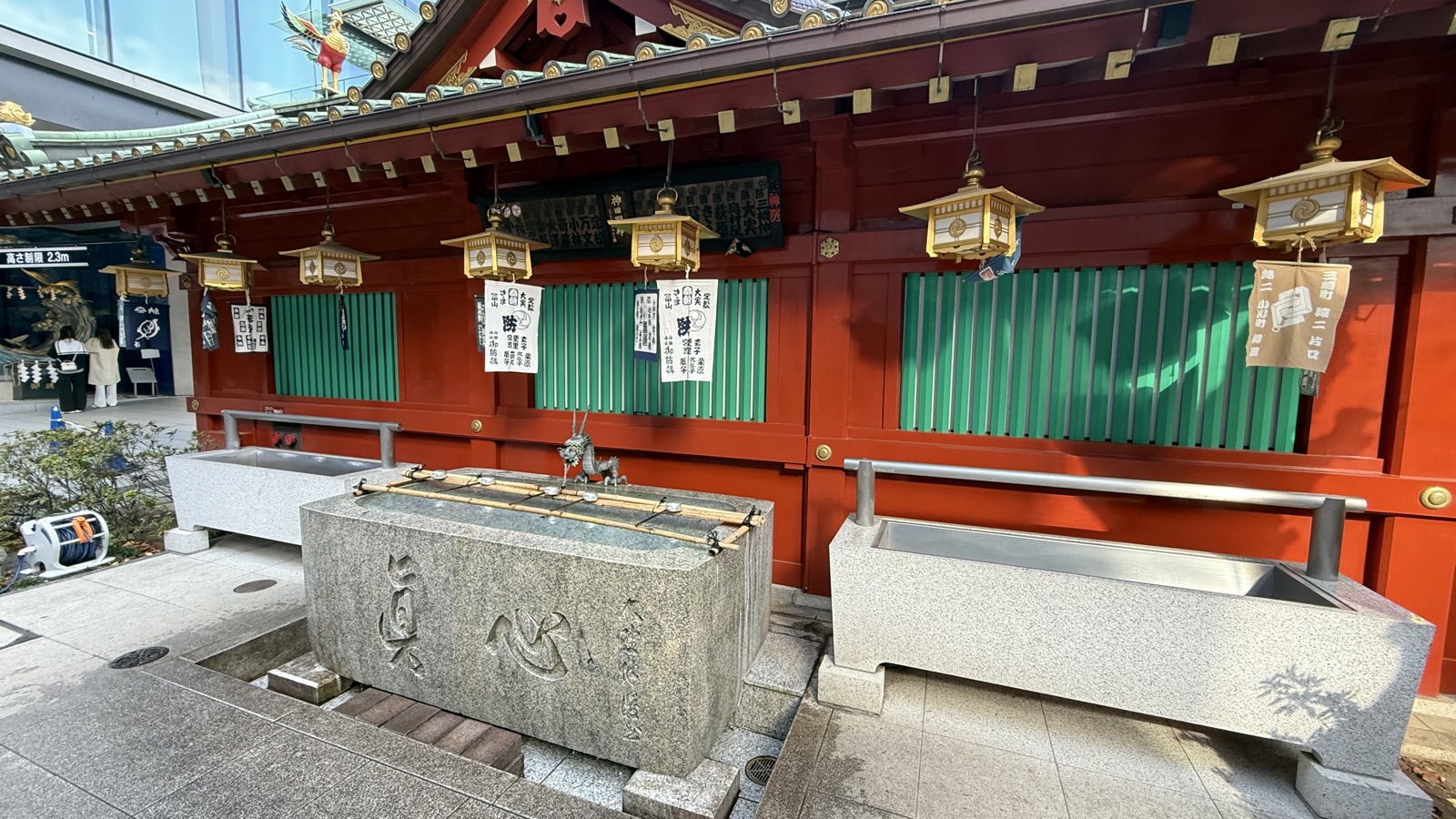
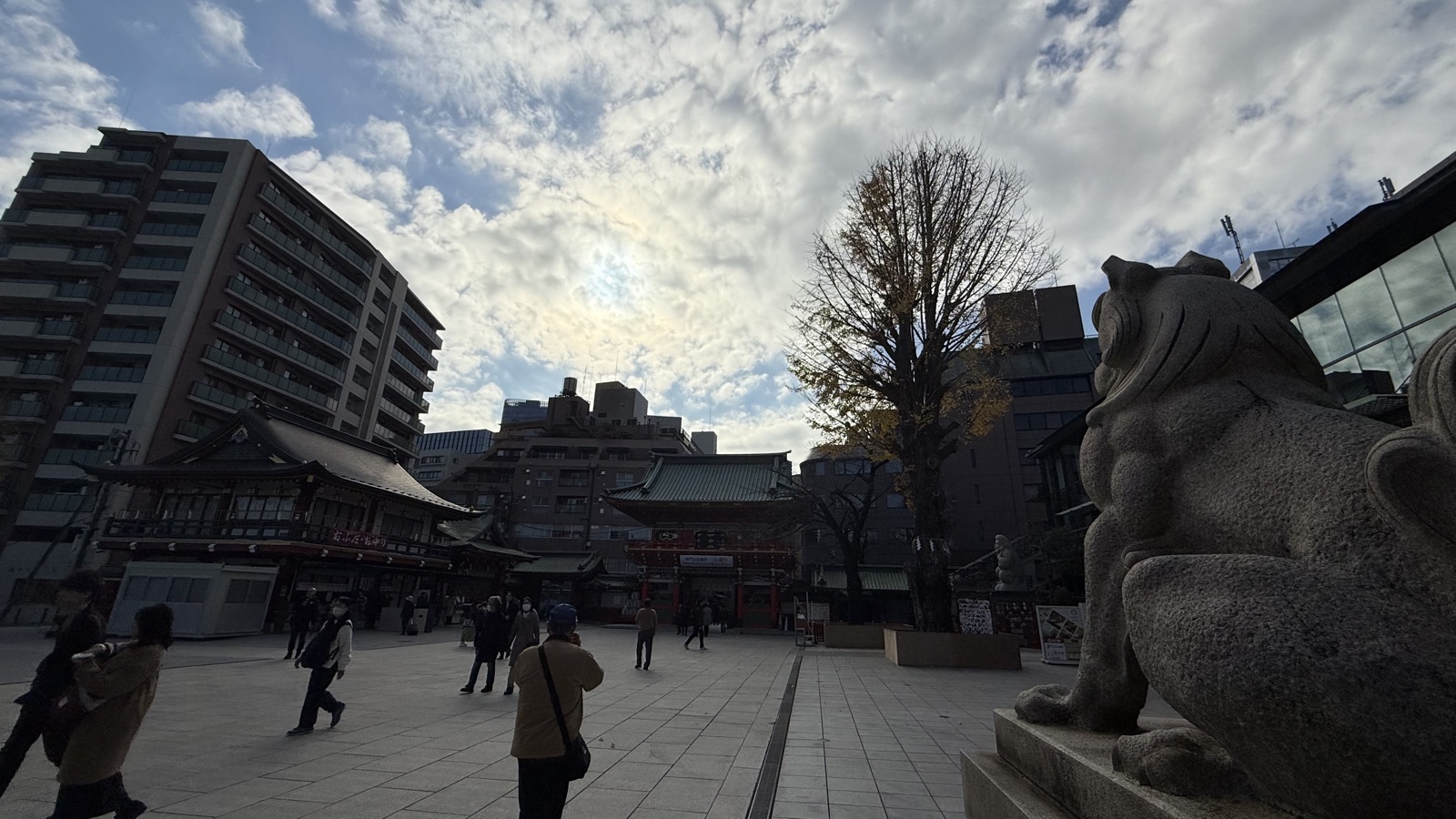
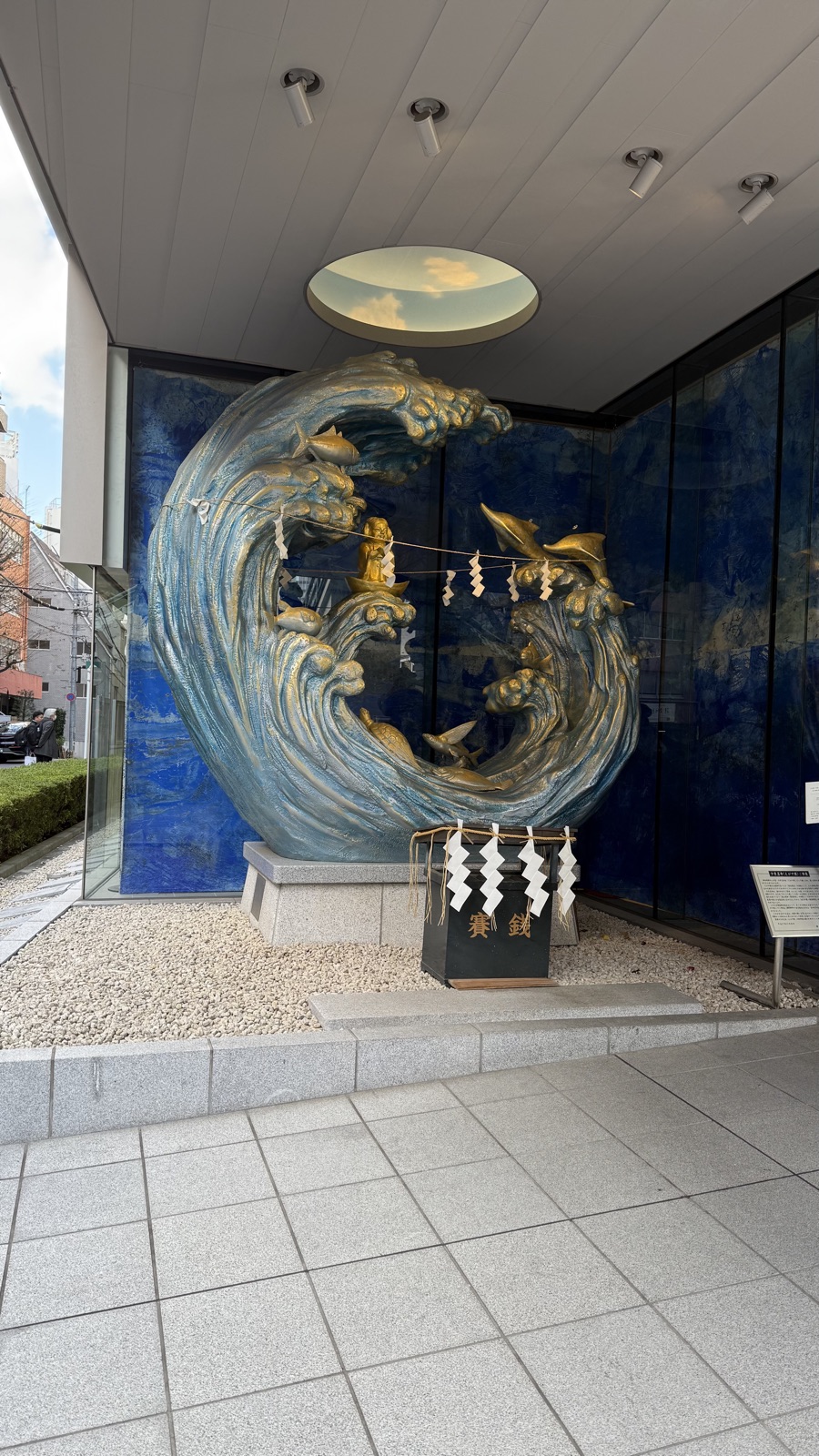
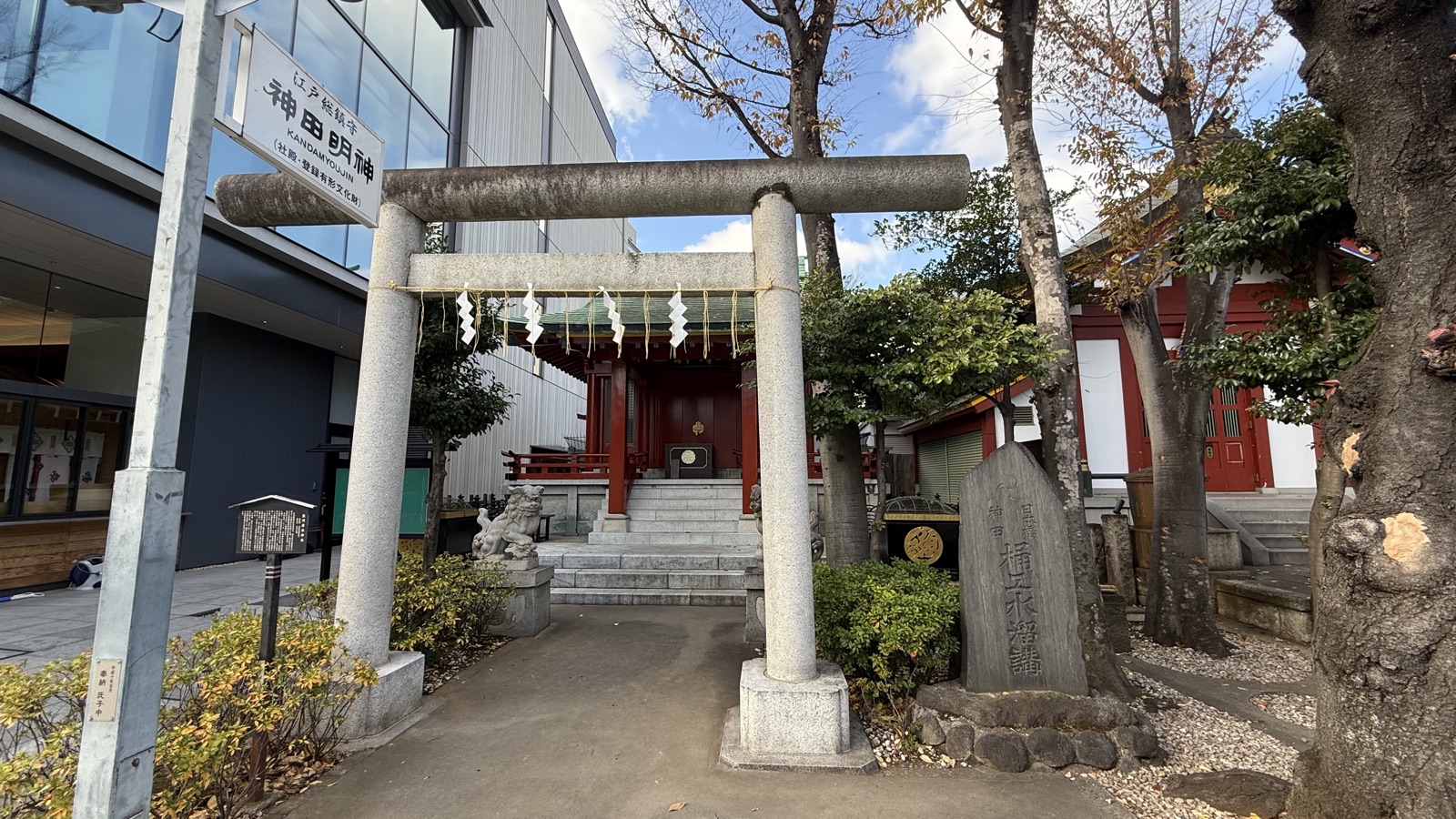
A stone torii leads to the auxiliary shrines. A stone marker bears the name "Kanda Myojin".
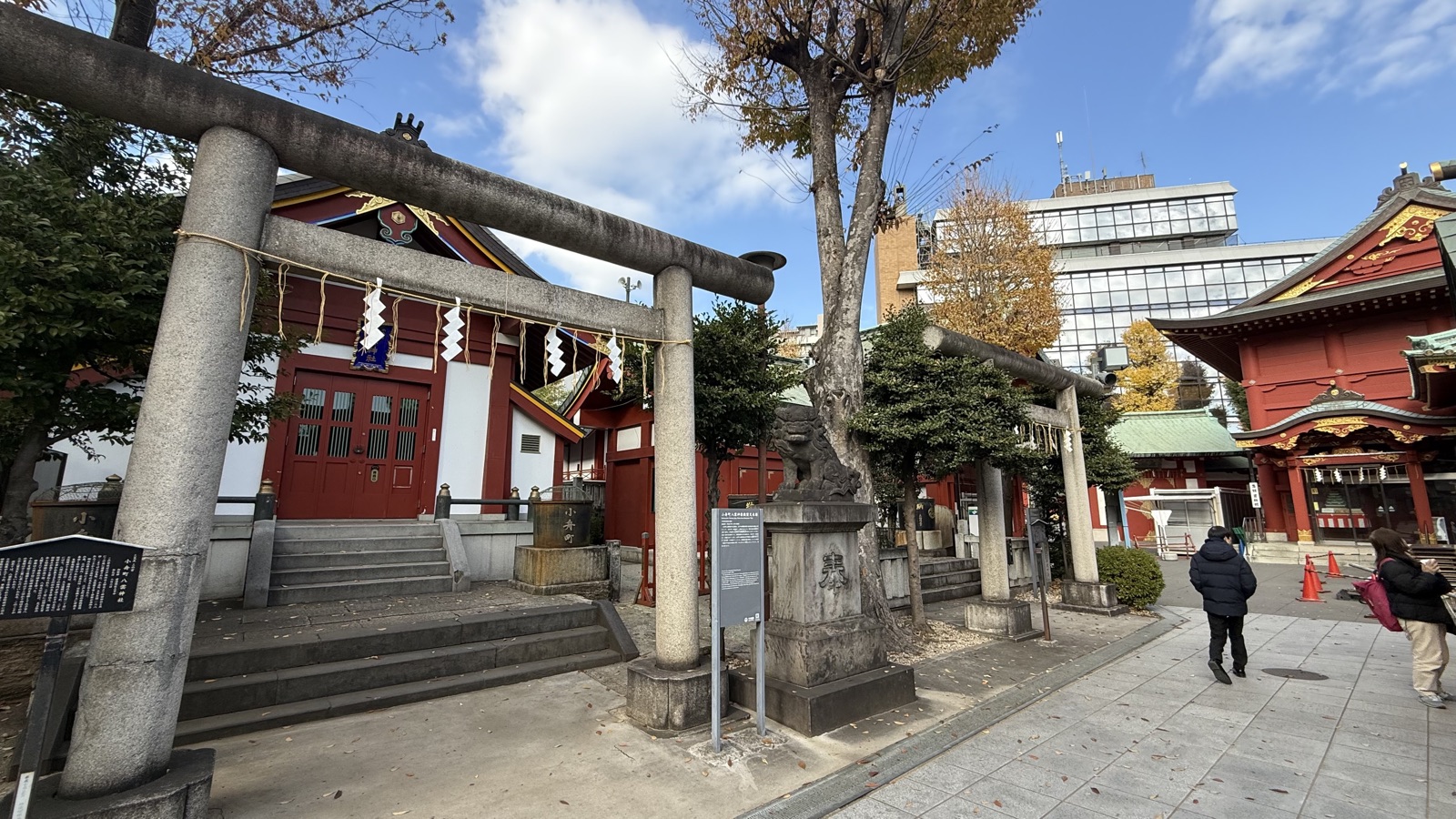
The stone torii of the auxiliary Kobunacho Yakumo shrine. The roof of the main sanctuary appears behind it.
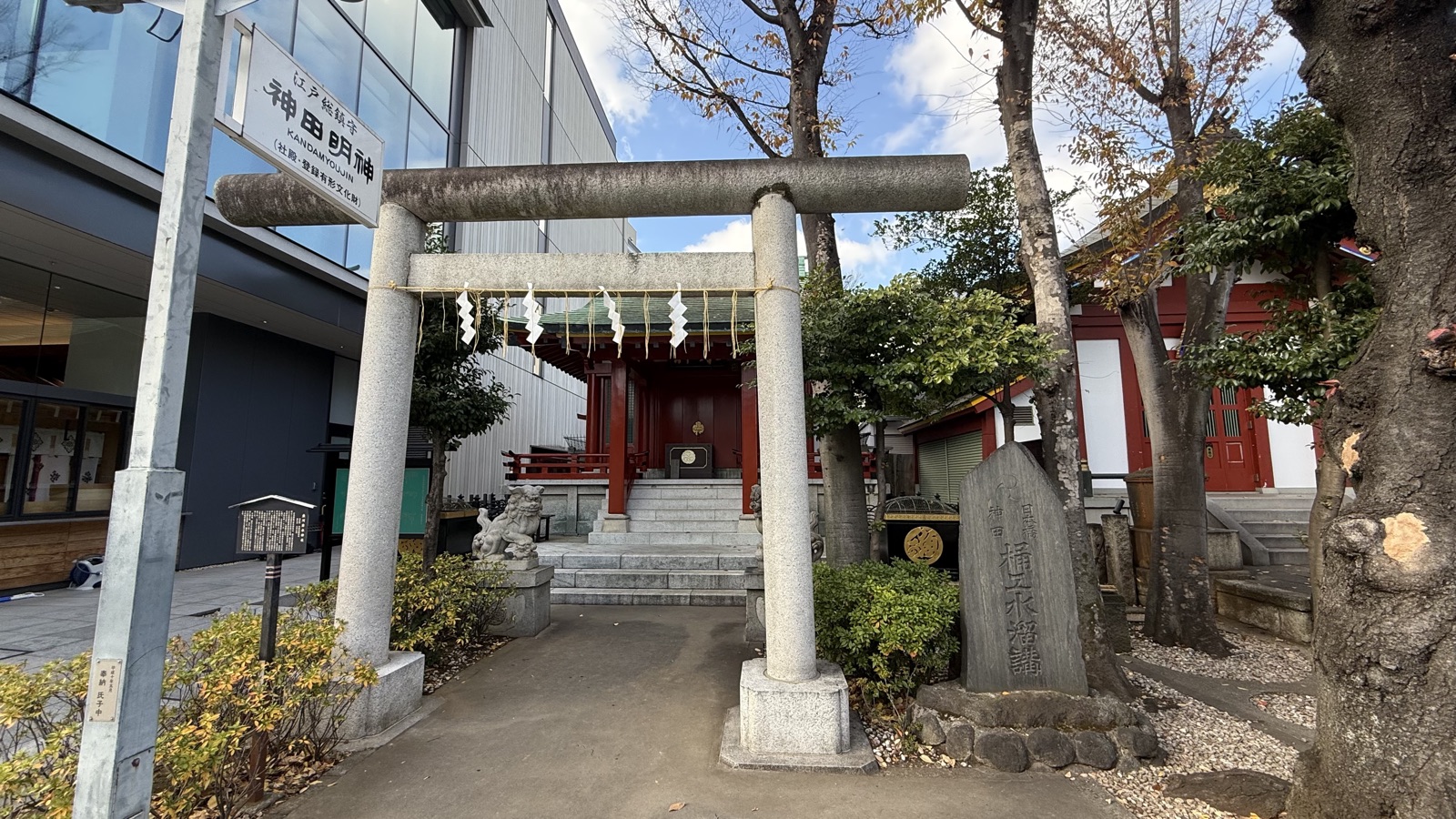
A torii leads to the auxiliary Edo shrine. Beside it stands a marker reading "Guardian of Edo, Kanda Myojin".
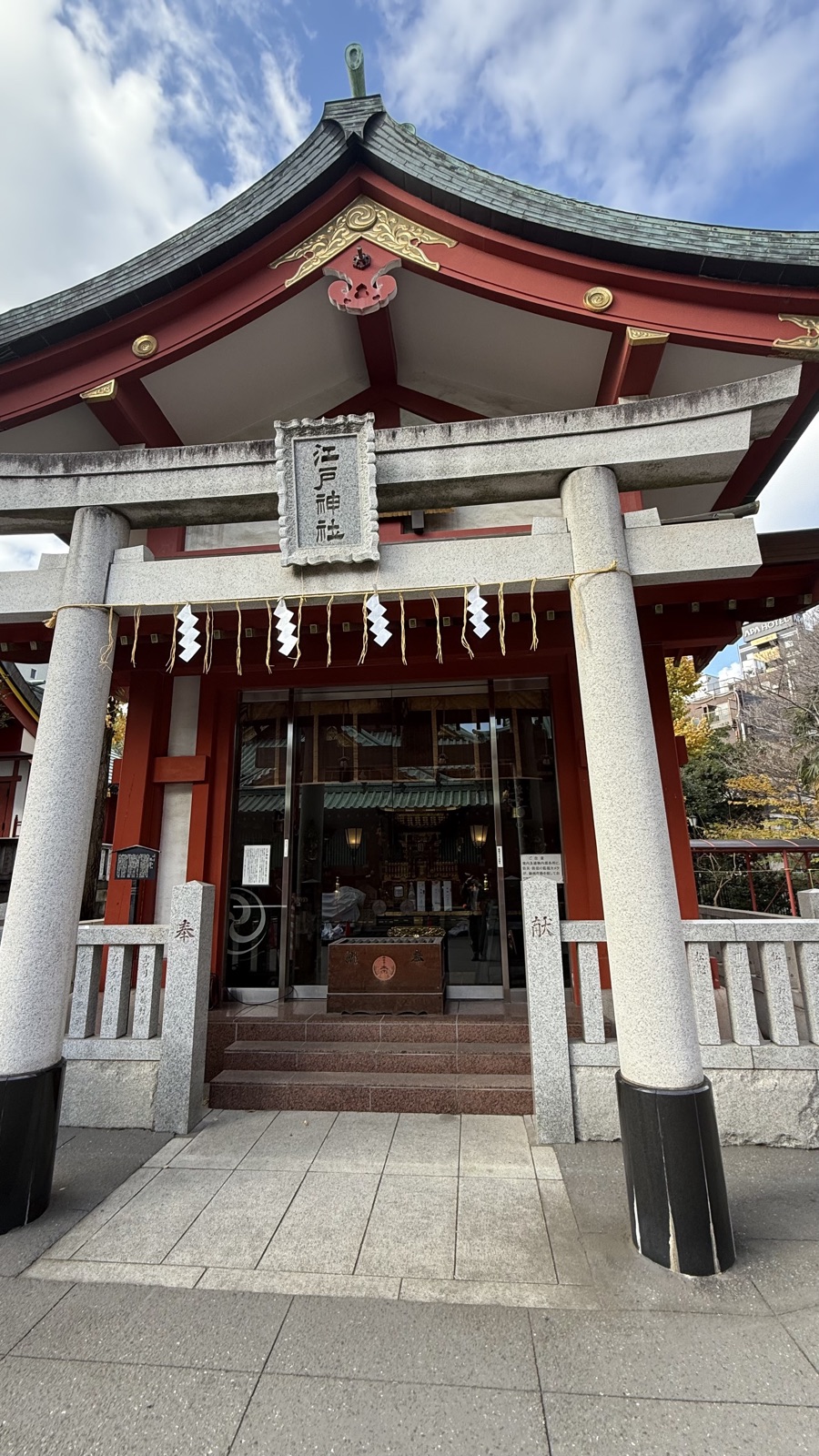
The Edo shrine building. It is a Registered Tangible Cultural Property.
Cultural context
A defeated man became a god (→ article Kami, ranks and lineages). Masakado rebelled against the imperial court and was killed. He became a guardian of Edo. The Kanda Matsuri is counted among Japan's three great festivals.