Visited in person · Original photography
Origins and founding
The ninomiya, or second-ranked shrine, of Sagami Province. It is a shikinai-sha, listed in the Jinmyocho, the register of shrines in the Heian-period Engishiki. The name of the town of Ninomiya comes from this shrine.
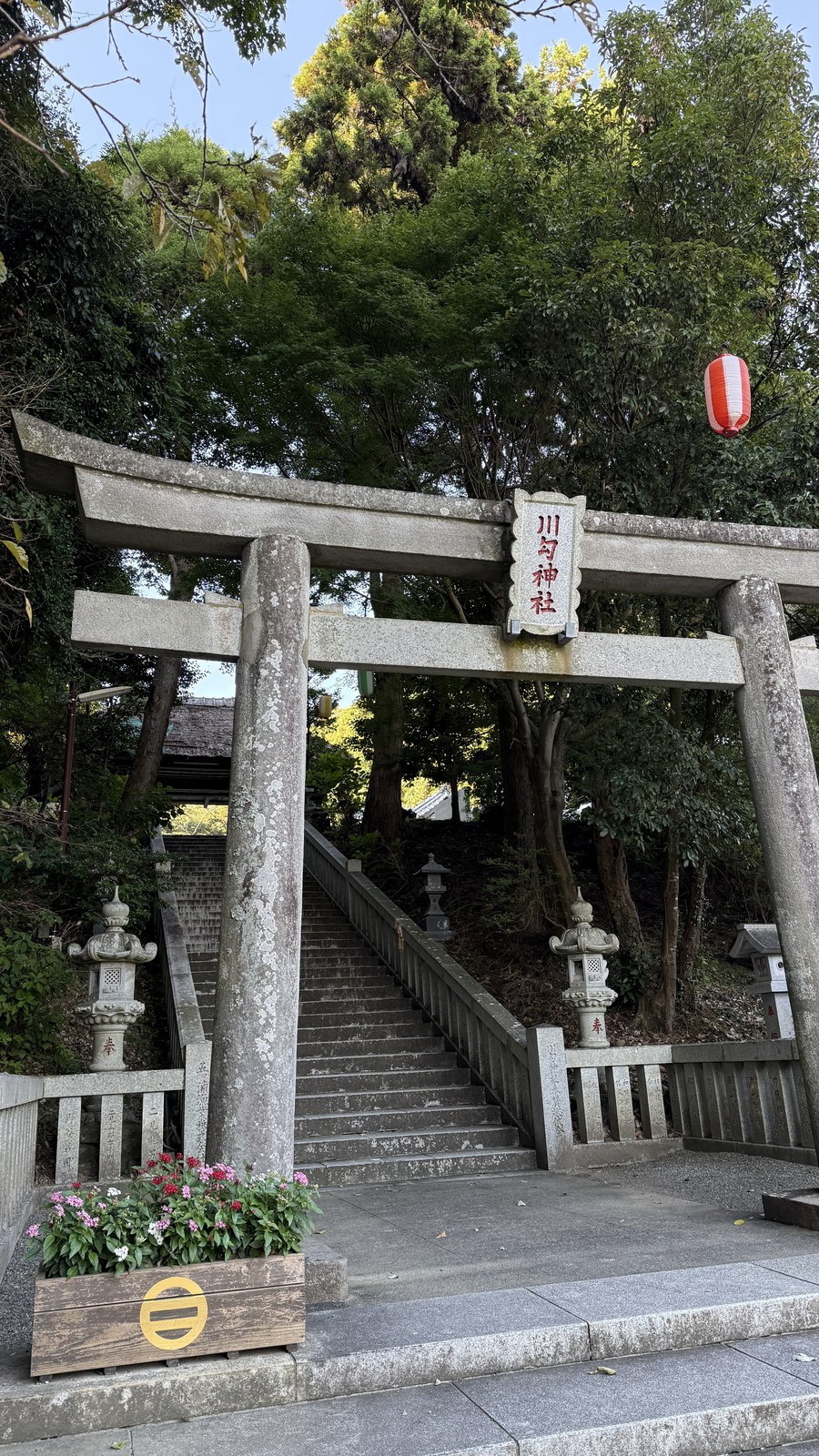
The stone torii and the steps rising beyond it. The plaque on the torii reads “Kawawa Jinja”.
What to see
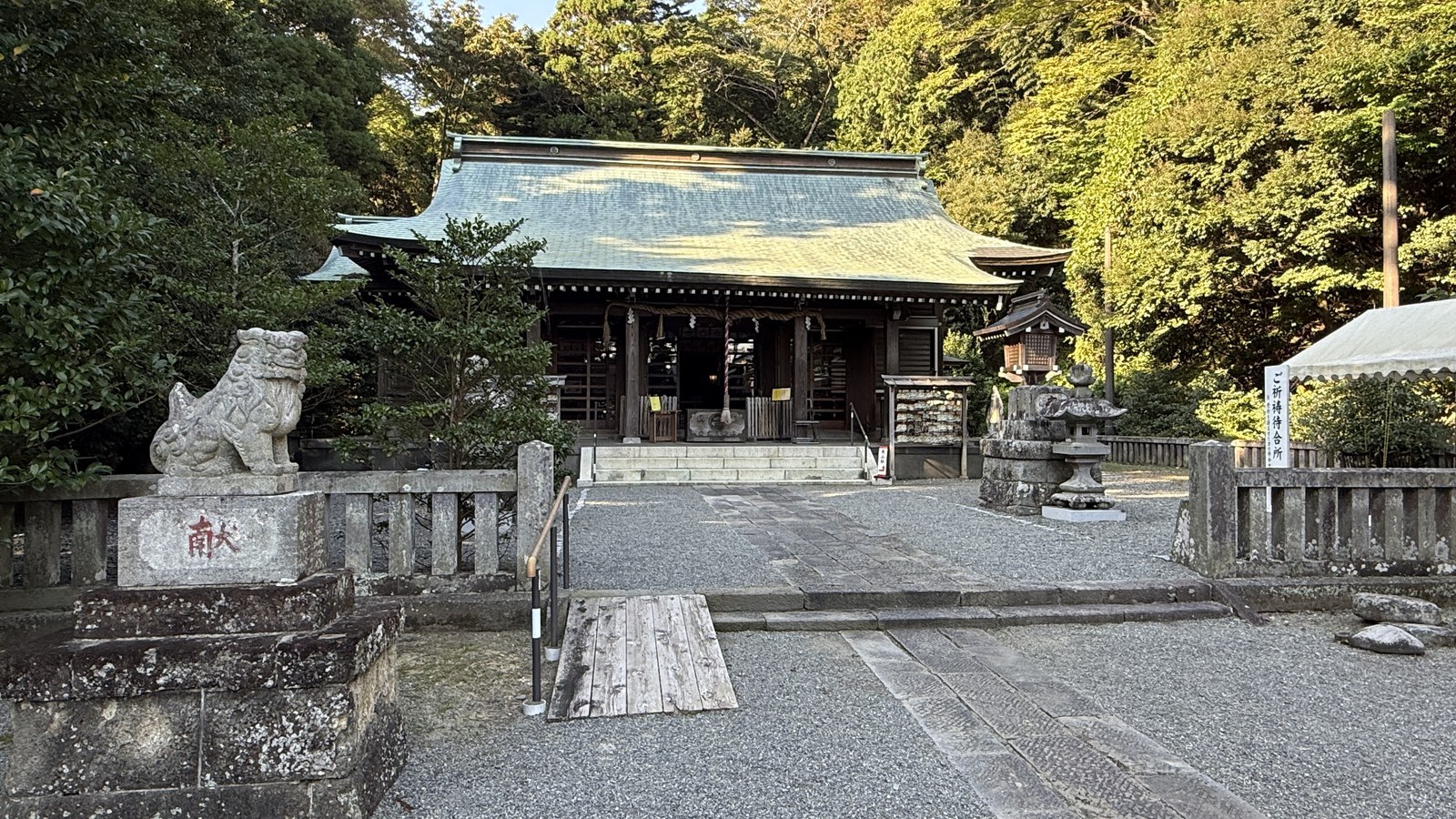
A long flight of stone steps beyond the torii climbs to the grounds. The main hall has a pale green roof, with a komainu in front. Beside the paths stand a statue in a small wooden shelter and a tall tree wrapped in a shimenawa.
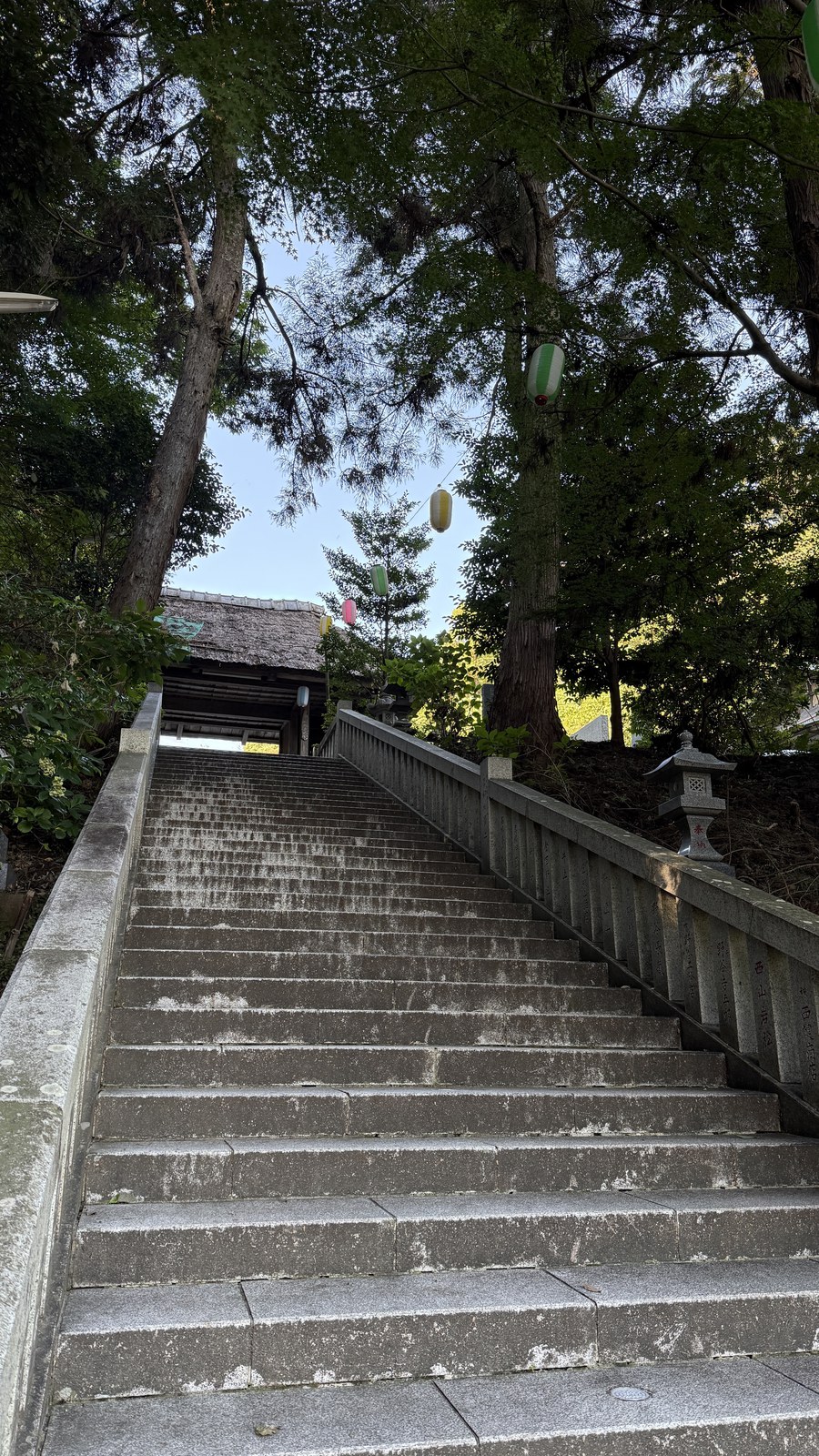
The steps beyond the torii. A roofed gate stands at the top.
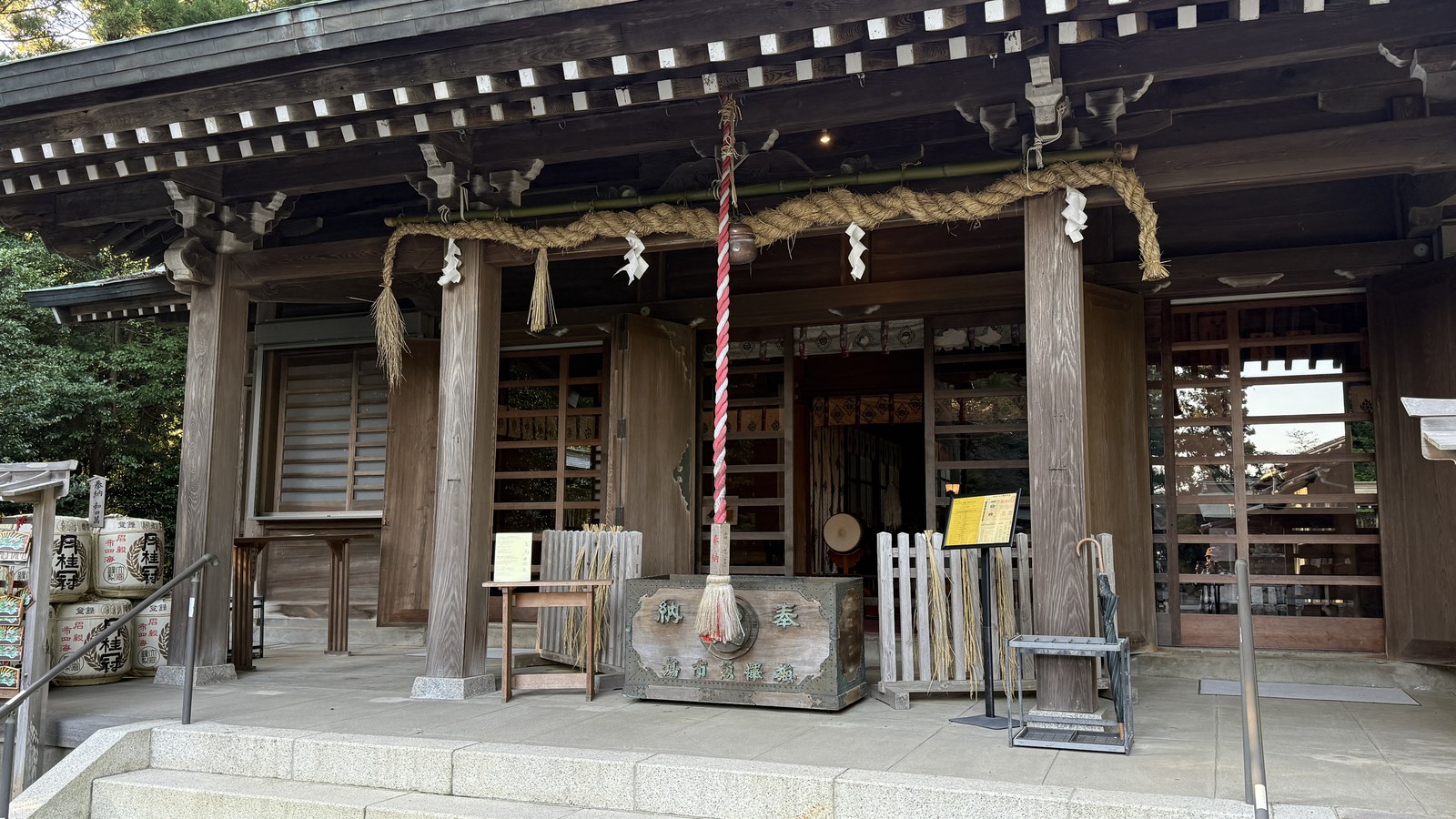
The front of the main hall, hung with a thick shimenawa and the bell rope.
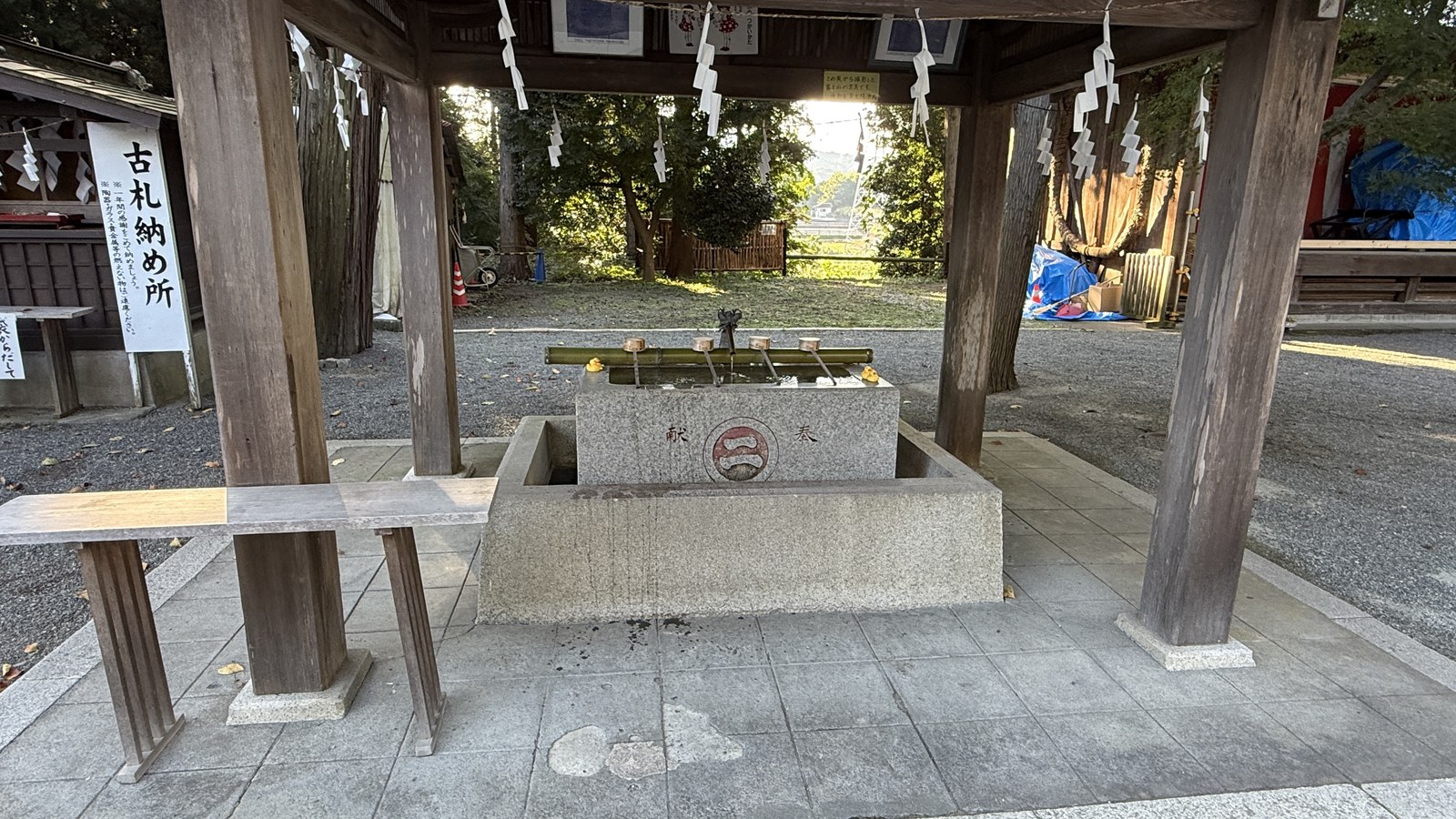
The purification pavilion, with the grounds visible between its pillars.
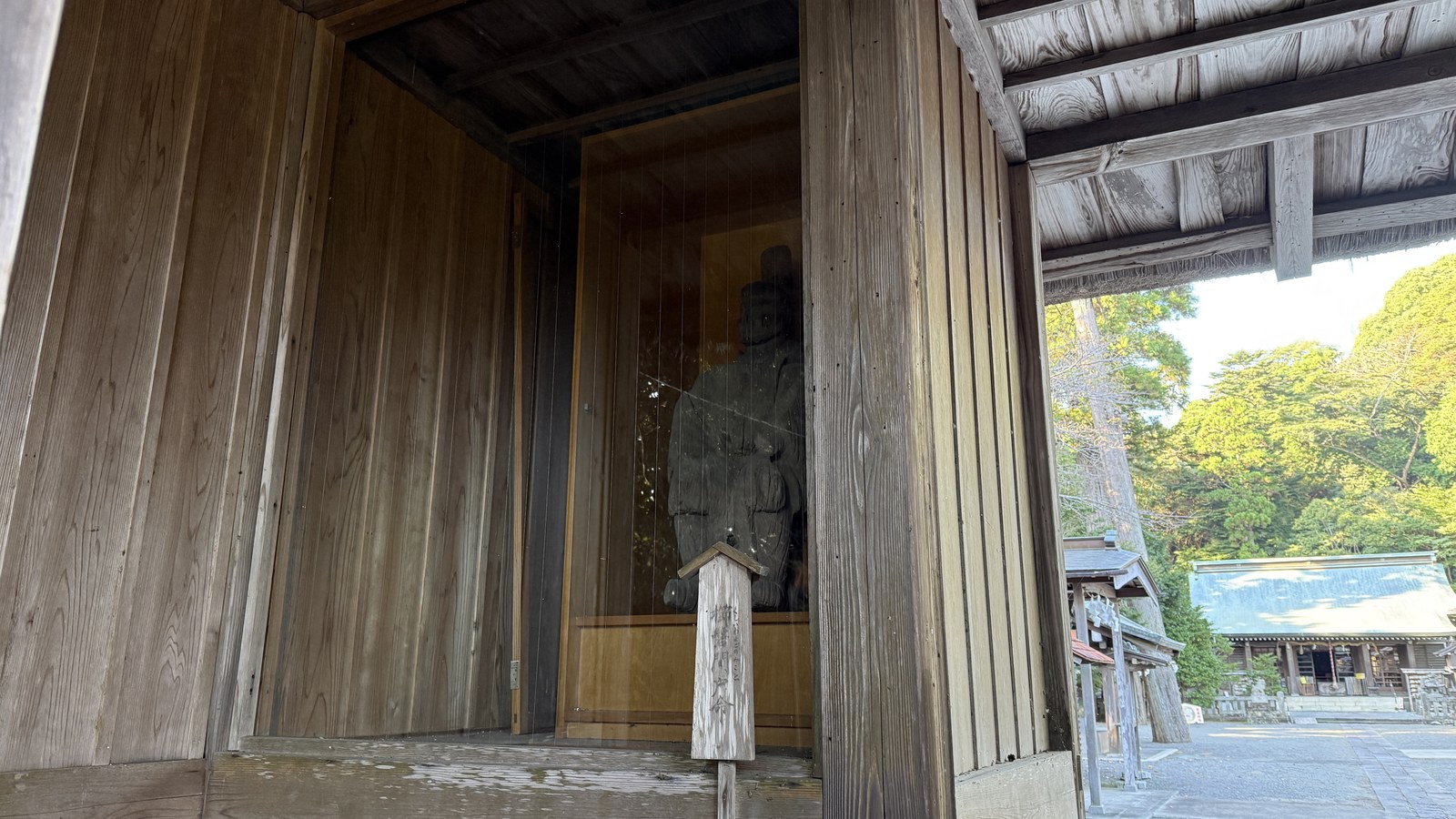
A statue in a wooden shelter beside the path, with the roof of the main hall visible beyond.
Cultural context
A ritual about who is first. Every year on 5 May, the shrines of Sagami Province (Samukawa Jinja as the first, Kawawa Jinja as the second, Hibita Jinja as the third and Sakitori Jinja as the fourth), together with Hiratsuka Hachimangu and Rokusho Jinja, gather on Kamizoroi-yama in Oiso for the Kokufu Matsuri. One part of it, the “Zamondo”, is a ritual enactment of the dispute over which shrine is first, between Samukawa Jinja and Kawawa Jinja. The seat of the deity, laid out on a tiger skin, is moved alternately to the higher position three times. Then the chief priest of Hibita Jinja mediates with the words “let us leave it until next year”.
The fact that the first shrine was never decided is acted out as a ritual every year, in a festival said to have run for over a thousand years (→ Kami, ranks and lineages: Ichinomiya).
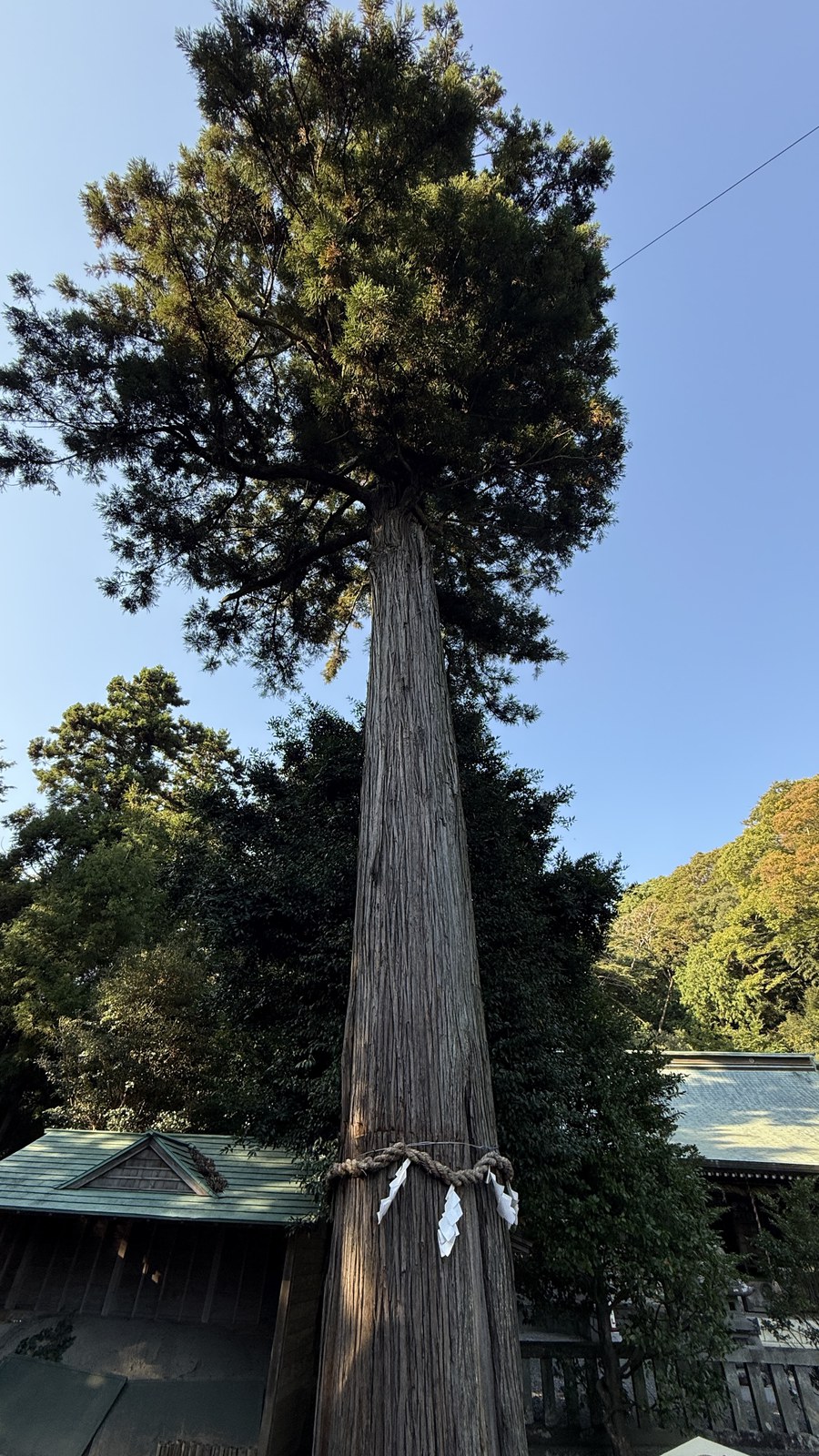
A tall tree wrapped in a shimenawa.
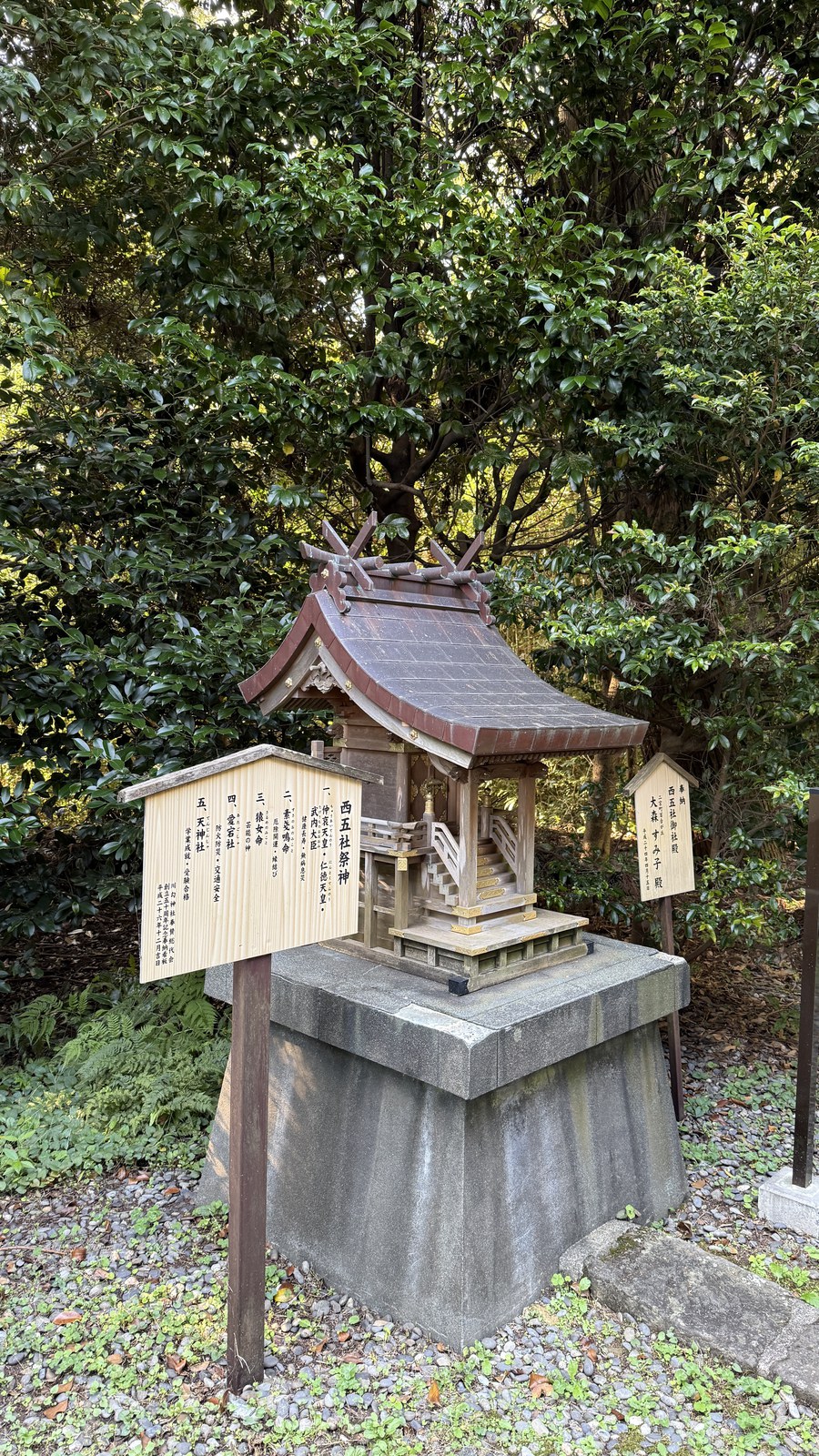
A small shrine within the grounds.