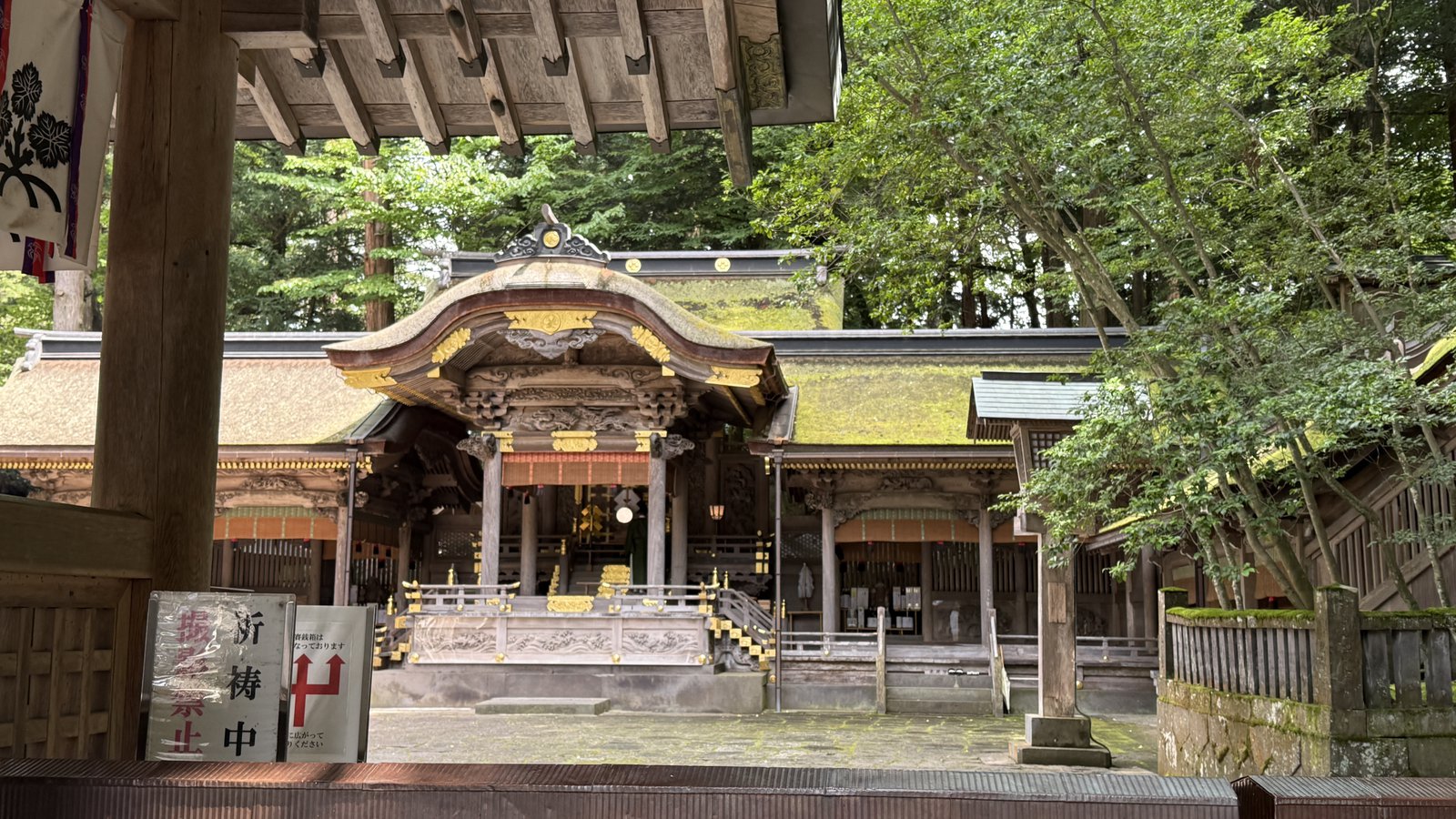
Visited in person · Original photography
Origins and founding
The ichinomiya, or first-ranked shrine, of Shinano Province. It is the head shrine of the Suwa shrines, said to number about ten thousand across Japan (according to the shrine). Its founding goes back to the transfer-of-the-land myth in the Kojiki, and it is regarded as one of the oldest shrines in Japan (according to the shrine).
The four shrines
South of Lake Suwa stand Honmiya and Maemiya, the Upper Shrine; to the north stand Harumiya and Akimiya, the Lower Shrine. Together the four are Suwa Taisha. The deities differ by shrine: Takeminakata at Honmiya, Yasakatome at Maemiya, and Takeminakata, Yasakatome and Yae Kotoshironushi at Harumiya and Akimiya (according to the shrine).
Upper Shrine: Honmiya
The deity is Takeminakata. It has no main sanctuary, and takes a mountain as its sacred object (according to the shrine).
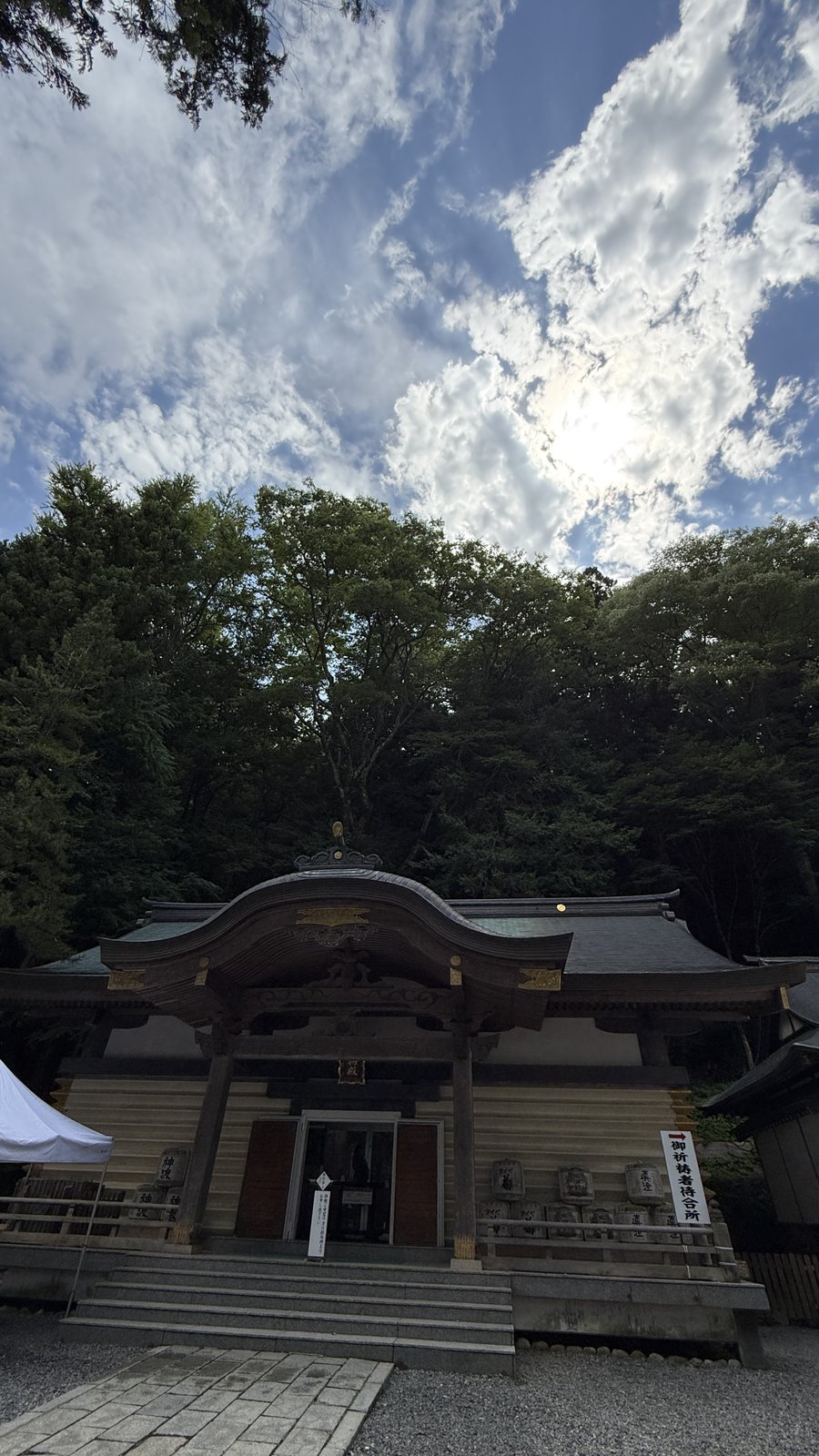
A building with a gracefully curved roof; stone steps lead up to its front.
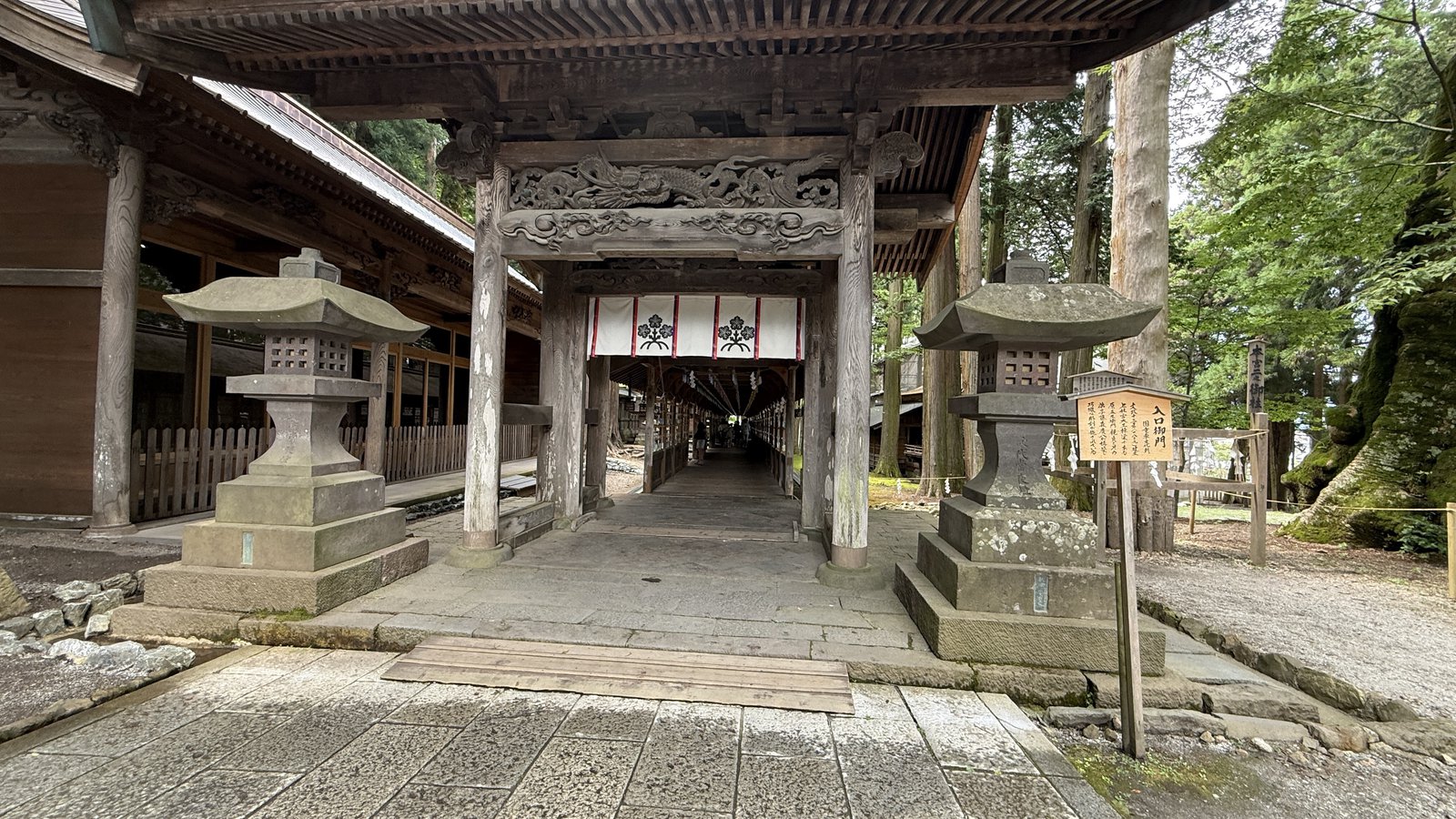
A roofed passage, with stone lanterns standing on either side.
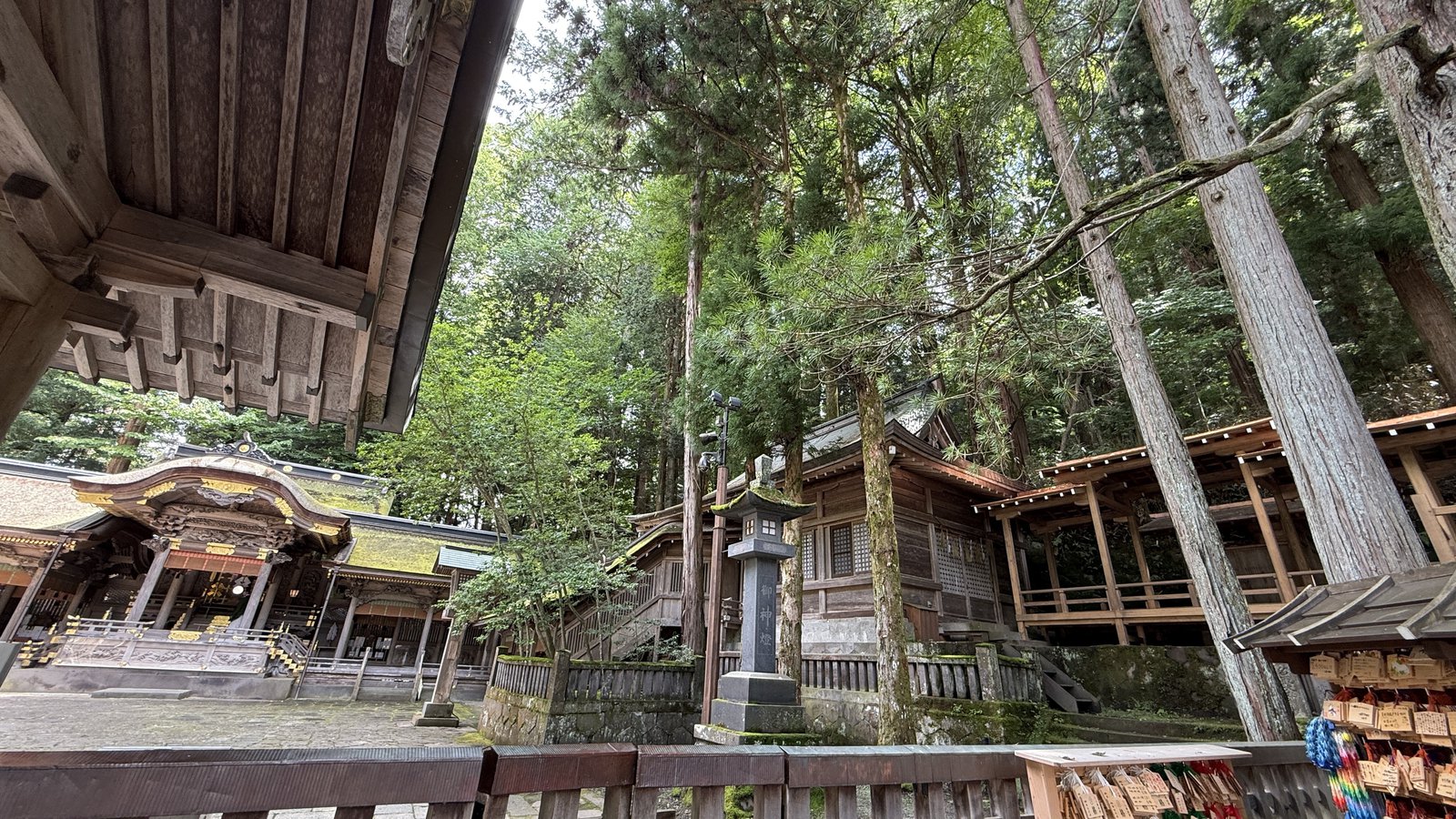
The grounds seen from beneath an eave, with votive plaques lined up on the right.
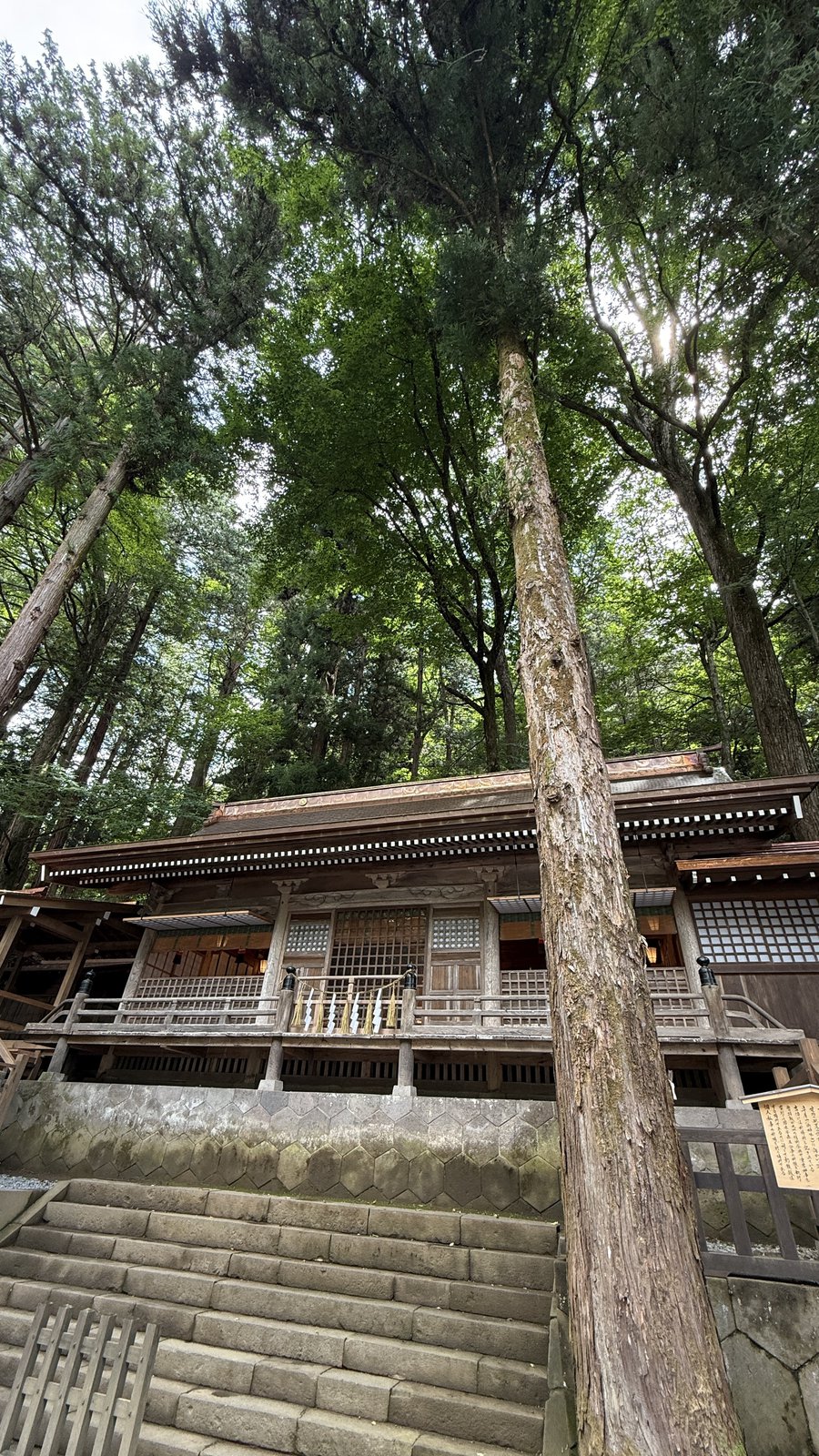
Beyond the trunk of a cedar, a building stands on a stone base.
Upper Shrine: Maemiya
The deity is Yasakatome.
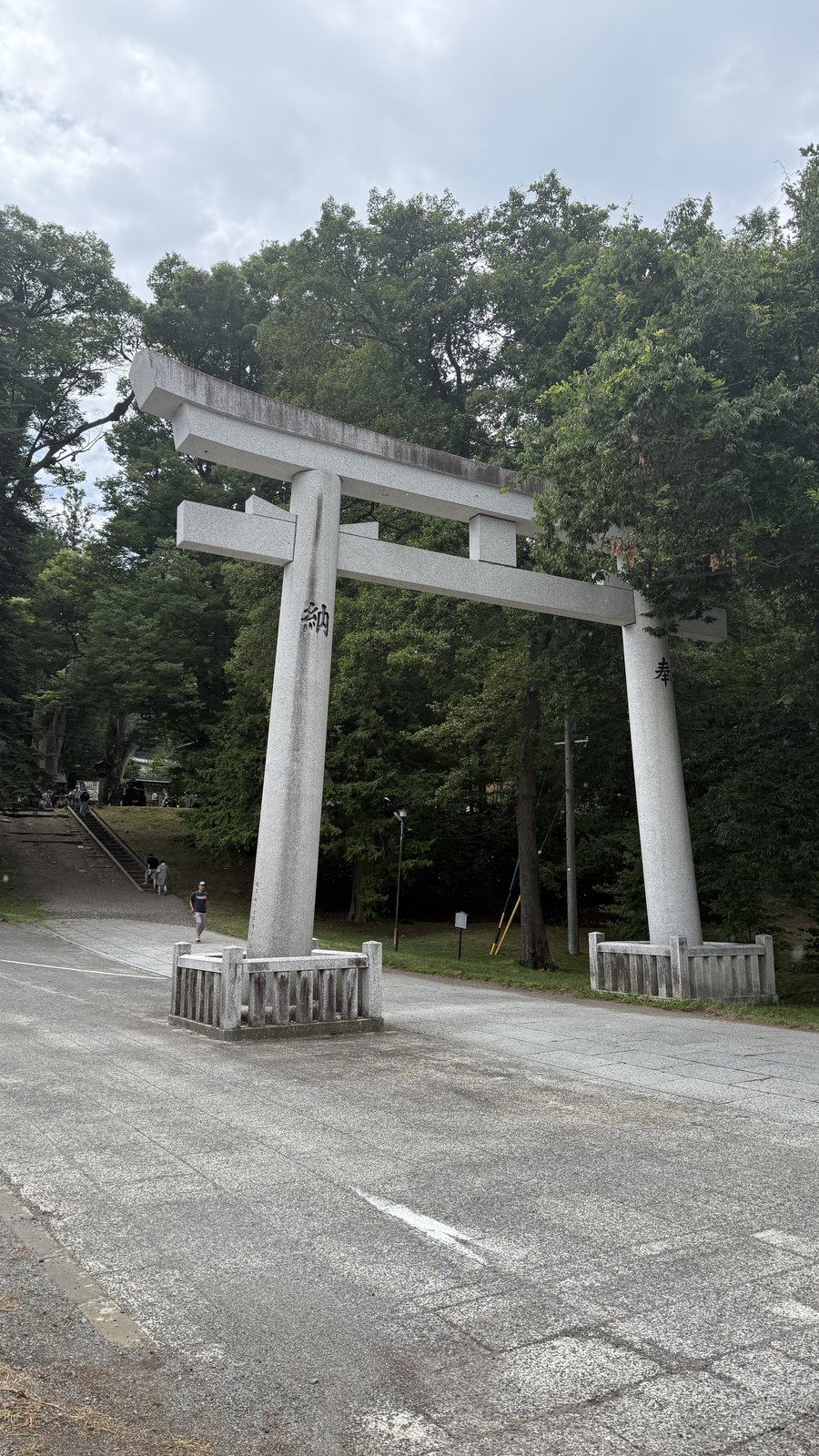
The large white torii of Maemiya.
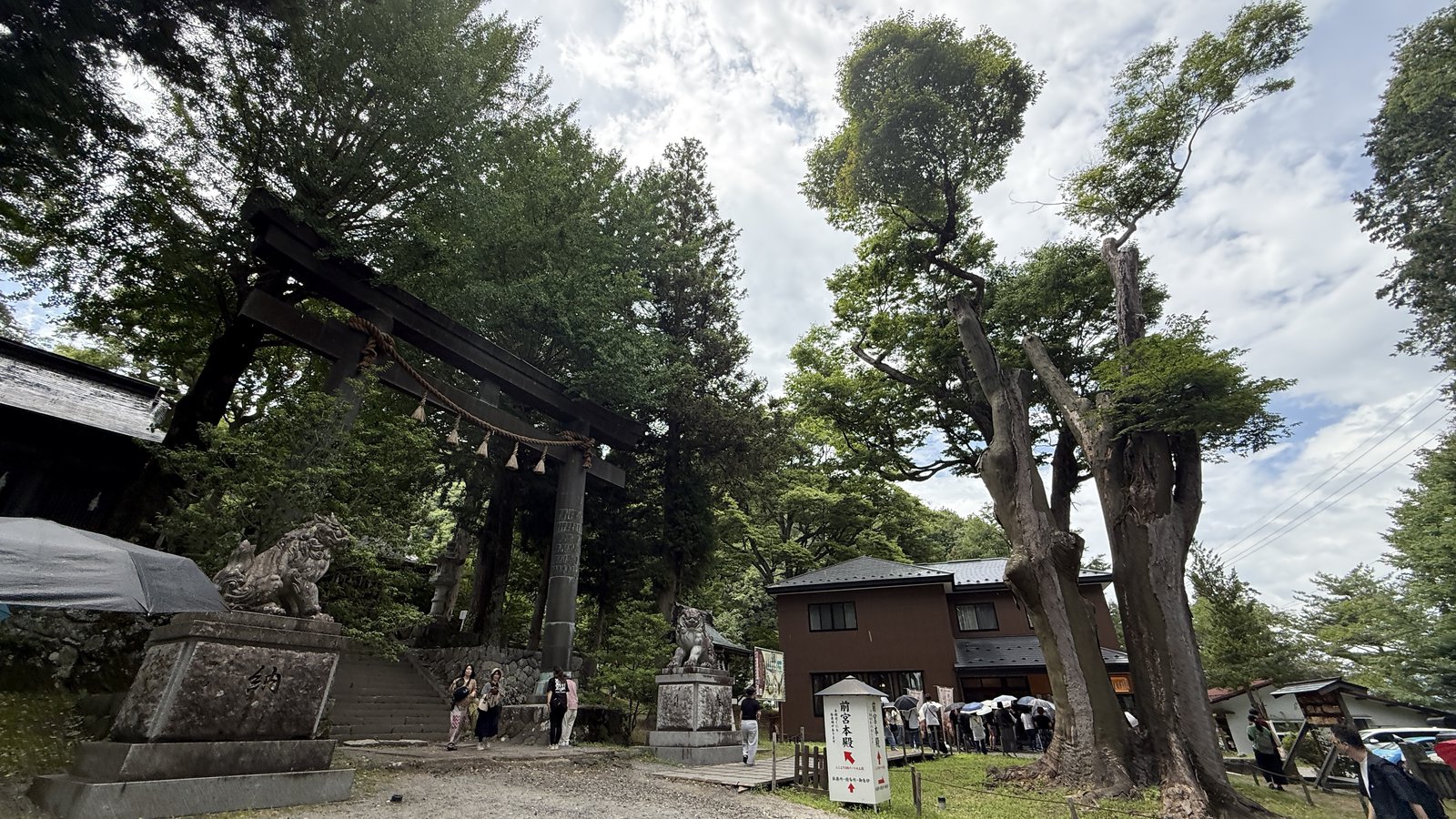
The wooden torii of Maemiya, with a komainu on either side. Two large trees stand side by side.
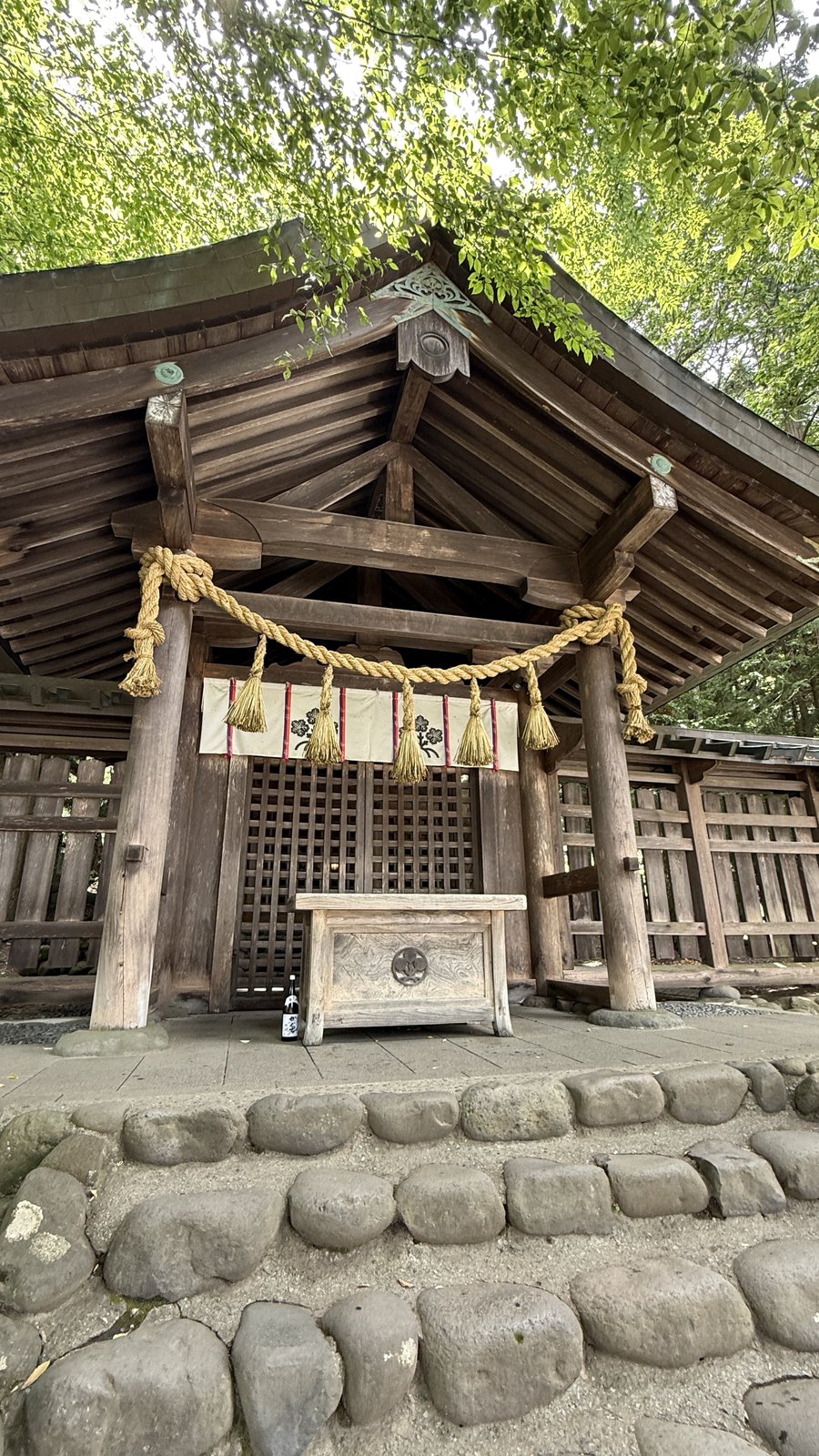
A shrine building at Maemiya, with a shimenawa and an offertory box under its eaves.
Lower Shrine: Harumiya
The deities are Takeminakata, Yasakatome and Yae Kotoshironushi. It has no main sanctuary, and takes a sacred cedar tree as its sacred object (according to the shrine). In the grounds stands an onbashira, a sacred pillar, whose plaque reads “Harumiya Ni-no-Onbashira”, the second pillar of Harumiya.
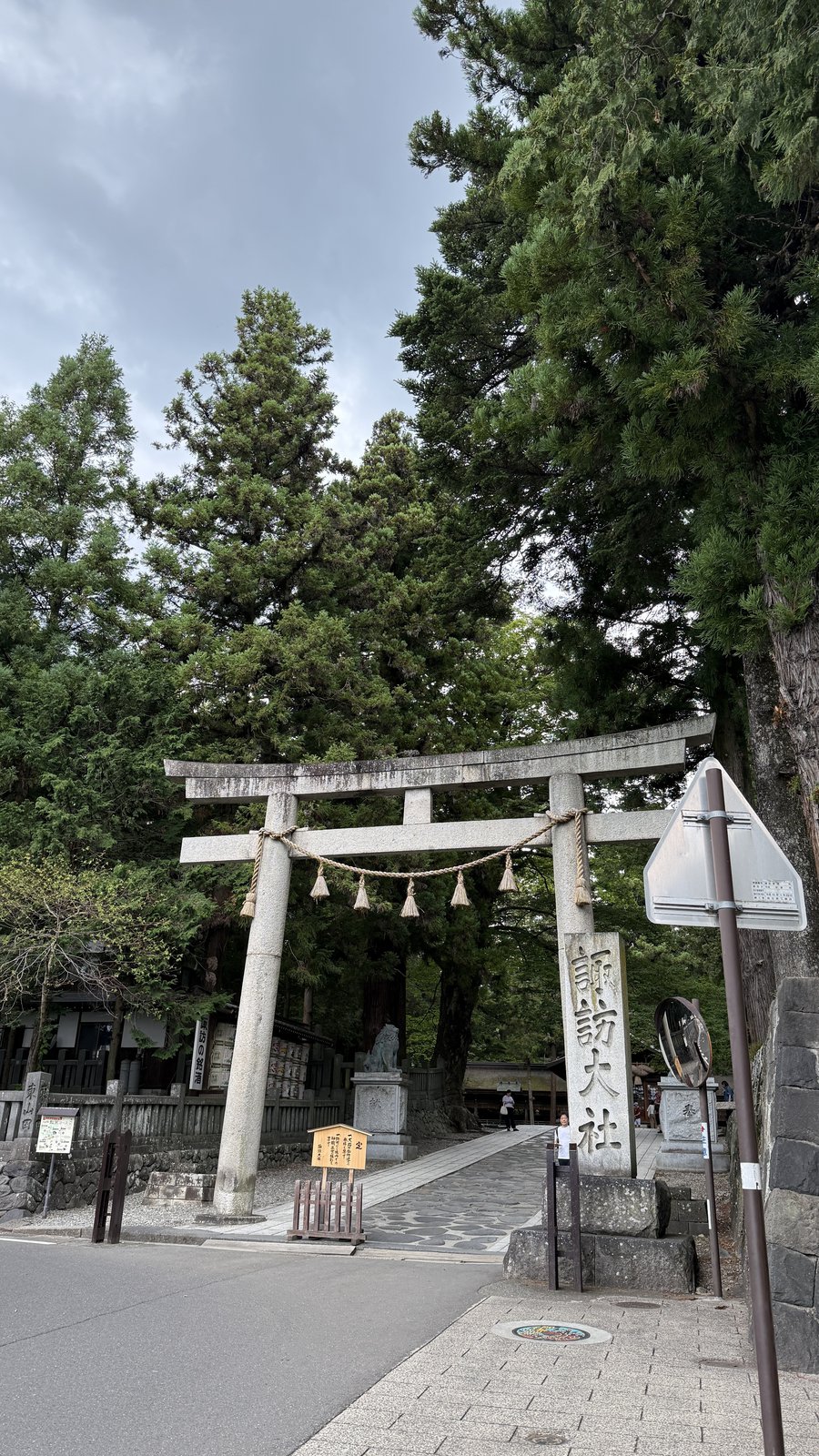
The torii of Harumiya, with a stone pillar carved “Suwa Taisha”.
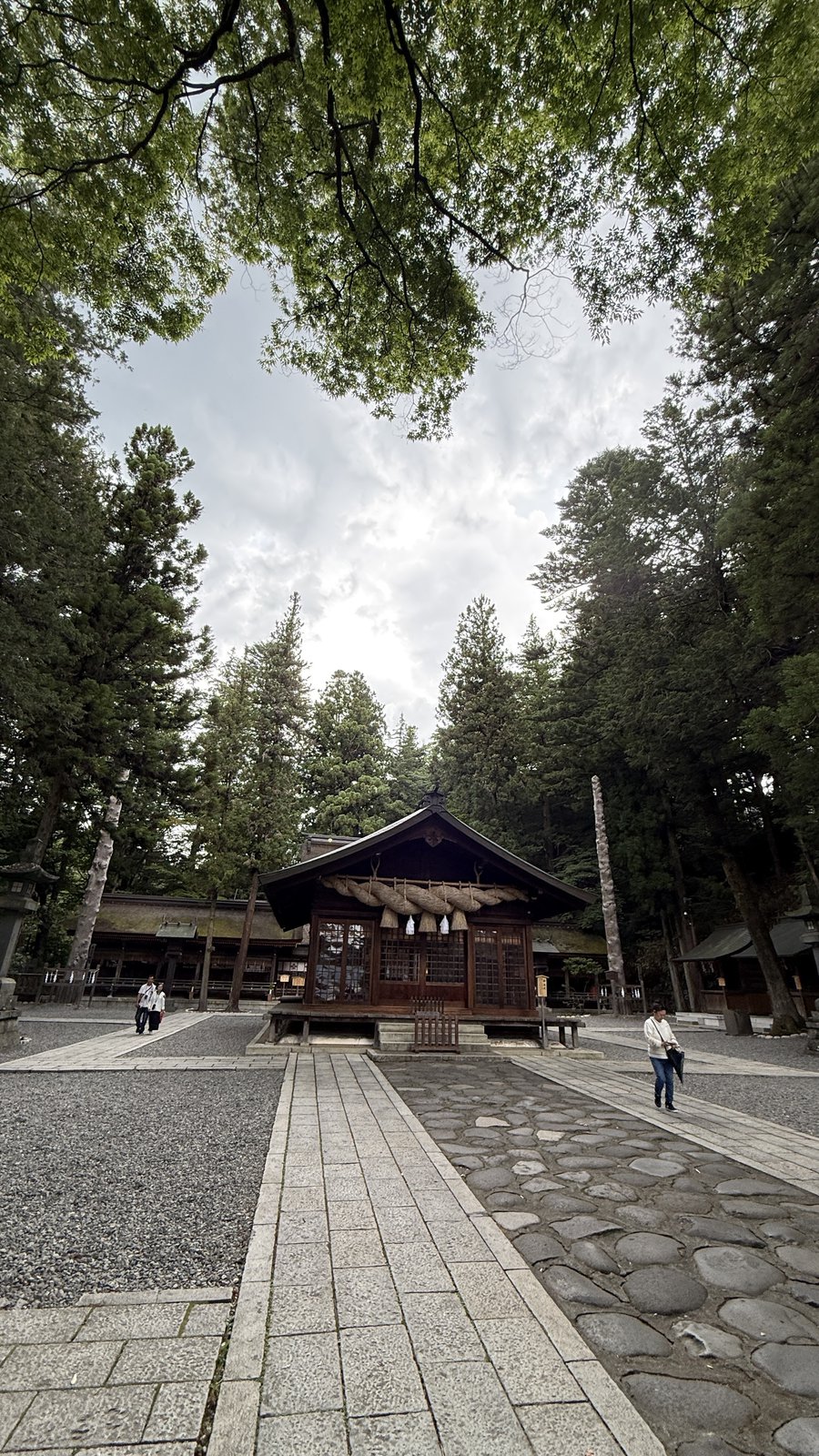
The paved approach of Harumiya. A thick shimenawa hangs from the eaves of the building at the far end.
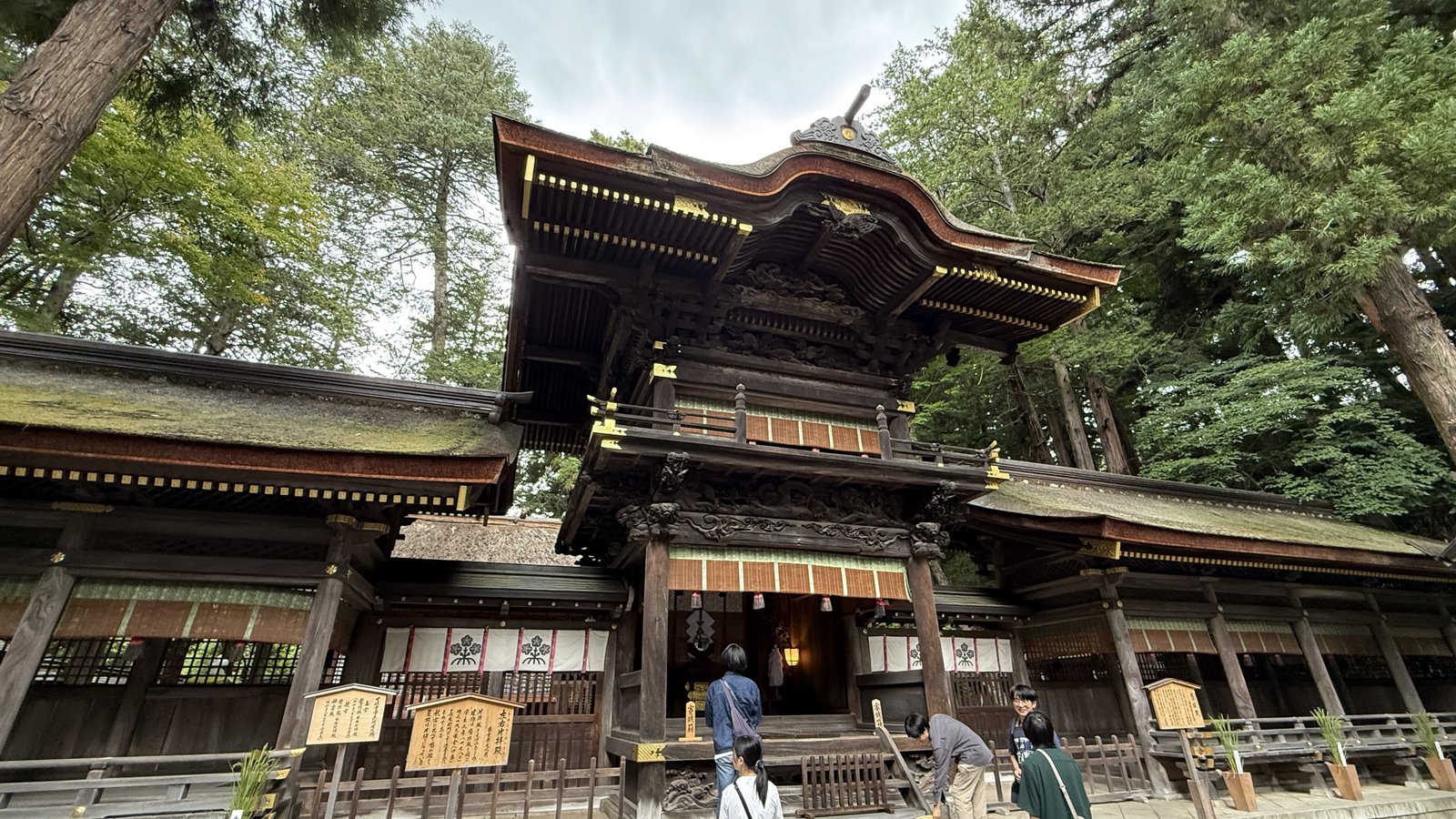
A shrine building at Harumiya, with finely carved details layered under its curved roof.
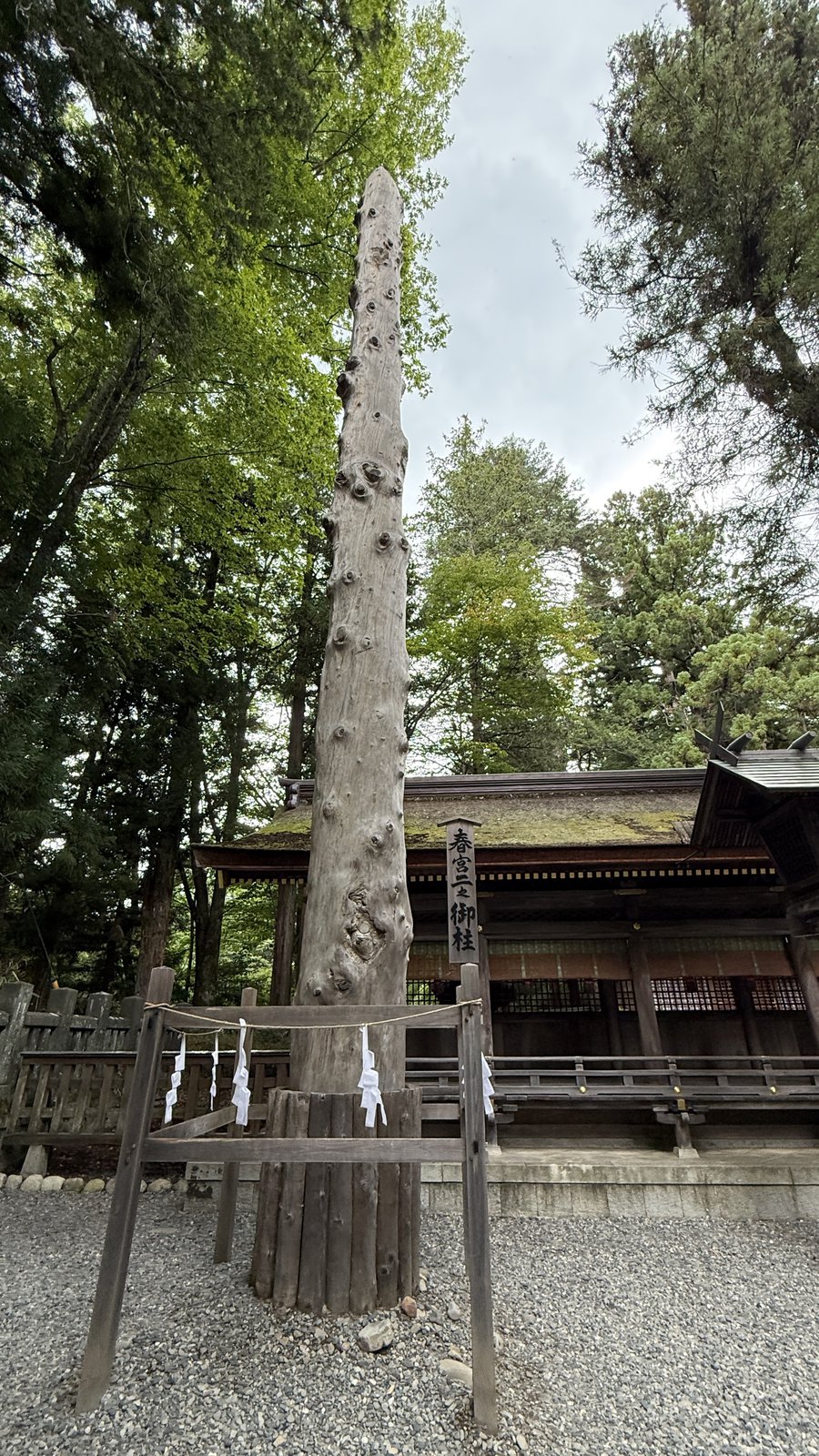
An onbashira standing in the grounds of Harumiya. Its plaque reads “Harumiya Ni-no-Onbashira”.
Lower Shrine: Akimiya
The deities are the same as at Harumiya. It has no main sanctuary, and takes a sacred yew tree as its sacred object (according to the shrine).
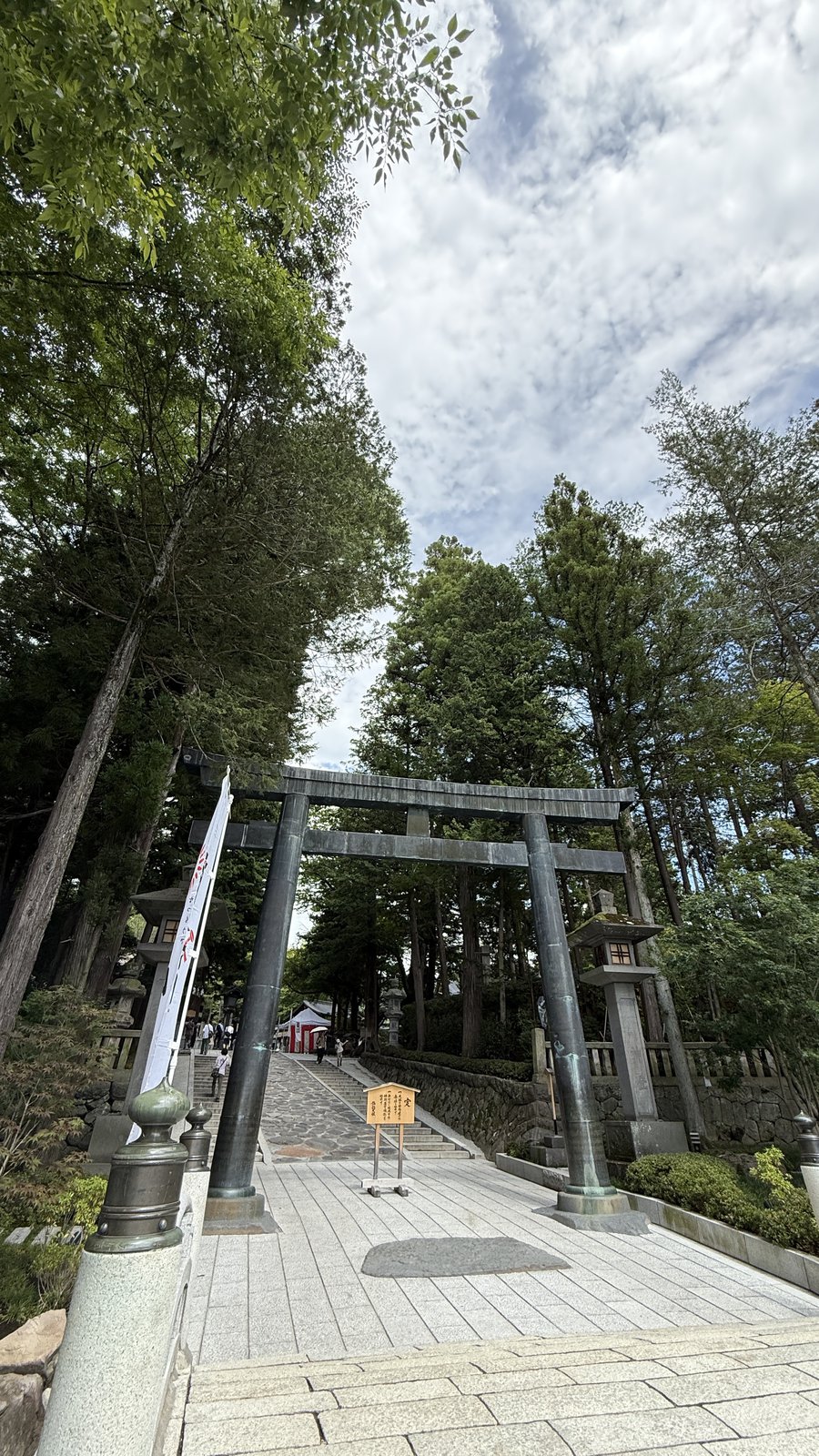
The torii of Akimiya, and the paved approach continuing beyond it.
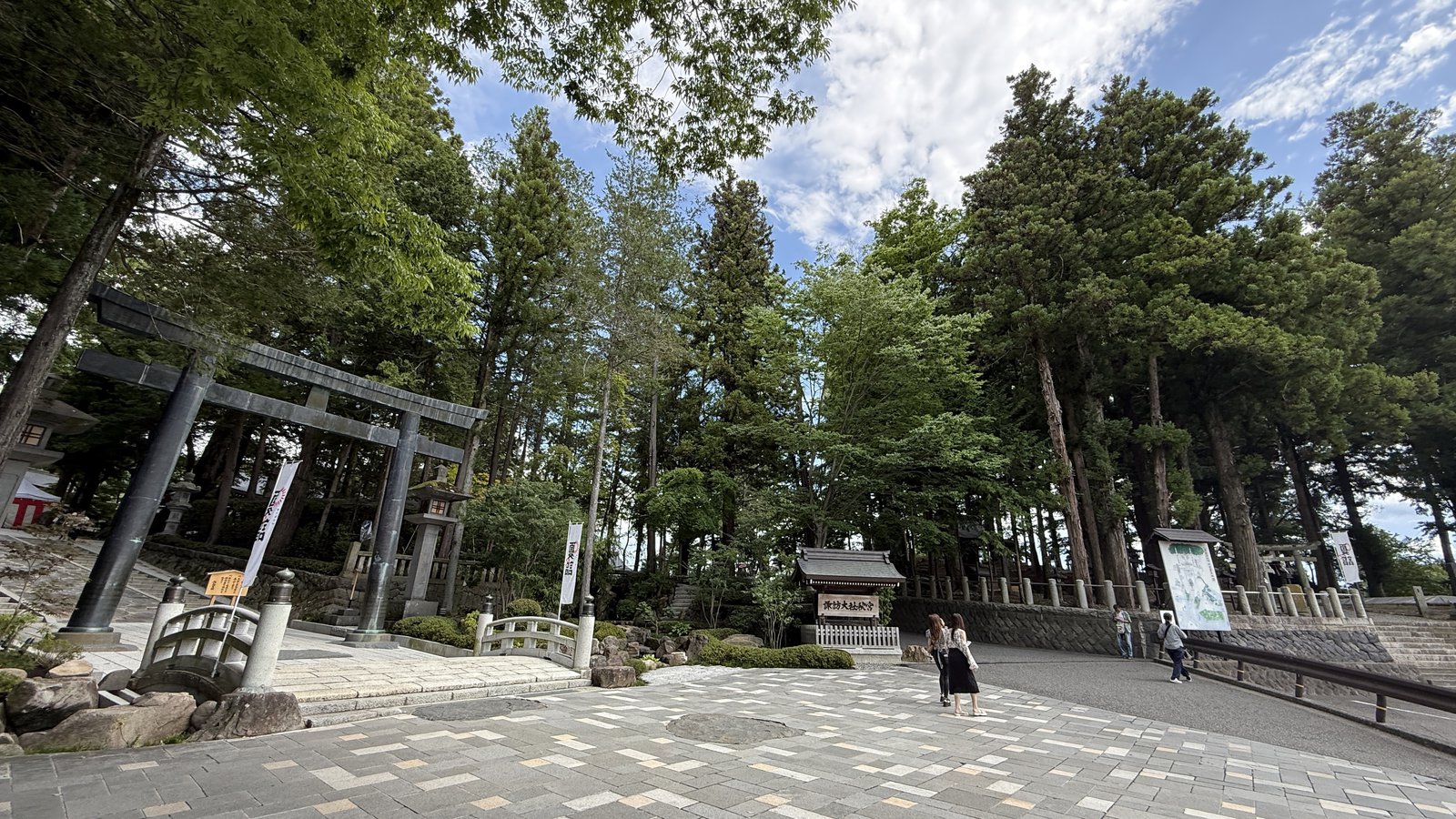
A stone bridge and a torii, with a small shrine beyond.
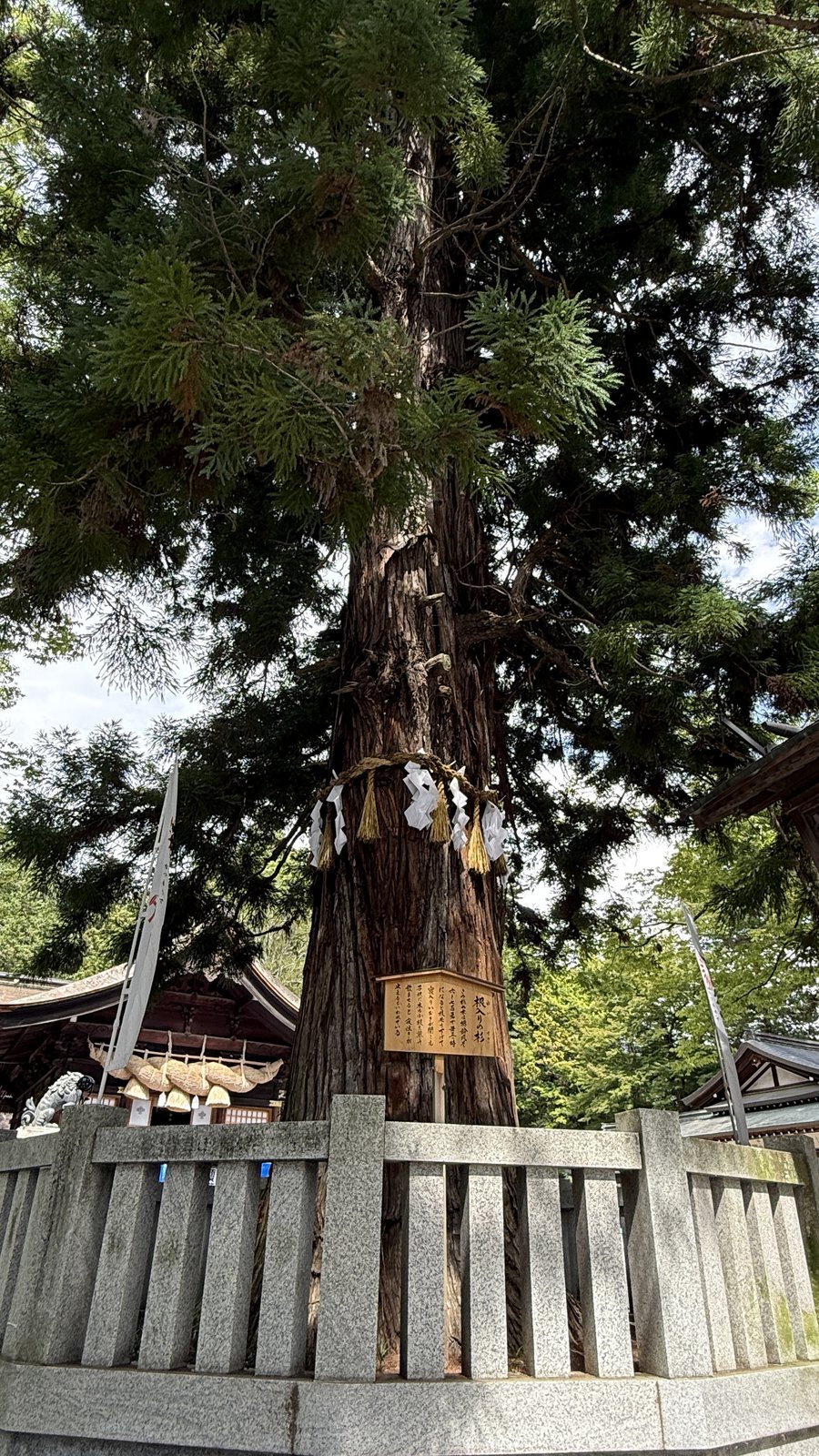
A large tree inside a fence, with a shimenawa around its trunk.
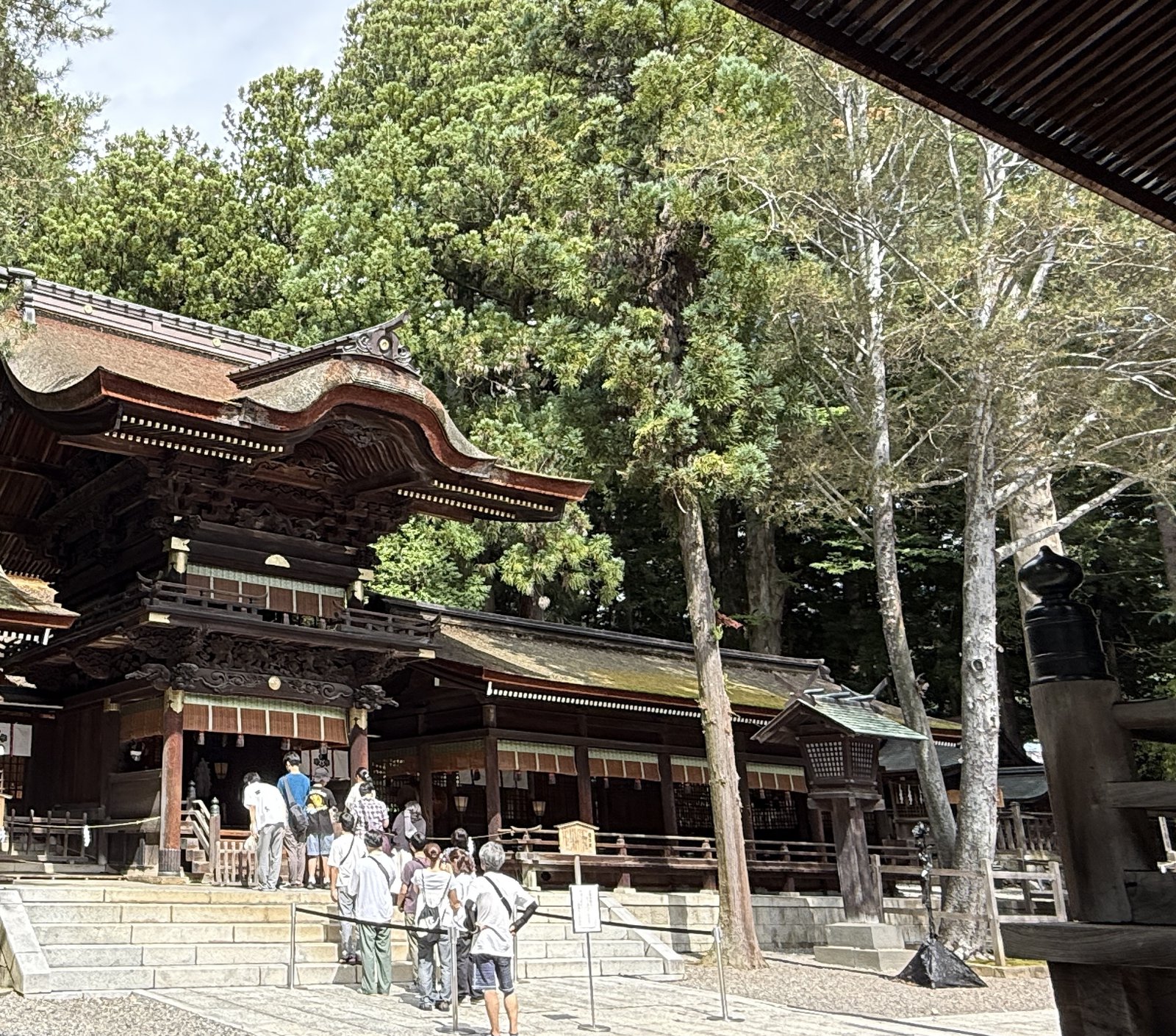
The Heihaiden of Akimiya. Worshippers gather before a building of curved roofs and layered carving.
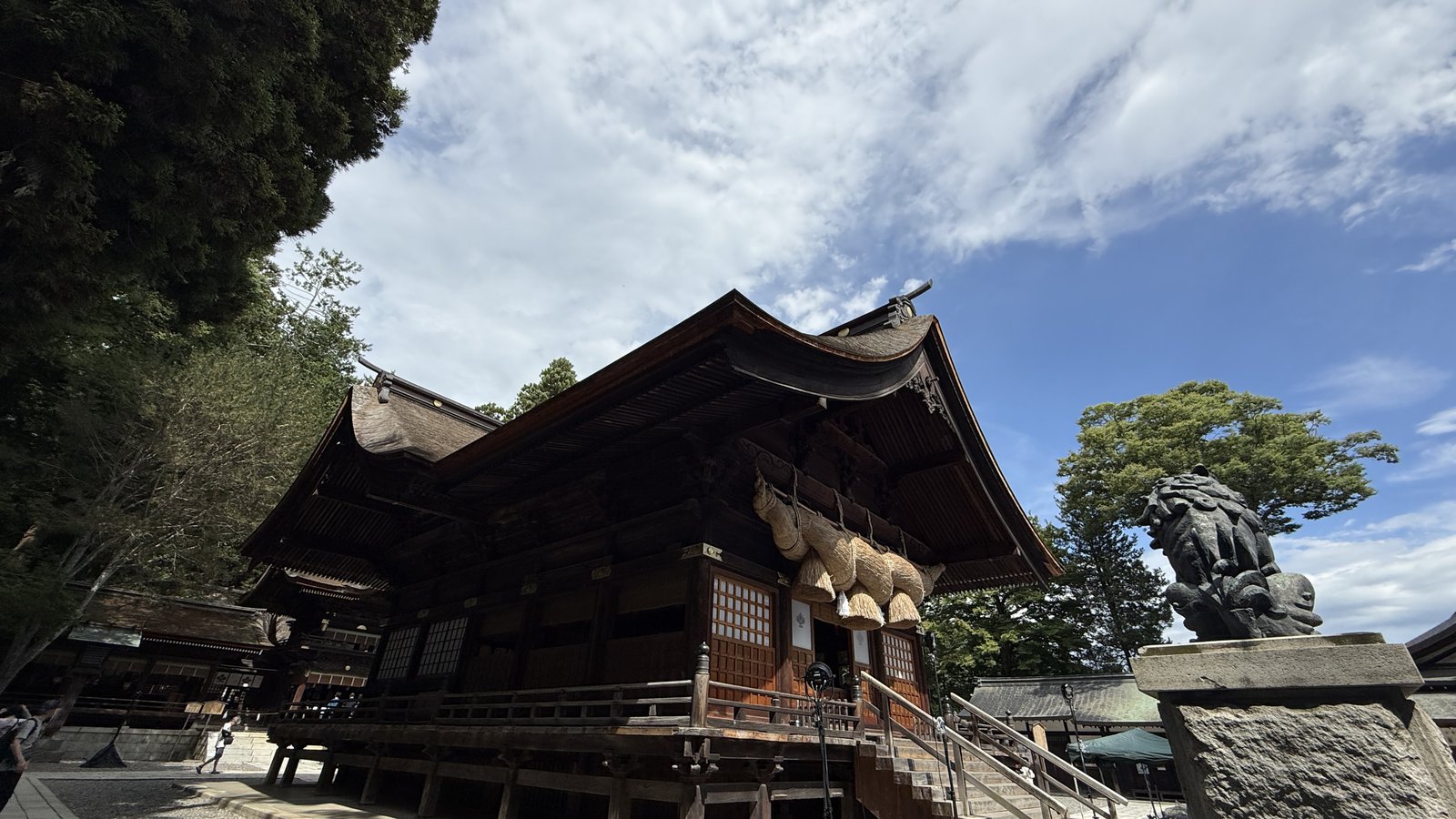
A building with a large shimenawa hanging from its eaves, and a komainu in the foreground.
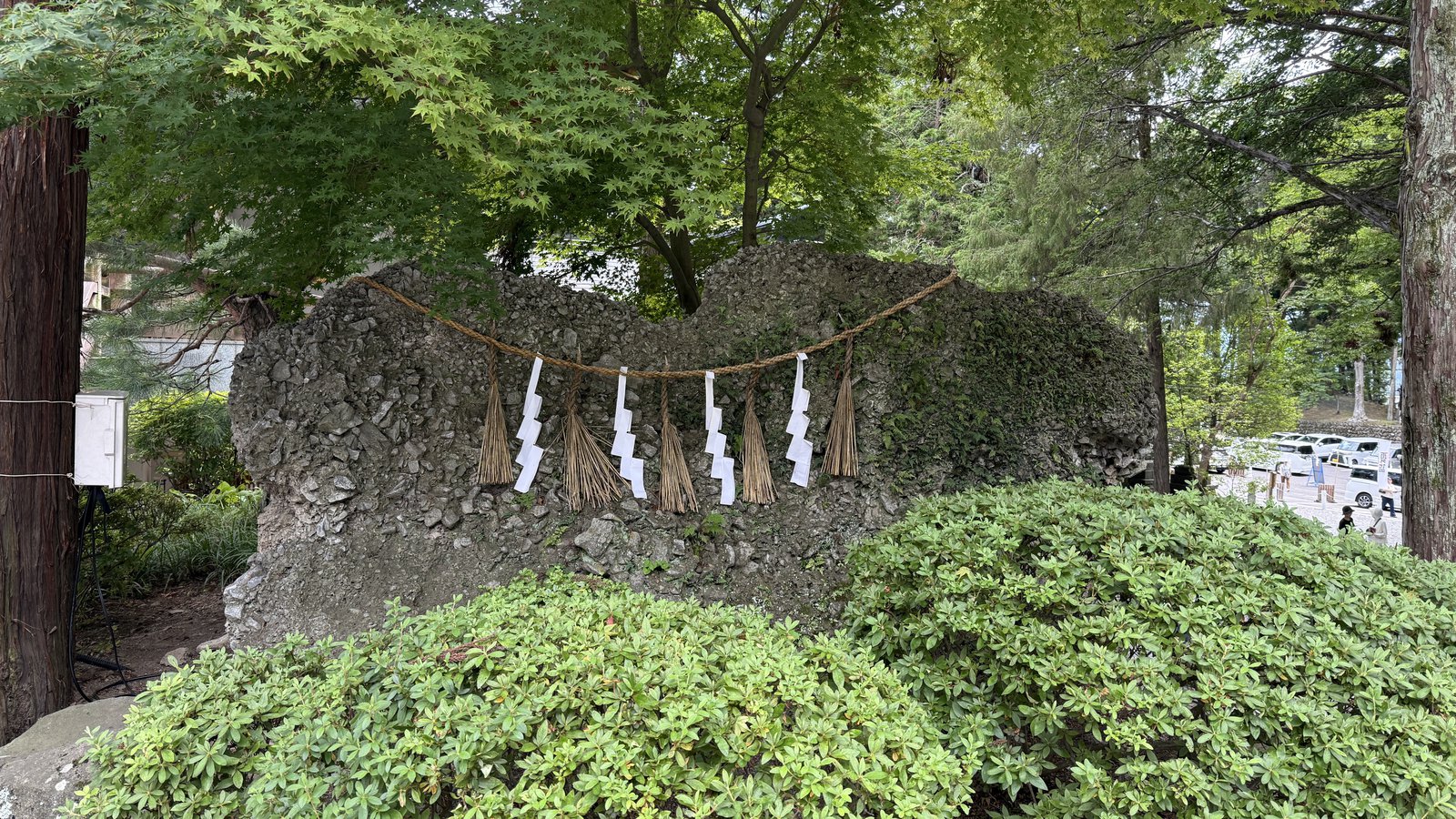
A large rock with a shimenawa hung across it.
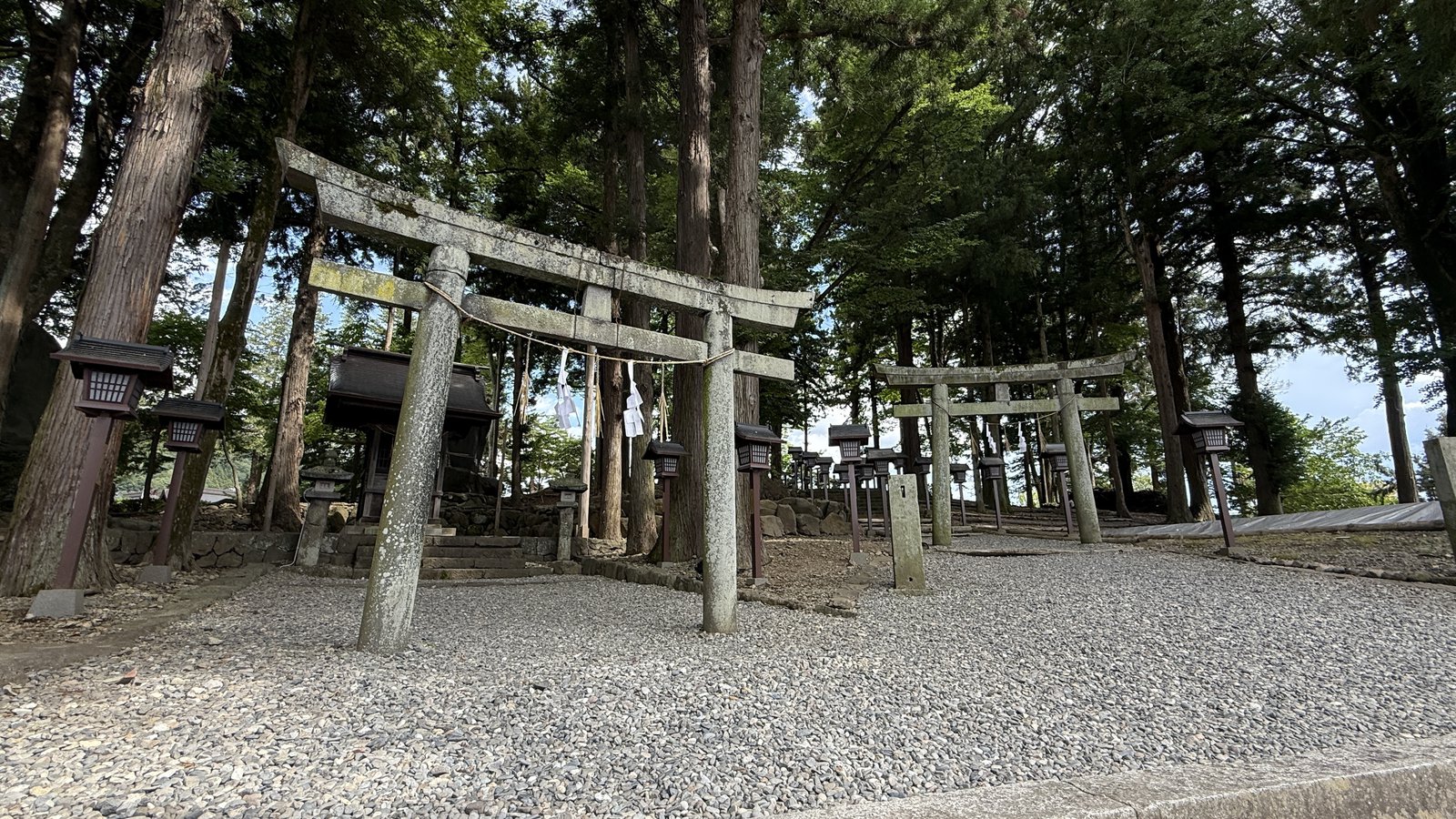
A small precinct lined with stone torii, with a shrine and stone lanterns.
Cultural context
A shrine with no main sanctuary. Honmiya, Harumiya and Akimiya have no main sanctuary: the Upper Shrine takes a mountain as its sacred object, and the Lower Shrine a sacred tree (a cedar at Harumiya, a yew at Akimiya). It is an old form of belief that worships nature itself (according to the shrine). (→ Torii and shrine grounds)
The Onbashira. The Shikinen Zoei Onbashira Taisai is held every seventh year, in the years of the Tiger and the Monkey (according to the shrine). The next is in 2028 (Reiwa 10, a Monkey year).
The deity Takeminakata is the god who resisted to the end in the transfer-of-the-land myth. He is said to have been defeated and fled to Shinano (→ Kami, ranks and lineages: the skeleton of the myths).