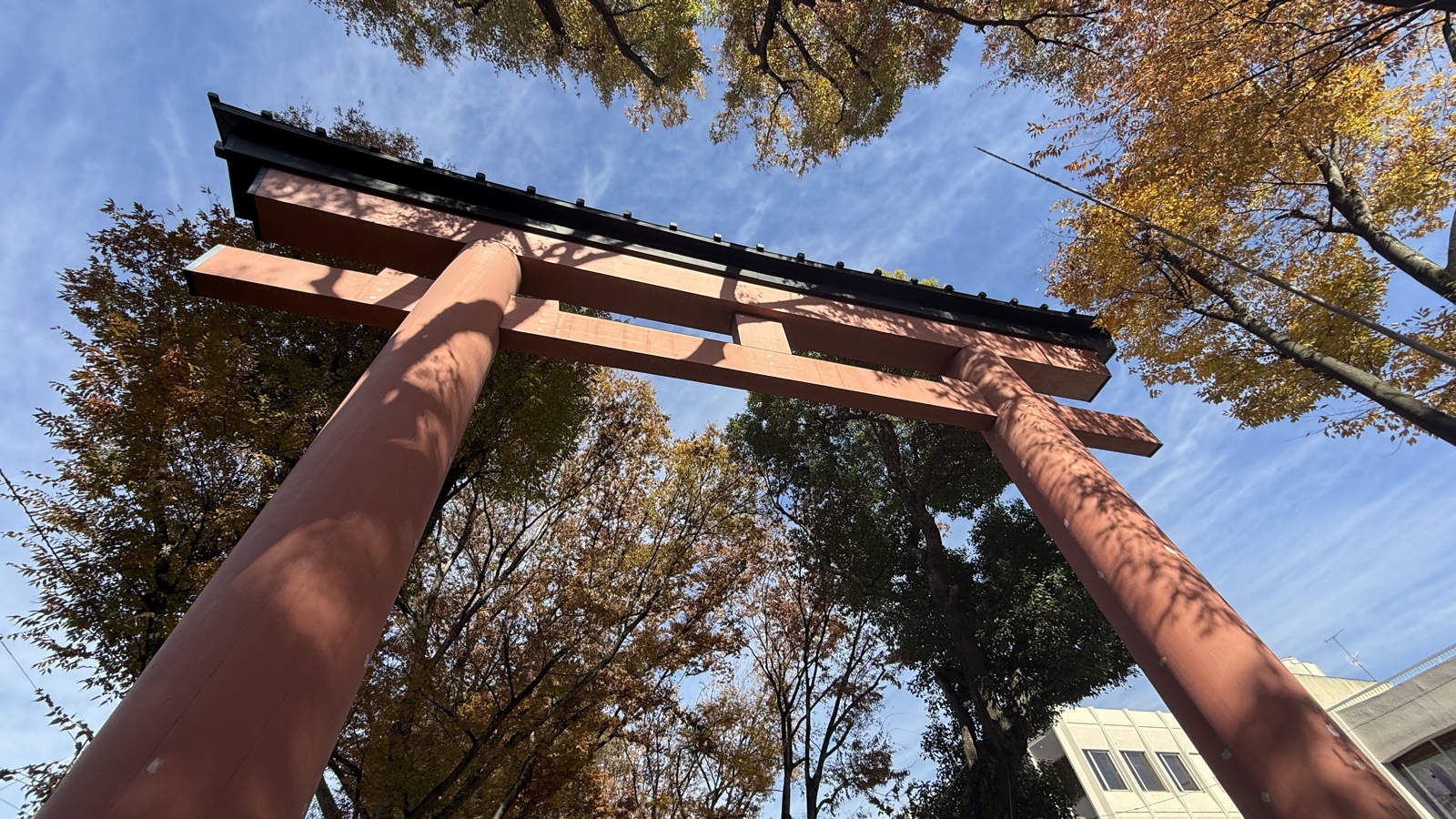
Visited in person · Original photography
Origins and founding
The first-ranked shrine (ichinomiya) of Musashi Province. Around 280 Hikawa shrines, concentrated in the Kanto region, are said to have been divided off from this shrine.
In 1868, shortly after moving to Tokyo, Emperor Meiji — the same emperor enshrined at Meiji Jingu — designated it the guardian shrine of Musashi Province and a chokusaisha, a shrine where an imperial envoy attends the main festival, and travelled to Omiya himself to perform the rite. It was the first time an emperor had personally conducted a festival at a shrine in the Kanto region.
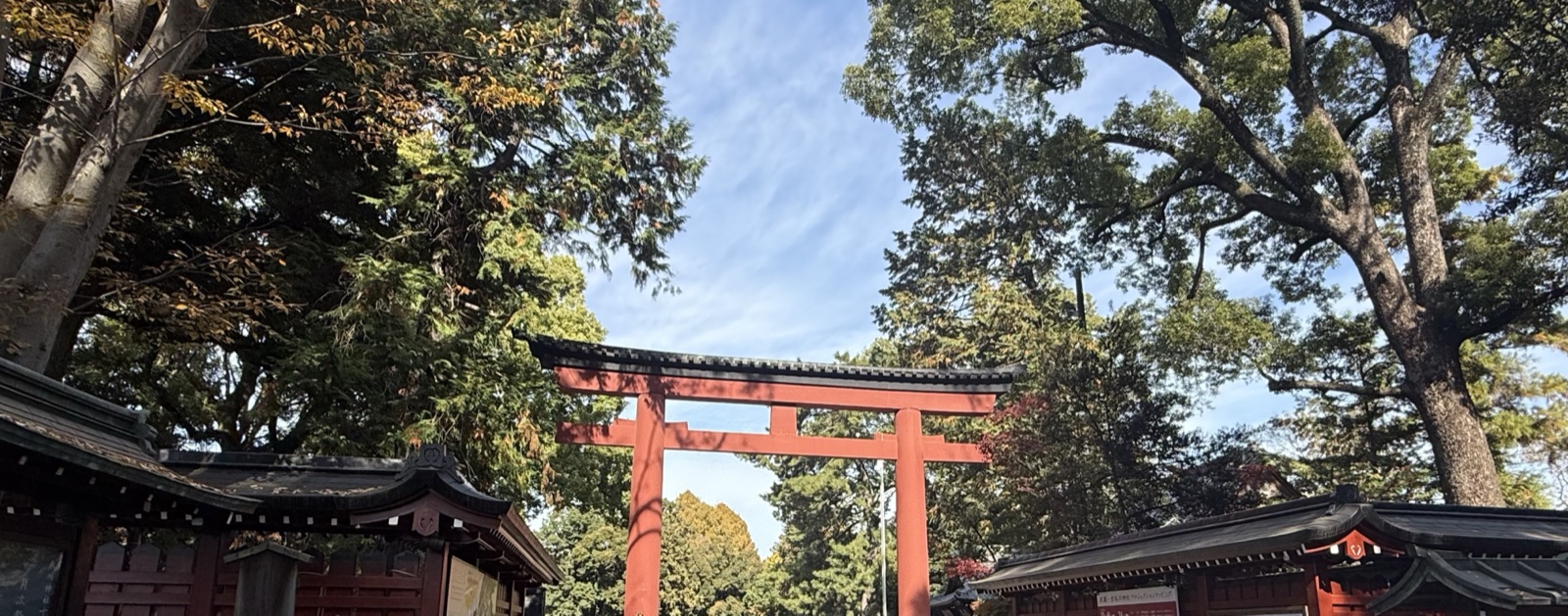
One of several torii lining the long approach, with the bearing of an ancient shrine.
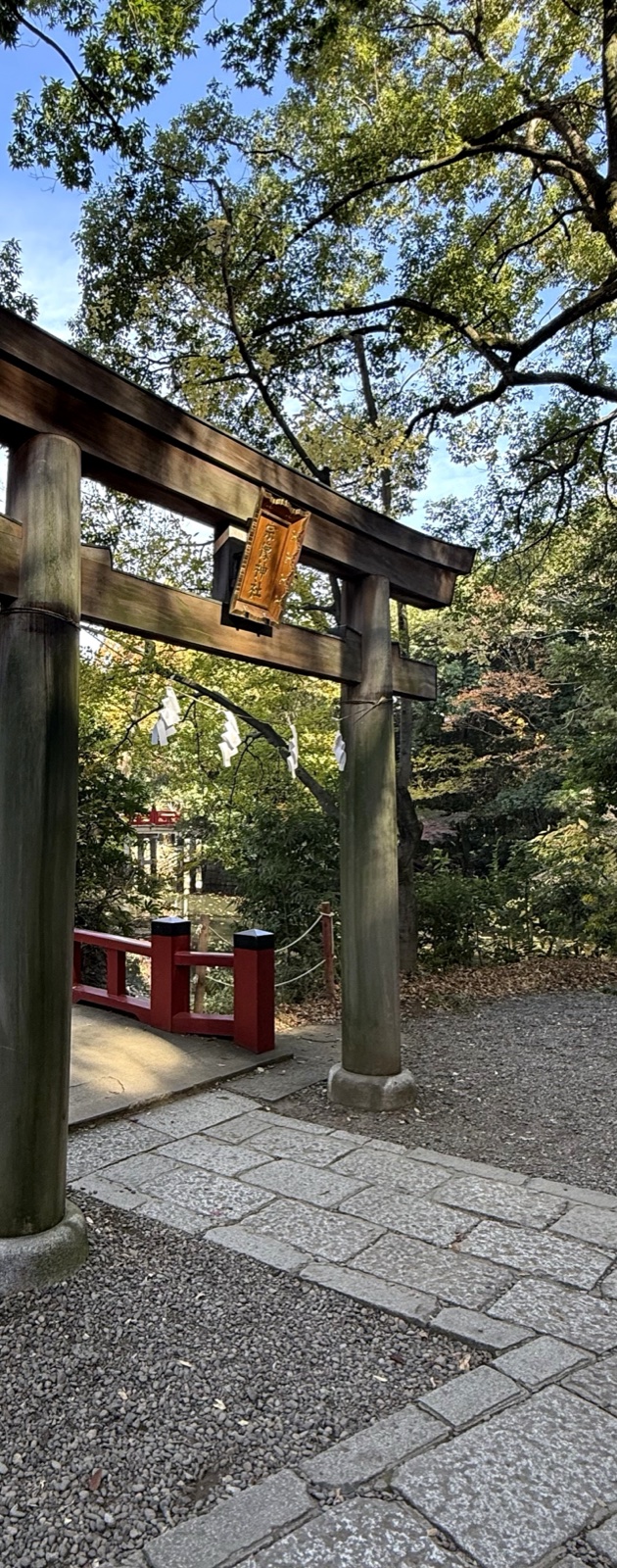
A torii bearing the shrine's name plaque, with a vermilion bridge visible beyond the gate.
What to see
An approach of about 2 kilometres, said to be among the longest of any shrine in Japan / the third torii / Snake Pond, a spring within the grounds / Omiya Park, spreading east of the approach — once part of the shrine's own forest.
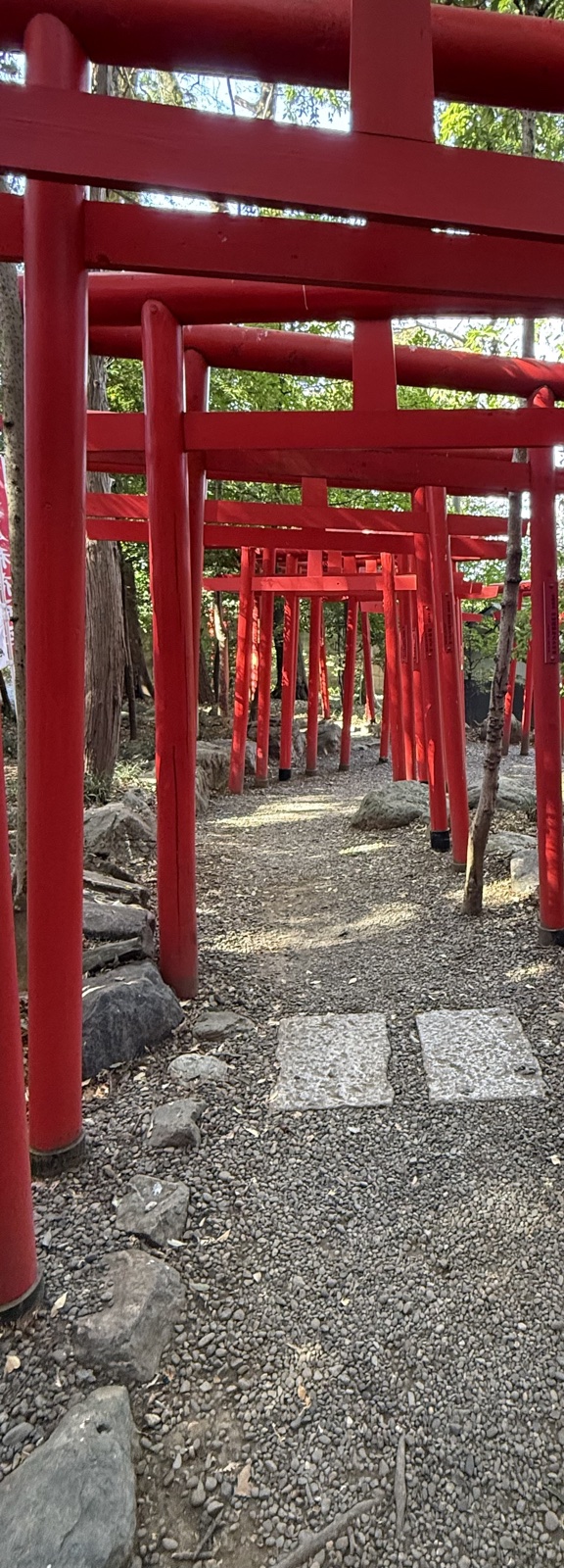
Rows of vermilion torii on the grounds, each pillar bearing the name of the person who offered it.
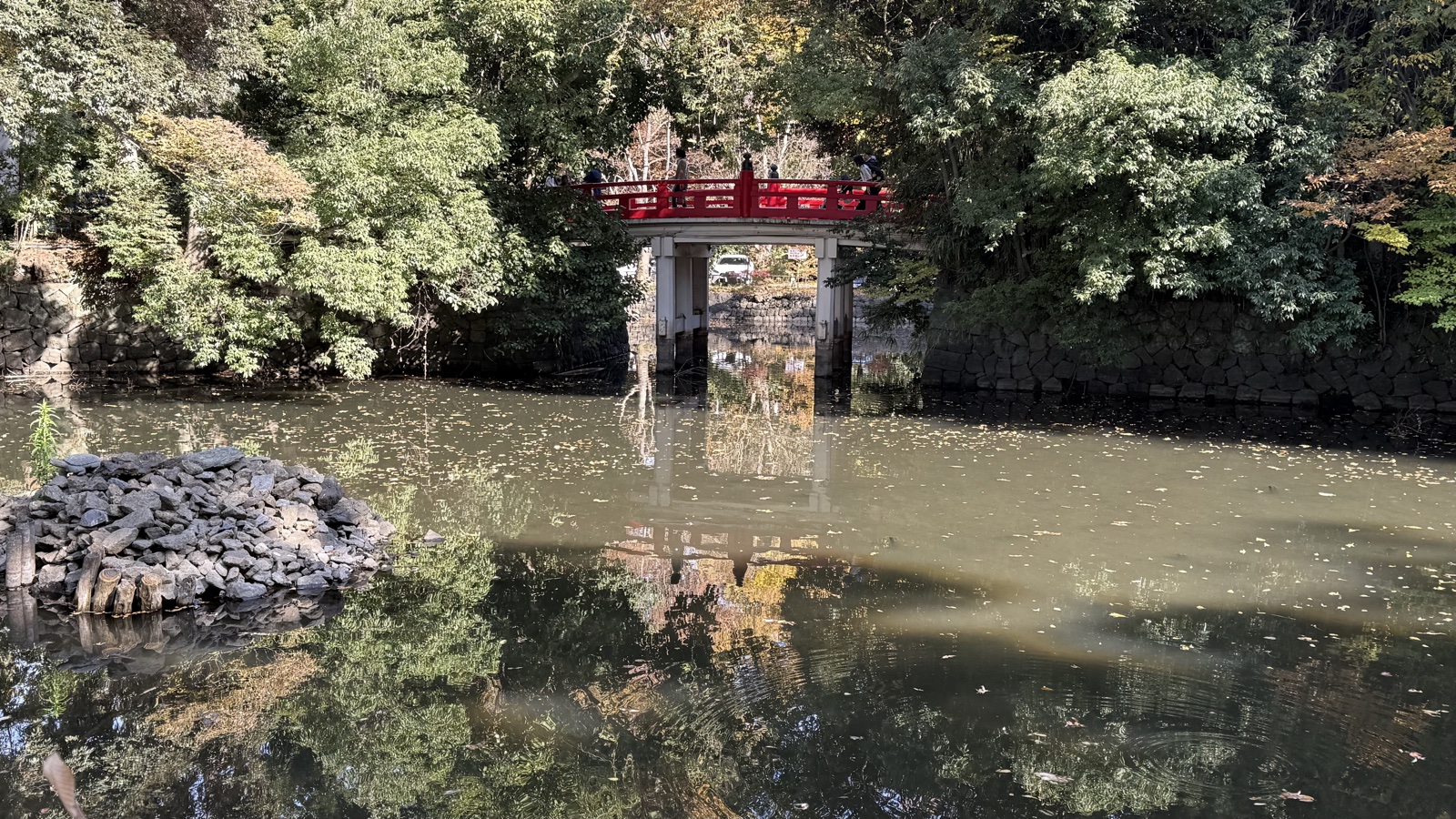
A vermilion bridge over a spring-fed pond on the grounds, said to be the Snake Pond (Hebi no Ike).
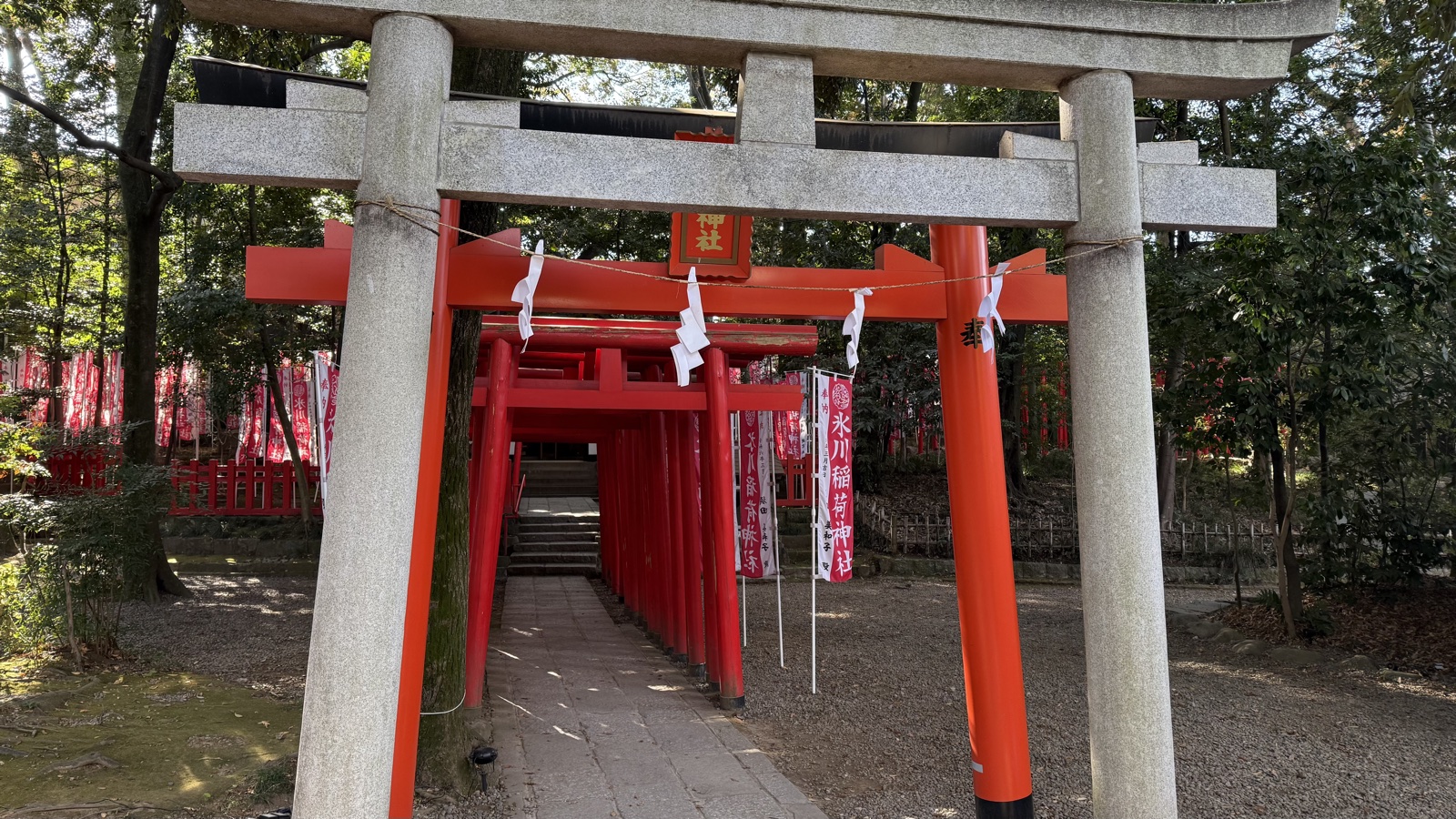
A row of vermilion torii leading to Hikawa Inari Jinja, one of the sub-shrines within the grounds.
Visiting Tips
The approach is long — a straight, tree-lined path from the middle of Omiya all the way to the shrine. It is not a walk to hurry, and it is the length itself that stays with you. By the time you reach the hall, the walk has become part of the visit.
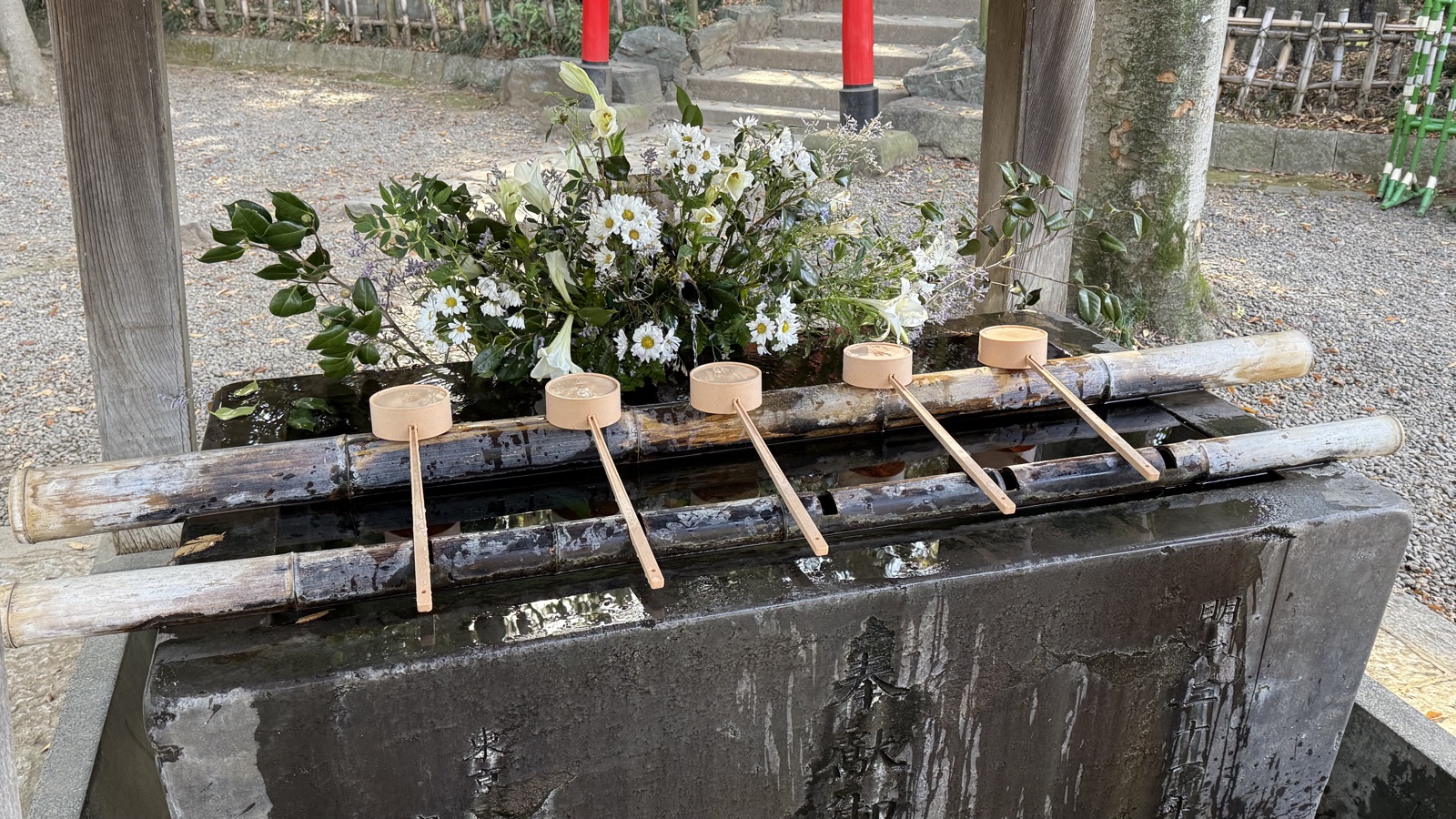
The temizuya, the purification fountain at the start of worship, decorated with seasonal flowers.
Cultural context
The place name Omiya is said to come from this shrine, once called "the great shrine" (o-miya) — the town took its name from the shrine, not the other way around.
Different traditions name different shrines as the ichinomiya of Musashi. Hikawa Jinja calls itself the ichinomiya of Musashi today, while in the six-shrine enshrinement at Okunitama Jinja in Fuchu, Ono Jinja is listed first and Hikawa third (see the article Kami, ranks and lineages — Samukawa Jinja and Tsurugaoka Hachimangu both claim ichinomiya of Sagami Province in the same way).
And part of the forest became a park. In the early Meiji era, part of the shrine's forest was ceded to the state, and in 1885 it opened as Hikawa Park — today's Omiya Park. Walking from the approach into the park, you can trace on foot how far the shrine's forest once reached.
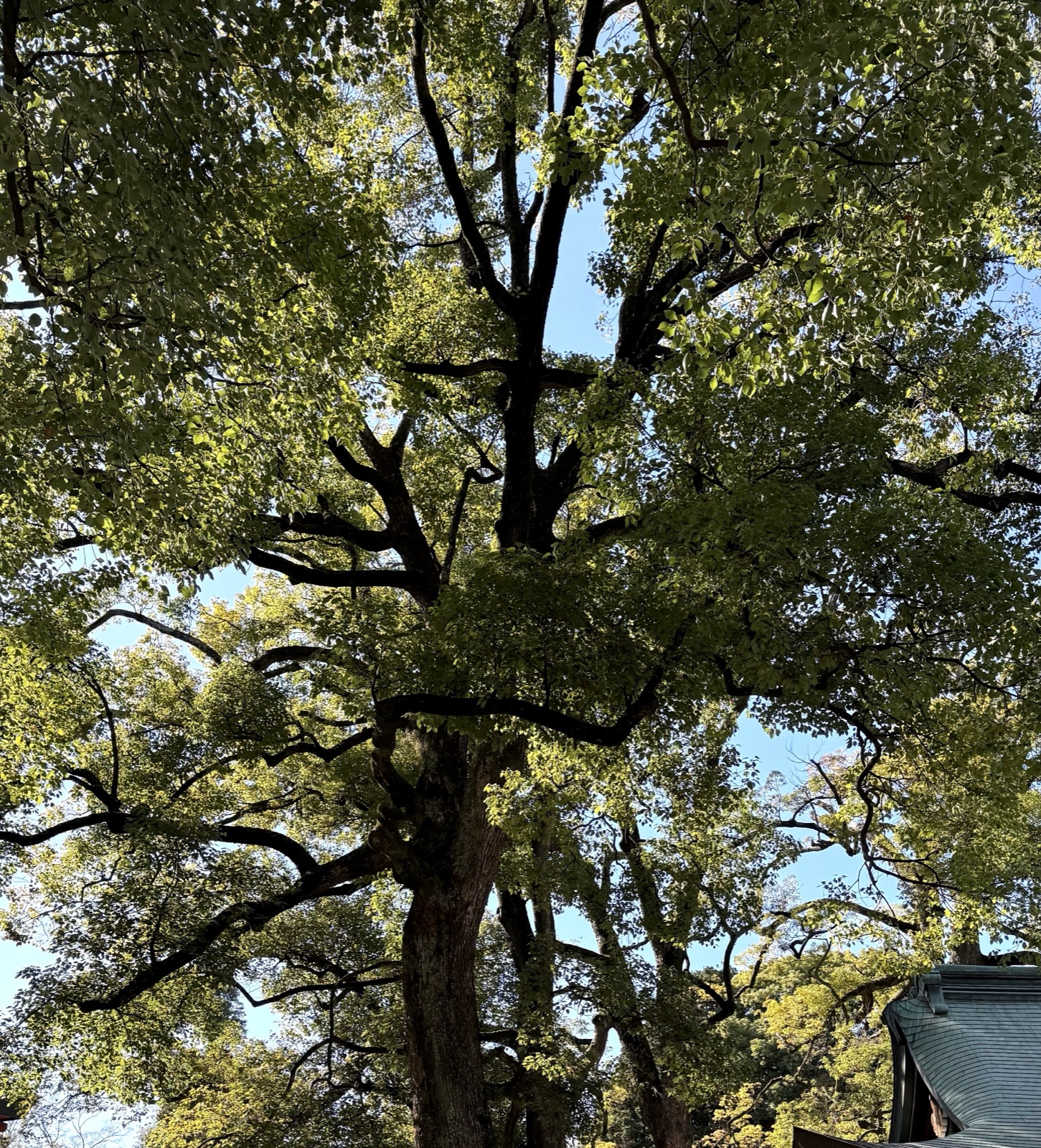
The canopy of trees over the grounds — the long approach gradually peels visitors away from the noise of the city.
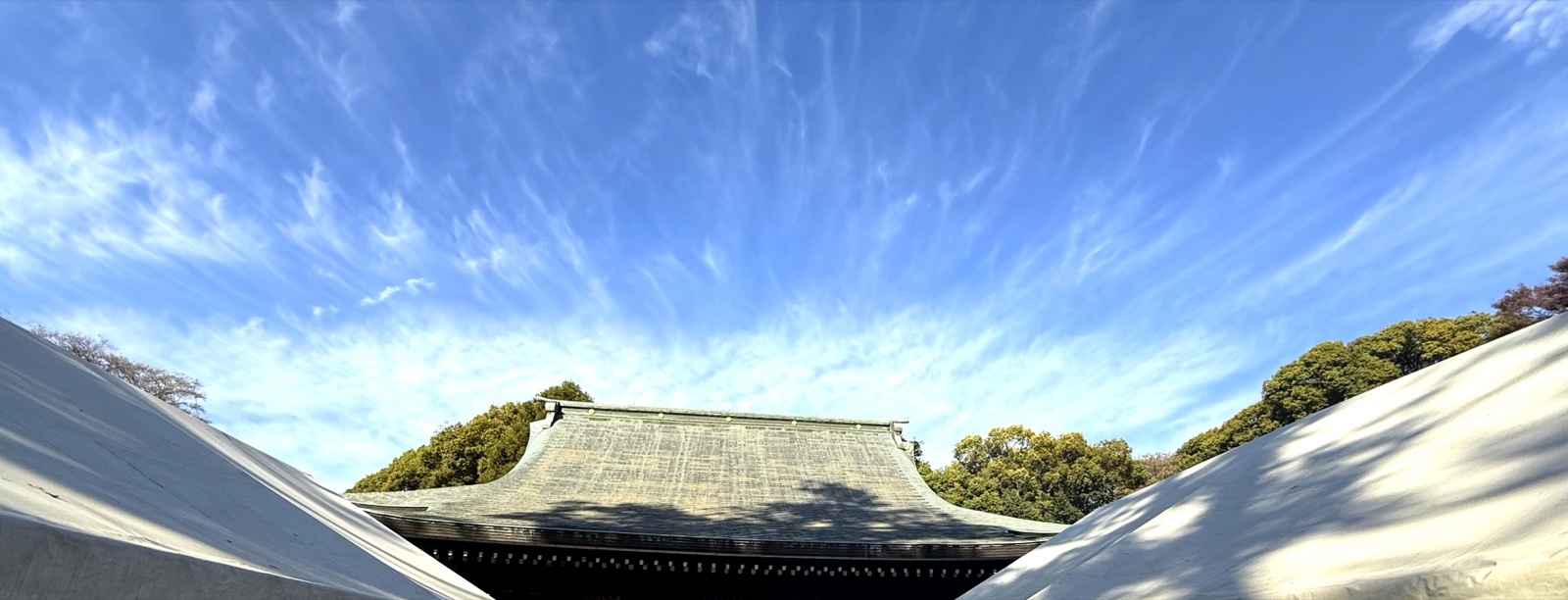
The shrine roof against the sky — the quiet bearing of an ichinomiya, among the most prestigious ranks in the Kanto region.
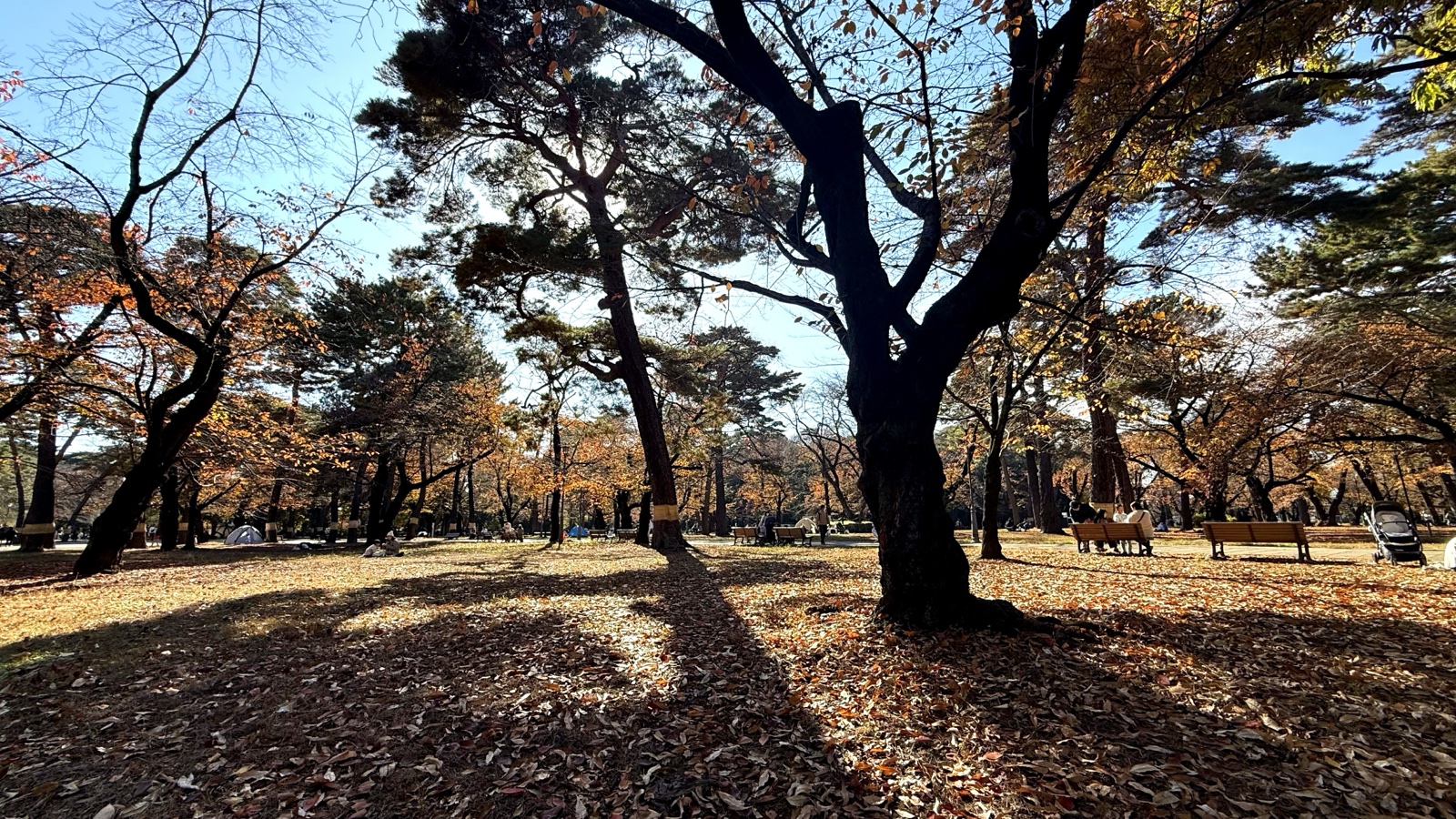
Once part of the shrine grounds — the forest opened as Omiya Park in 1885.