Visited in person · Original photography
Origins and founding
Ichinomiya of Hitachi Province. It enshrines the god said to have forced Okuninushi to negotiate the transfer of the land. It is the head shrine of about 600 Kashima shrines across Japan.
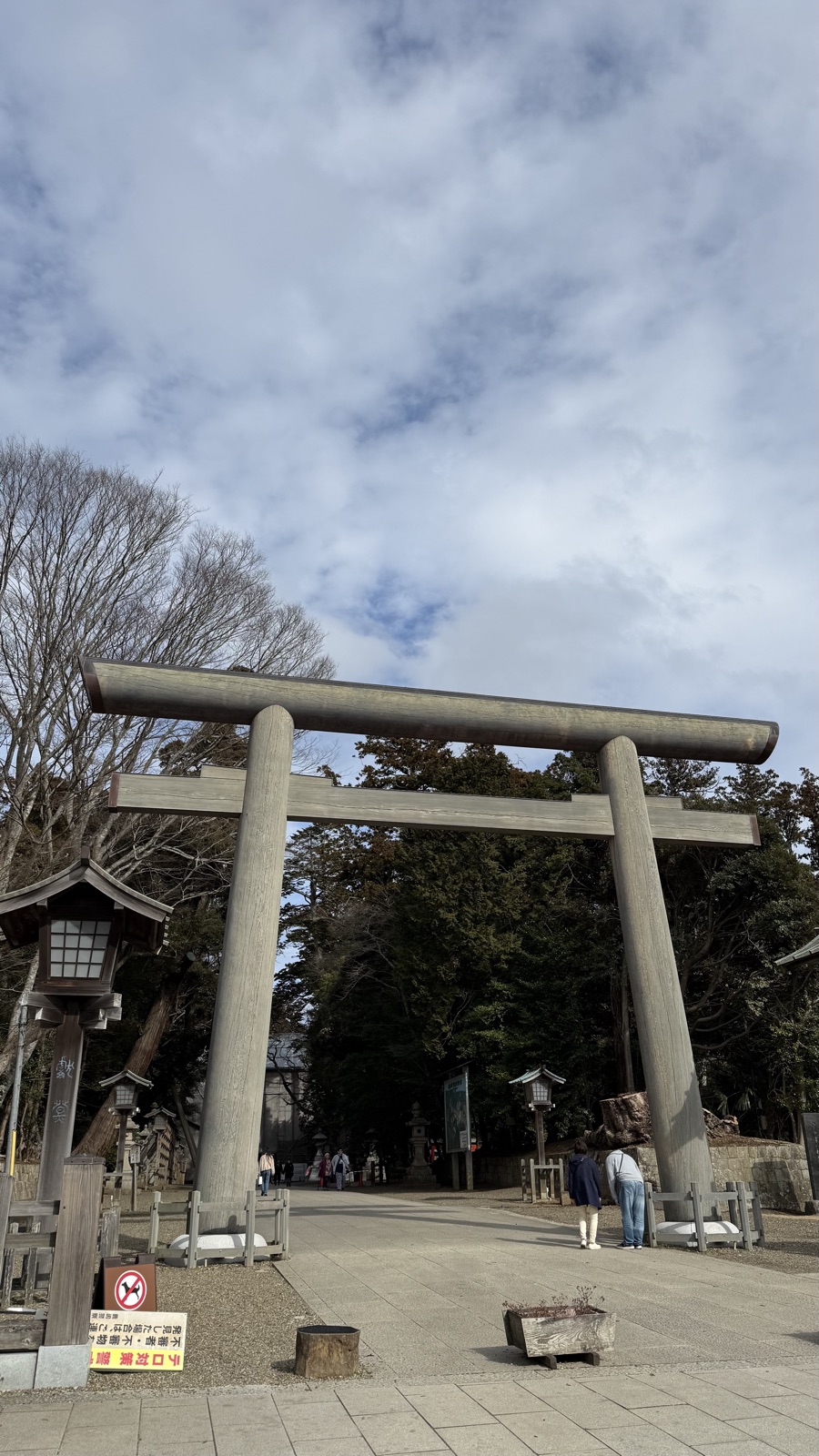
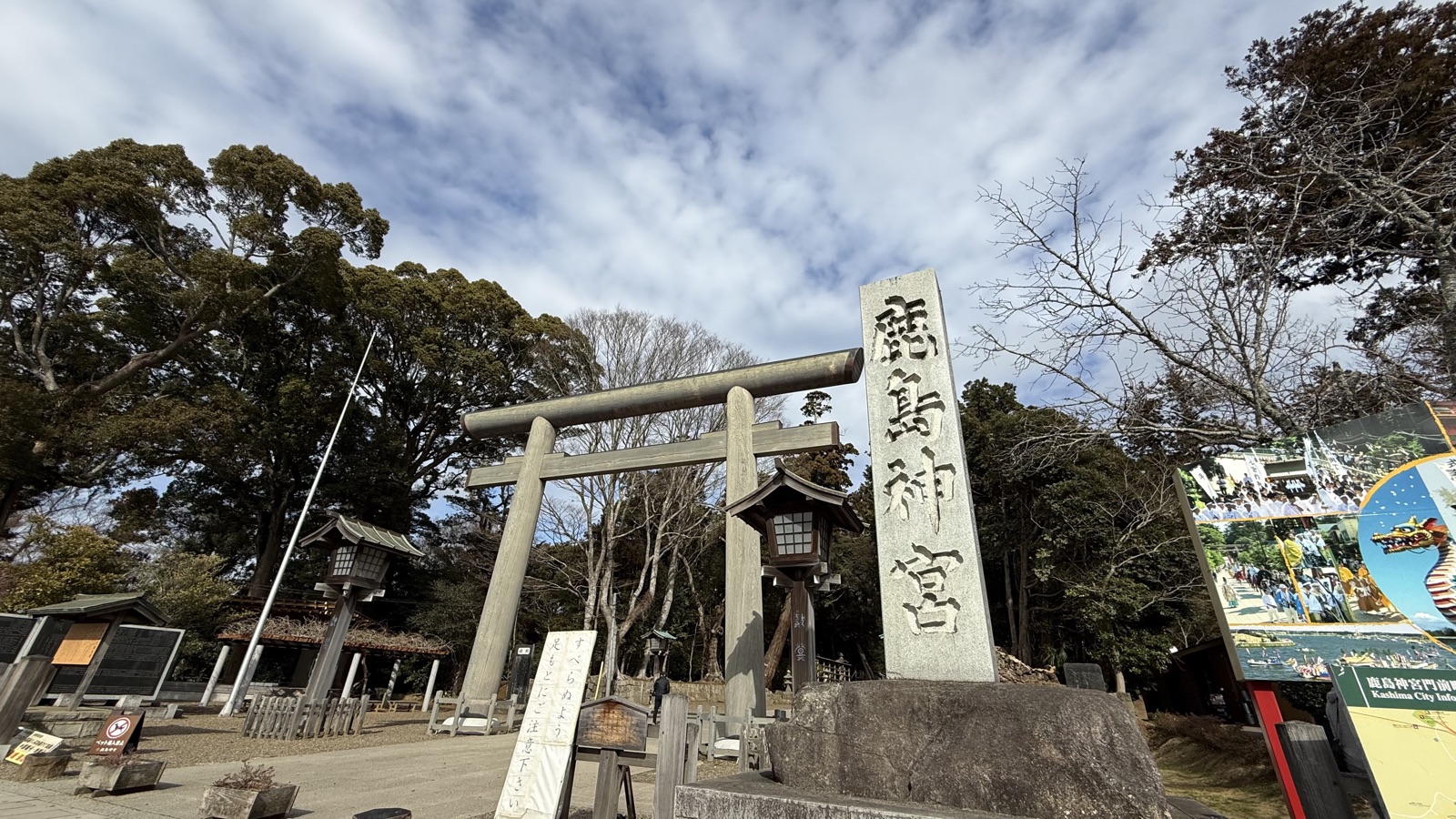
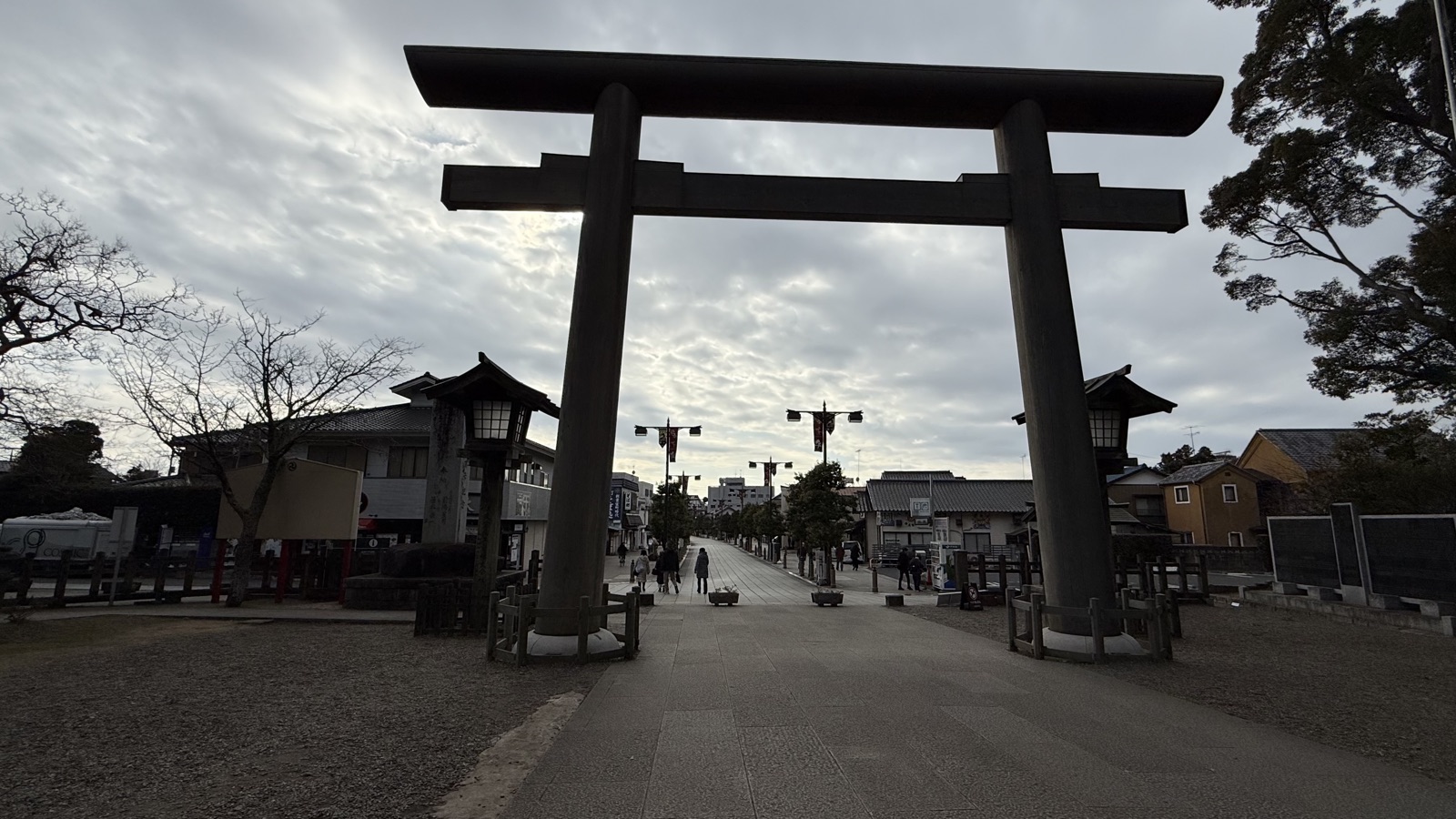
A huge wooden torii. Beyond it, the cedar-lined inner approach continues.
What to see
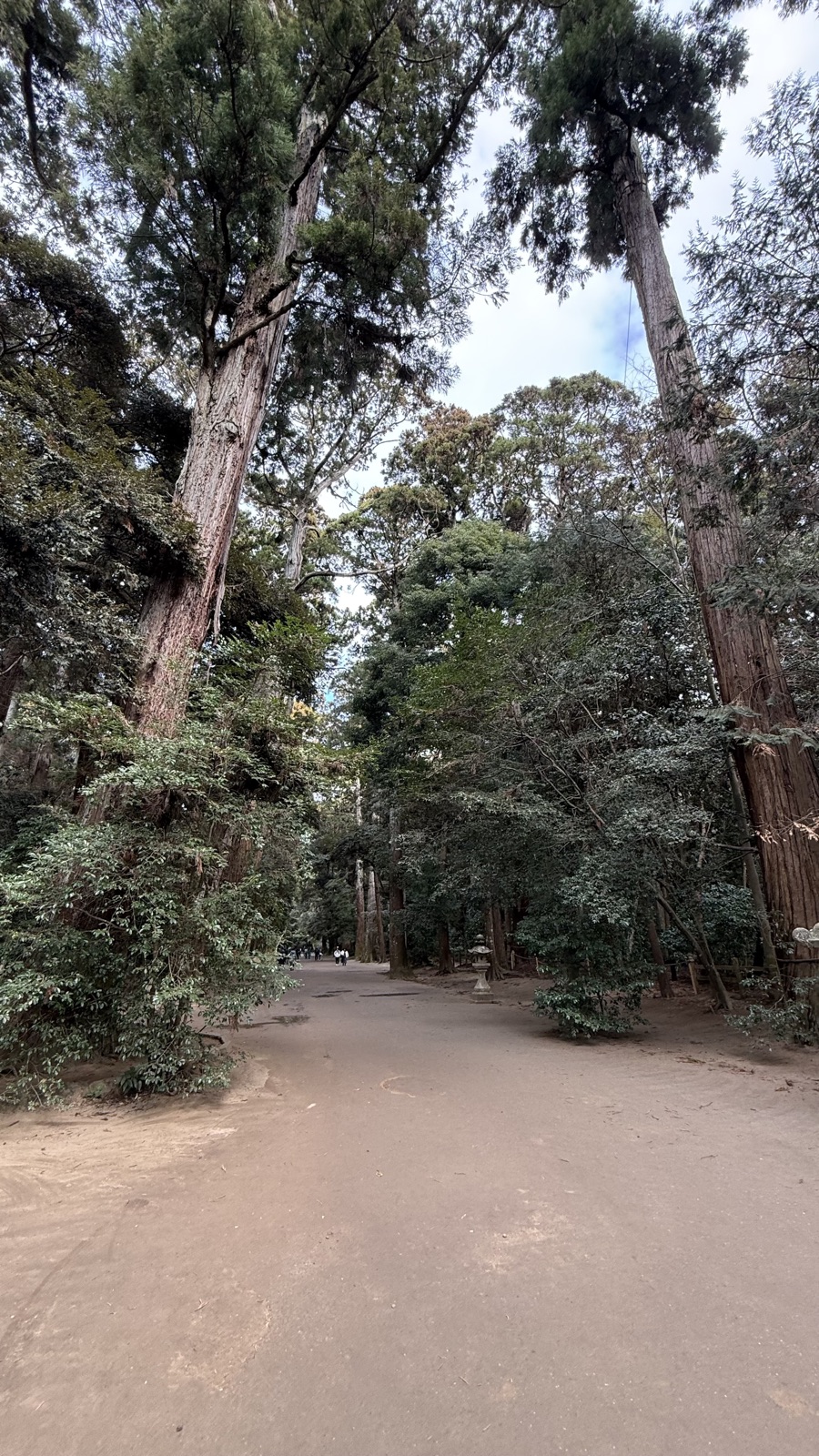
The inner approach, said to run for 700 metres through cedars / the Kaname-ishi stone, said to pin down the giant catfish that causes earthquakes. Only a tiny part appears above ground / Mitarashi Pond, fed by a spring / the deer enclosure — deer are divine messengers here, and tradition says the deer of Kasuga Taisha in Nara came from Kashima.
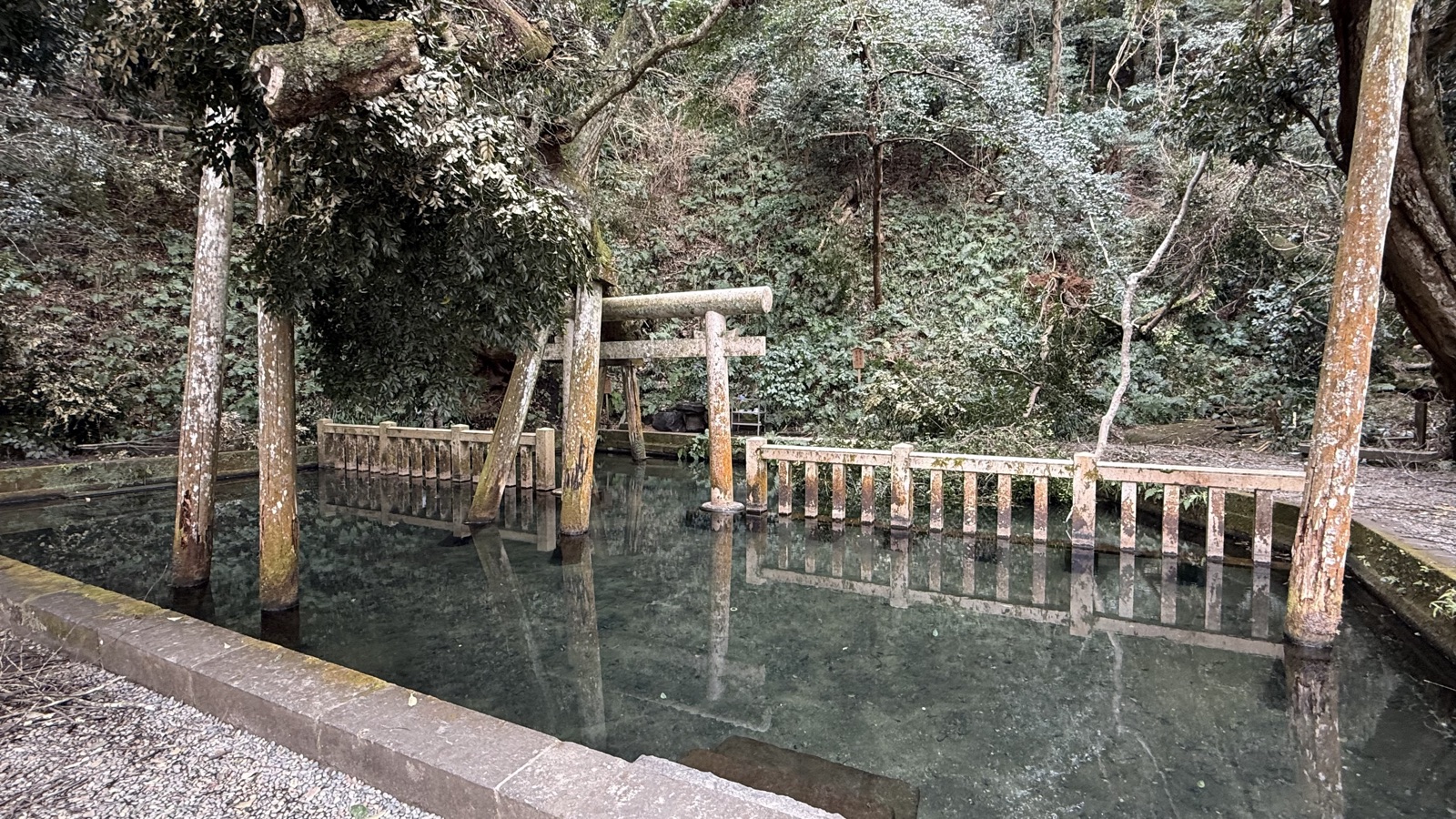
Mitarashi Pond. A torii is reflected in the water.
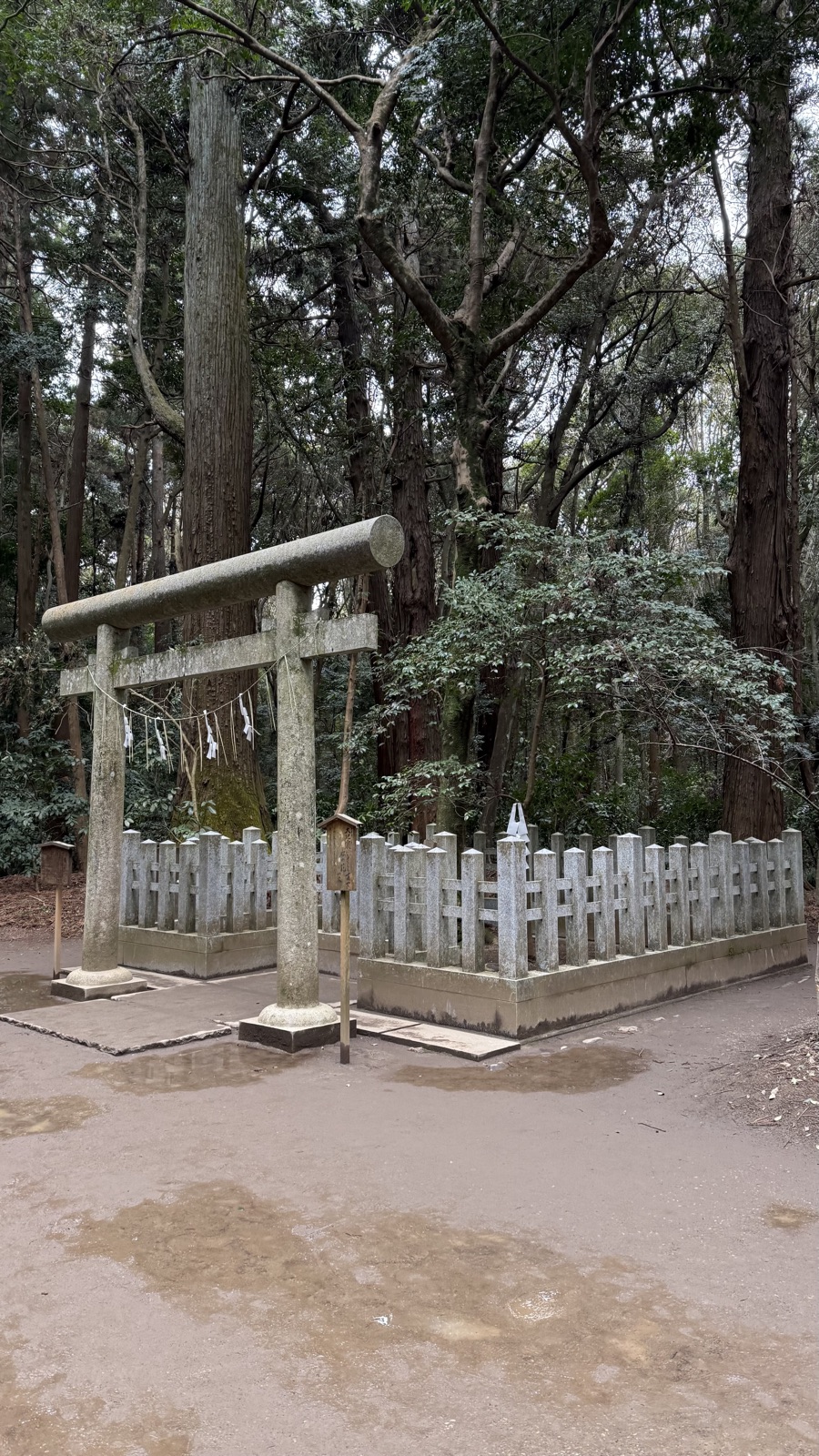
A torii and tamagaki fence surround the Kaname-ishi. Only a tiny part is said to show above ground.
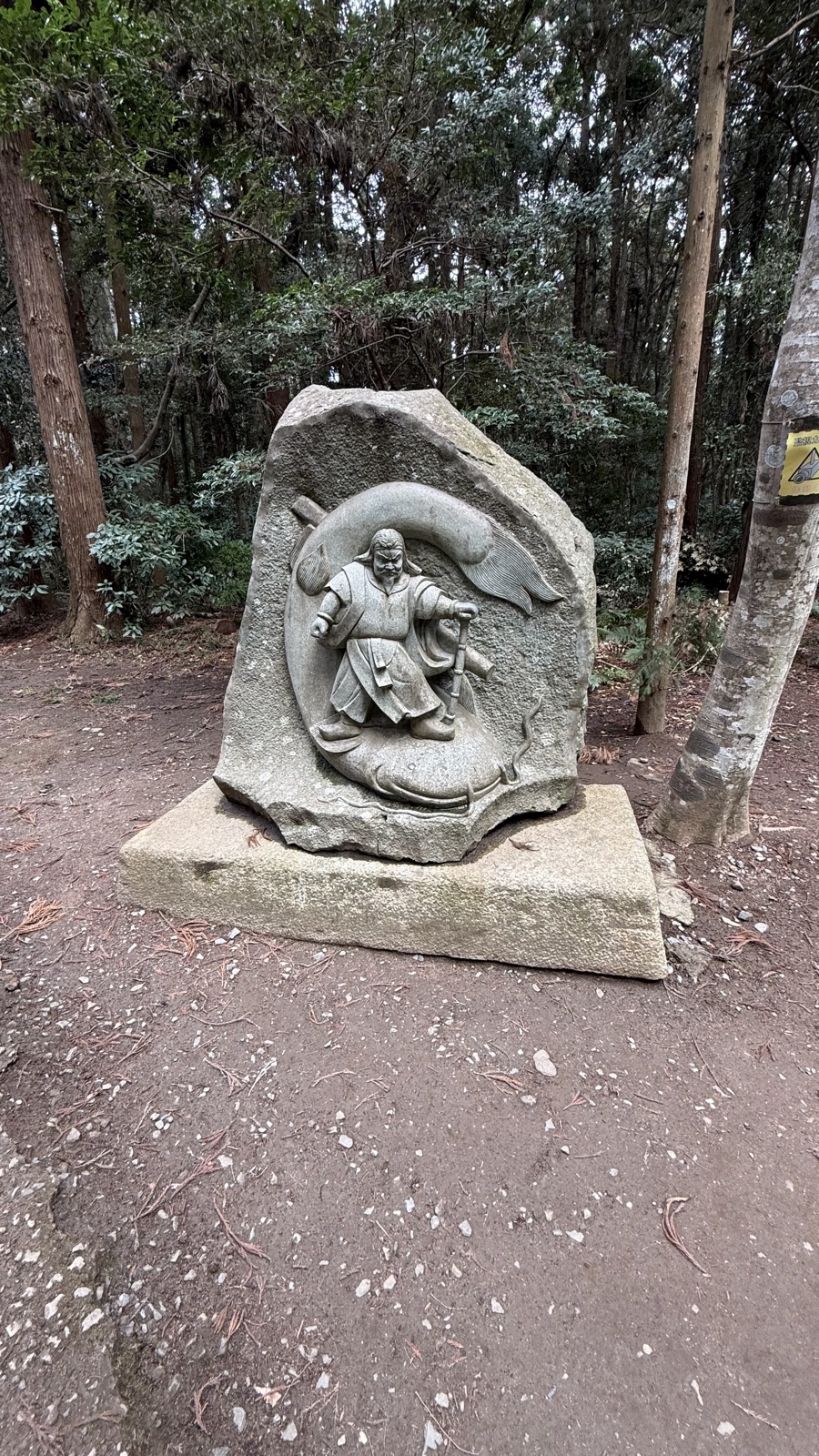
A stone carving of a warrior pinning down a giant catfish. It depicts the Kaname-ishi legend.
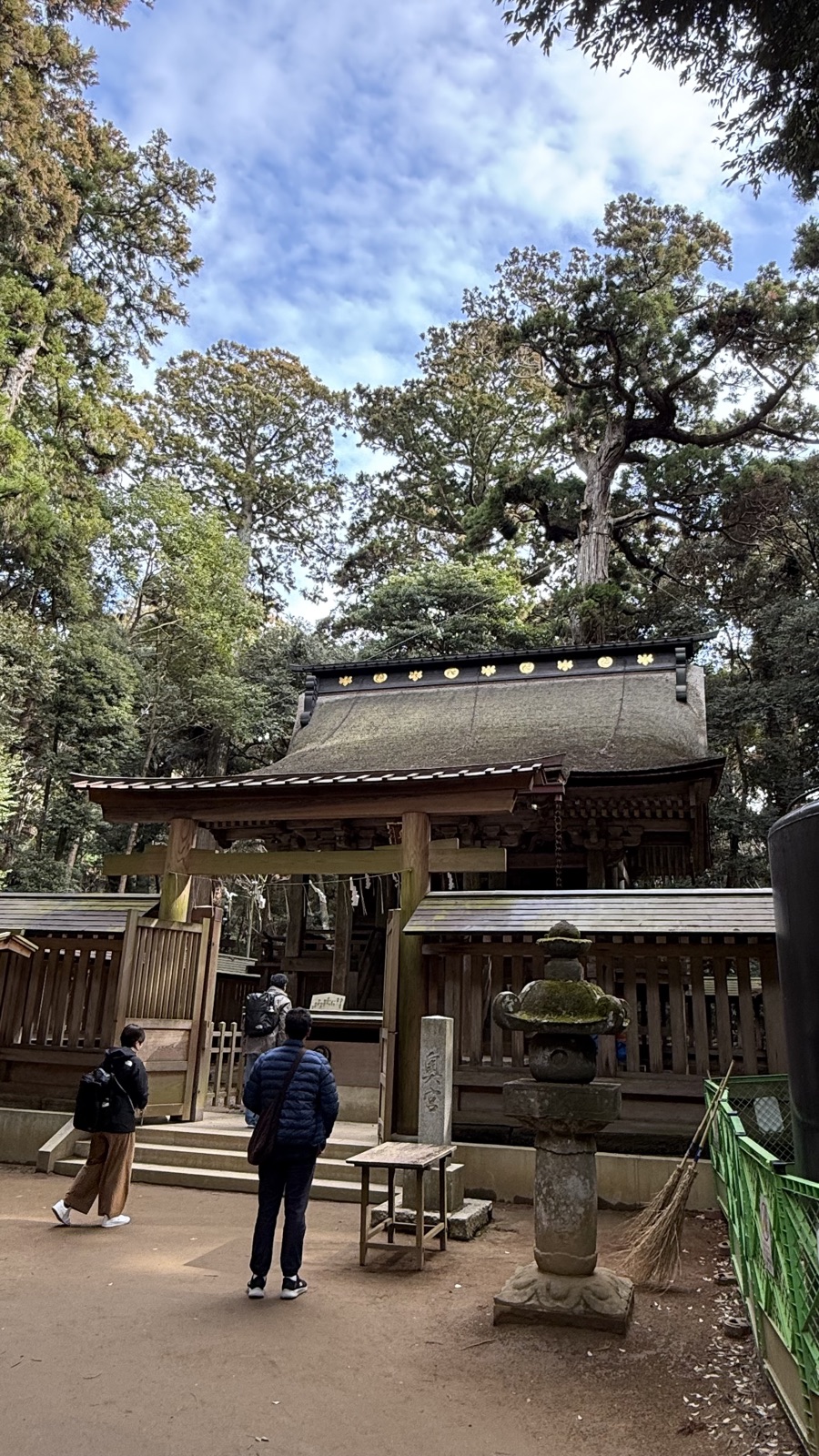
The Okumiya shrine building. Gold crests run along the edge of its thatched roof.
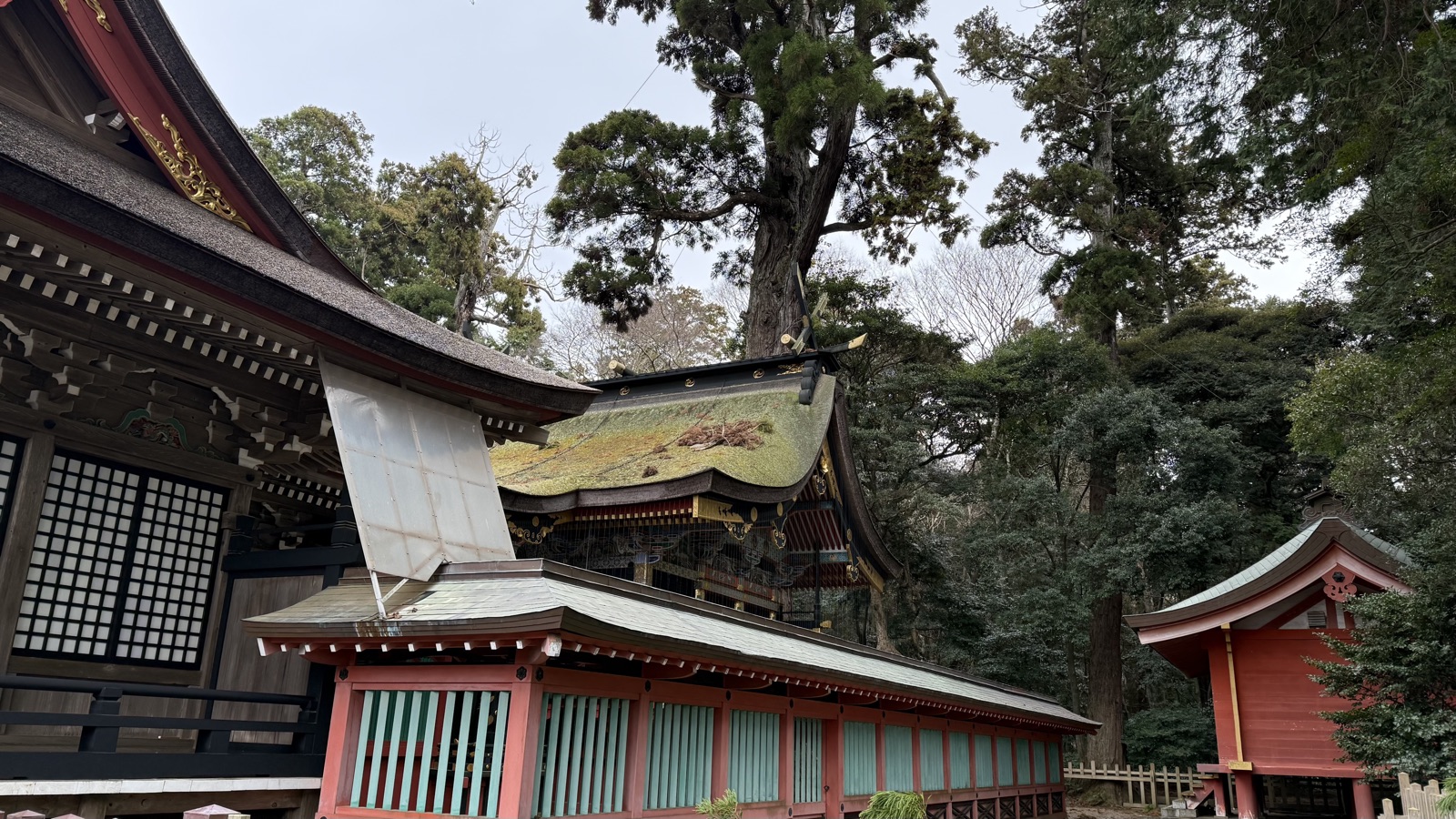
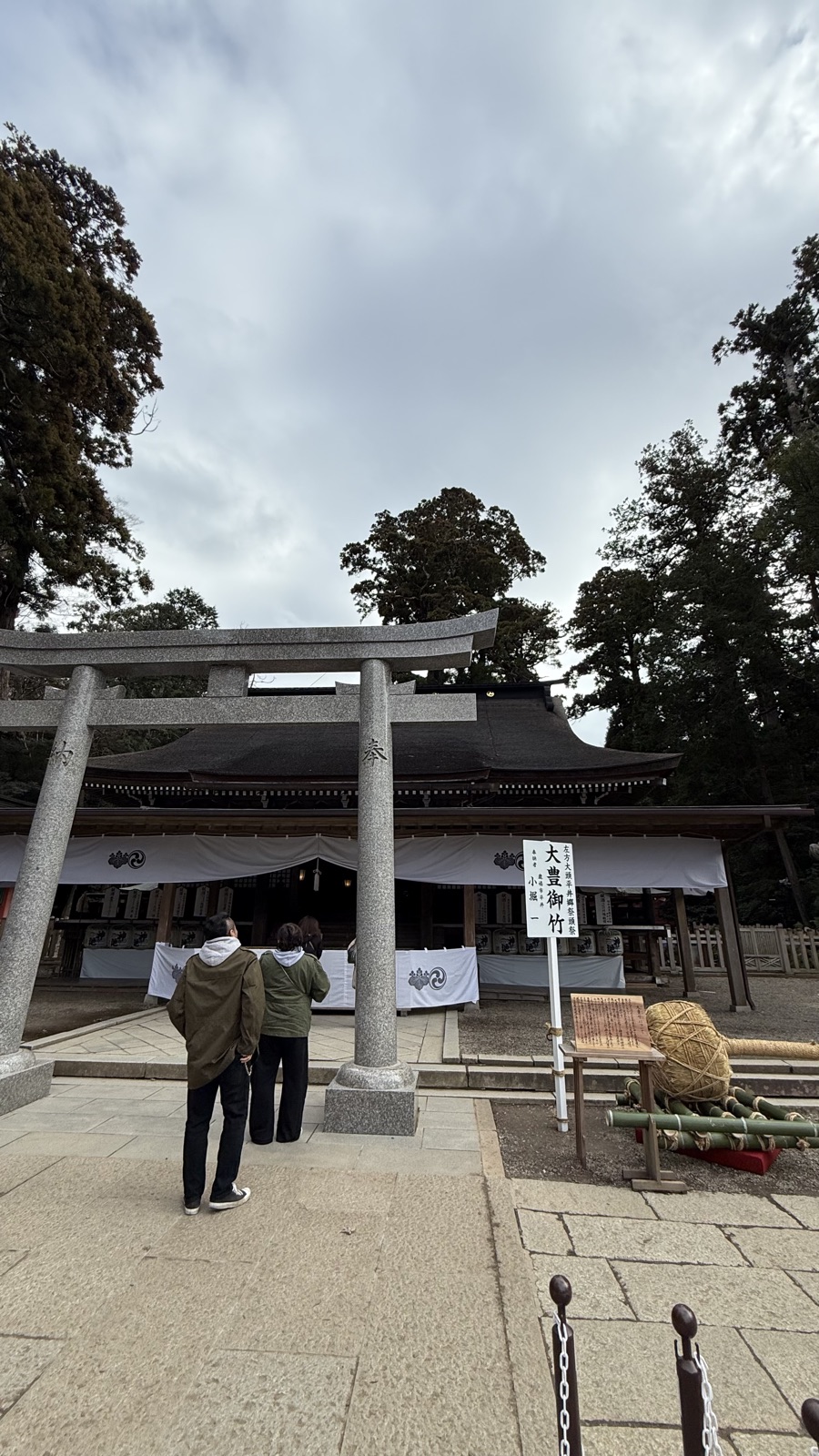
A stone torii in front of the worship hall. White curtains and green bamboo for ritual use have been dedicated here.
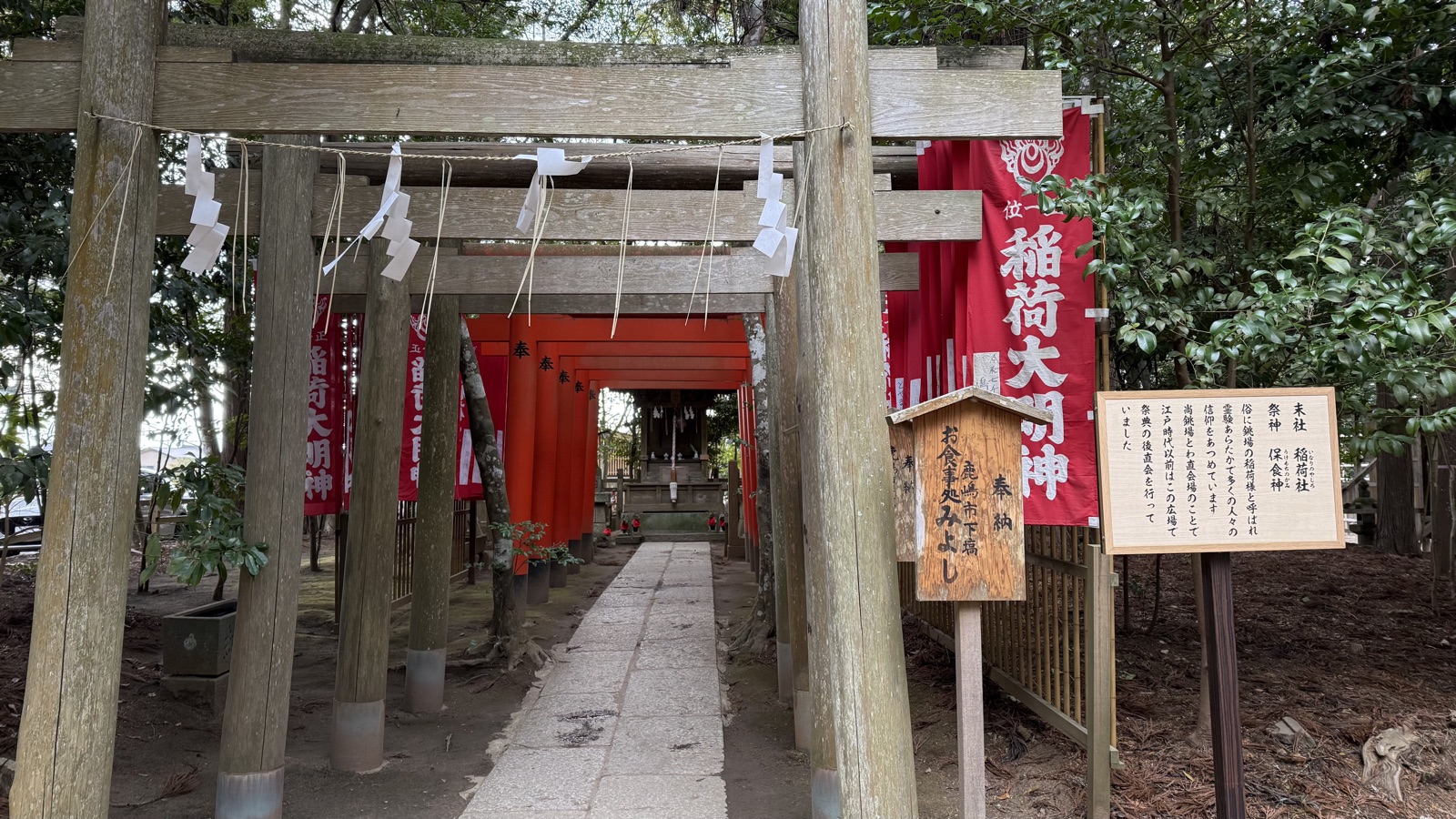
The torii of the subsidiary Inari shrine. Banners read "Inari Daimyojin".
Cultural context
Takemikazuchi is said to have driven Takeminakata to Suwa (→ Kami, ranks and lineages: Transfer of the land). Kashima forms a pair with Suwa Taisha.