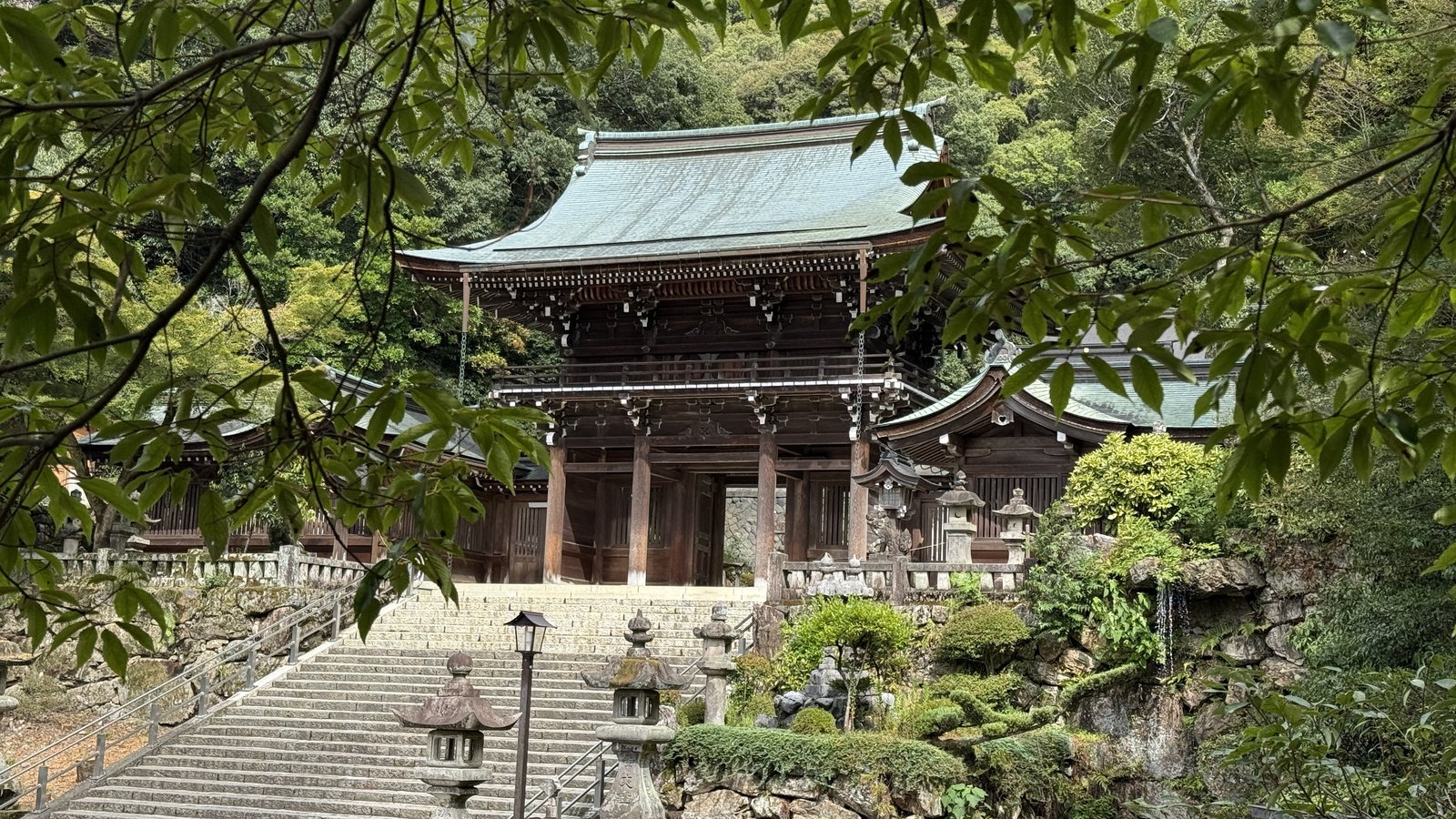
Visited in person · Original photography
Origins and founding
The enshrined Ikishiiribiko was the eldest son of Emperor Suinin. The Kojiki and the Nihon Shoki are said to record that he opened some eight hundred ponds and channels across the provinces (according to the shrine). The shrine is said to have begun in the year after his death (the 14th year of Emperor Keiko), when Takenouchi no Sukune enshrined him on Maruyama, near Mount Inaba (the shrine’s tradition). In 1539 (Tenbun 8), when Saito Dosan made Mount Inaba his stronghold, the shrine was moved to its present site at the foot of the mountain. In 1939 (Showa 14) it was made a national shrine of the small rank (kokuhei shosha).
Enshrined alongside are Nunoshihime, Hibasuhime, Hikotatsuhiko and Mononobe no Tochine.
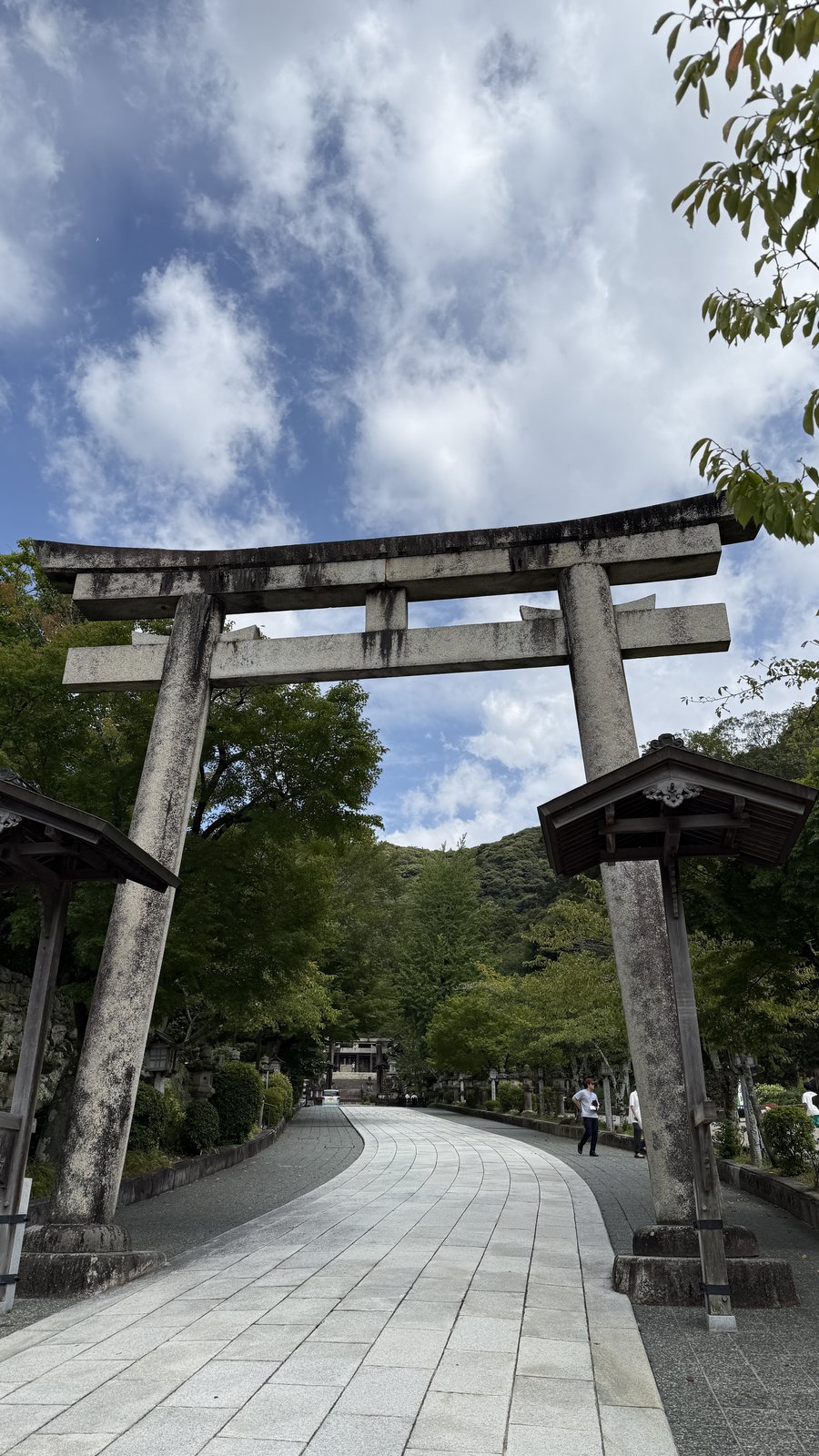
The stone torii and the approach continuing beyond it.
What to see
Past the stone torii, a paved approach continues, and another torii and the shrine buildings come into view. A gate stands at the top of a long flight of stone steps. The grounds hold a garden of stonework and flowing water. Beside the steps stands a small shrine, Akiba Sha.
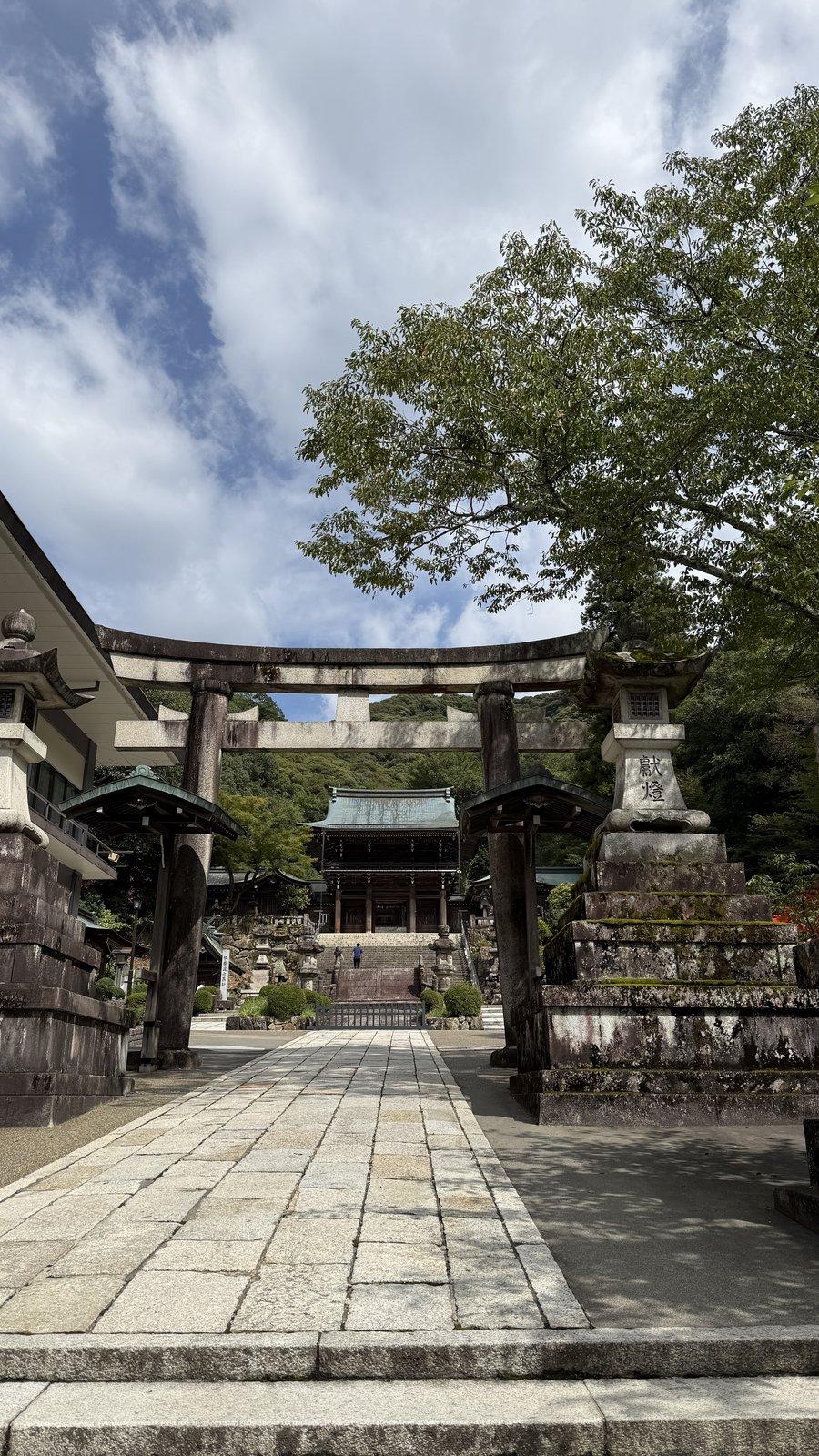
Beyond the paved approach, another stone torii and the shrine buildings can be seen.
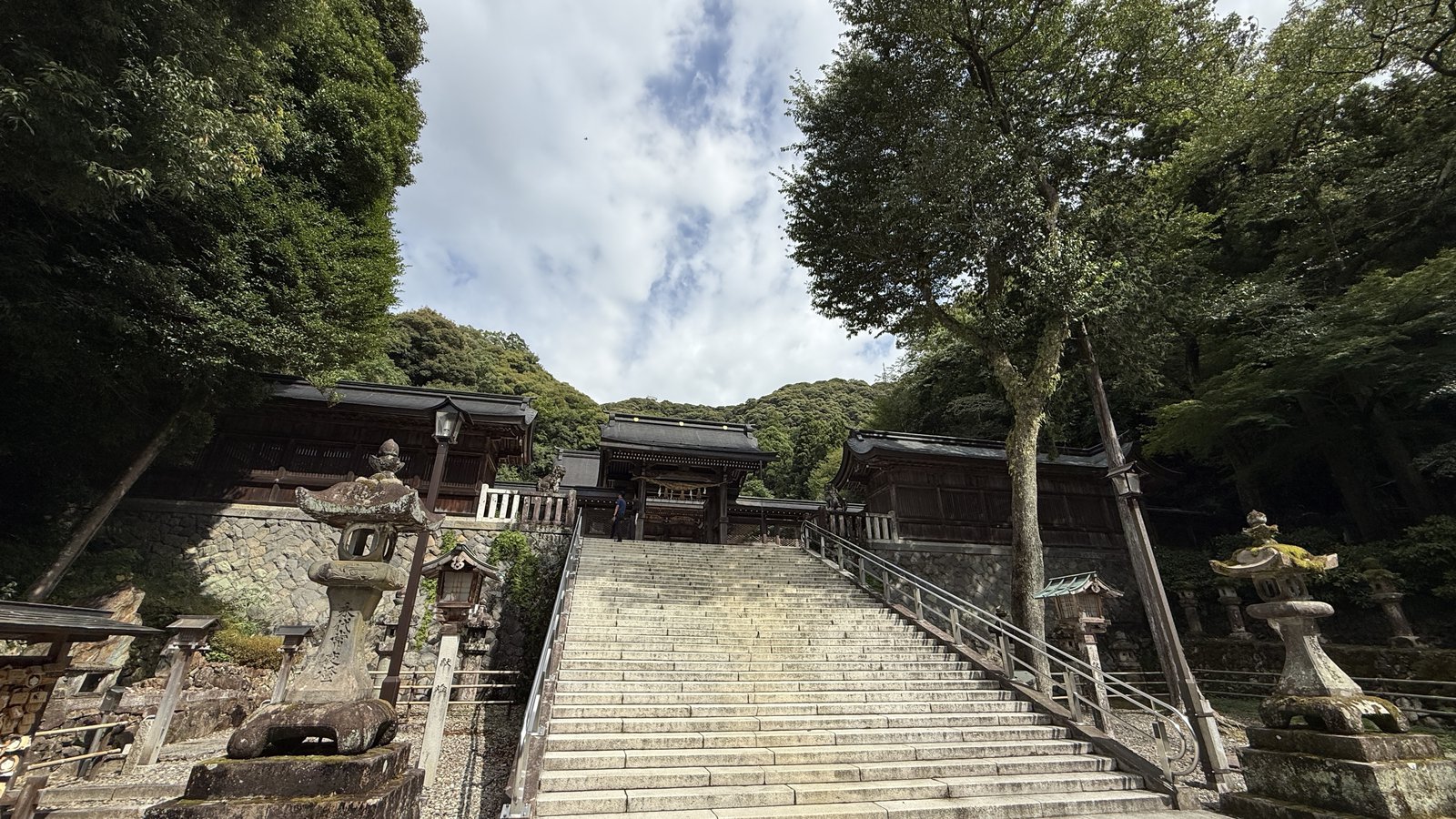
The stone steps climbing upward. A gate can be seen at the top.
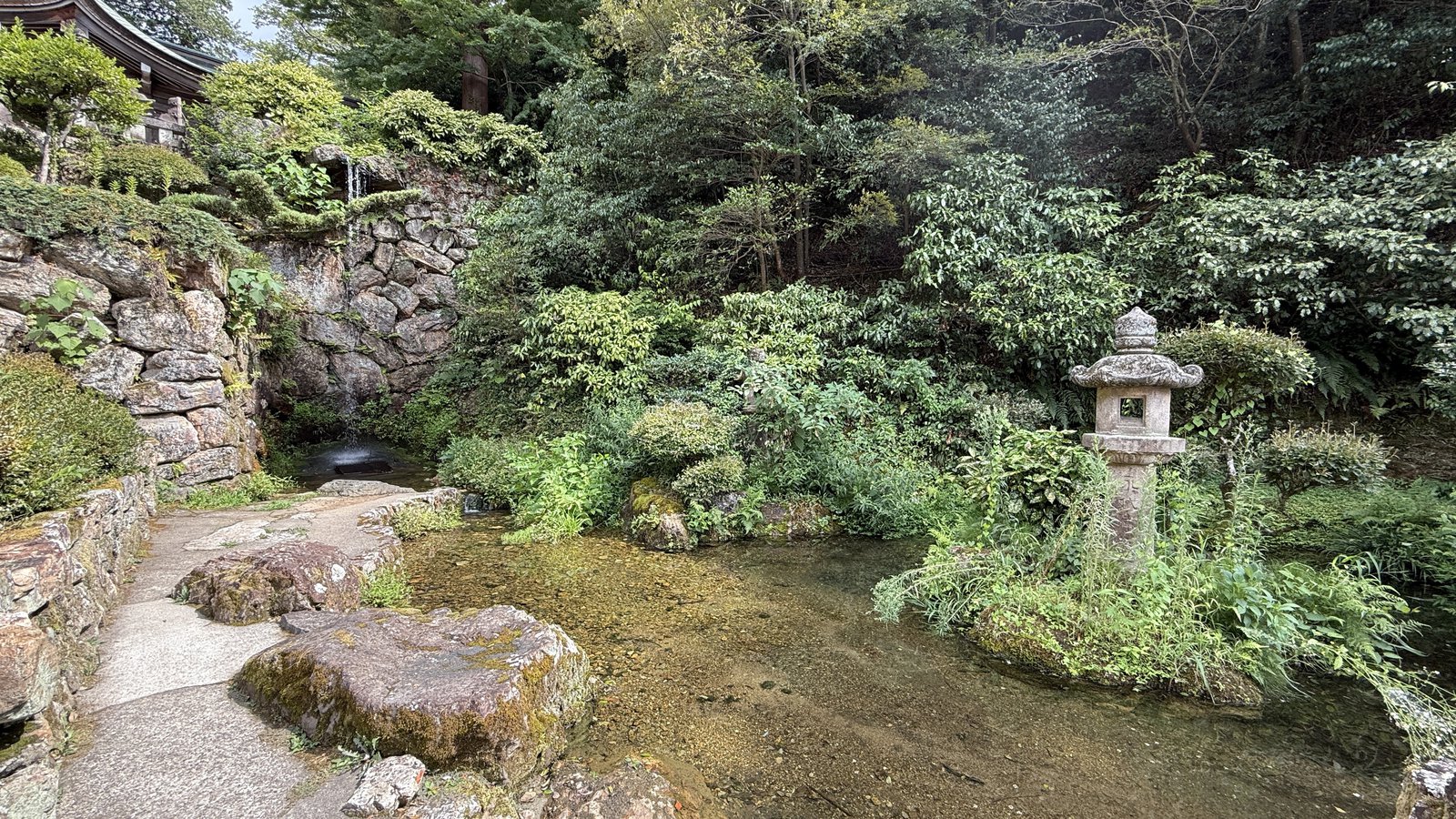
A garden of stonework and flowing water, with a stone lantern.
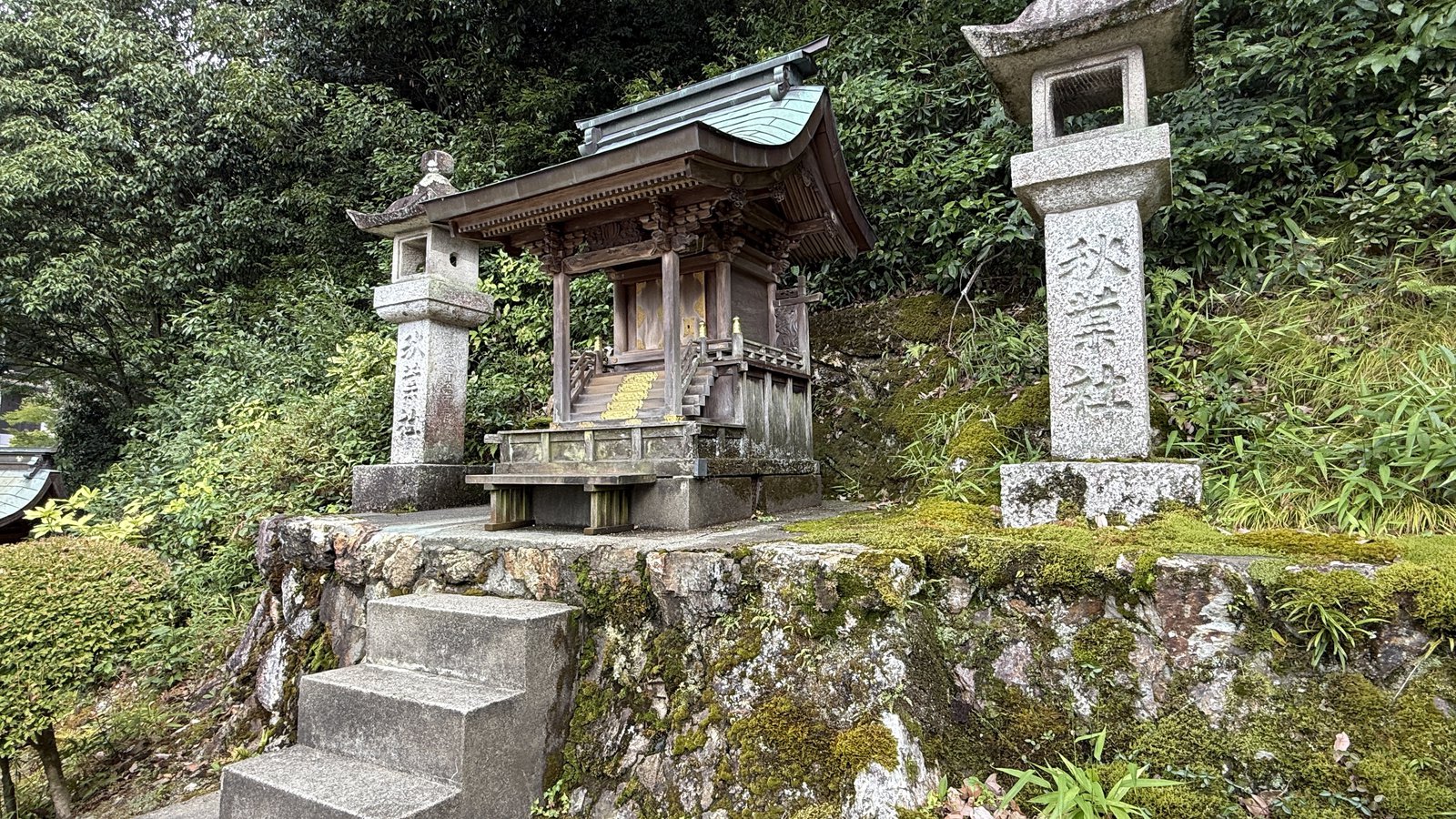
A small shrine in the grounds. The stone pillar reads “Akiba Sha”.
Cultural context
A god who guards against water. The land is surrounded by three rivers, the Ibi, the Nagara and the Kiso, and has long suffered from floods. According to the shrine, because the Yin-Yang Five Elements idea holds that metal is what masters water, many place names around it contain the characters for gold (metal) and water.