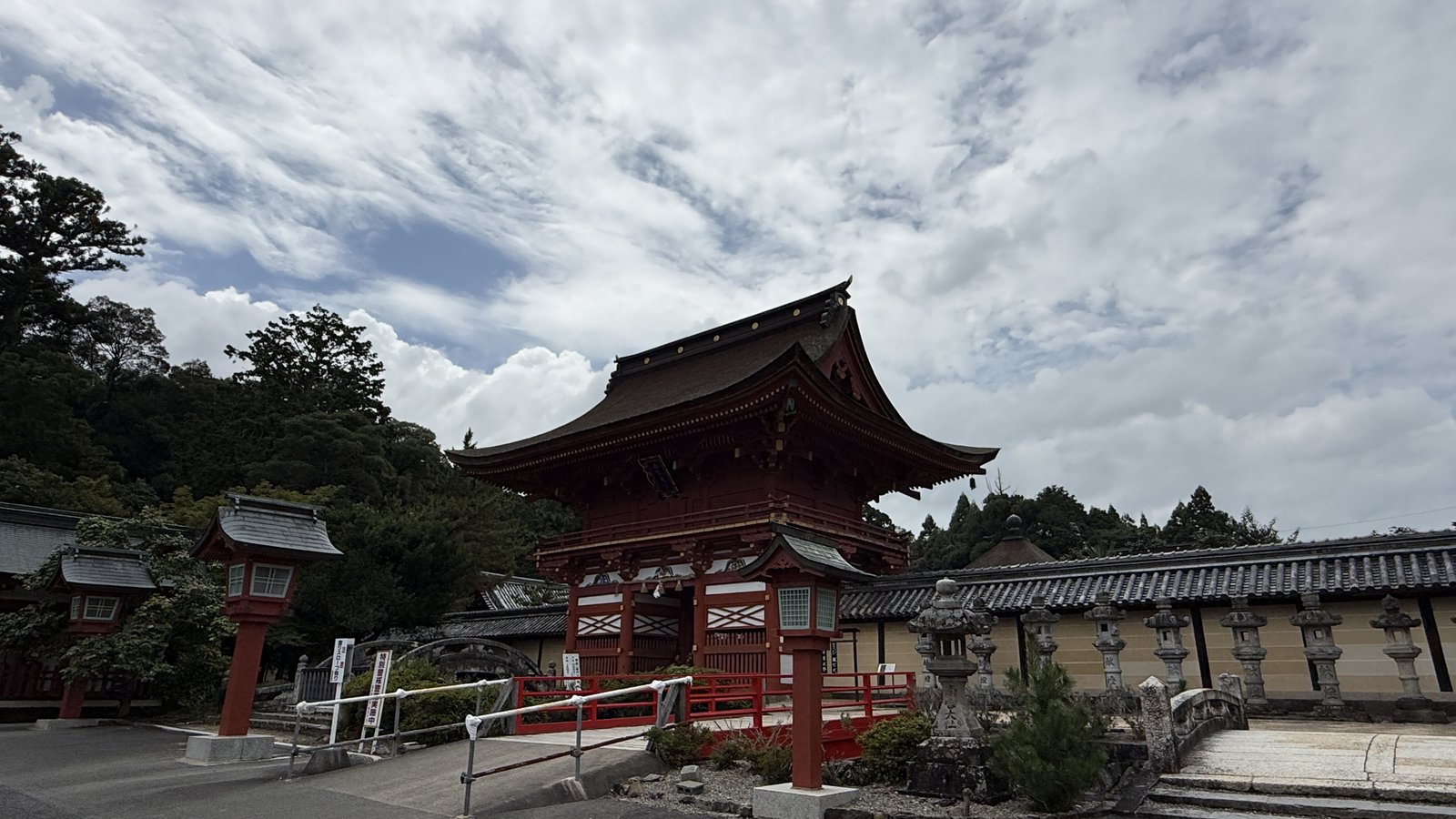
Visited in person · Original photography
Origins and founding
The ichinomiya, or first-ranked shrine, of Mino Province, and a former national shrine of the great rank (kokuhei taisha). The enshrined Kanayamahiko Okami is the god of iron ore and mining, born when Izanami gave birth to the fire god Hi no Kagutsuchi. Hikohohodemi no Mikoto and Mino no Mikoto are enshrined alongside. According to the shrine’s tradition, it came to rest at its present site in the reign of Emperor Sujin.
The shrine buildings were burned down in the fighting of the Battle of Sekigahara in 1600 (Keicho 5), and were rebuilt in 1642 (Kan’ei 19) by Tokugawa Iemitsu at the request of Kasuga no Tsubone (according to the shrine).
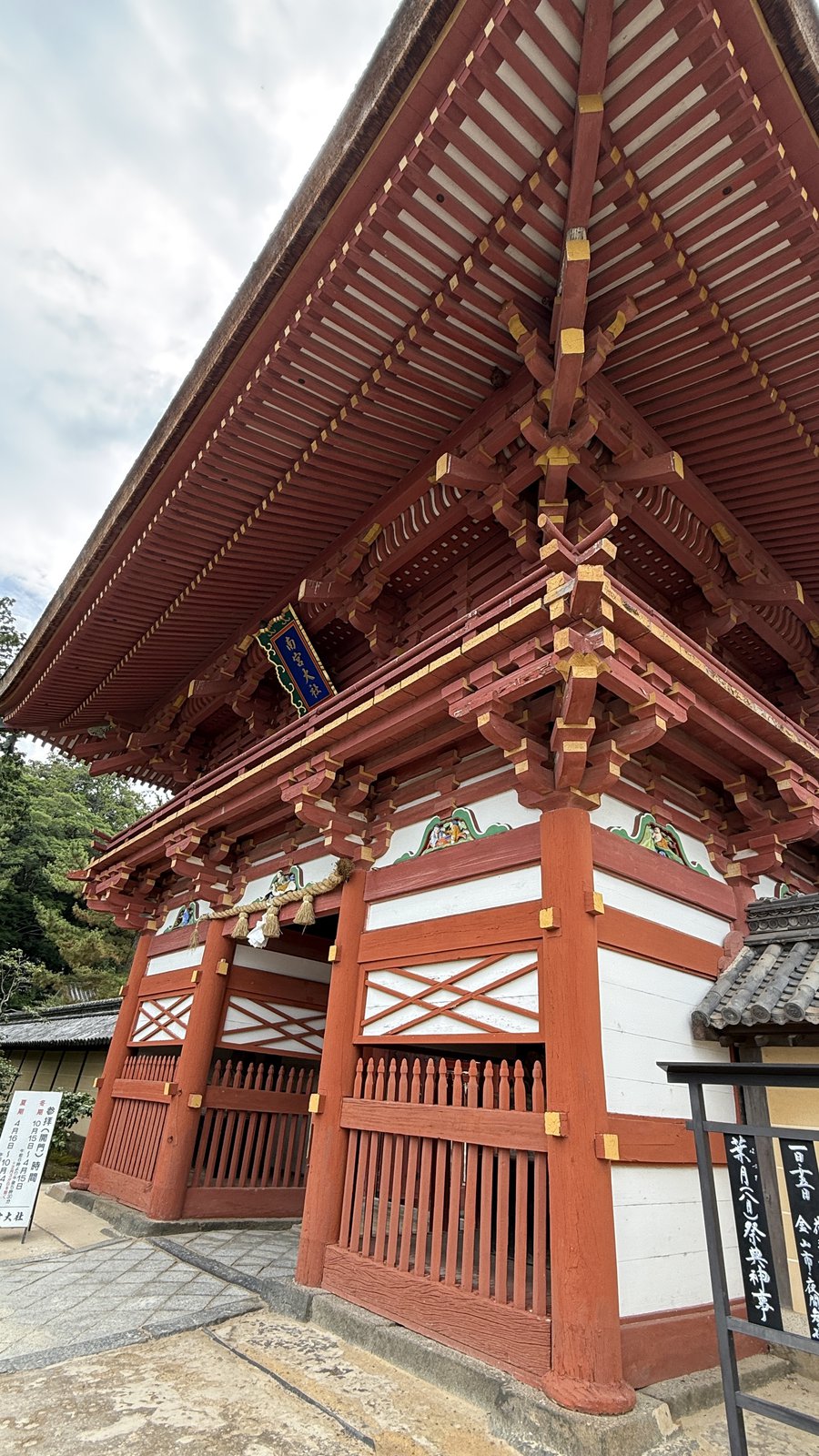
Looking up at the two-storey gate: vermilion pillars, white walls, and eaves with layered brackets.
What to see
The vermilion two-storey gate, and the corridor with its line of vermilion pillars. Beside the approach, a path of vermilion torii leads to Nangu Inari Shrine. The approach itself runs through a wooded grove.
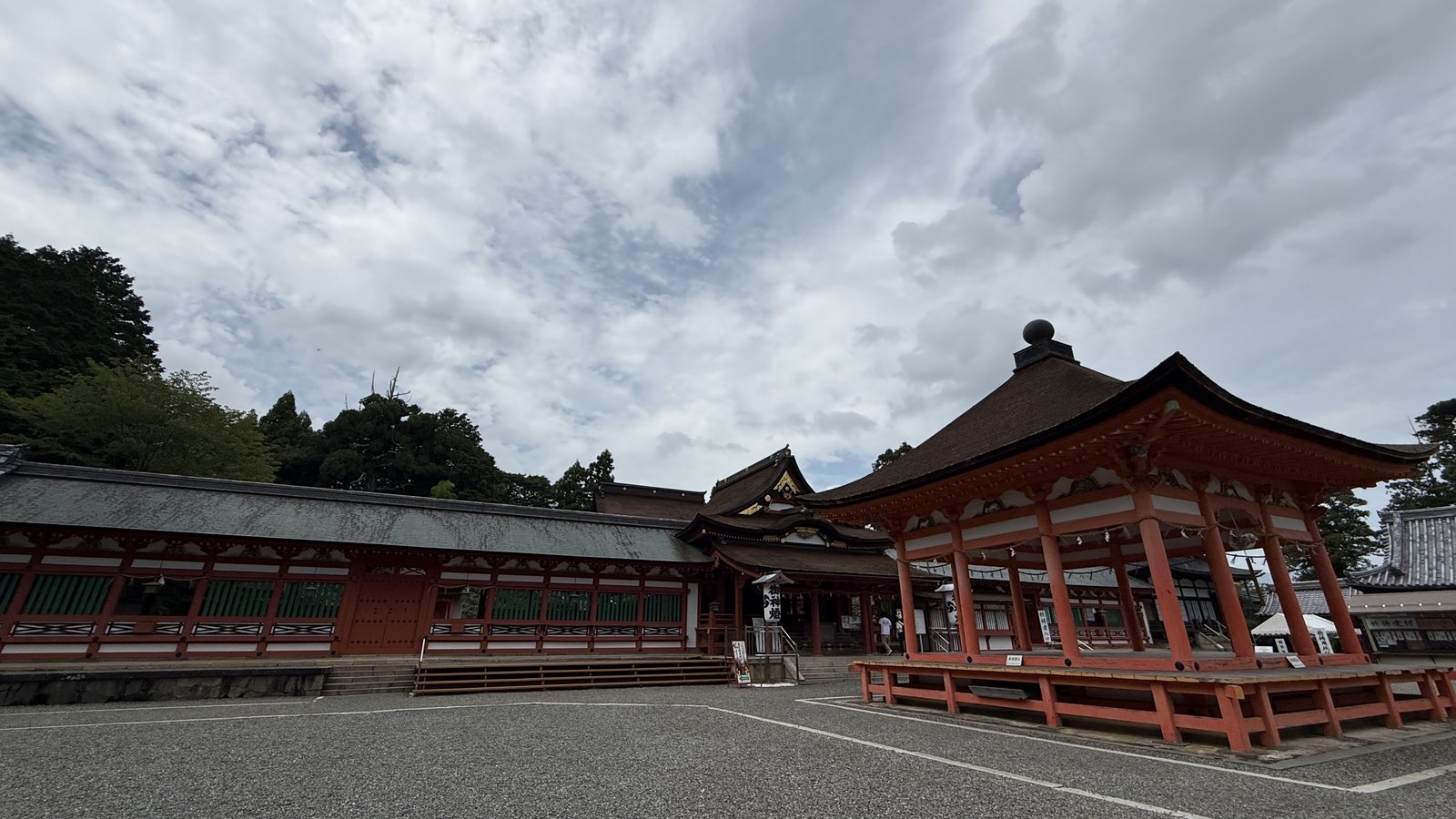
The corridor, and a vermilion building beyond it.
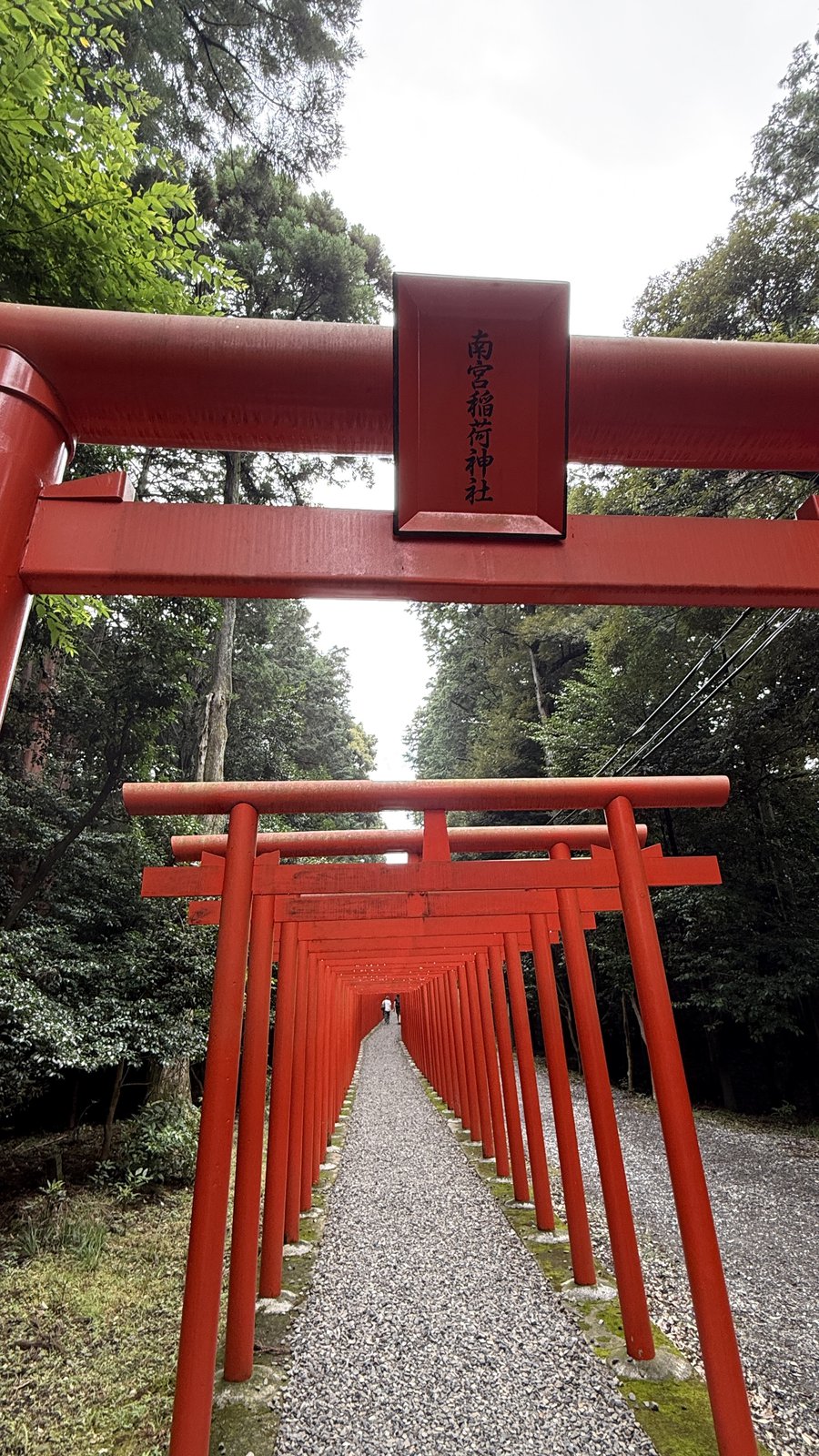
A path lined with vermilion torii. The plaque on the nearest torii reads “Nangu Inari Shrine”.
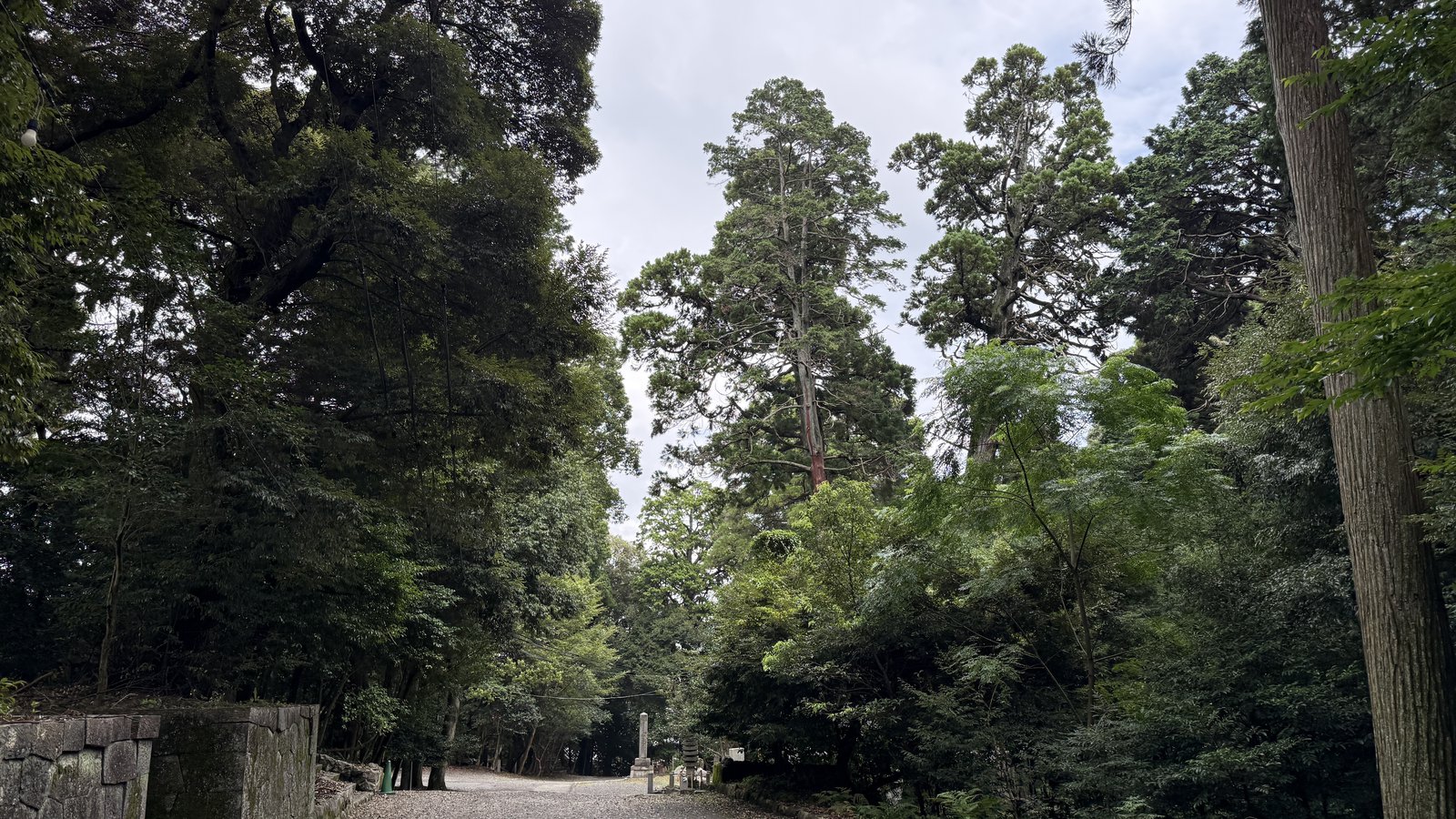
The approach through the grove.
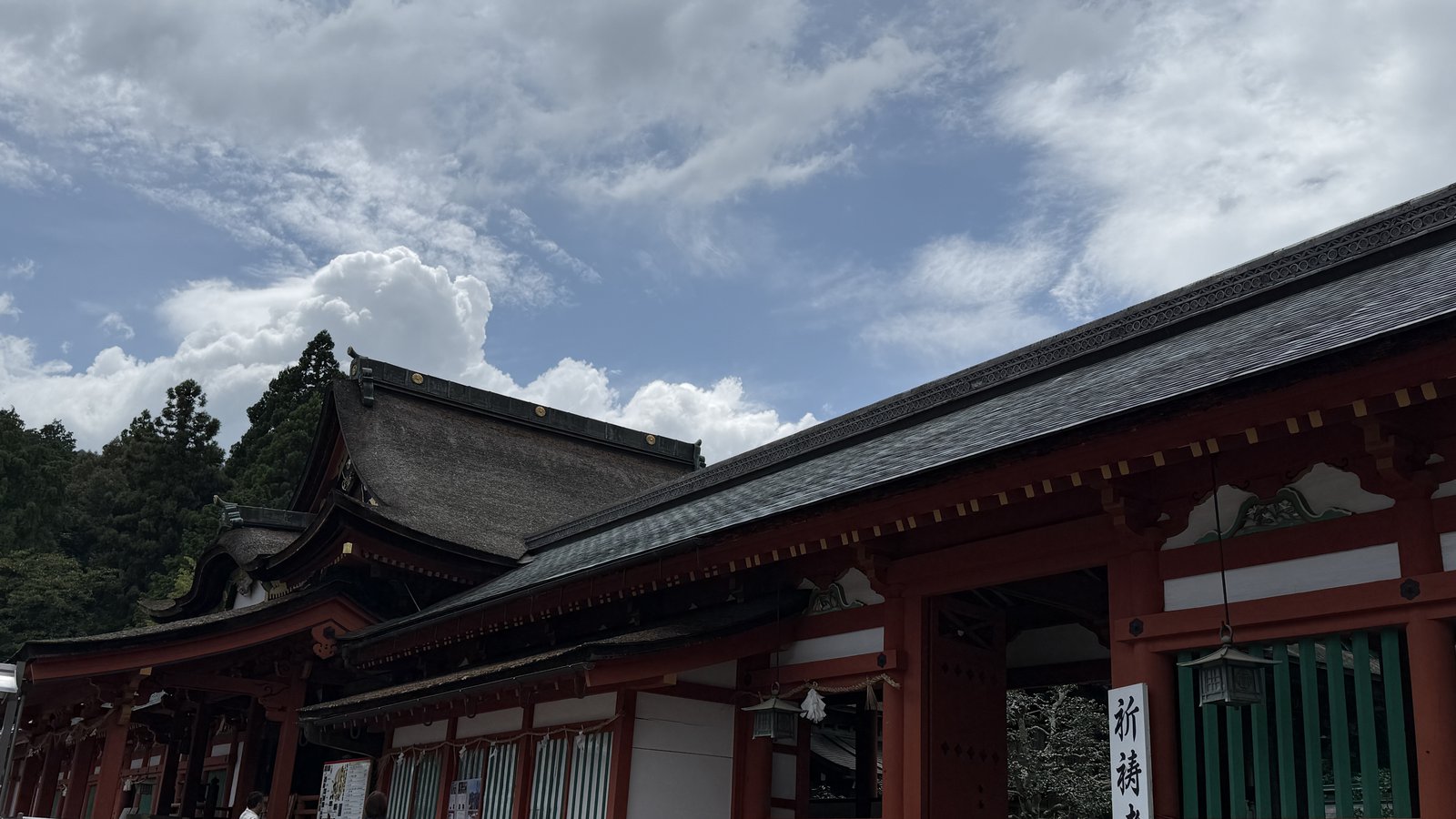
The eaves of a building with vermilion pillars, white walls and green slatted doors.
Cultural context
The head shrine of metalworking in Japan (according to the shrine). Metalworkers, ironmakers and blacksmiths from across the country come to worship. The shrine holds the Kanayama Taisai, also called the Fuigo Festival, named after the bellows (fuigo) used in ironmaking.