Visited in person · Original photography
Origins and founding
Said to have been founded in 1000. Guardian shrine of the Chiba clan. Its Myoken worship deifies the North Star and the Big Dipper.
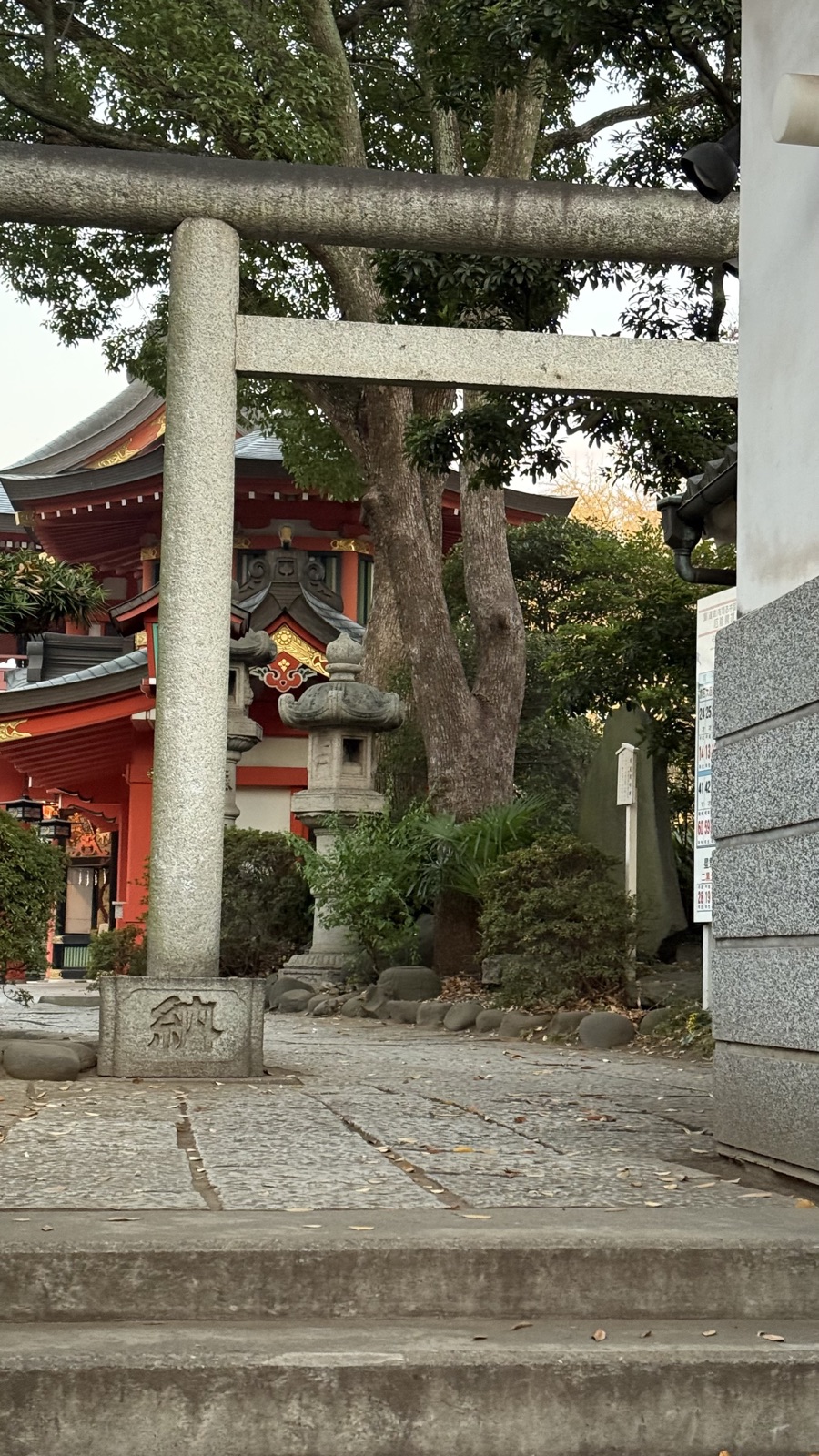
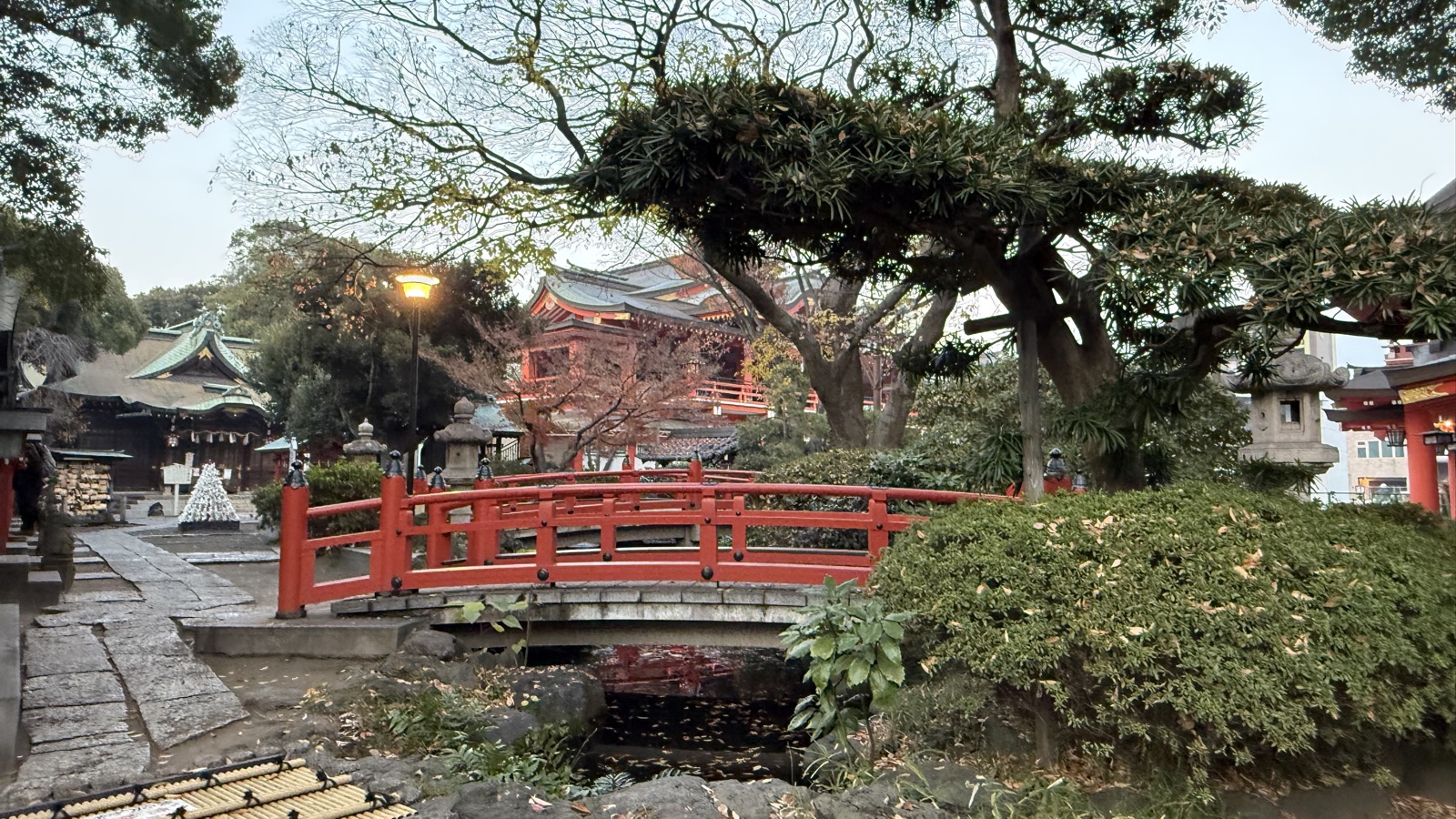
A vermilion drum bridge crosses Myoken Pond. The roof of a shrine building appears behind it.
What to see
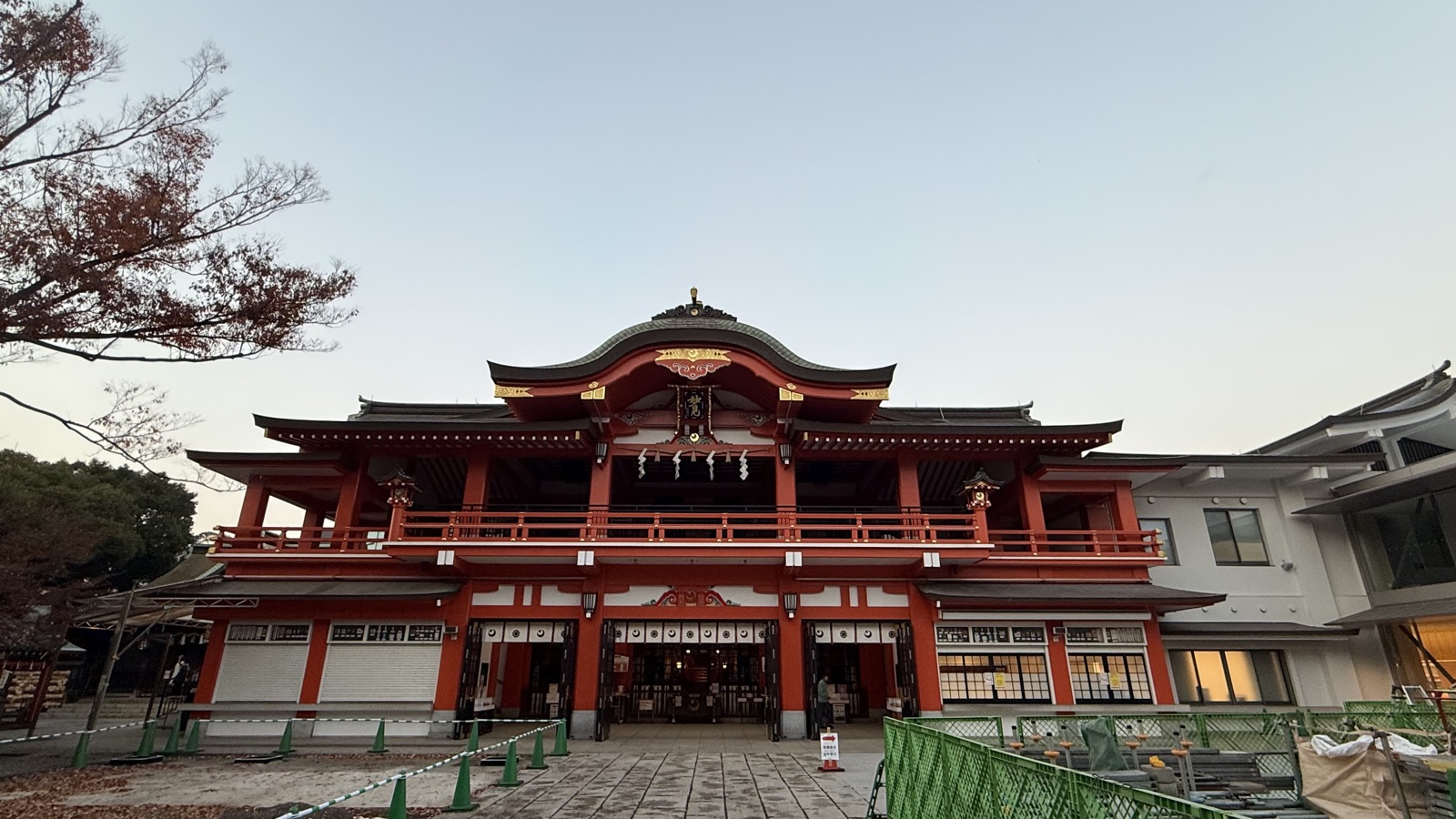
The two-storey shrine building, with a separate worship hall on each floor / Sonjoden, said to serve as both tower gate and shrine building / Myoken Pond.
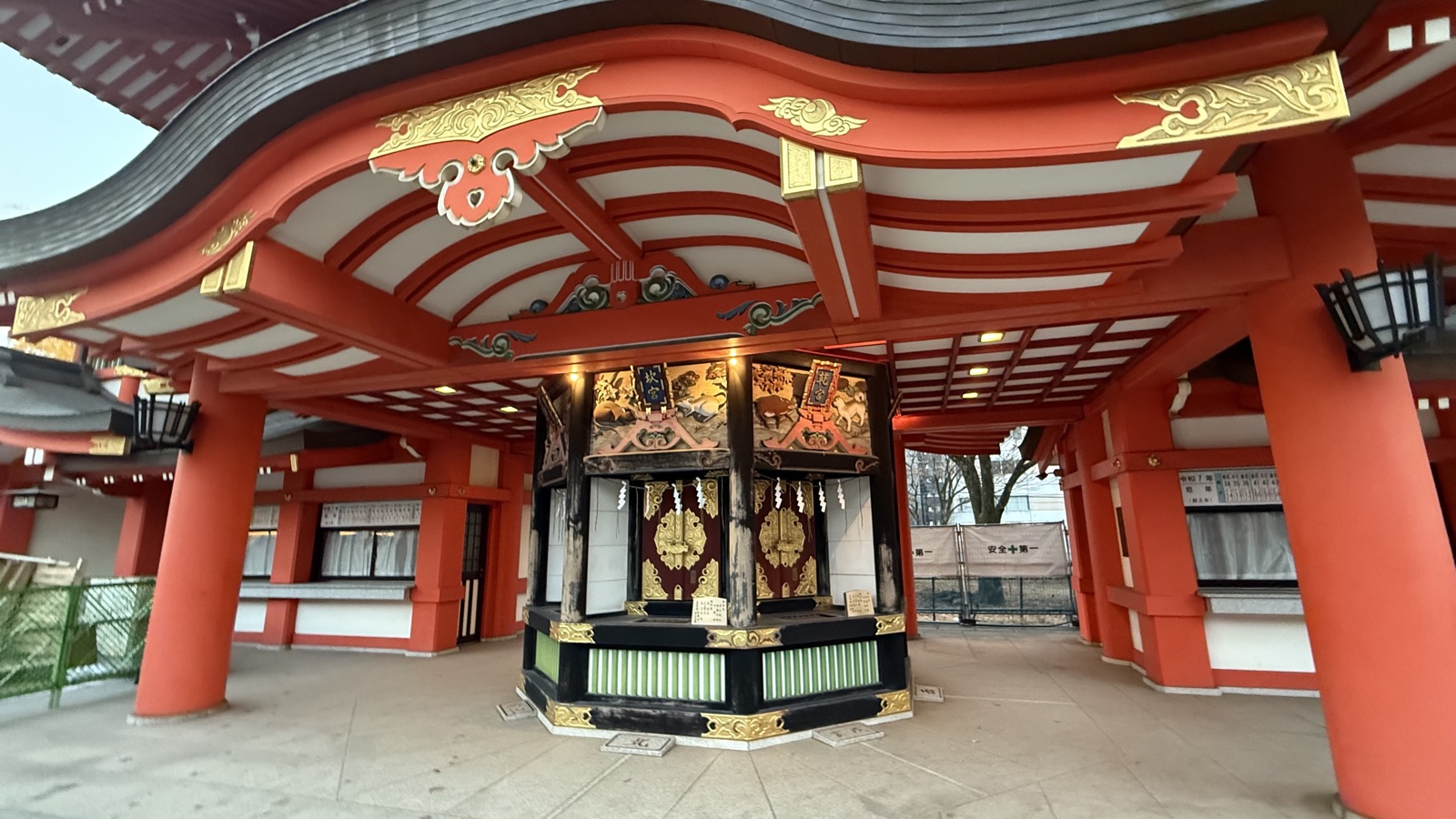
An octagonal shrine building inside Sonjoden. Panels around it show the twelve zodiac animals.
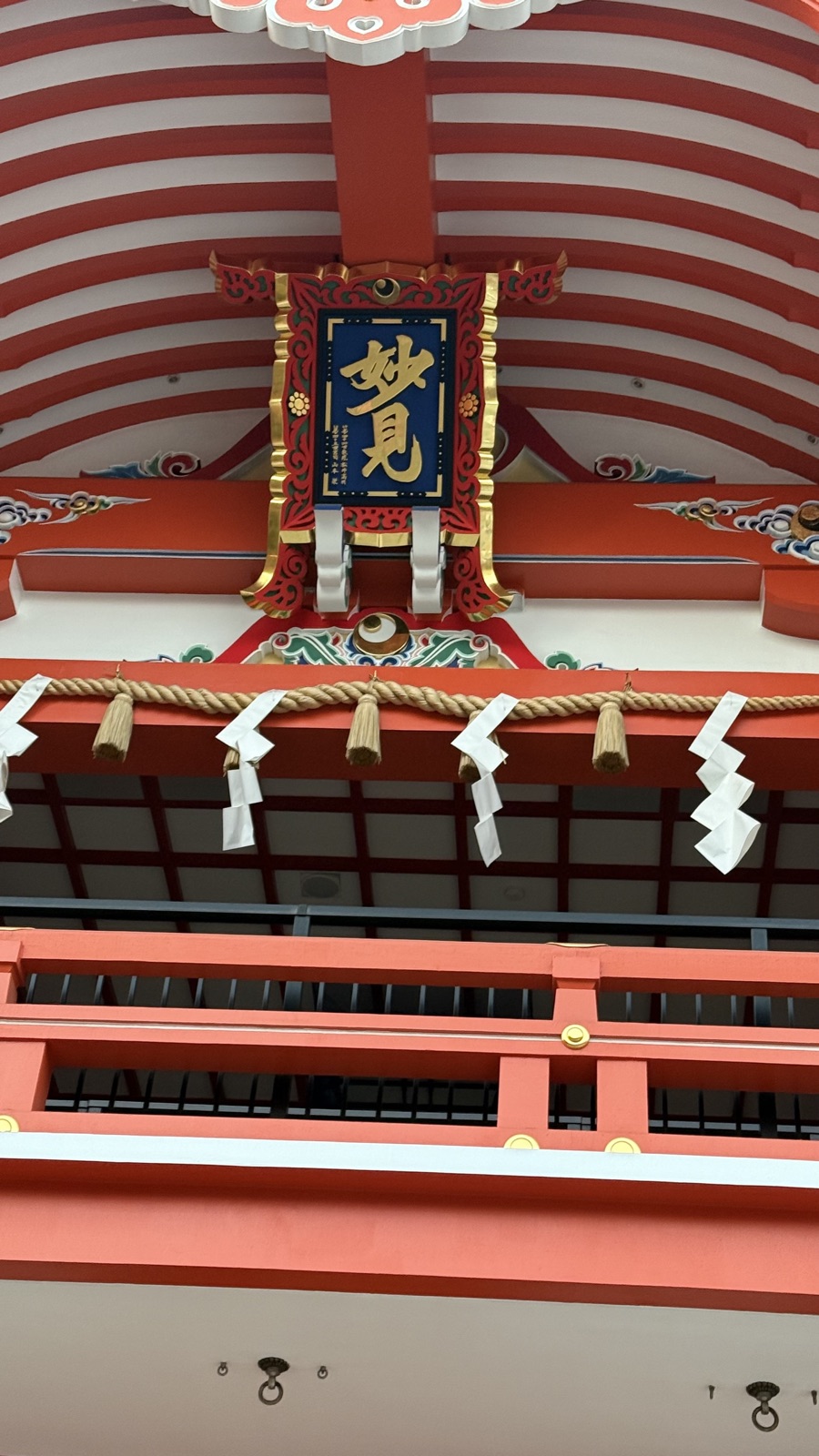
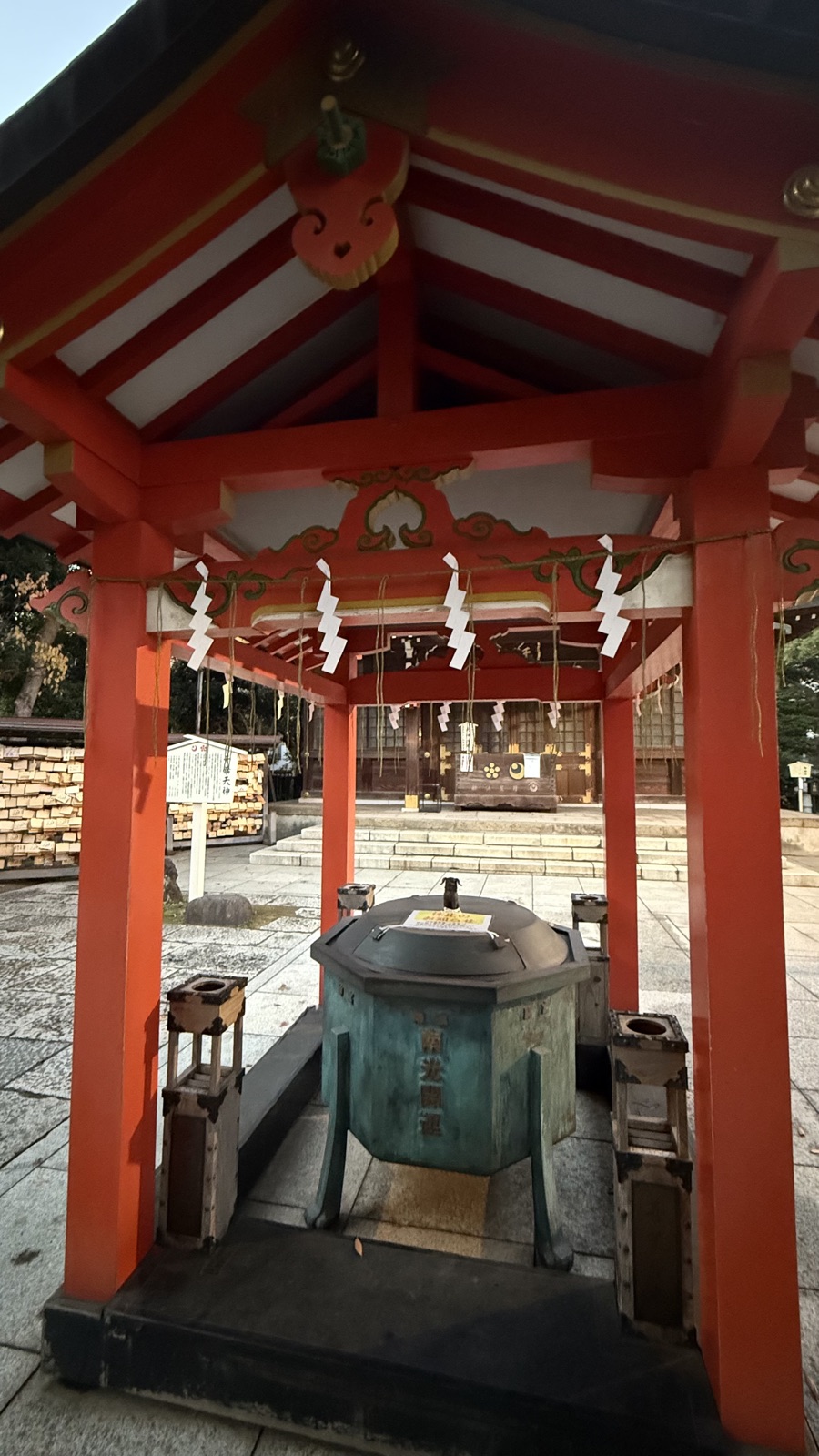
An incense burner under a vermilion shelter. A shrine building stands behind it.
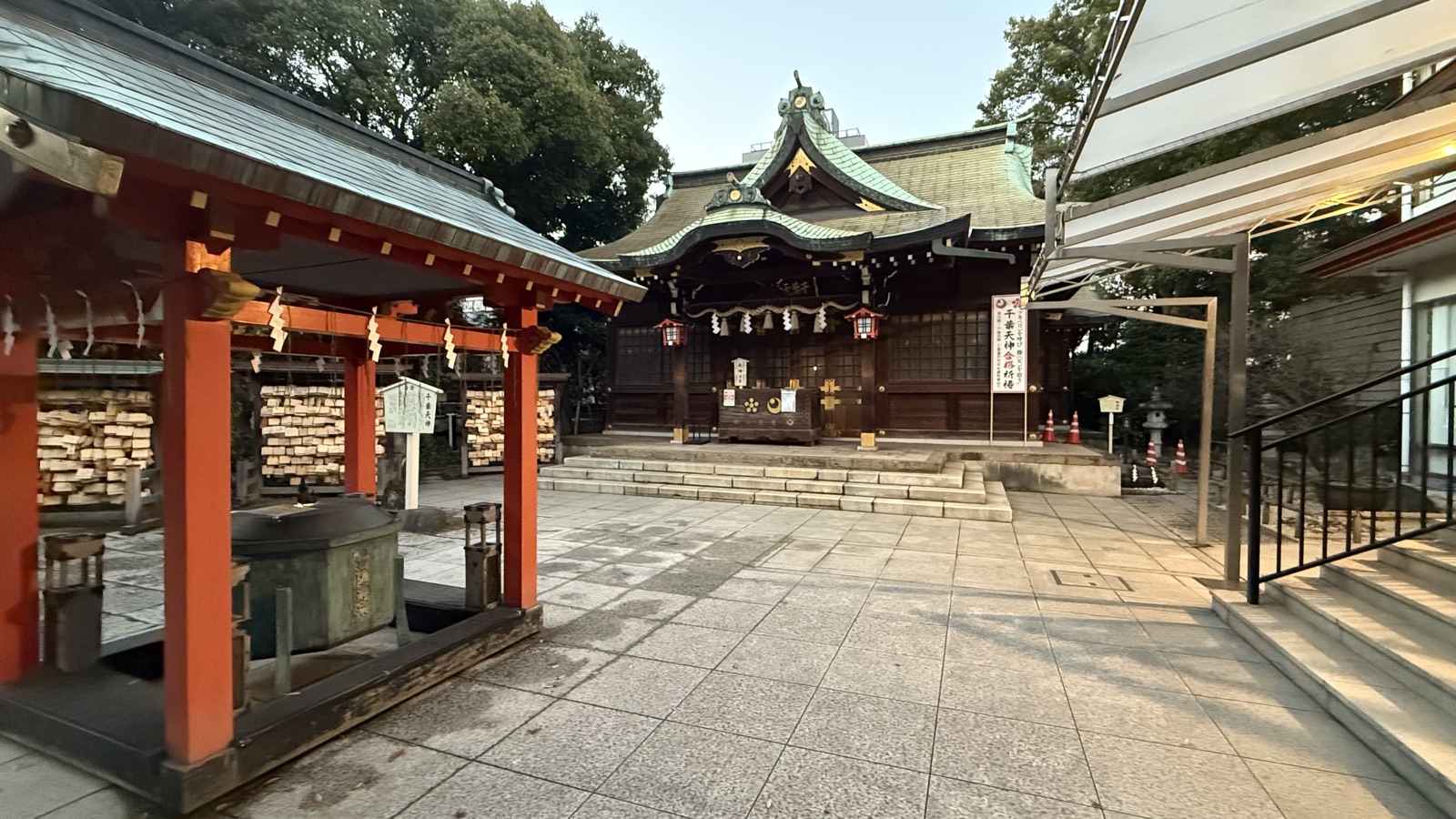
The auxiliary Chiba Tenjin. Ema plaques for exam success line the shrine.
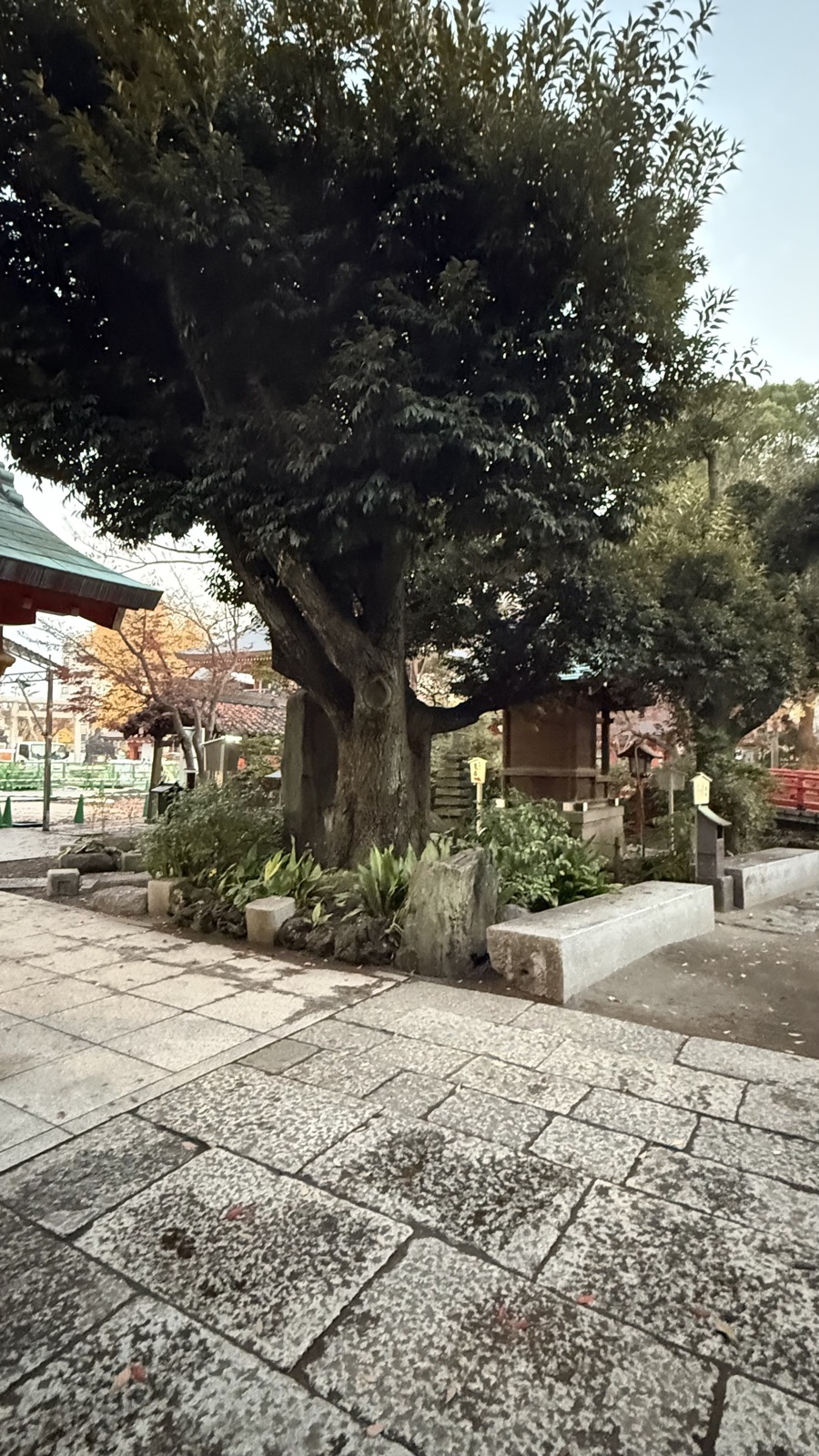
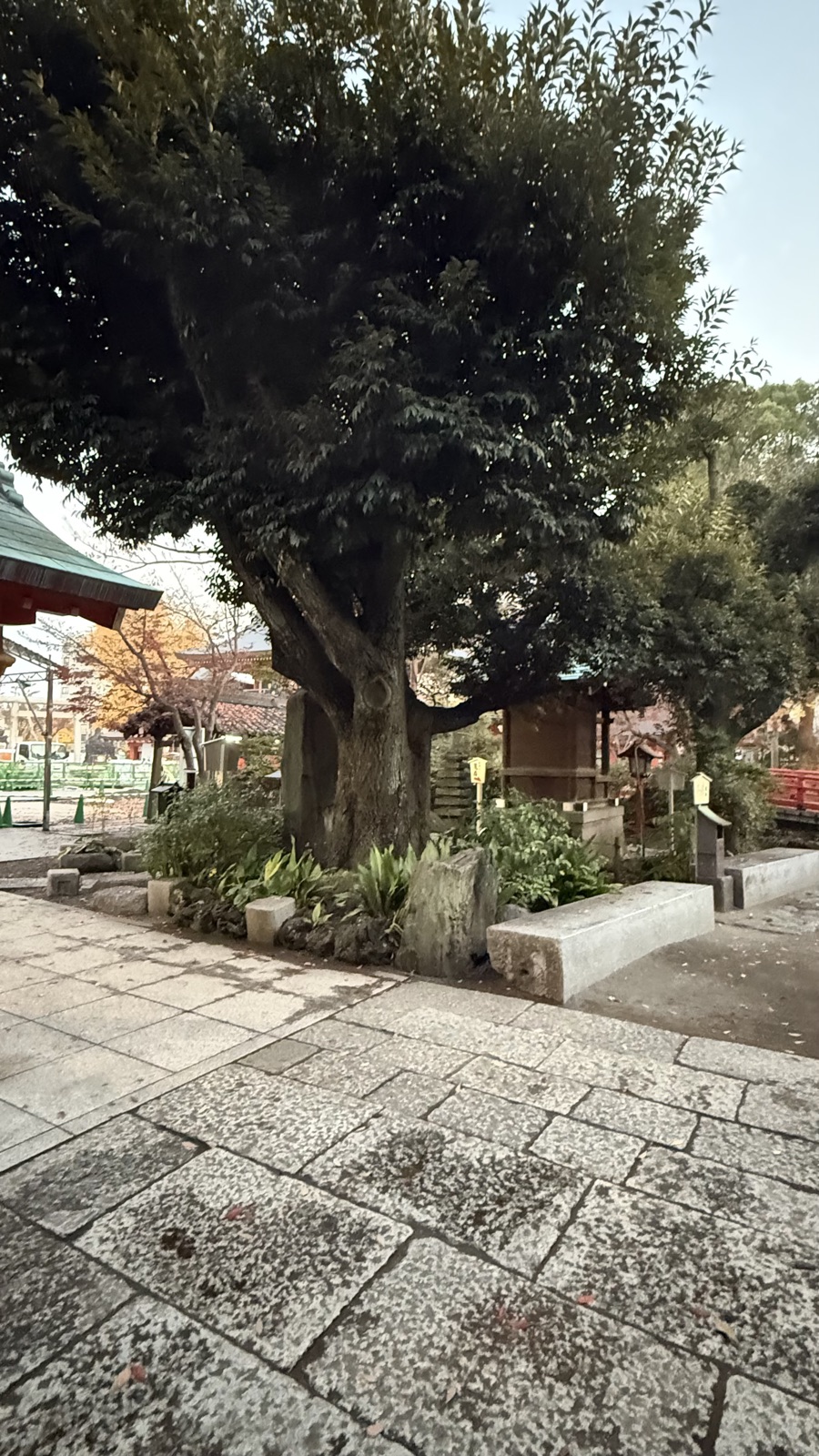
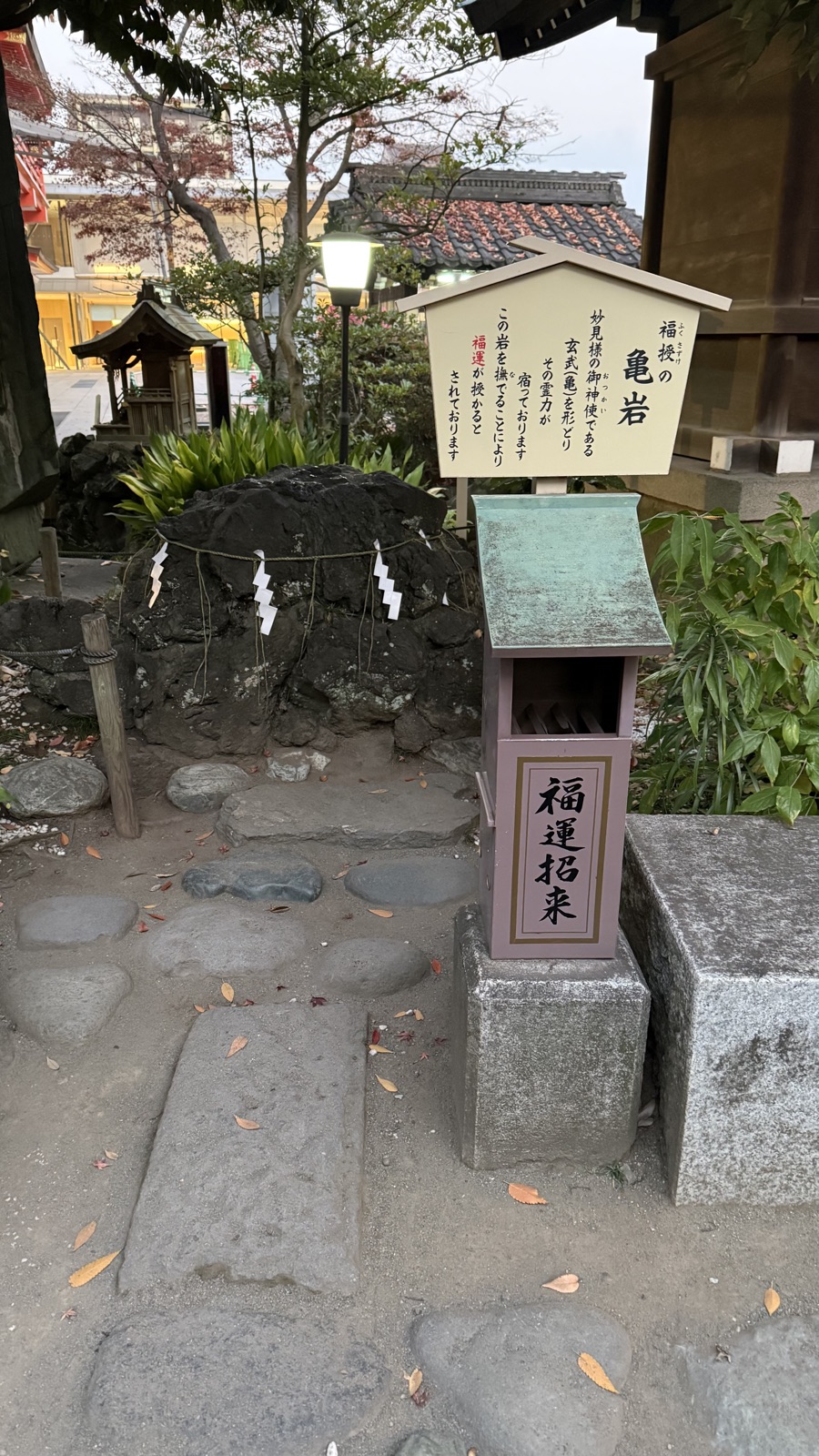
The "Kameiwa of Good Fortune". The rock is said to represent Genbu, the tortoise-serpent divine messenger of Myoken.
Cultural context
The deity is now called Hokushin Myoken Sonjo-o. Myoken was originally a Buddhist bodhisattva, and when the shrine was established in the Meiji separation of Shinto and Buddhism, Myoken came to be identified with Amenominakanushi (→ article Japan and its shrines). A god whose name was explained anew.