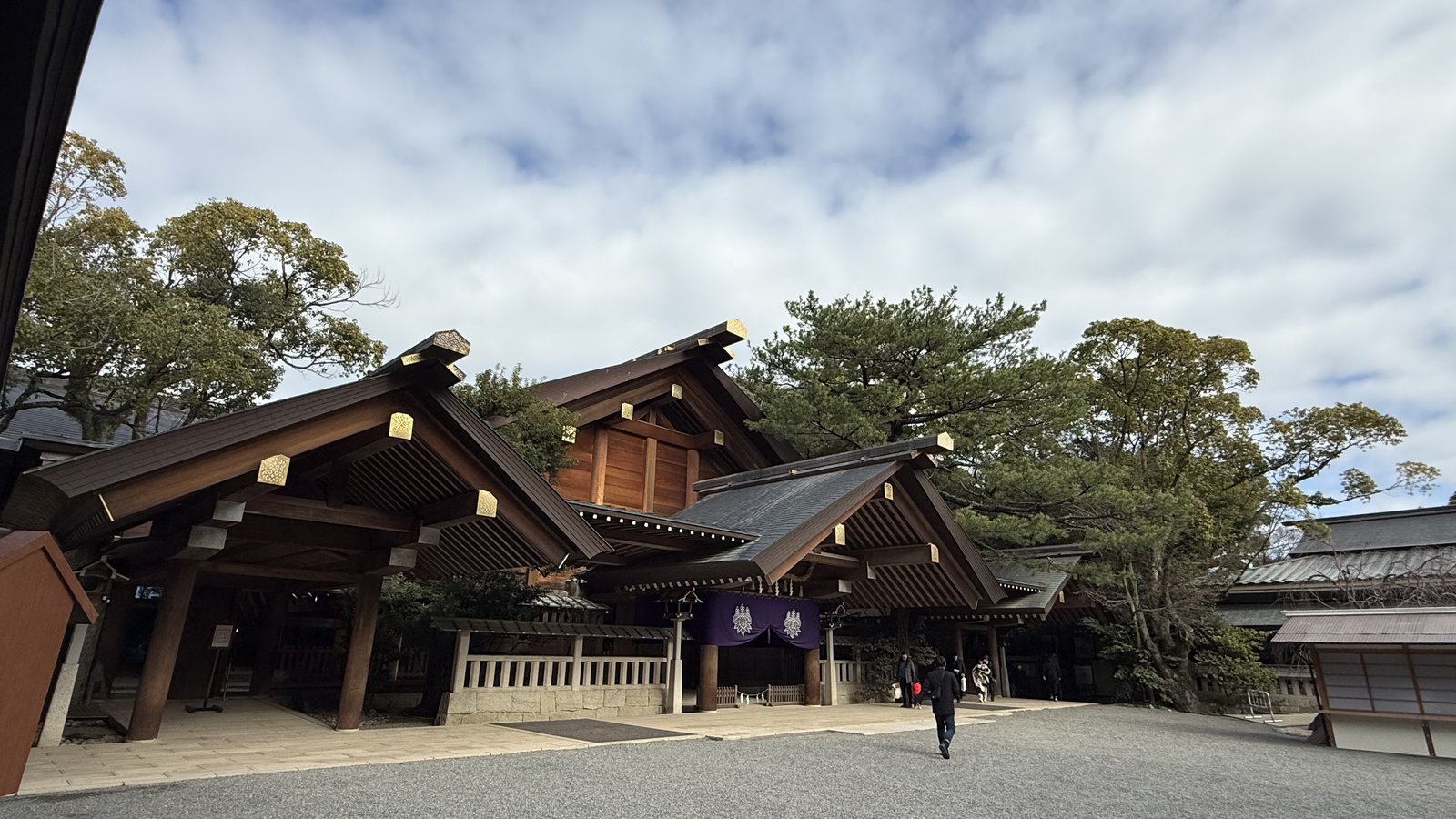
Visited in person · Original photography
Origins and founding
It enshrines Kusanagi, the sacred sword and one of the Three Sacred Treasures. The shrine is said to have begun when Miyazuhime, the consort of Yamato Takeru, enshrined at Atsuta the sword that he had left behind on his return from the eastern campaign (according to the shrine’s tradition, in the reign of Emperor Keiko, about 1,900 years ago). It is a Myojin Taisha listed in the Engishiki and a chokusaisha, a shrine where an imperial envoy attends the main festival. The shrine itself ranks it second only to Ise Jingu. Five more deities are enshrined alongside the main deity, and are known together as the “Gojin-sama”.
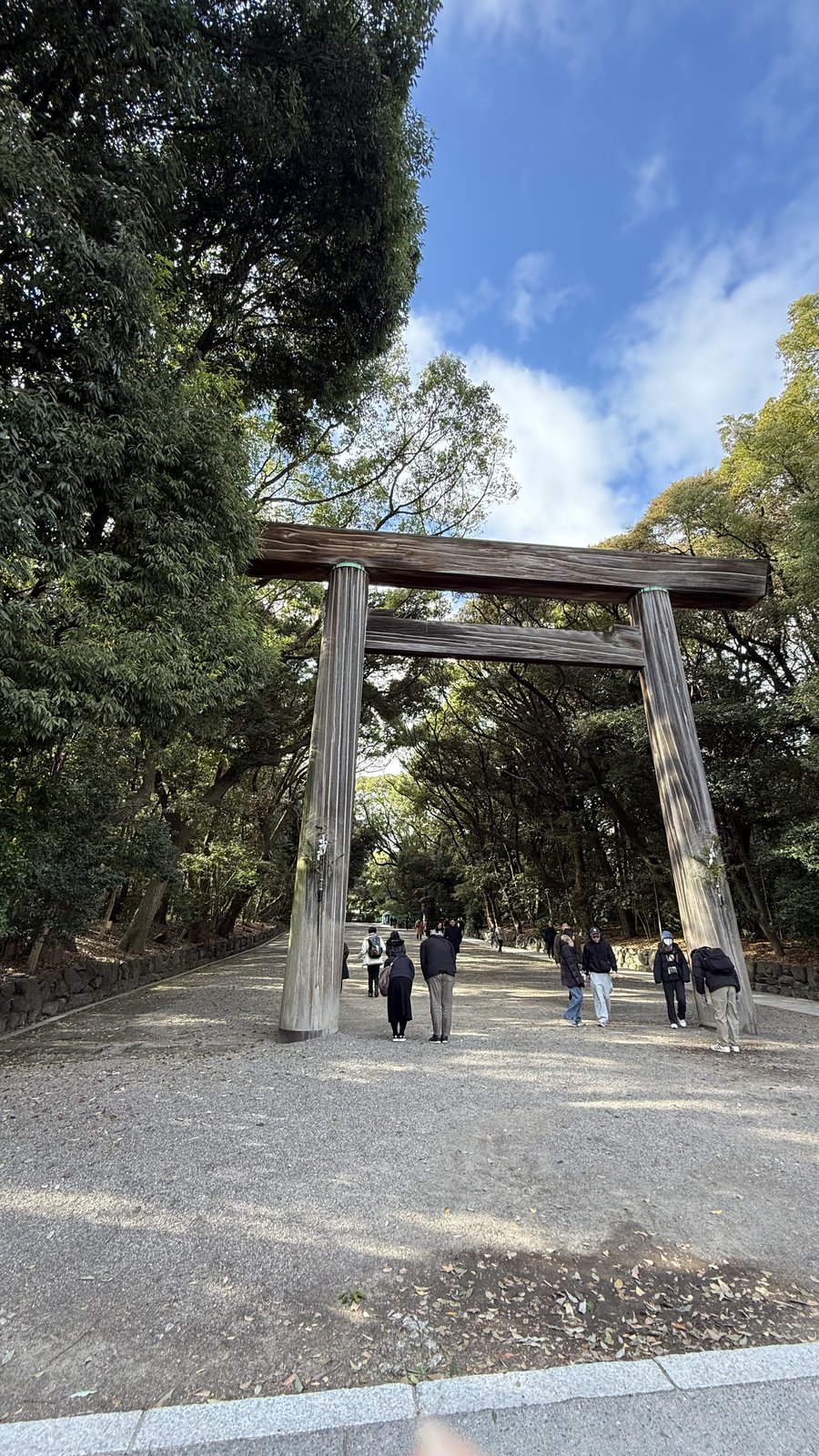
A large wooden torii on the approach.
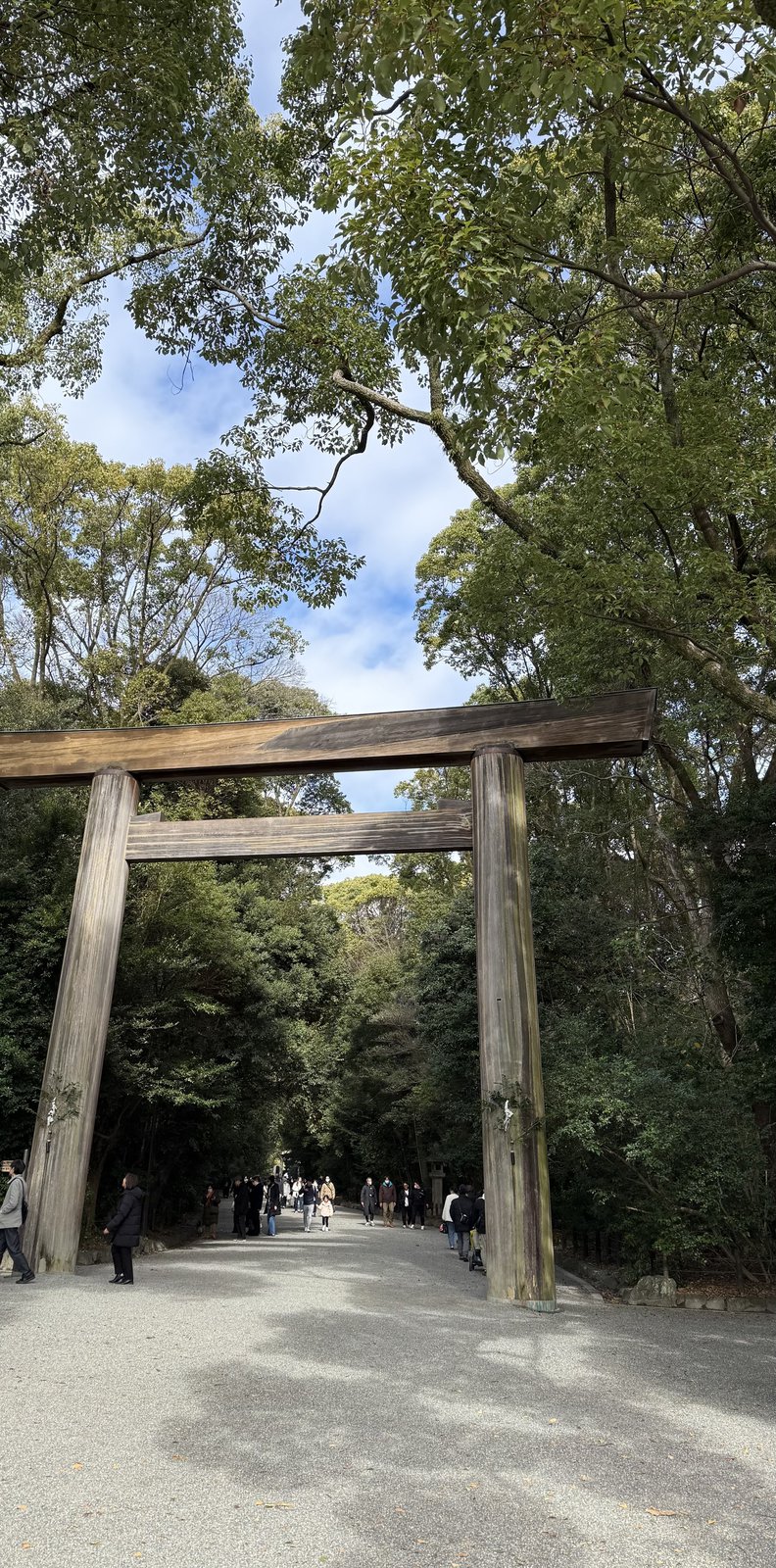
Another large wooden torii. The thickness of its pillars can be seen.
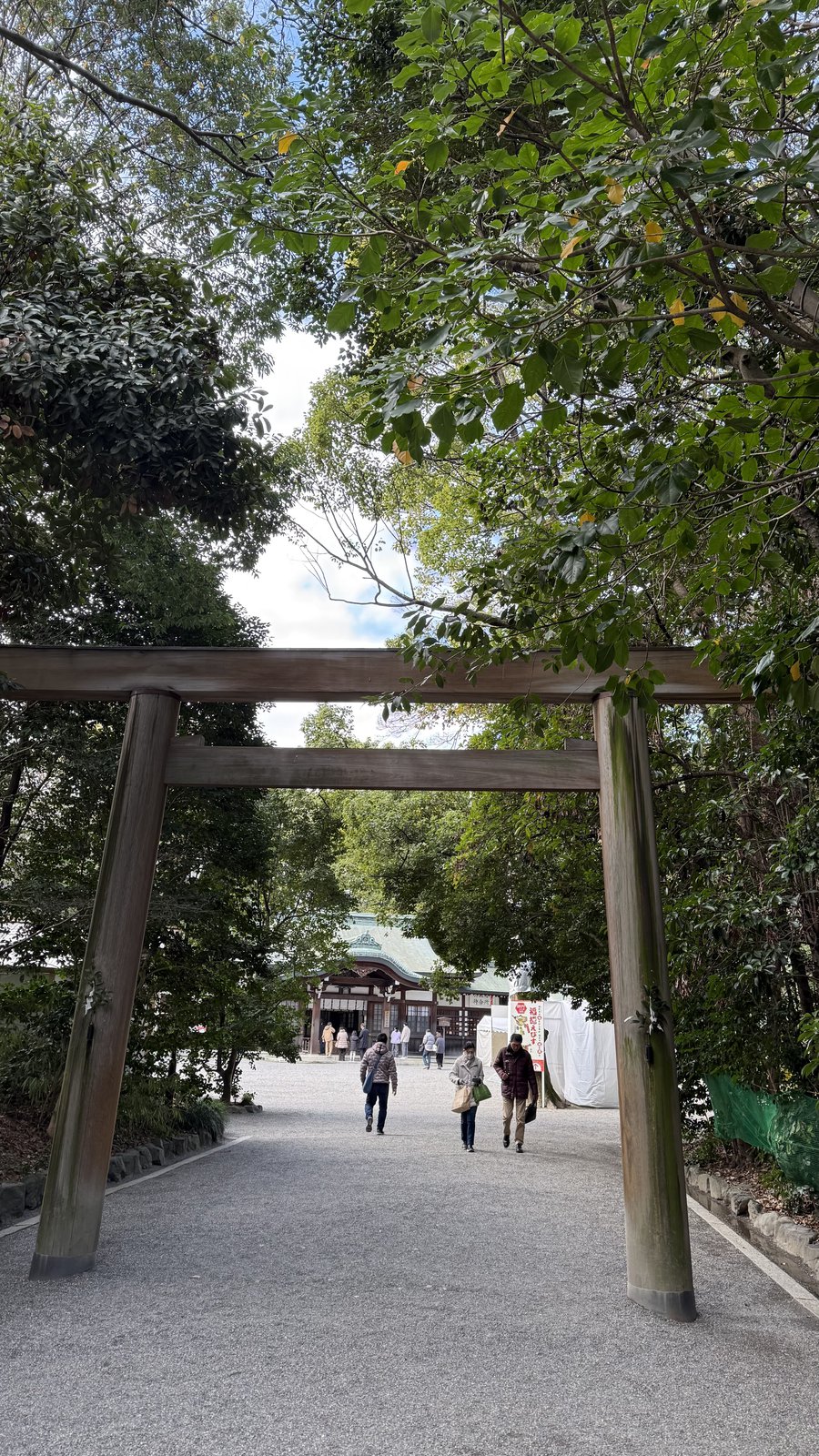
Beyond a wooden torii, the courtyard with the main hall comes into view.
What to see
The main hall. The large wooden torii on the approach. The great camphor tree in the grounds: its signboard says it is also said to have been planted by Kobo Daishi, and is said to be more than a thousand years old. The Sakuma stone lantern: its signboard says it was donated in 1630 (Kan’ei 7) and is renowned as one of Japan’s three great lanterns, together with the great lanterns of Nanzen-ji in Kyoto and Ueno Toshogu in Tokyo. Minamishingu Shrine, painted vermilion: its signboard says its building is the only vermilion-lacquered one in the shrine. Yatsurugi-no-miya, the betsugu (detached shrine). Besides the main shrine, the grounds hold one betsugu, twelve sessha and thirty-one massha, the shrine’s auxiliary shrines (according to the shrine).
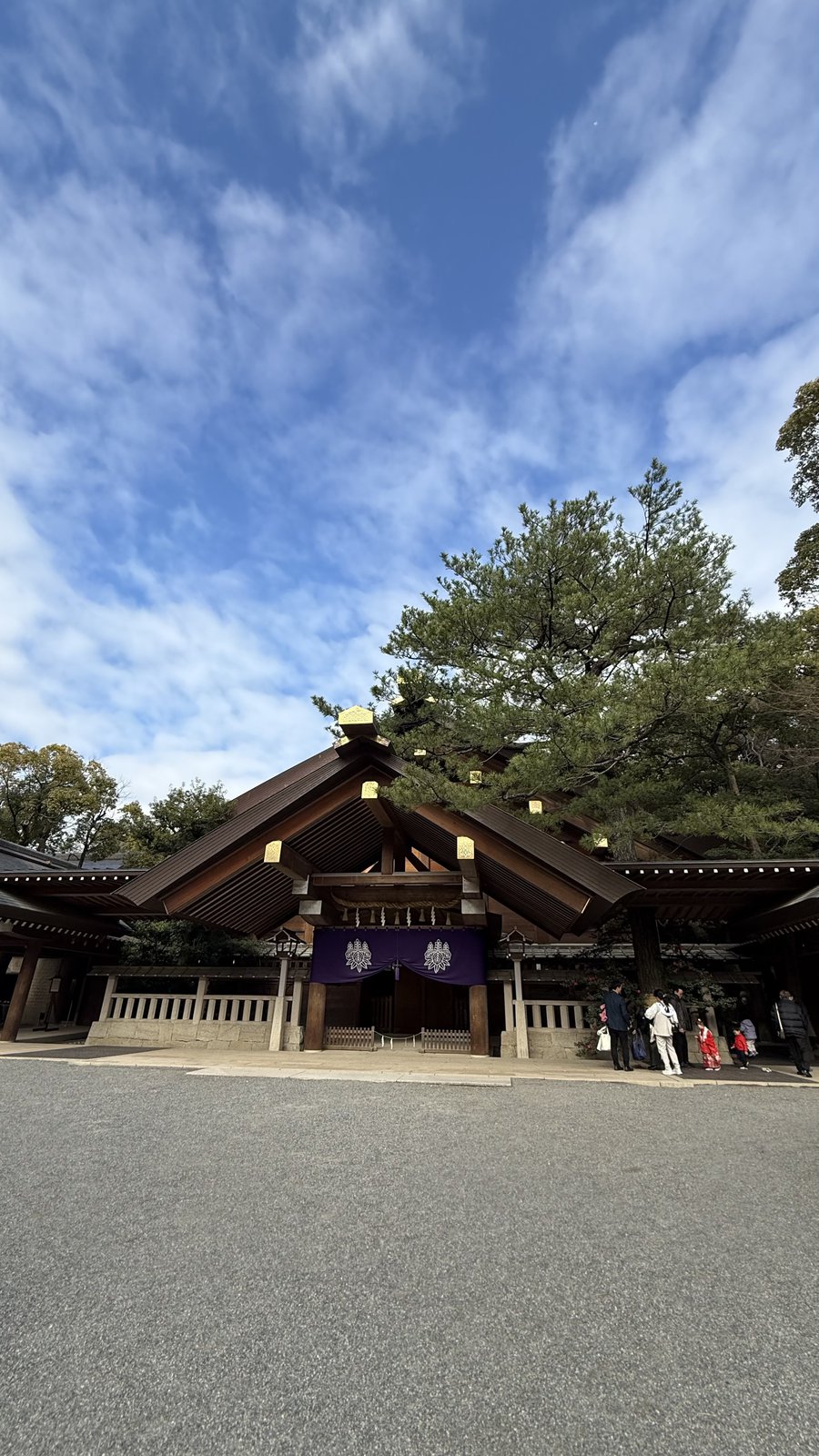
Looking up at the front of the main hall. Gold fittings shine at the ends of the roof.
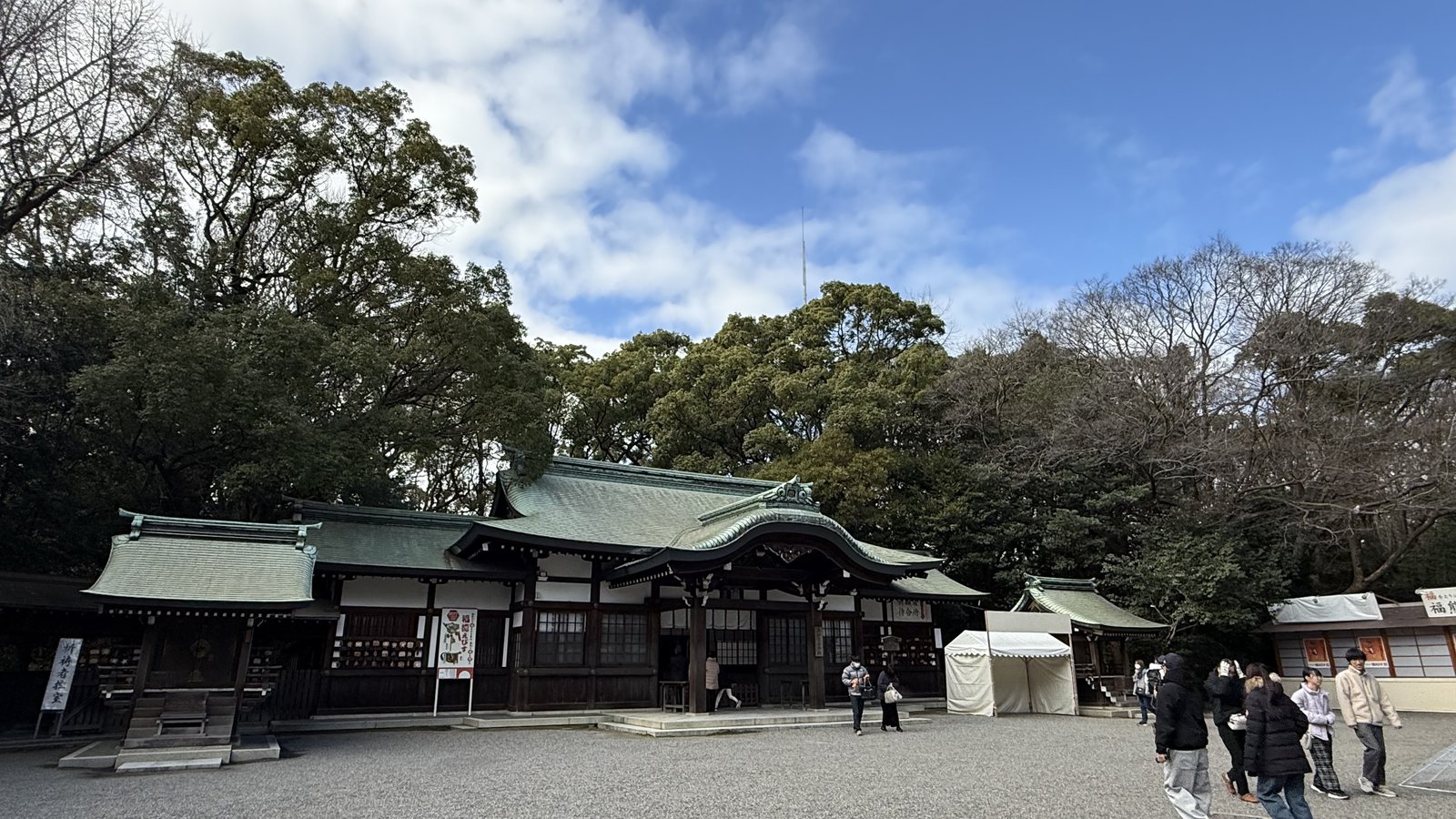
Buildings with green copper roofs in the grounds.
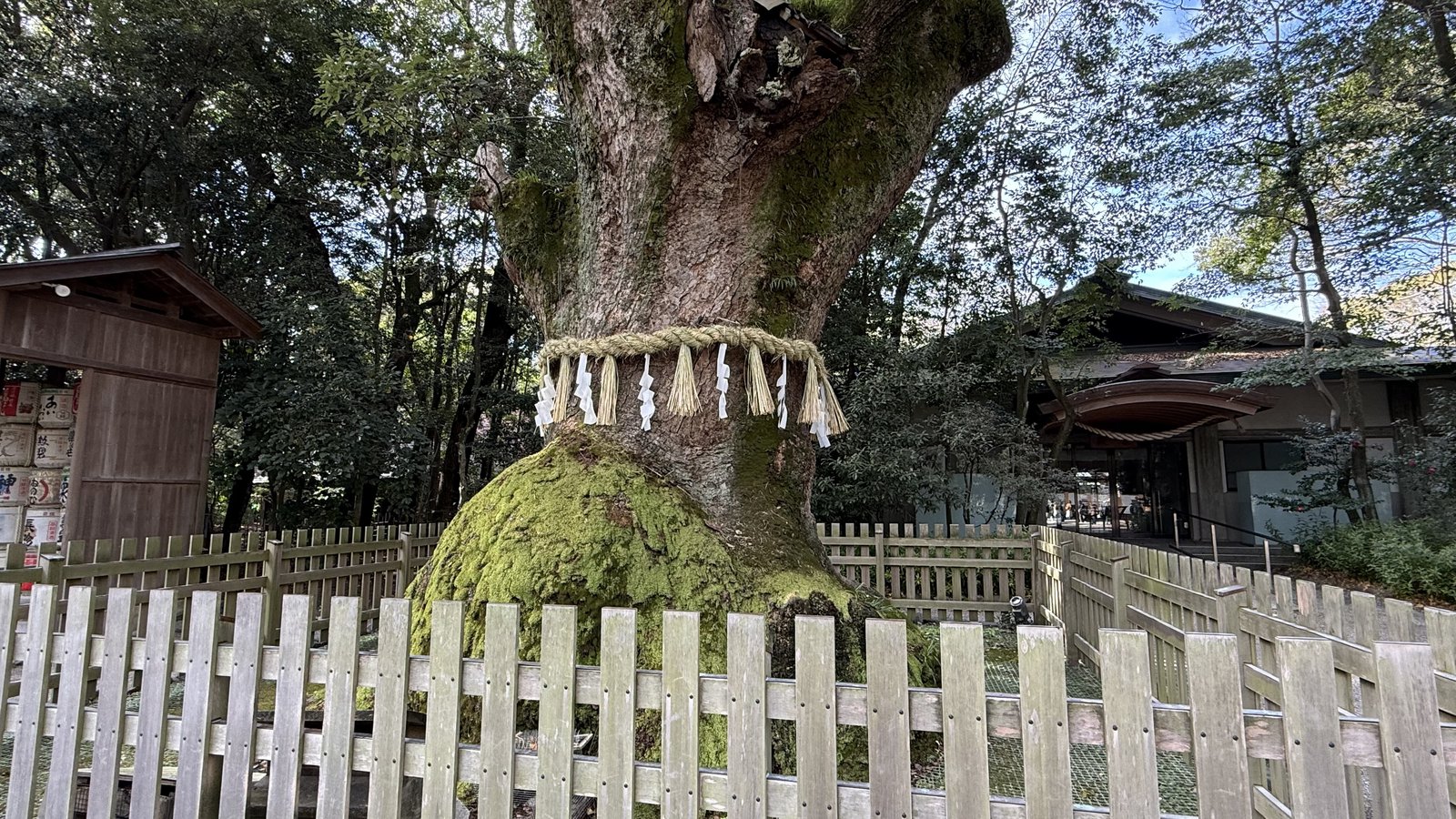
The great camphor tree in the grounds, with a shimenawa around its base and a fence around it.
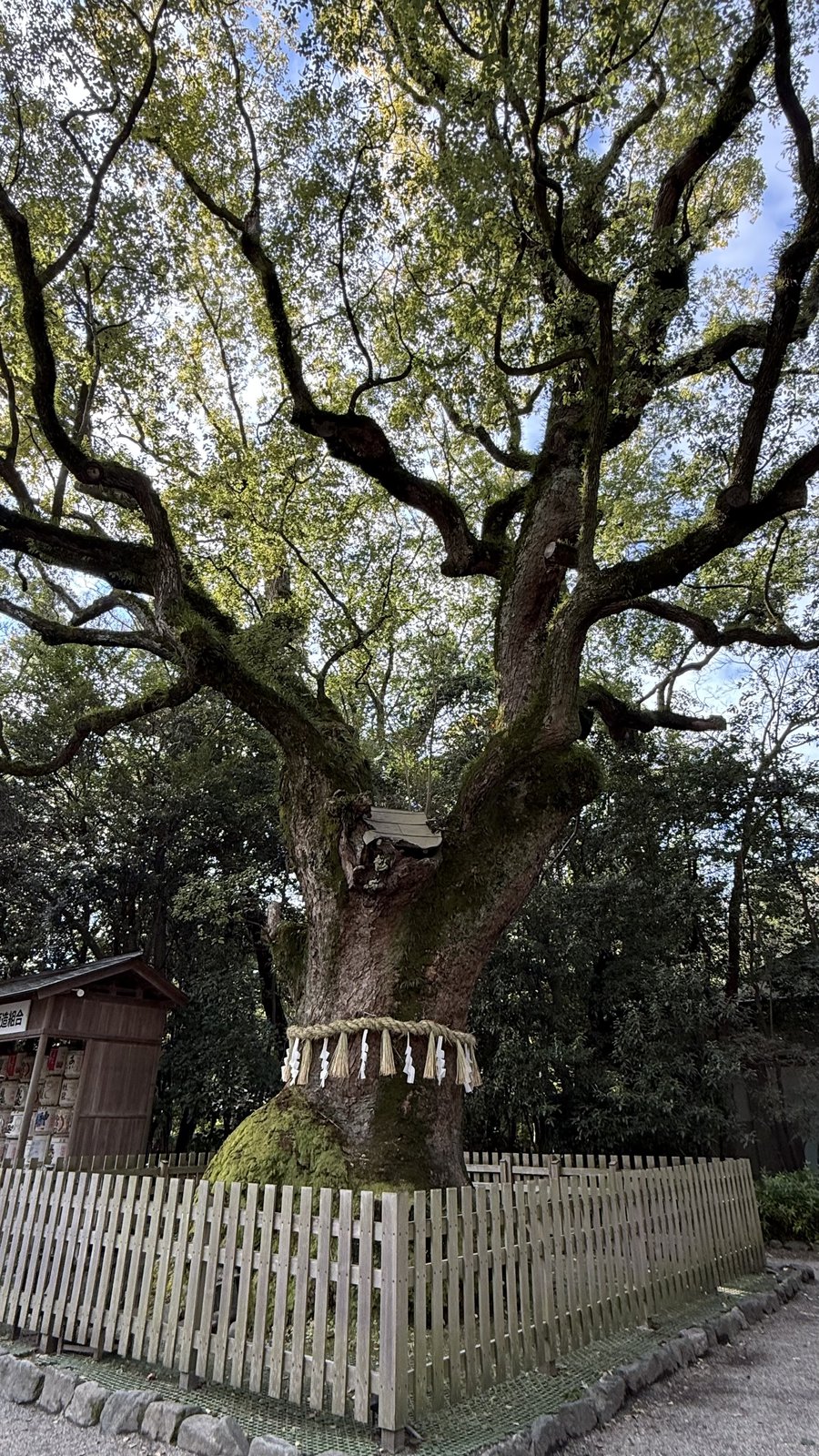
The whole of the great camphor tree, its branches spreading wide.
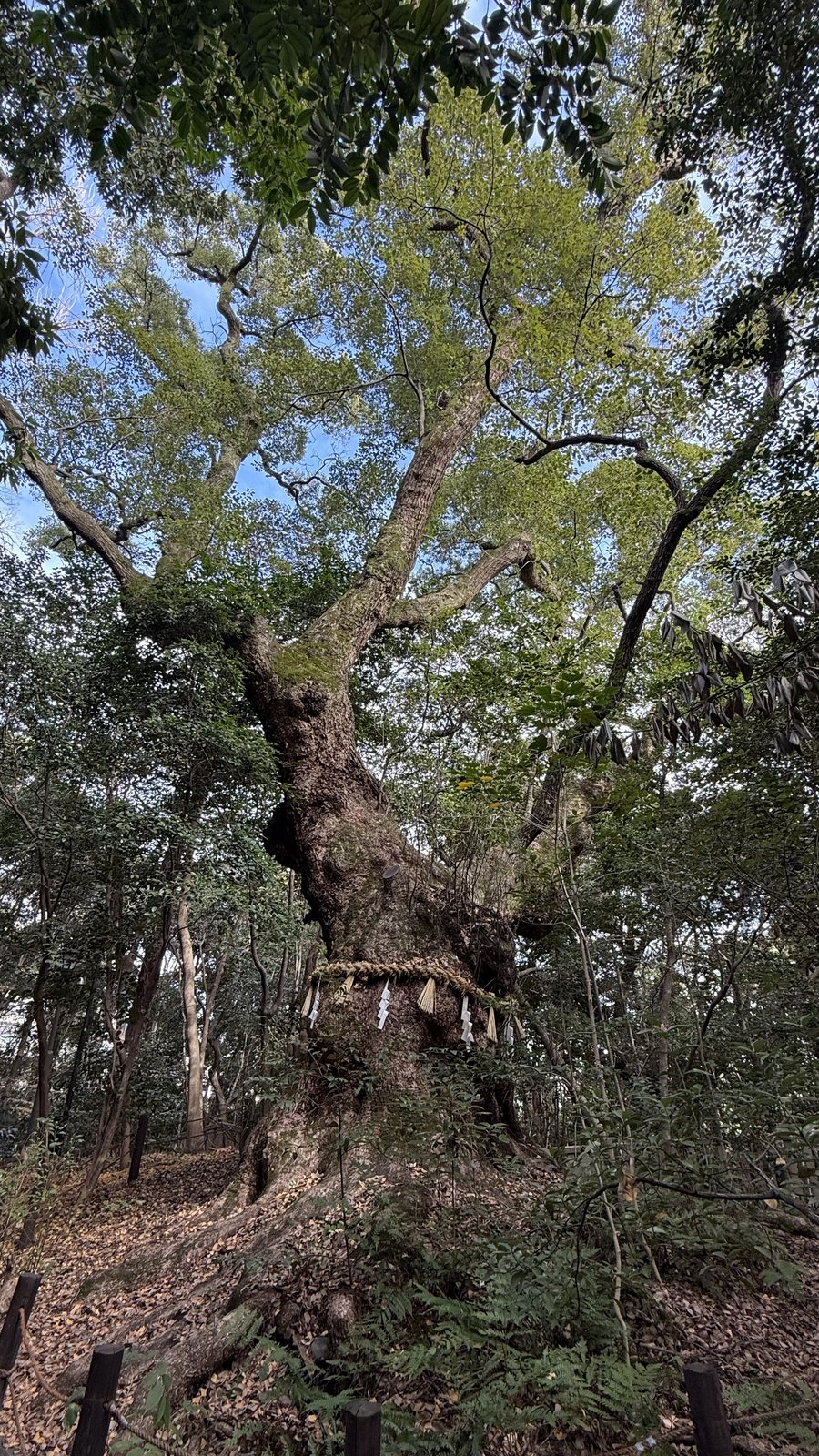
A large tree standing in the woods, with a shimenawa around its trunk.
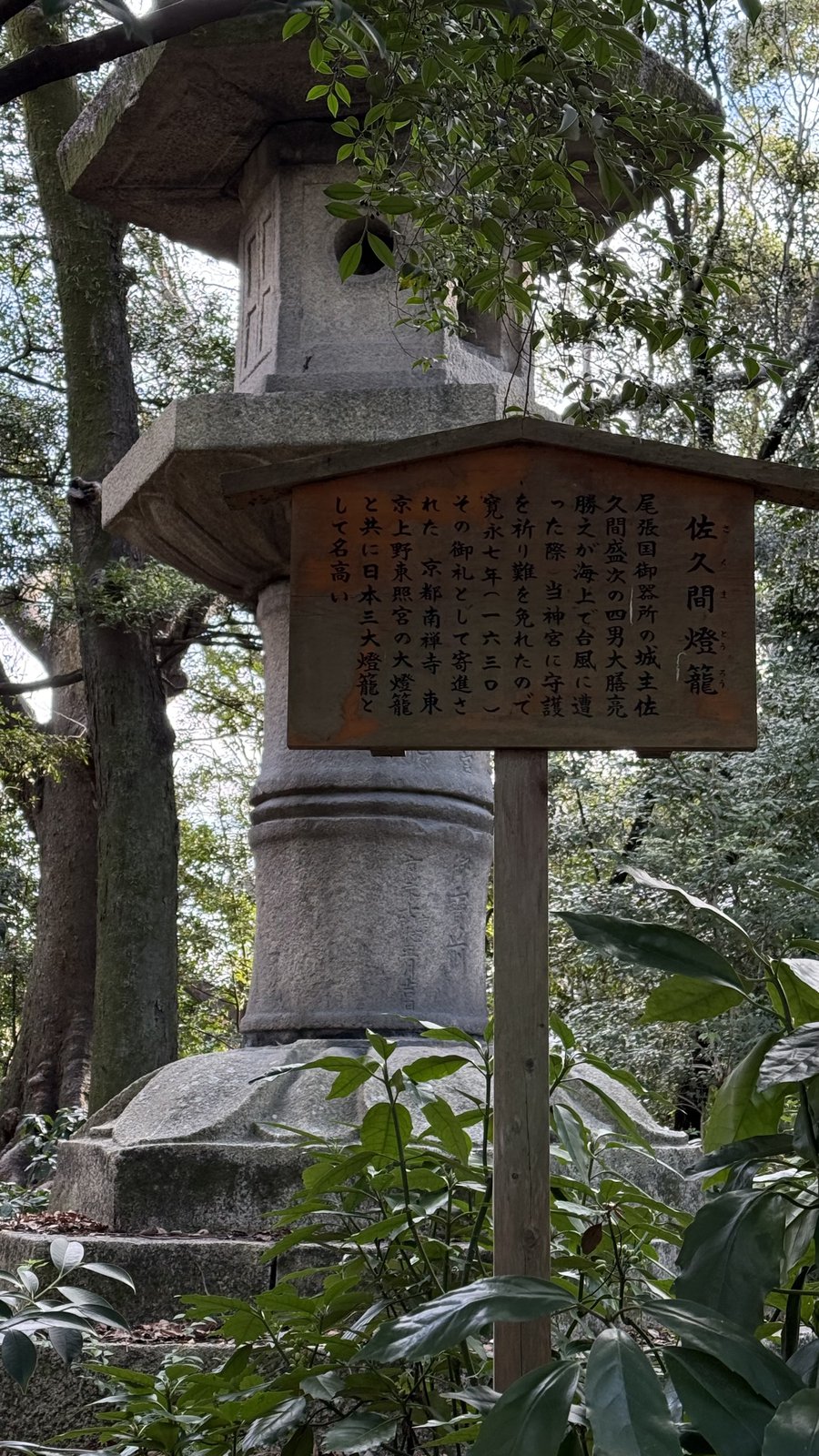
The Sakuma stone lantern, with its signboard standing in front of the great stone lantern.
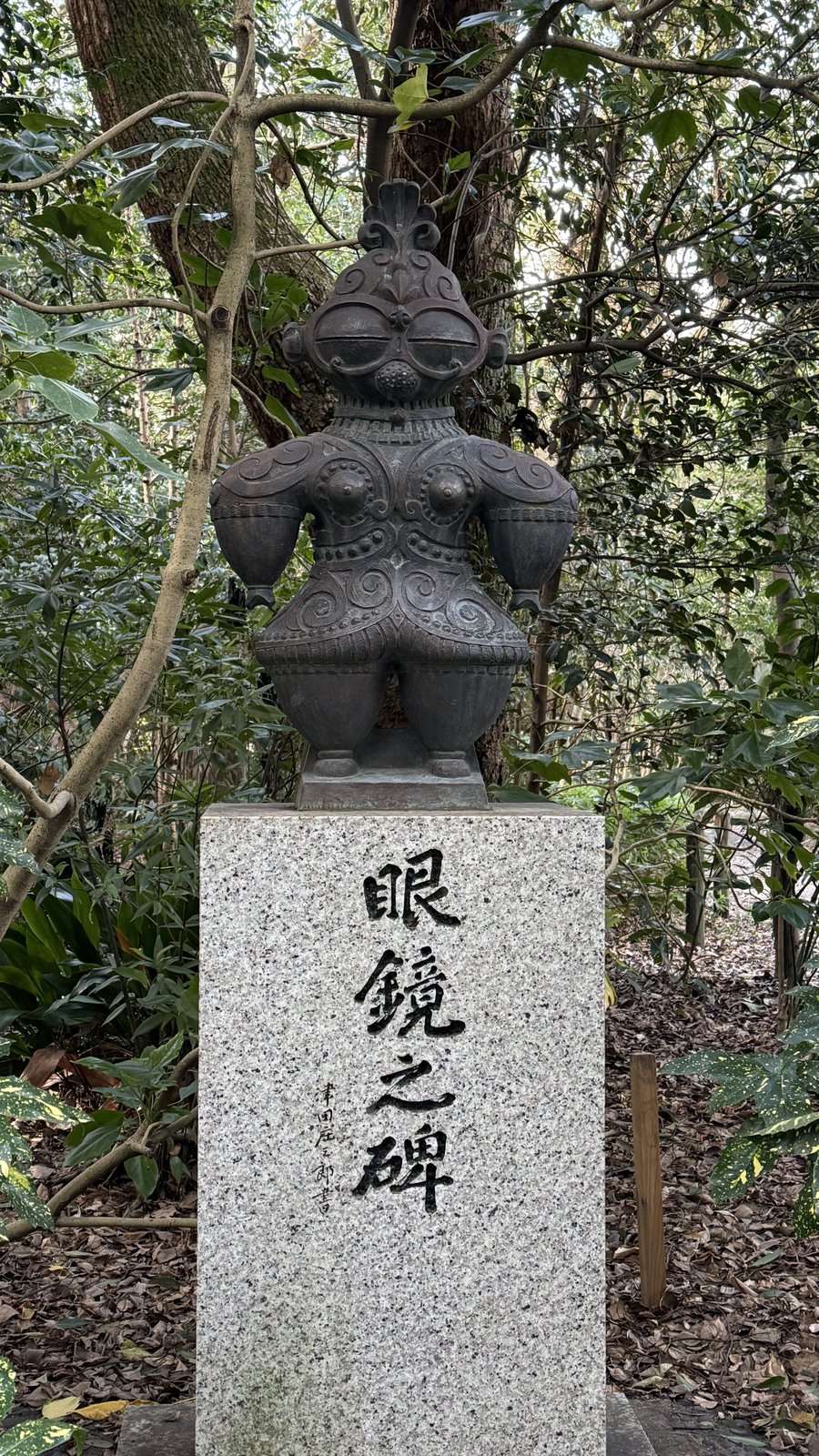
The “Megane no Hi” monument, with a dogu figure standing on top of the stone.
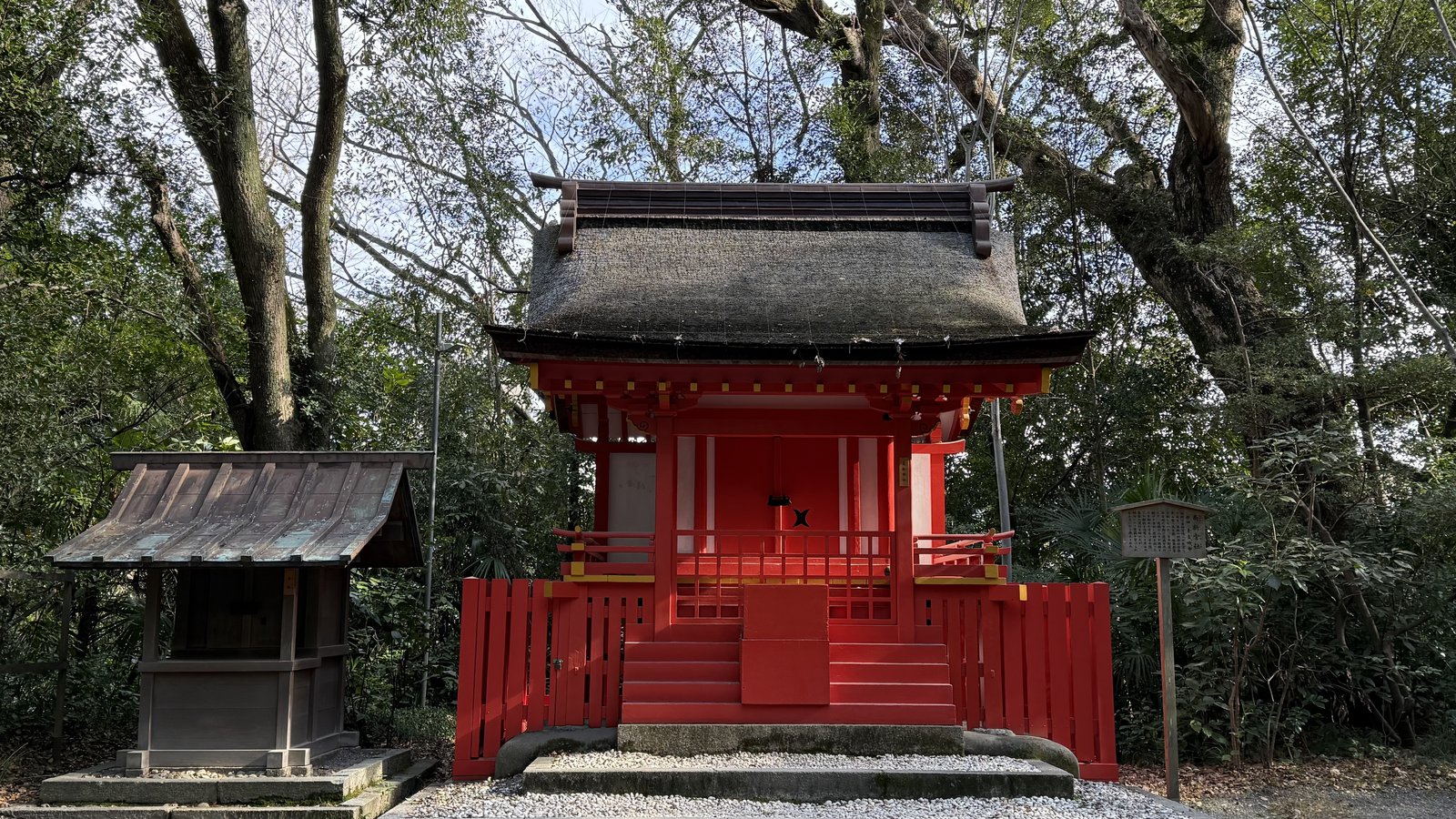
Minamishingu Shrine. The vermilion building stands among the trees.
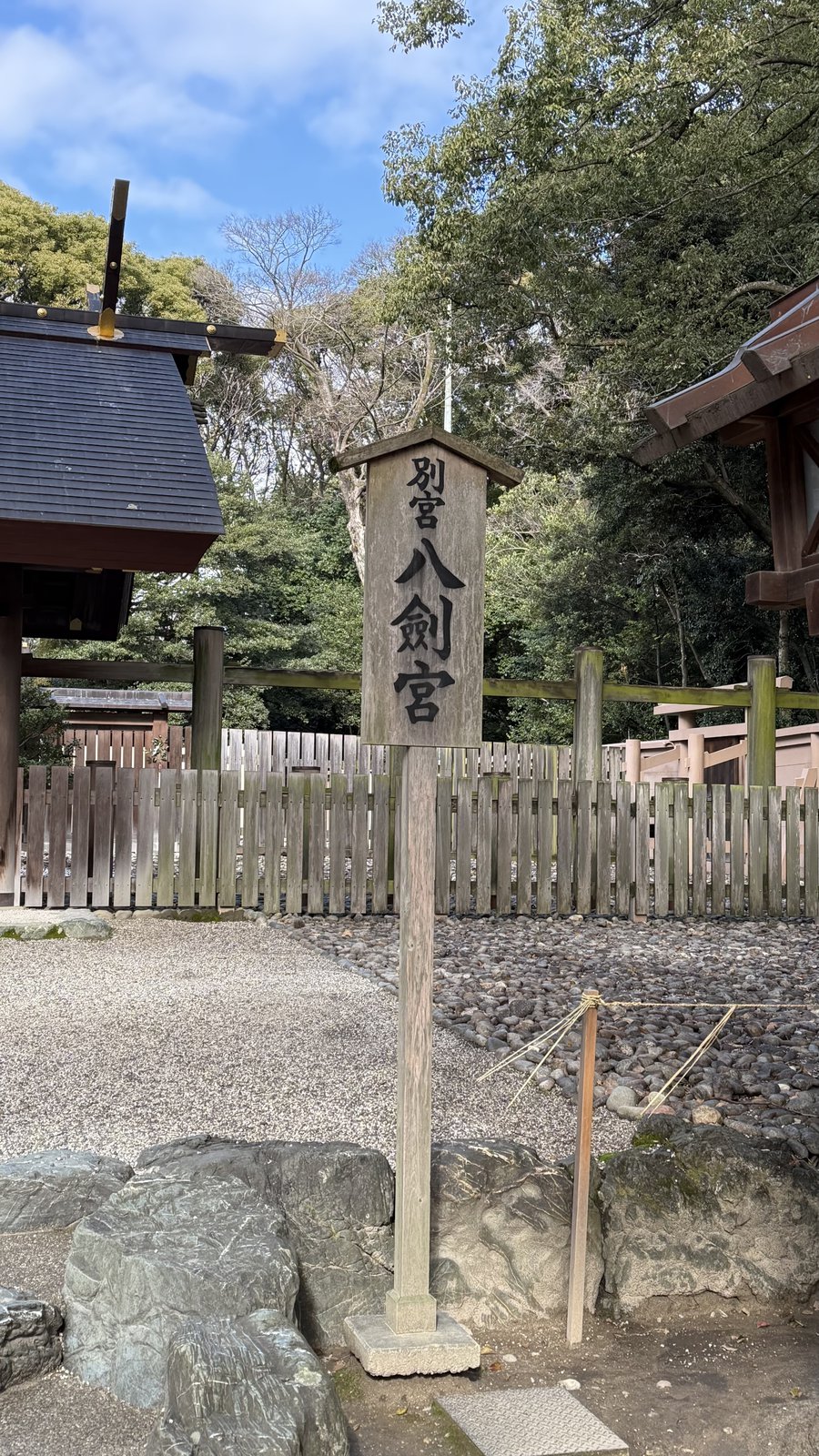
The marker post of Yatsurugi-no-miya, the betsugu. The fence around the shrine can be seen beyond.
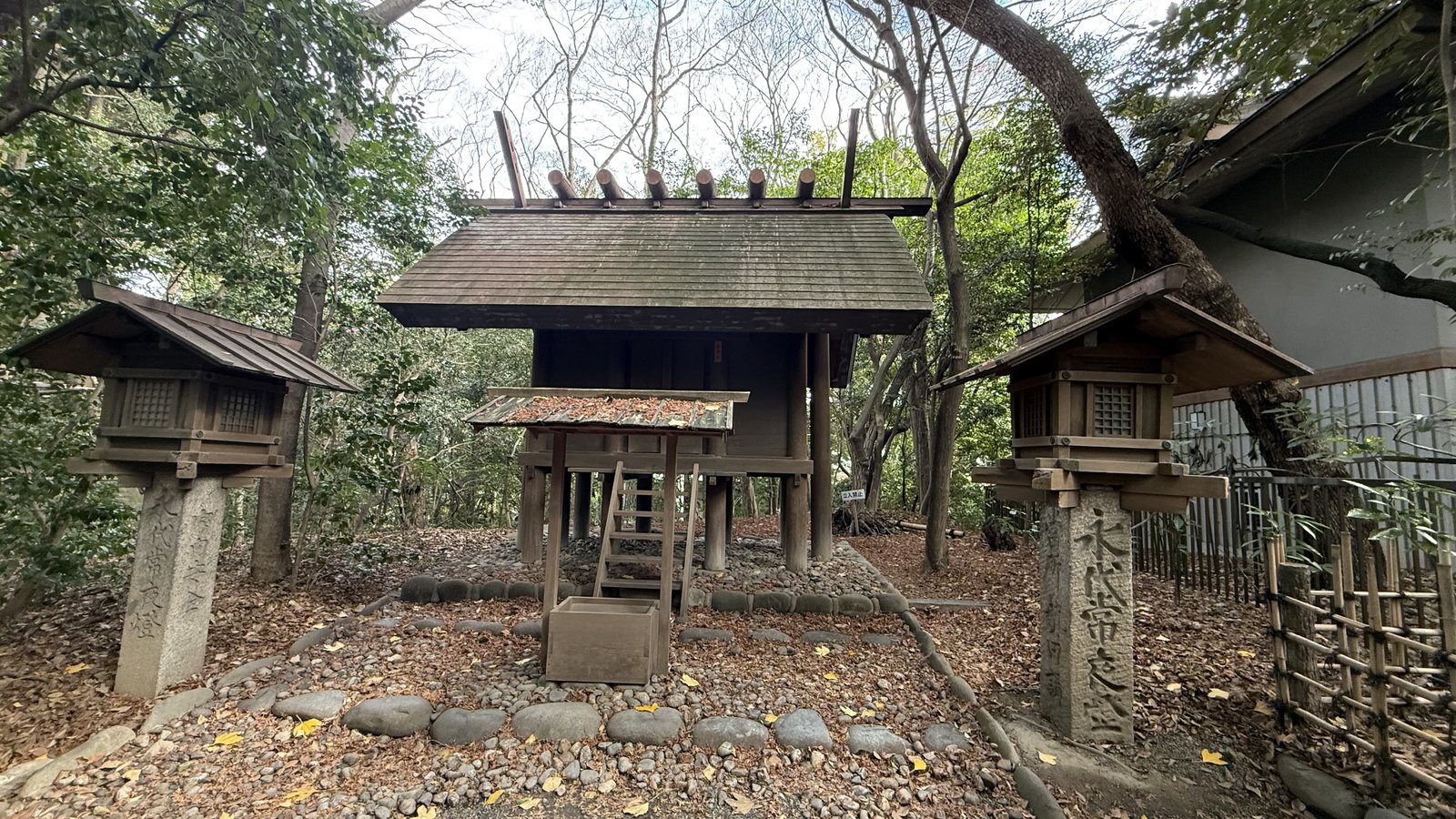
A small shrine among the trees, with stone lanterns on either side.
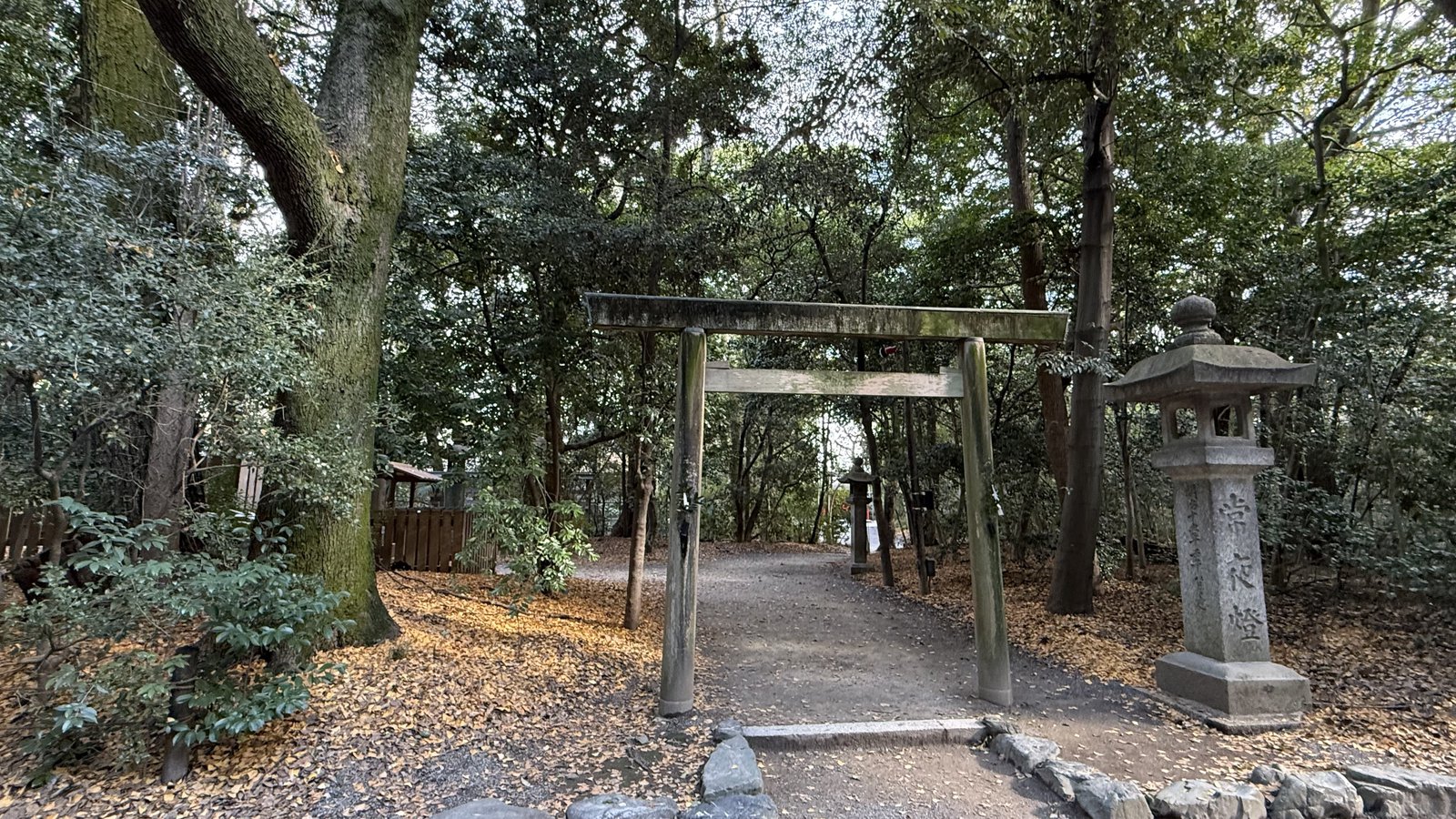
A small wooden torii and a stone lantern on a forest path.
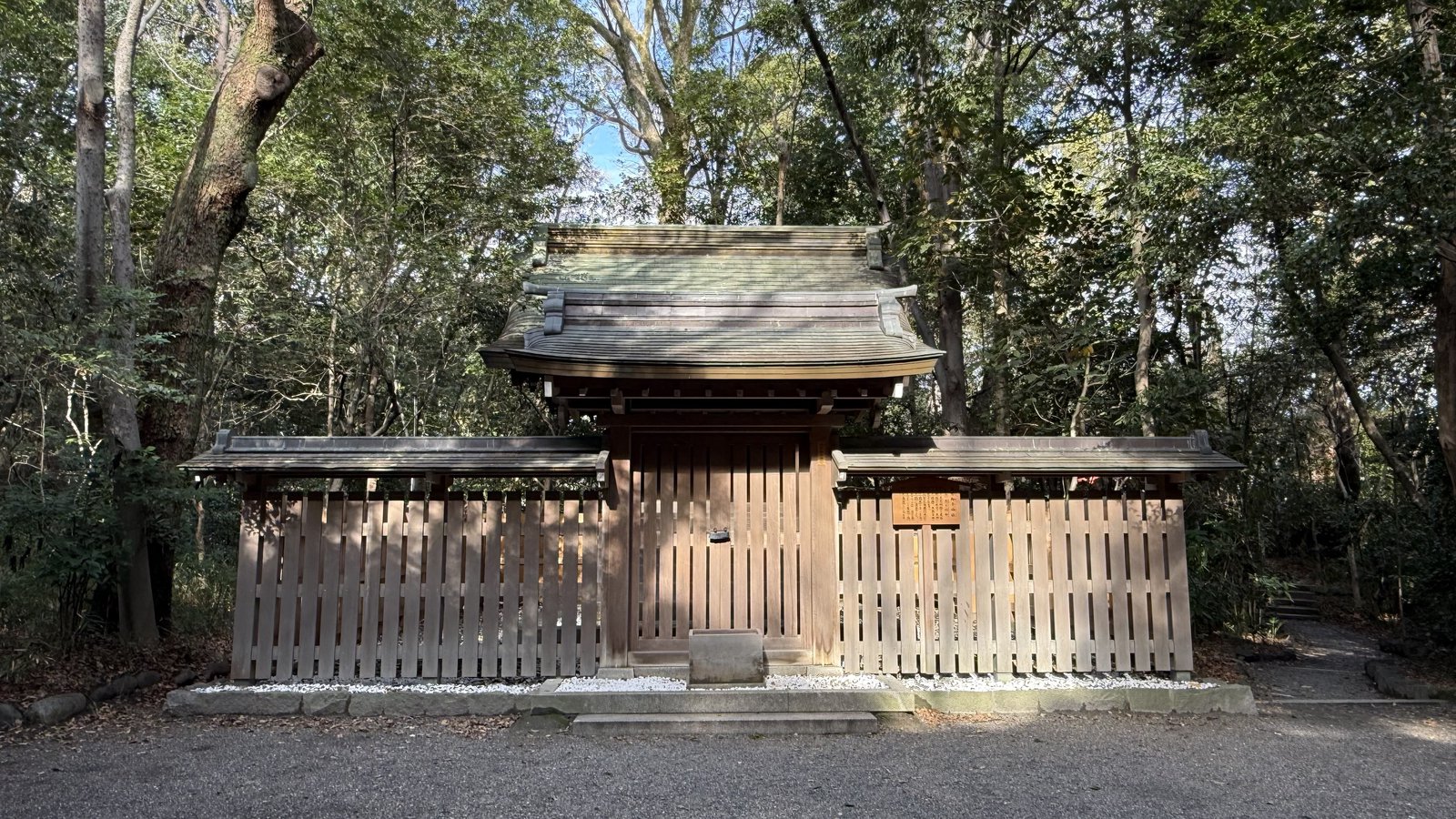
A small shrine enclosed by a wooden fence.
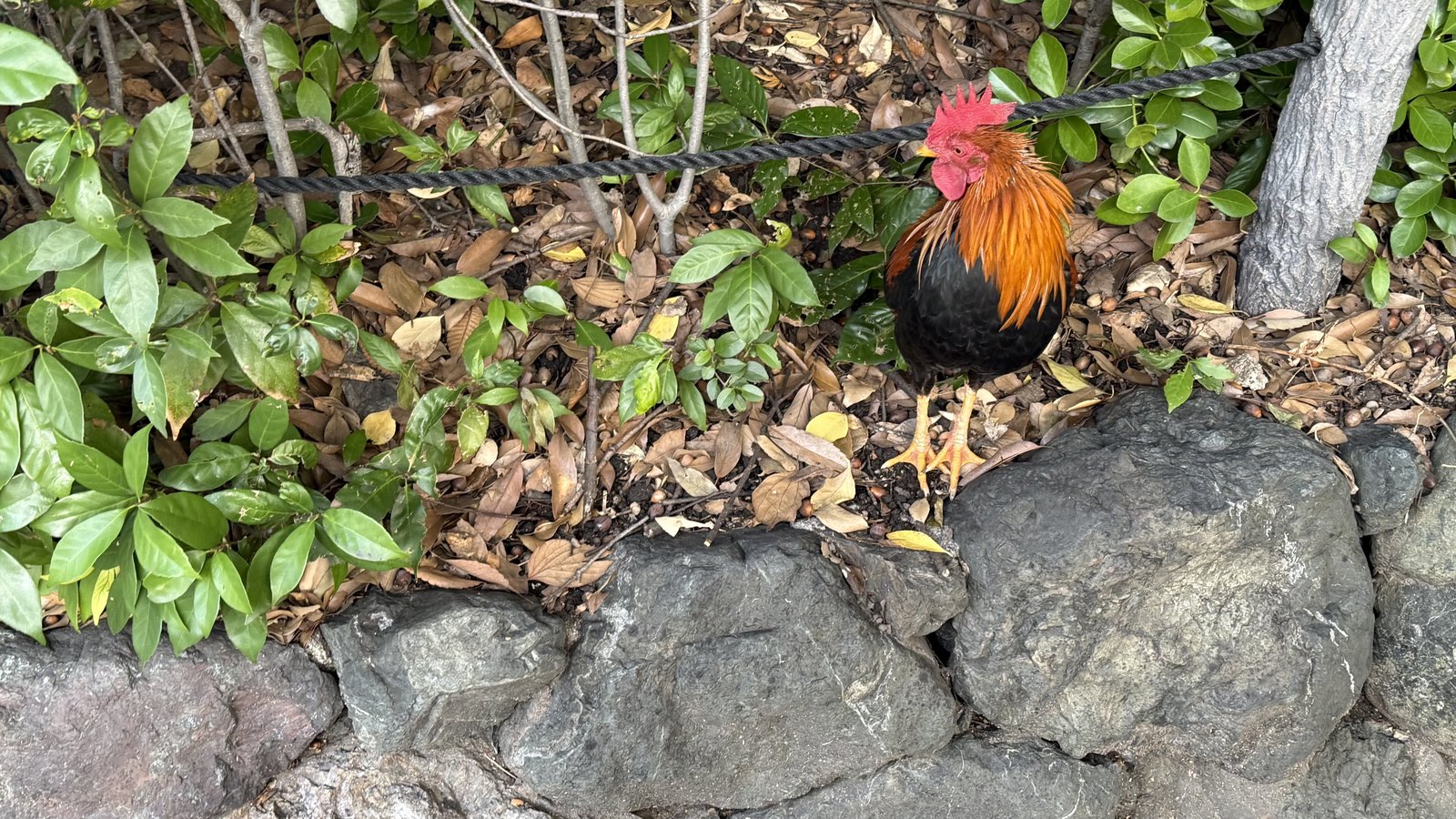
A rooster in the grounds.
Cultural context
Of the Three Sacred Treasures, the sword is at Atsuta and the mirror is at Ise. In 1893 (Meiji 26) the main sanctuary was changed from the Owari-zukuri style to shinmei-zukuri, the same style as at Ise (according to the shrine).
Miyazuhime and Takeinadane, enshrined alongside, are regarded as distant ancestors of the Owari clan.