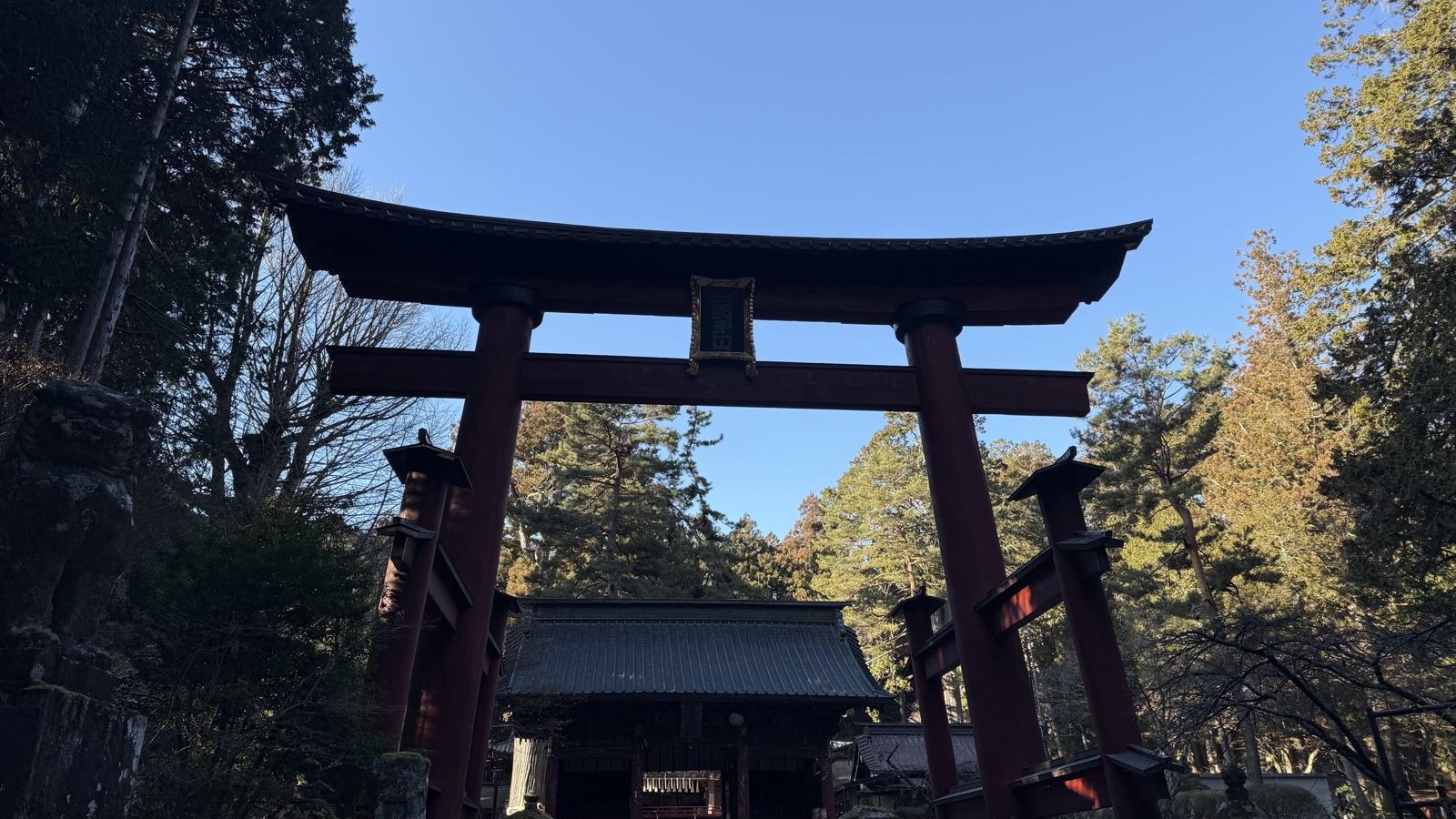
Visited in person · Original photography
Origins and founding
It enshrines Konohanasakuyahime and others. It stands on the northern side of Mount Fuji, at the start of the Yoshida climbing route. Where Fujisan Hongu Sengen Taisha to the south is a shrine that calms the mountain, this one grew up as a shrine for climbing it. Its signboard lists, as the deities of the main sanctuary, Konohanasakuyahime, Hikoho-no-ninigi (her husband) and Oyamatsumi (her father).
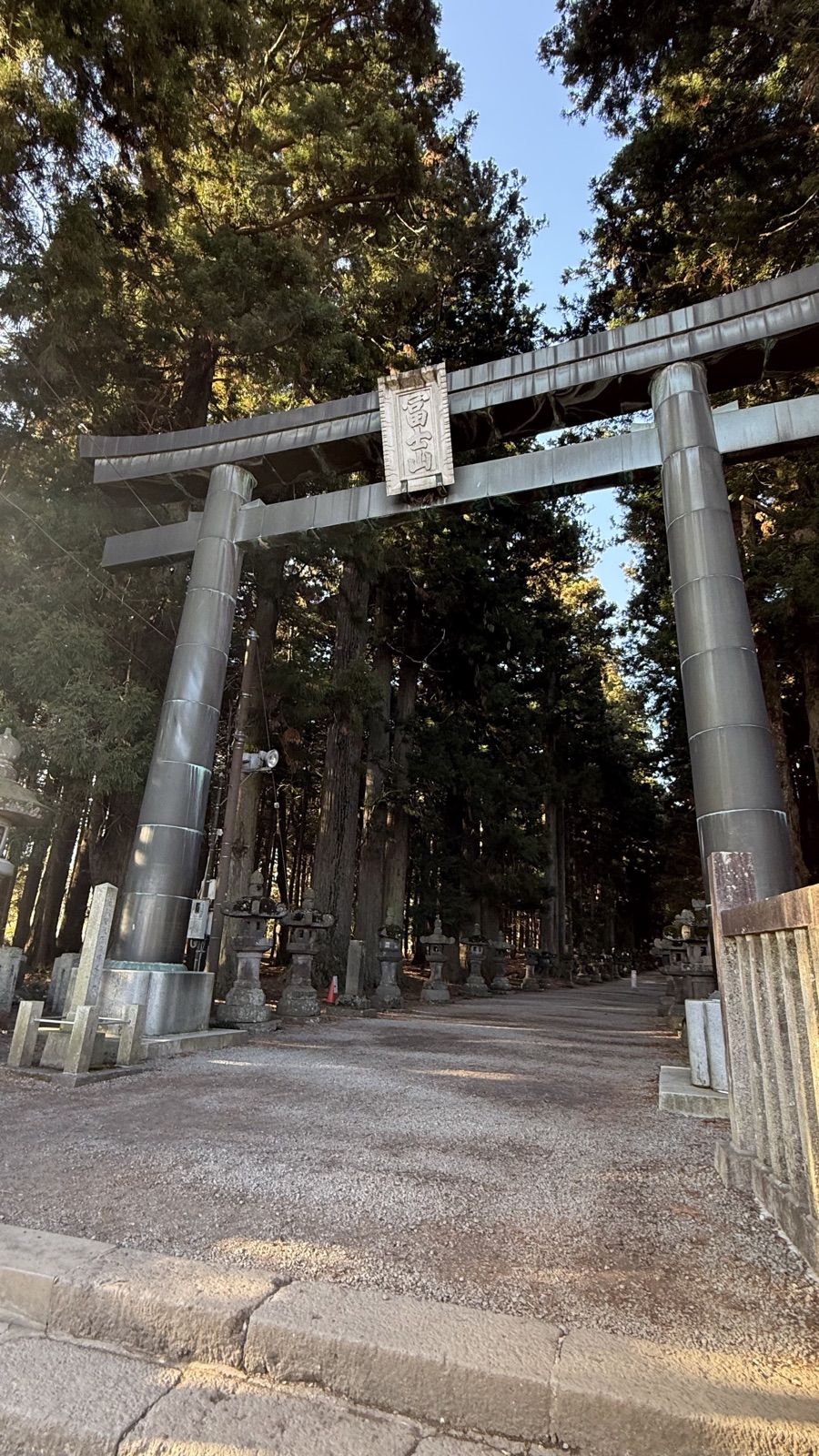
The great torii, with a plaque reading “Fujisan”. Beyond it the approach continues, lined with stone lanterns.
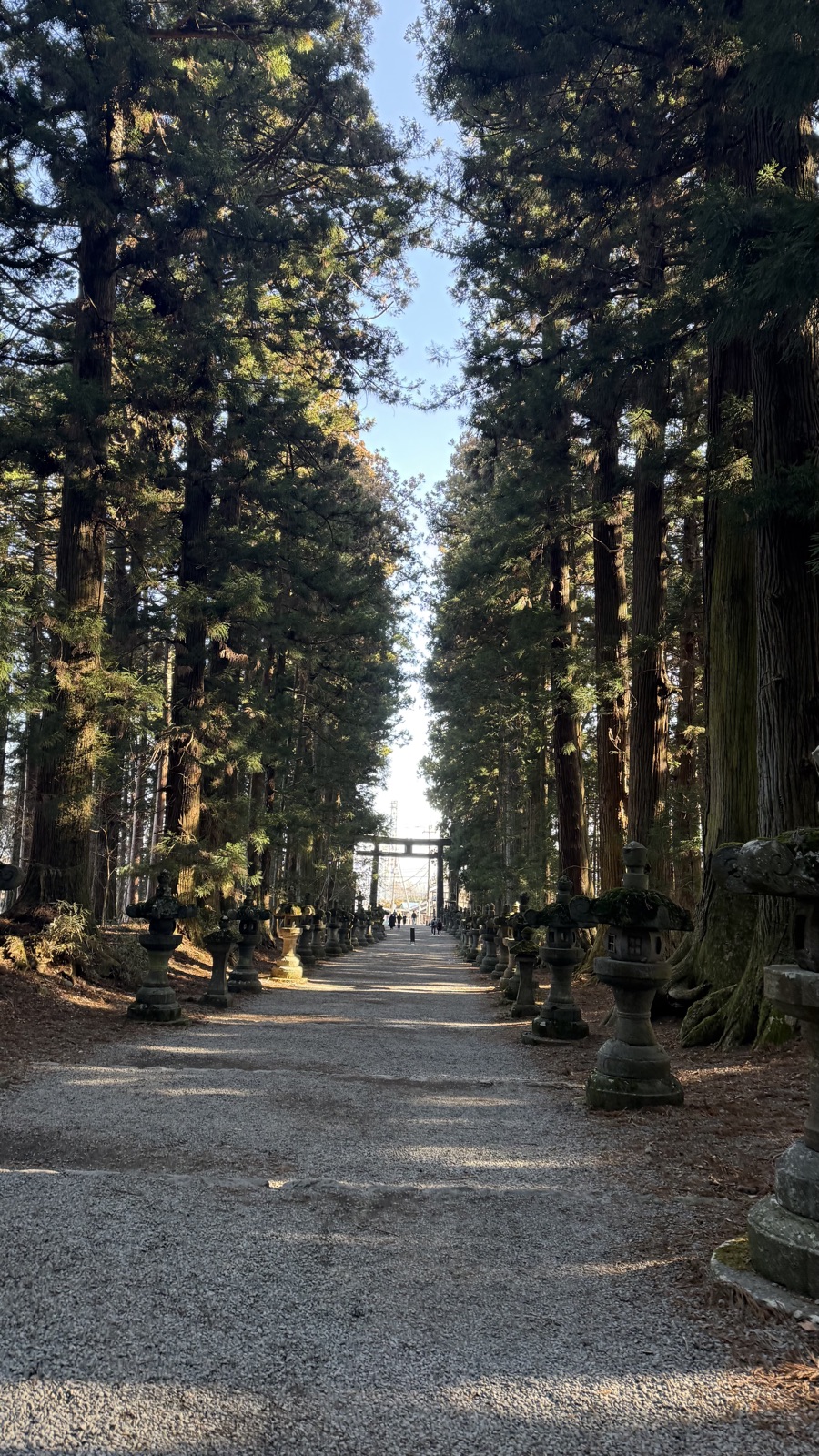
The cedar-lined approach with its stone lanterns. The climbing route continues beyond.
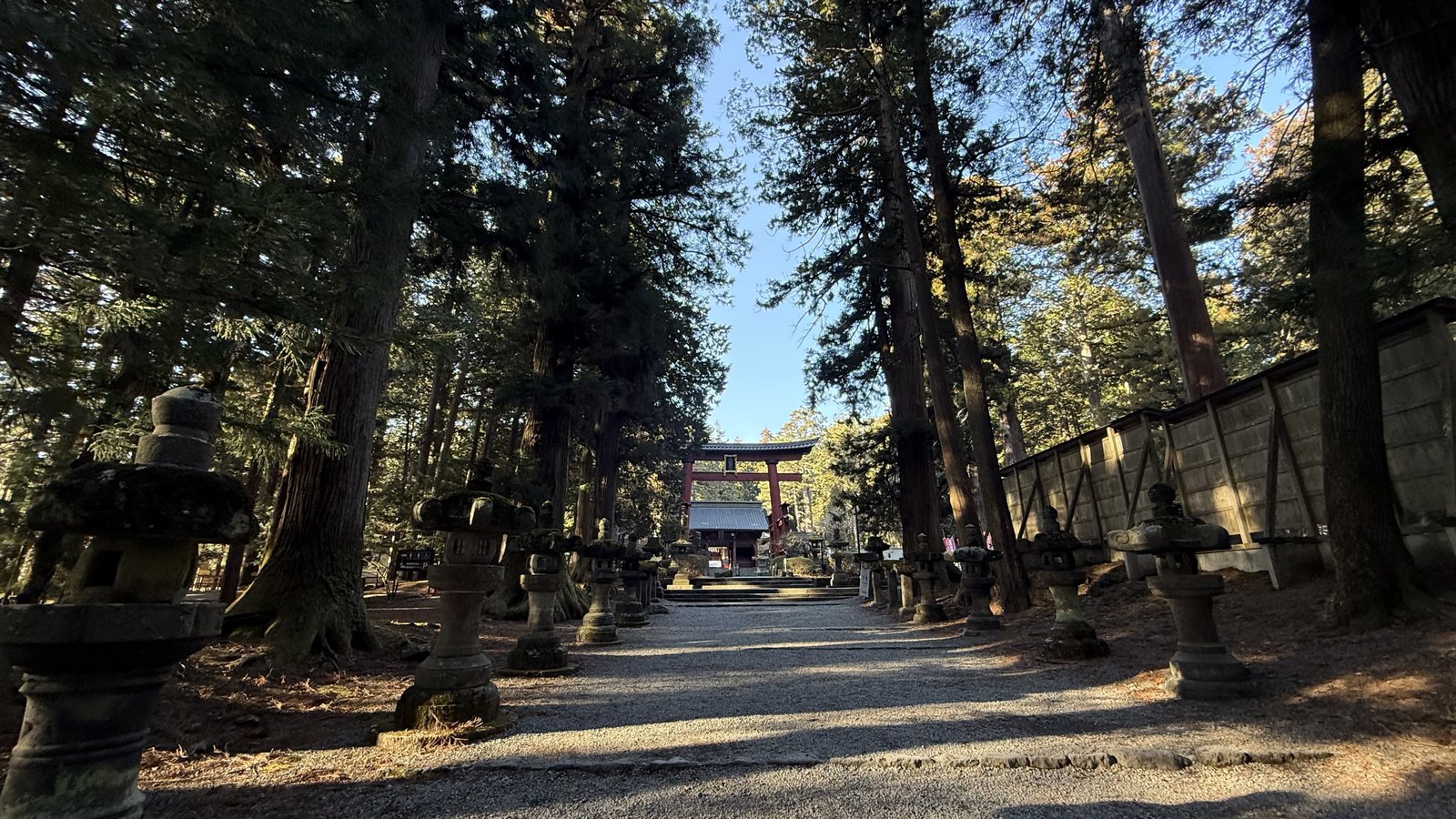
The approach lined with stone lanterns. A vermilion great torii can be seen, small, at the far end.
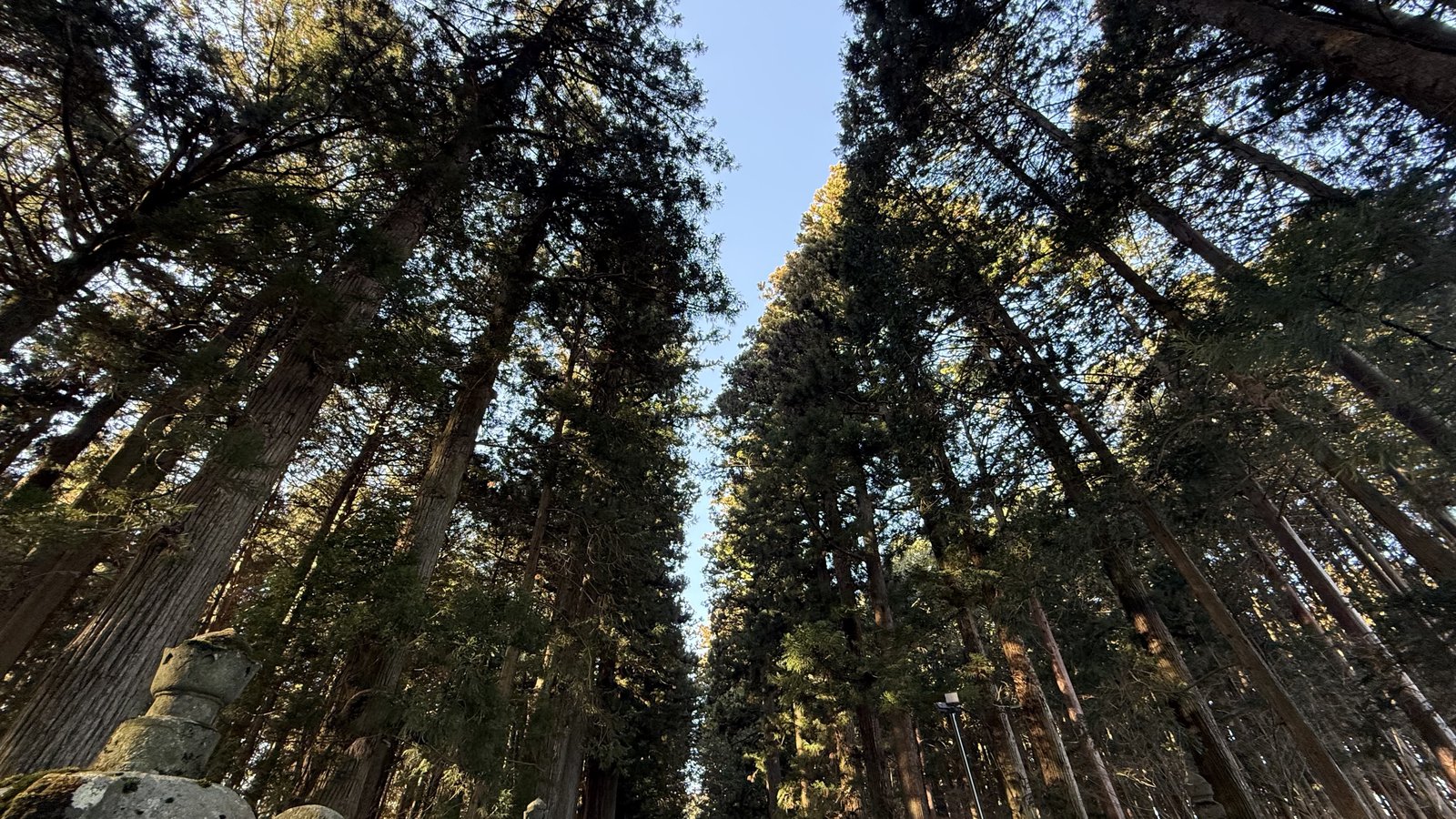
Looking up at the cedars along the approach, their trunks rising straight to the sky.
What to see
The cedar avenue along the approach, said to be several hundred years old. The wooden great torii. The main hall and the East and West shrines. The Fuji climbing gate: once you pass through the approach, the climbing route begins. Worship and climbing are one continuous path.
According to the signboards, the main sanctuary, worship hall and offering hall were built in 1615 (Genna 1) by Torii Naritsugu, the lord of the Gunnai region, and were repaired and rebuilt over the years with the help of the Fuji-ko groups (Important Cultural Property). The Fuji Taro Sugi was the first natural monument designated by Yamanashi Prefecture (in 1958), and is about 30 metres tall. The grounds also hold a great cypress called the “Fuji Meoto-hinoki”, the Fuji married-couple cypress, because two cypresses have grown into one at the root and join again about 12 metres above the ground (a natural monument designated by Fujiyoshida City).
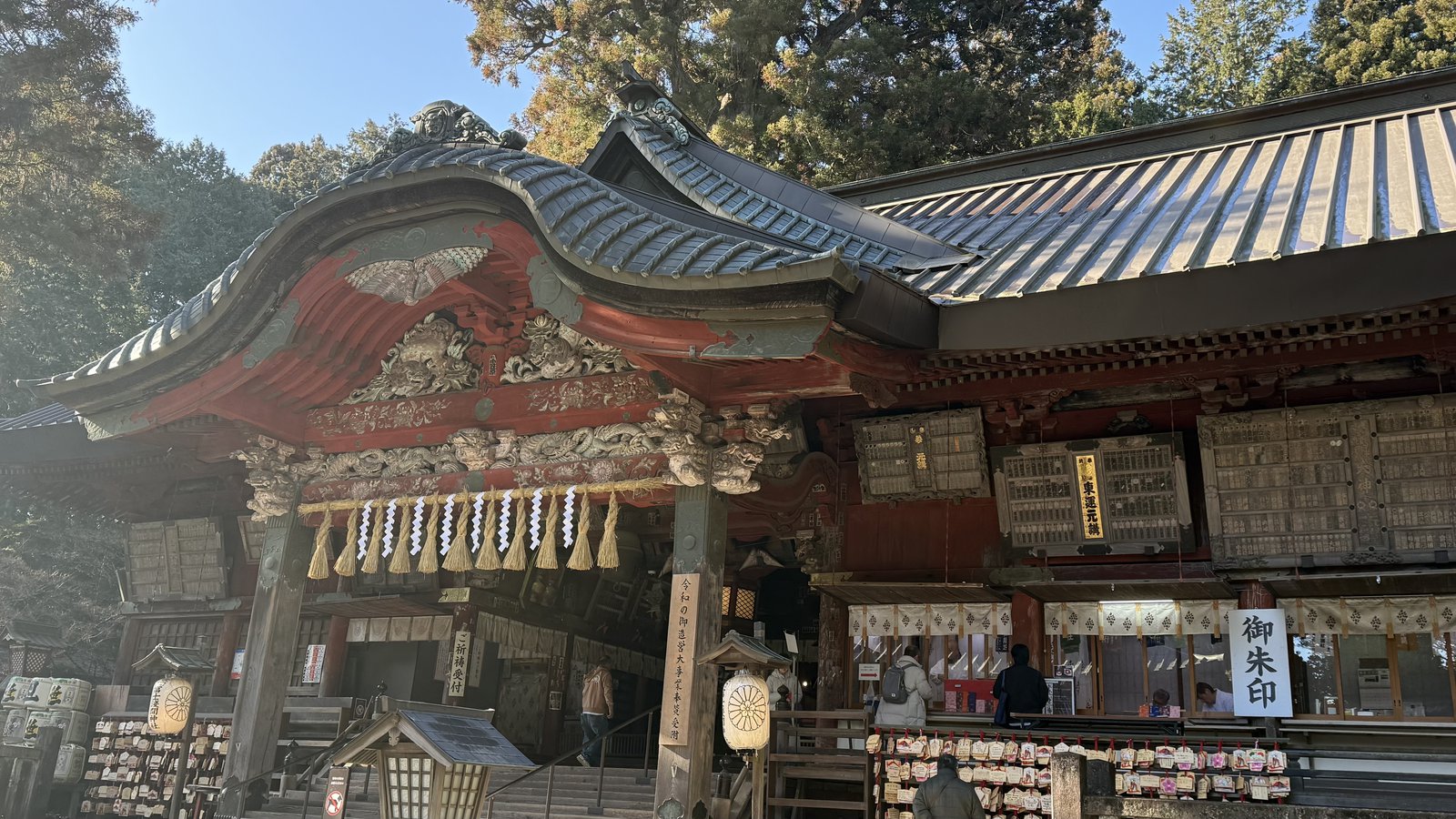
The worship hall, with a curved karahafu gable and carved decoration. Votive plaques are lined up in front.
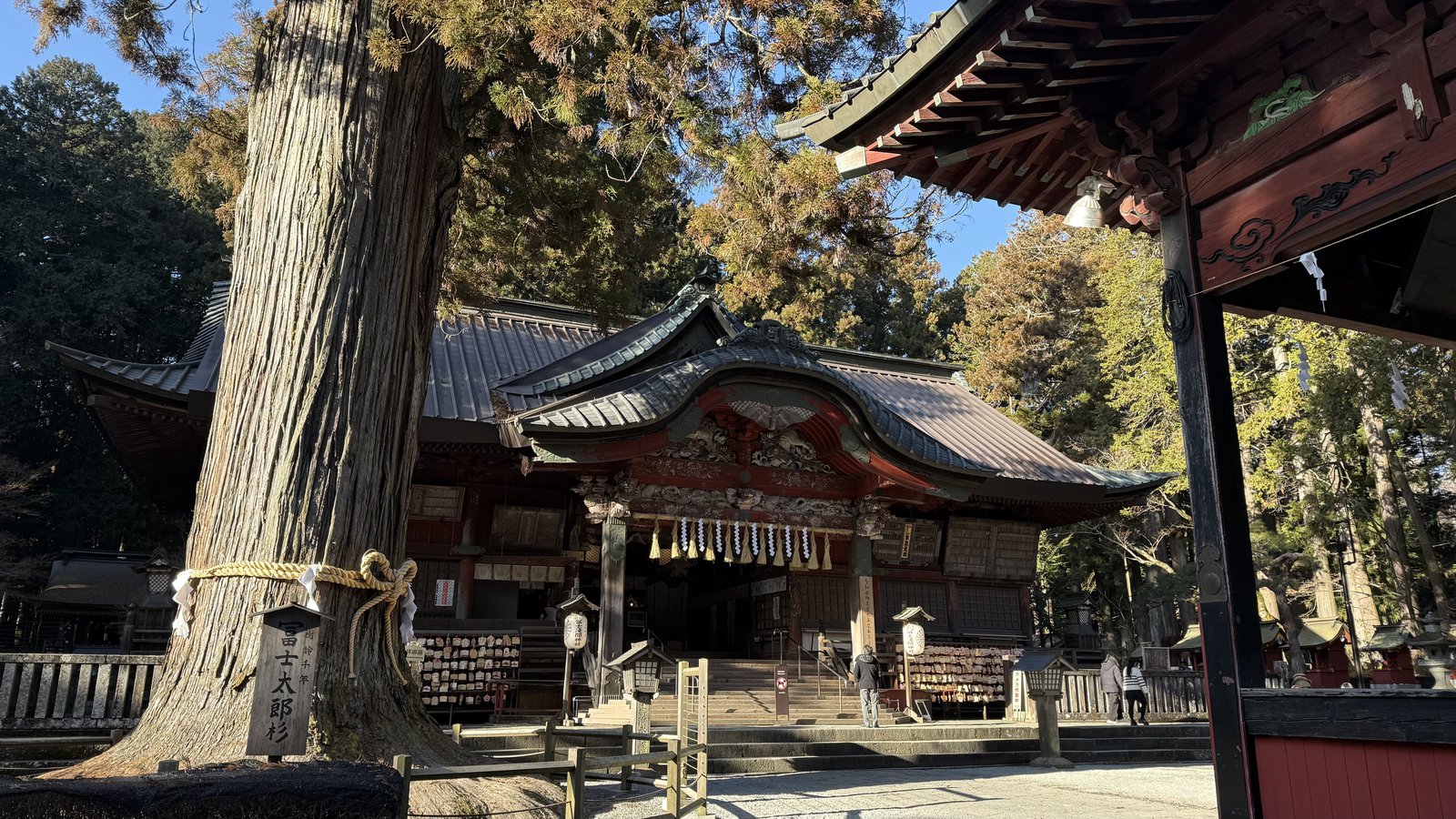
The Fuji Taro Sugi, with the worship hall beyond.
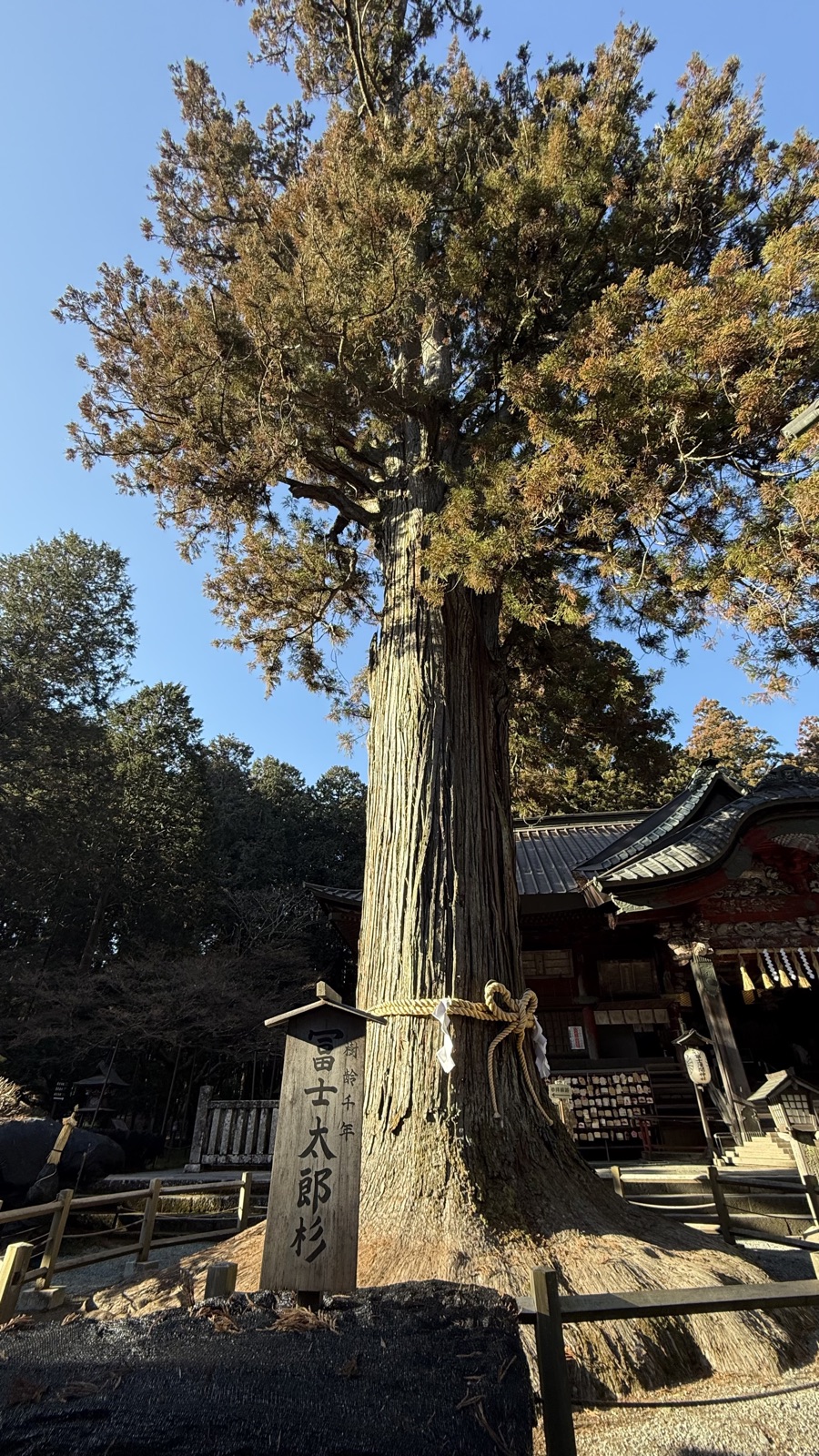
The sacred cedar “Fuji Taro Sugi”, said to be a thousand years old. The main hall stands beyond.
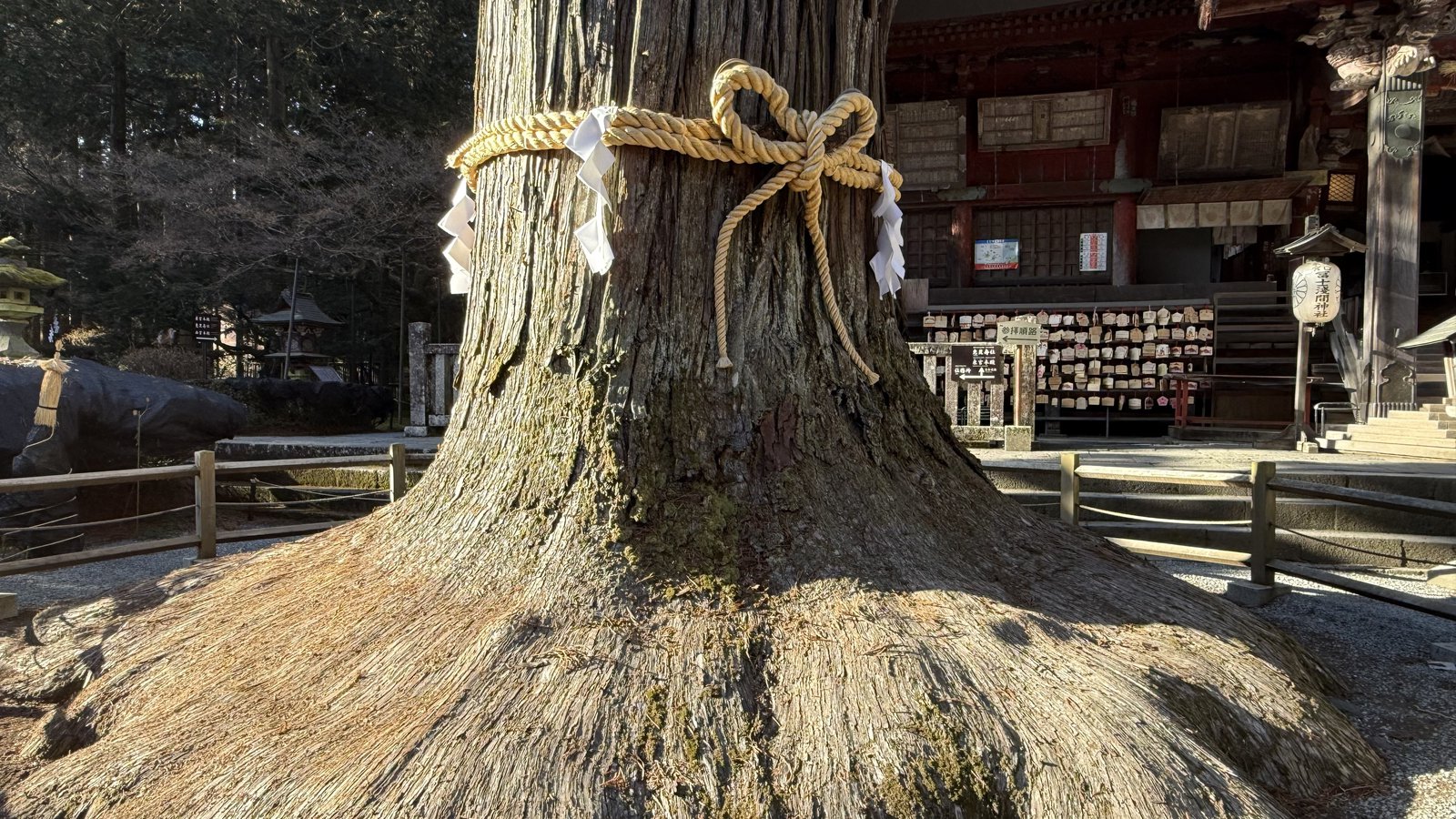
The base of the Fuji Taro Sugi, with a thick shimenawa around it and its roots spreading wide.
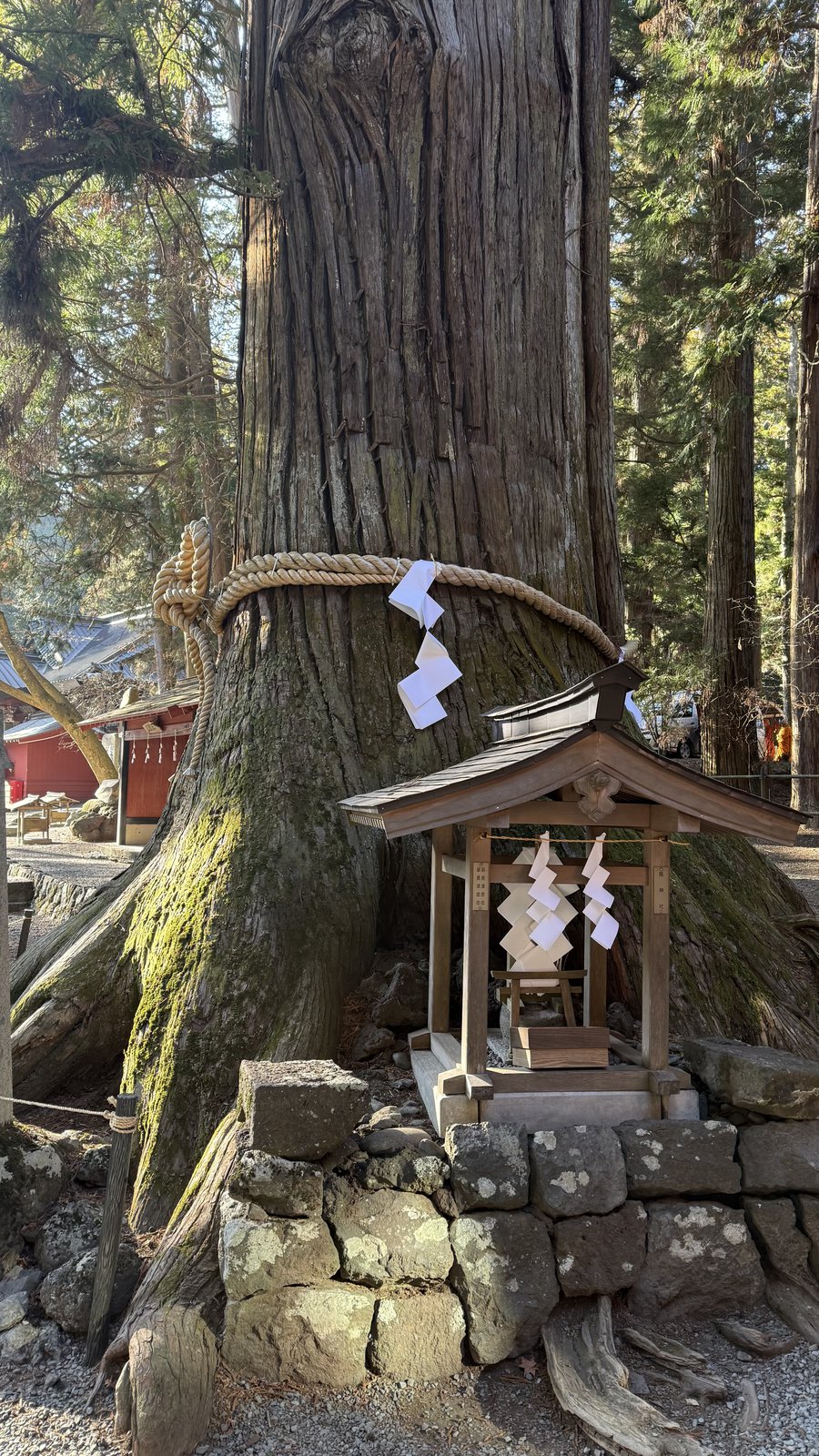
A large tree with a small shrine at its base and a shimenawa around its trunk.
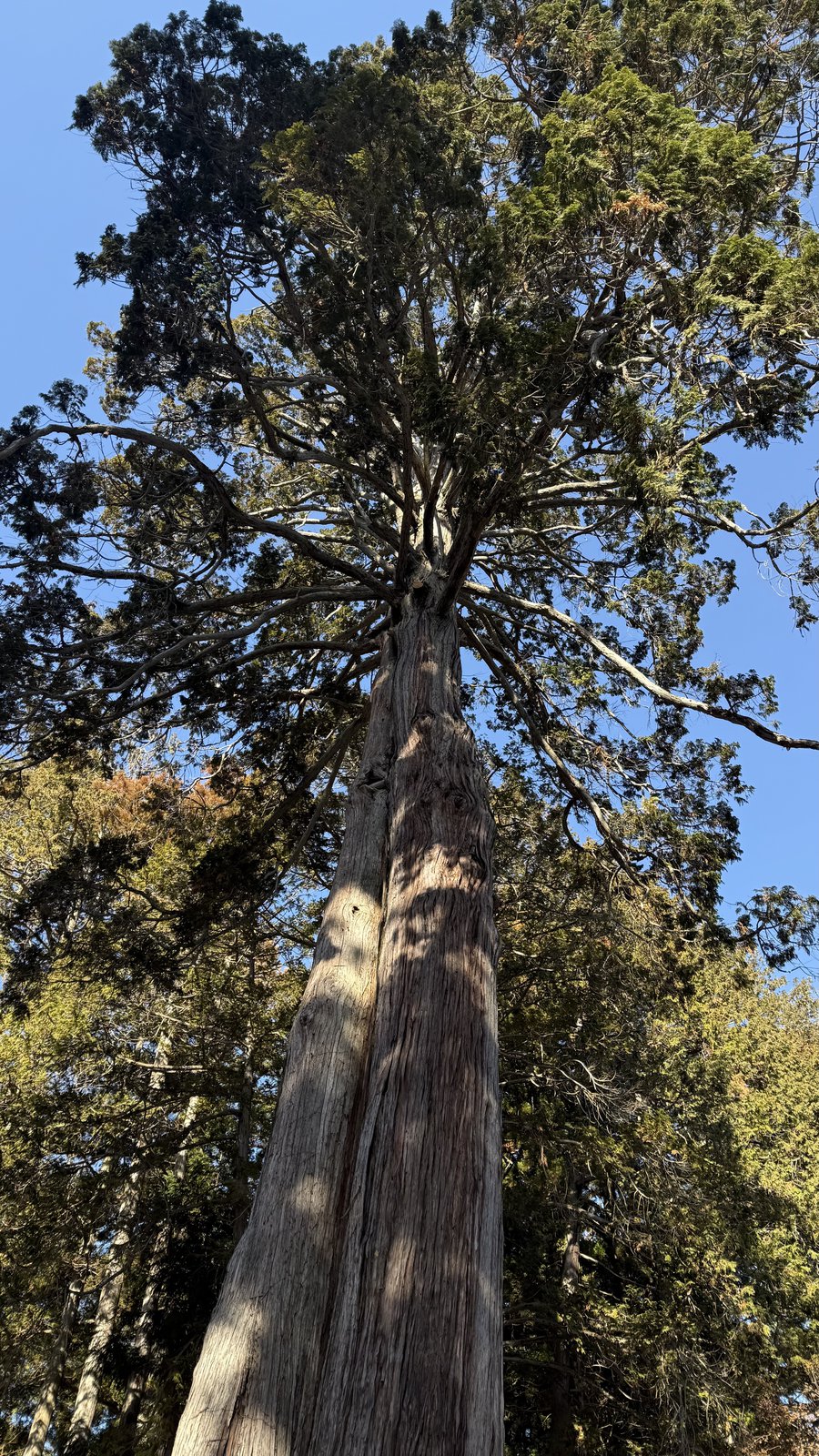
Looking up at a large tree whose two trunks stand side by side.
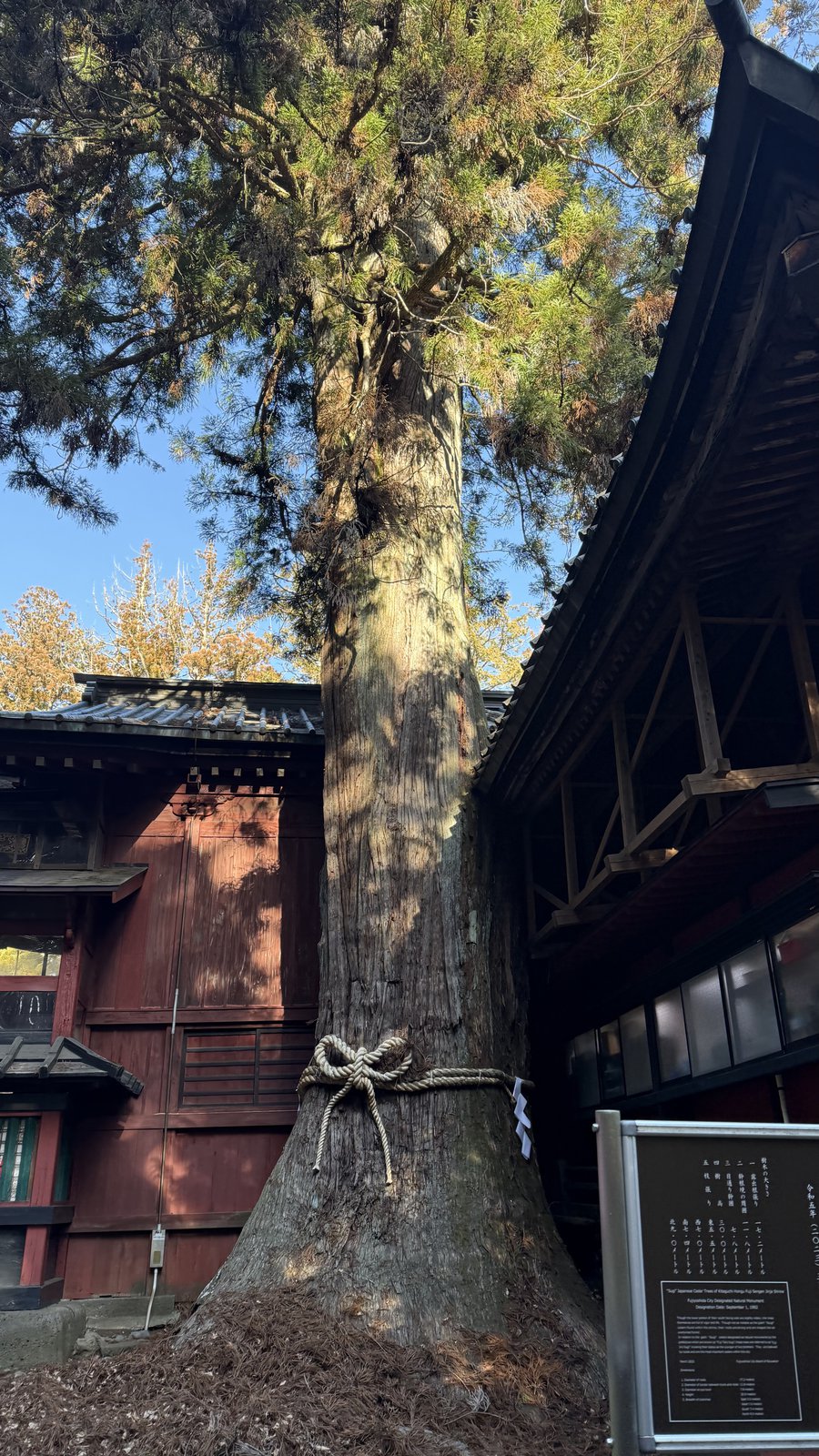
A large tree beside the curved roof of a vermilion building.
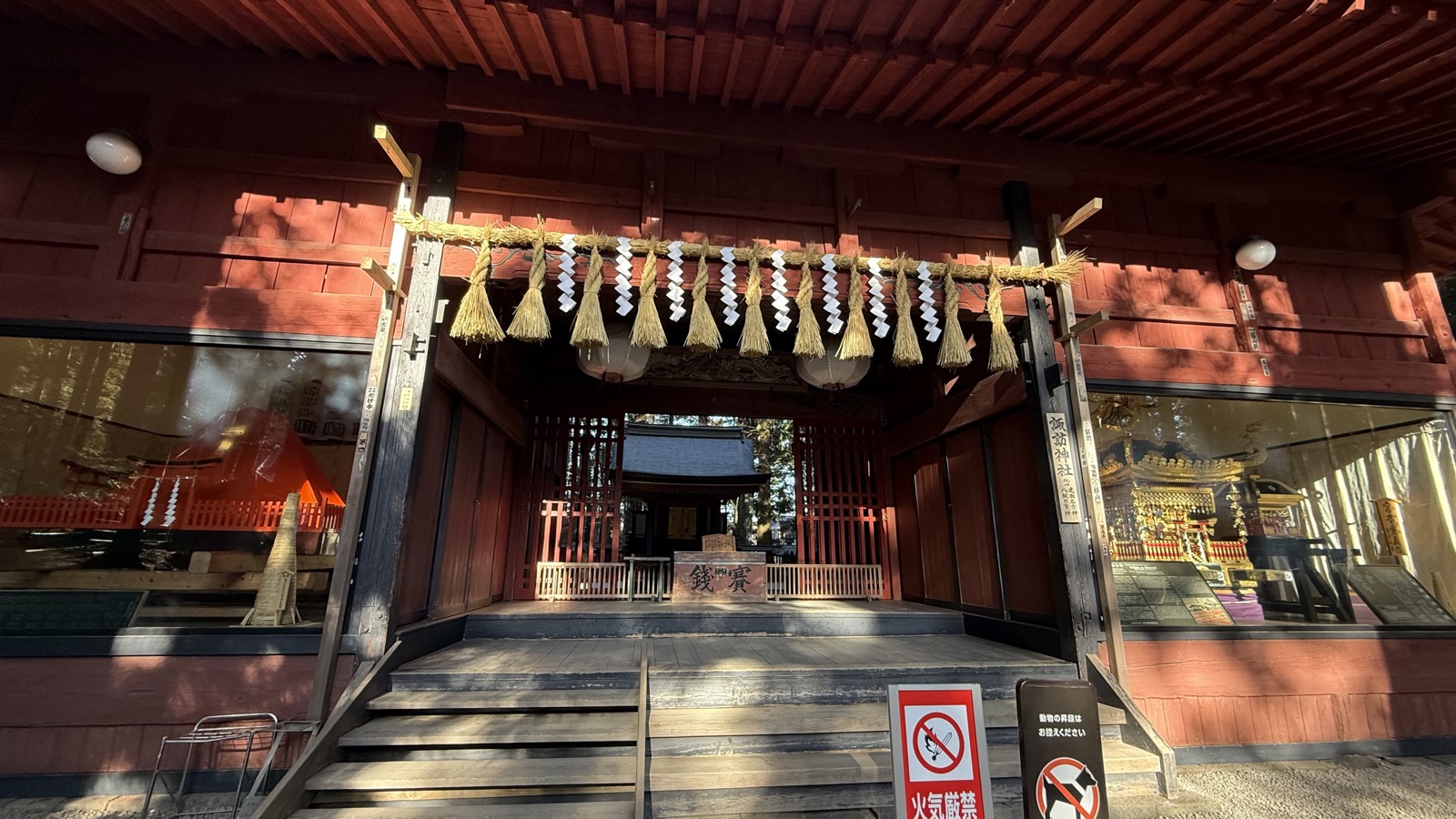
The large shimenawa hung on the gate in front of the main hall.
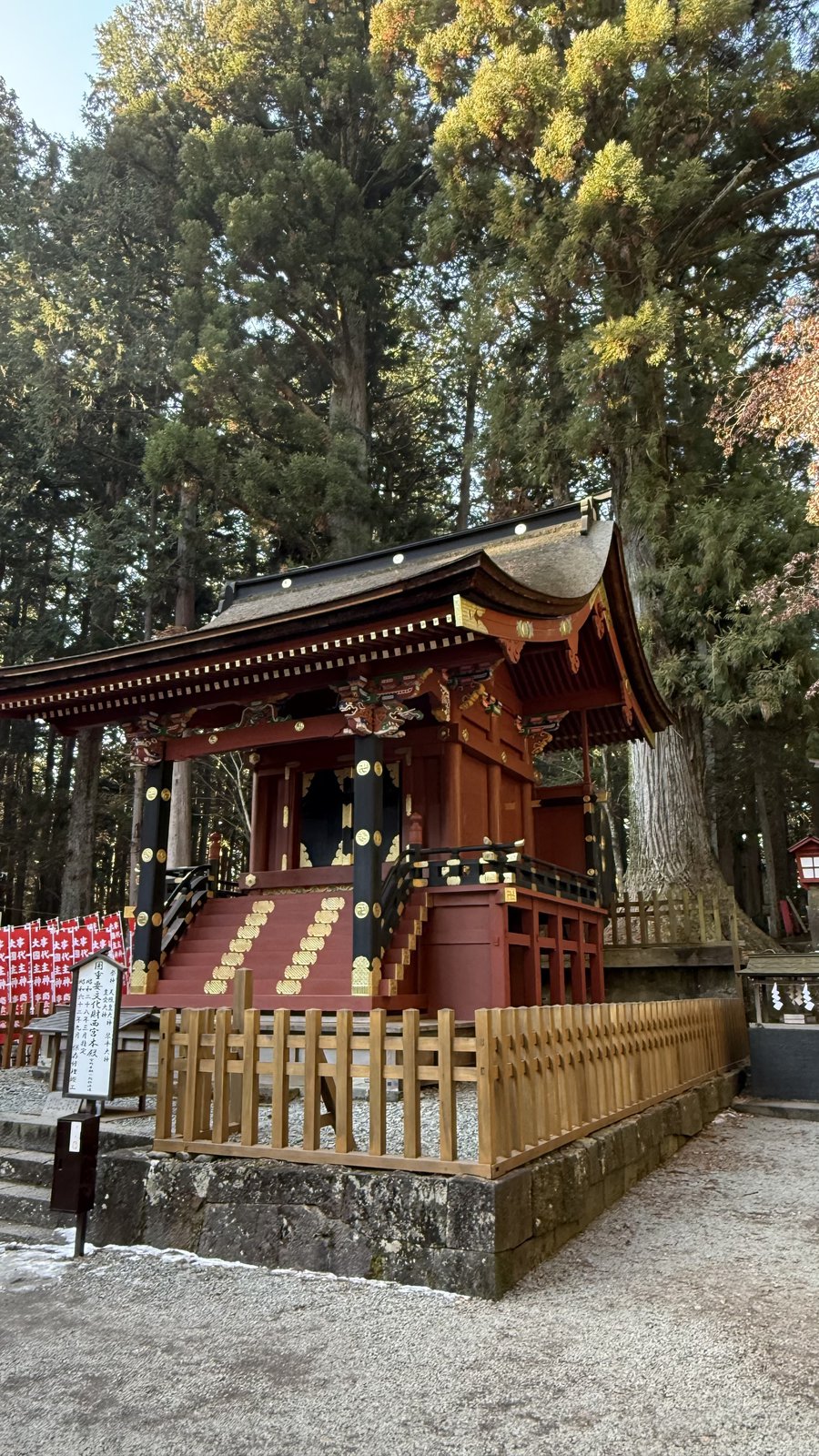
A small vermilion shrine, with red banners standing around it.
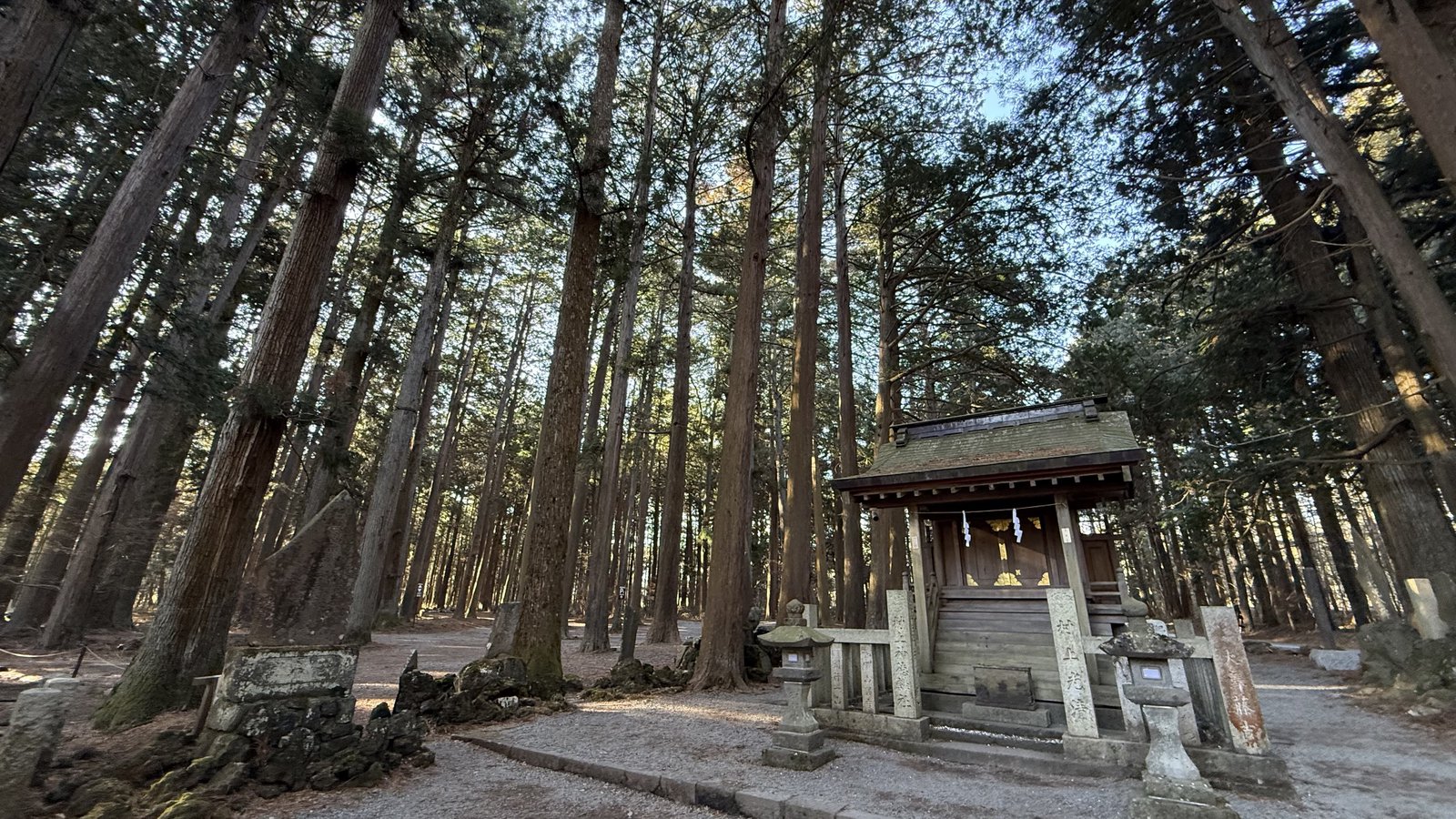
A small shrine among the cedars, with stone lanterns.
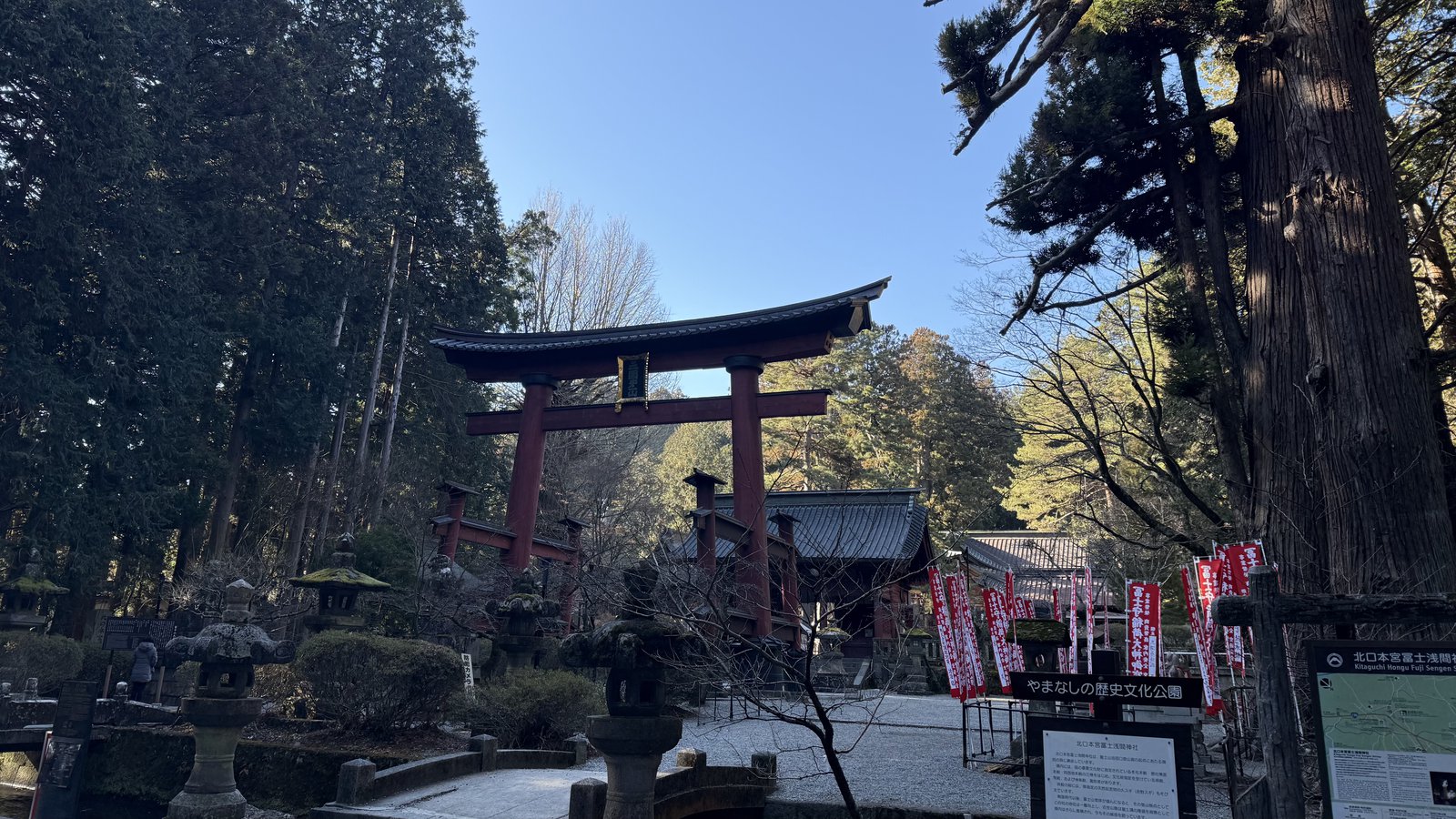
A vermilion torii and a large cedar, with red banners lined up beside them.
Cultural context
The Fuji-ko. In the Edo period, ordinary people formed ko (savings groups) to climb Mount Fuji, and this was the gateway. Faith and travel began here as something inseparable.