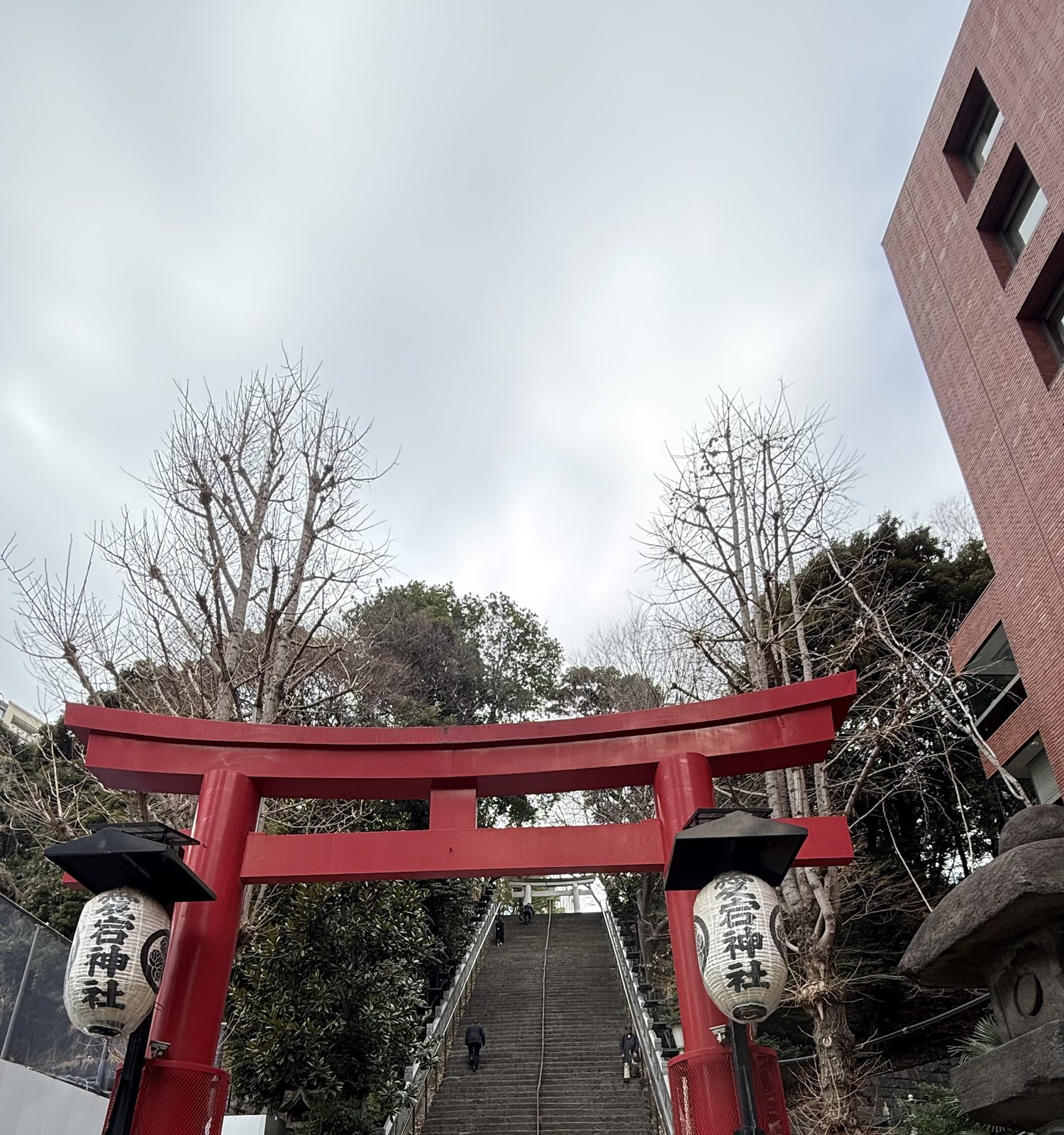
Visited in person · Original photography
Origins and founding
In 1603, Tokugawa Ieyasu founded it as a shrine to protect Edo from fire. Mount Atago rises 25.7 metres, the highest natural hill in Tokyo's 23 wards.
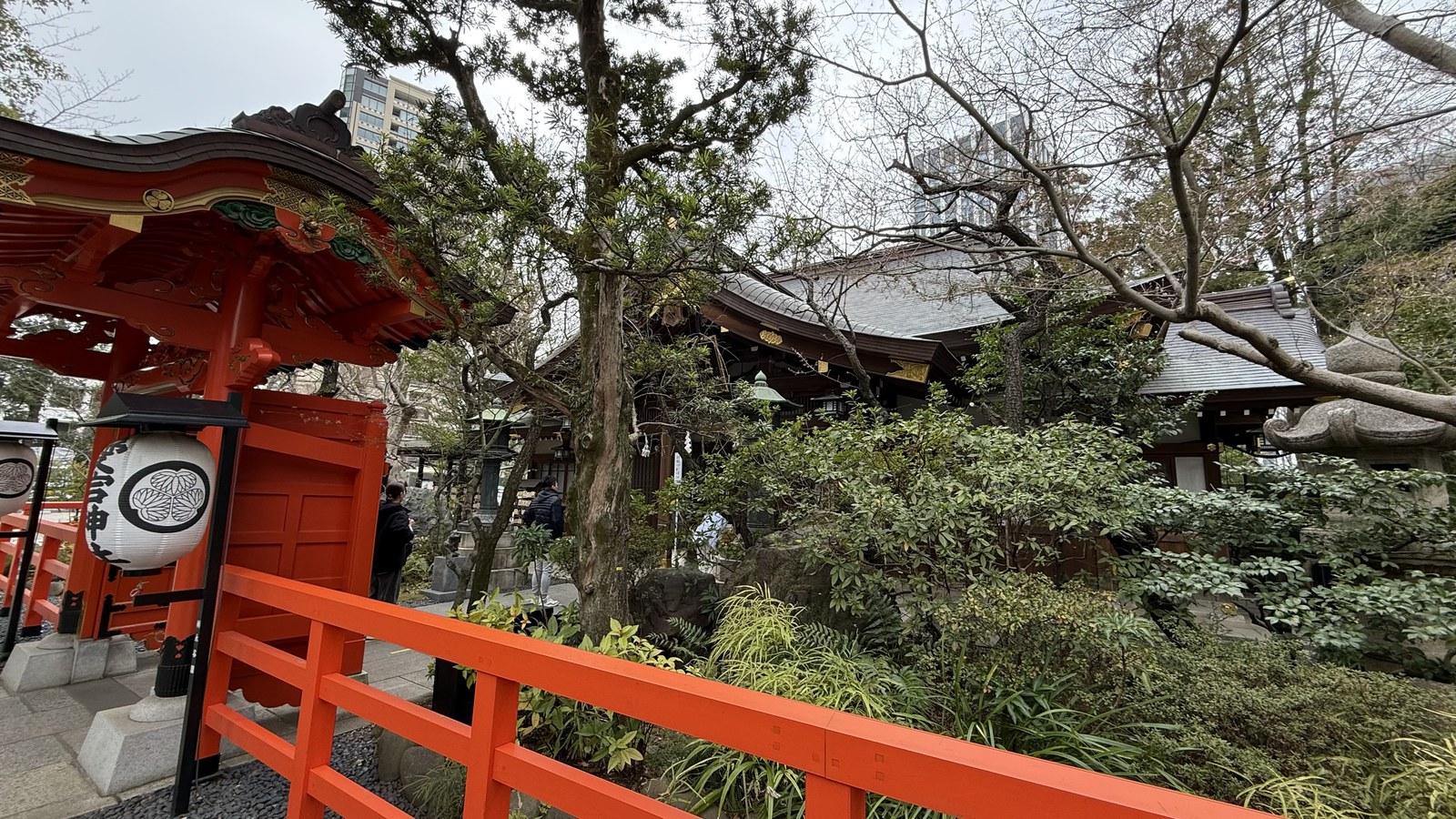
The shrine buildings glimpsed through the trees, set quietly on a hilltop in the middle of the city.
What to see
The Stone Steps of Success — 86 steep steps on Otokozaka. In 1634, Magaki Heikuro rode a horse up them to fetch a plum branch. The story gave the steps their name. The summit view once reached Edo Bay. A pond and carp.
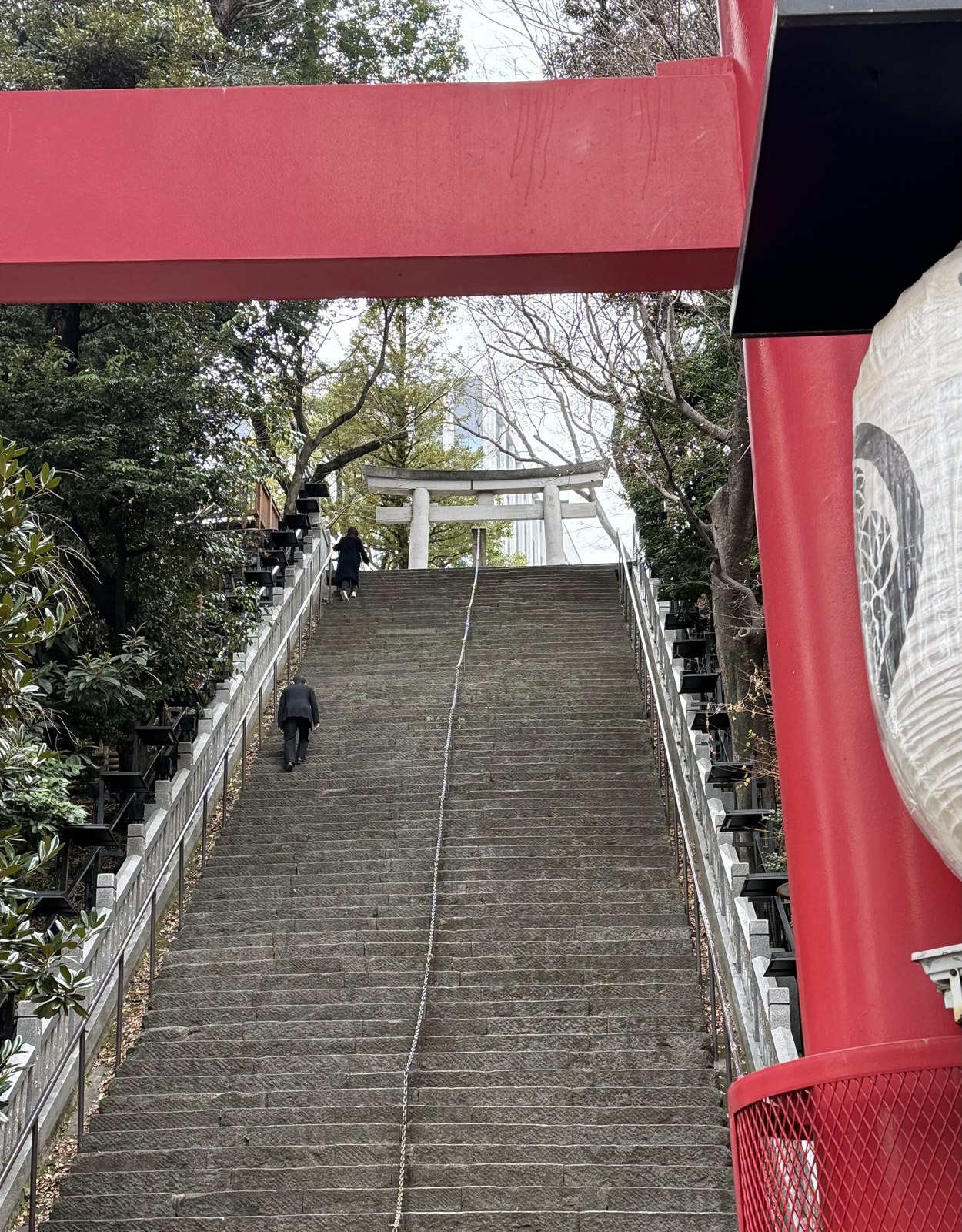
The Stone Steps of Success (Otokozaka) — climbing the steep 86 steps, the torii at the summit comes into view.
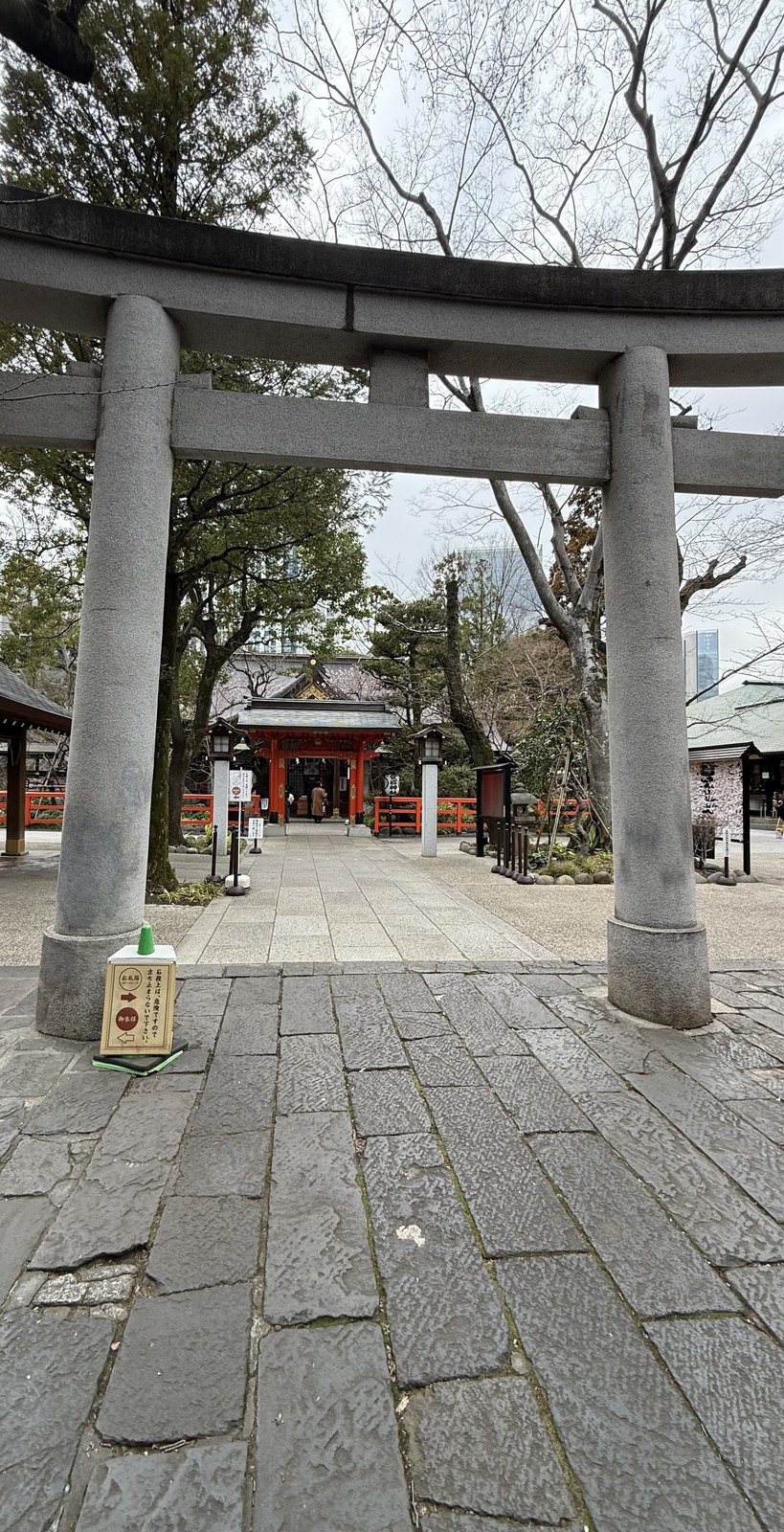
The grounds at the top of the steps, the path leading straight on to the shrine buildings.
Cultural context
A fire god on high ground above the city. Edo burned often, and fire prevention was one of its most urgent problems. Fires were called "the flowers of Edo" — faith was another form of preparation, beyond administration.
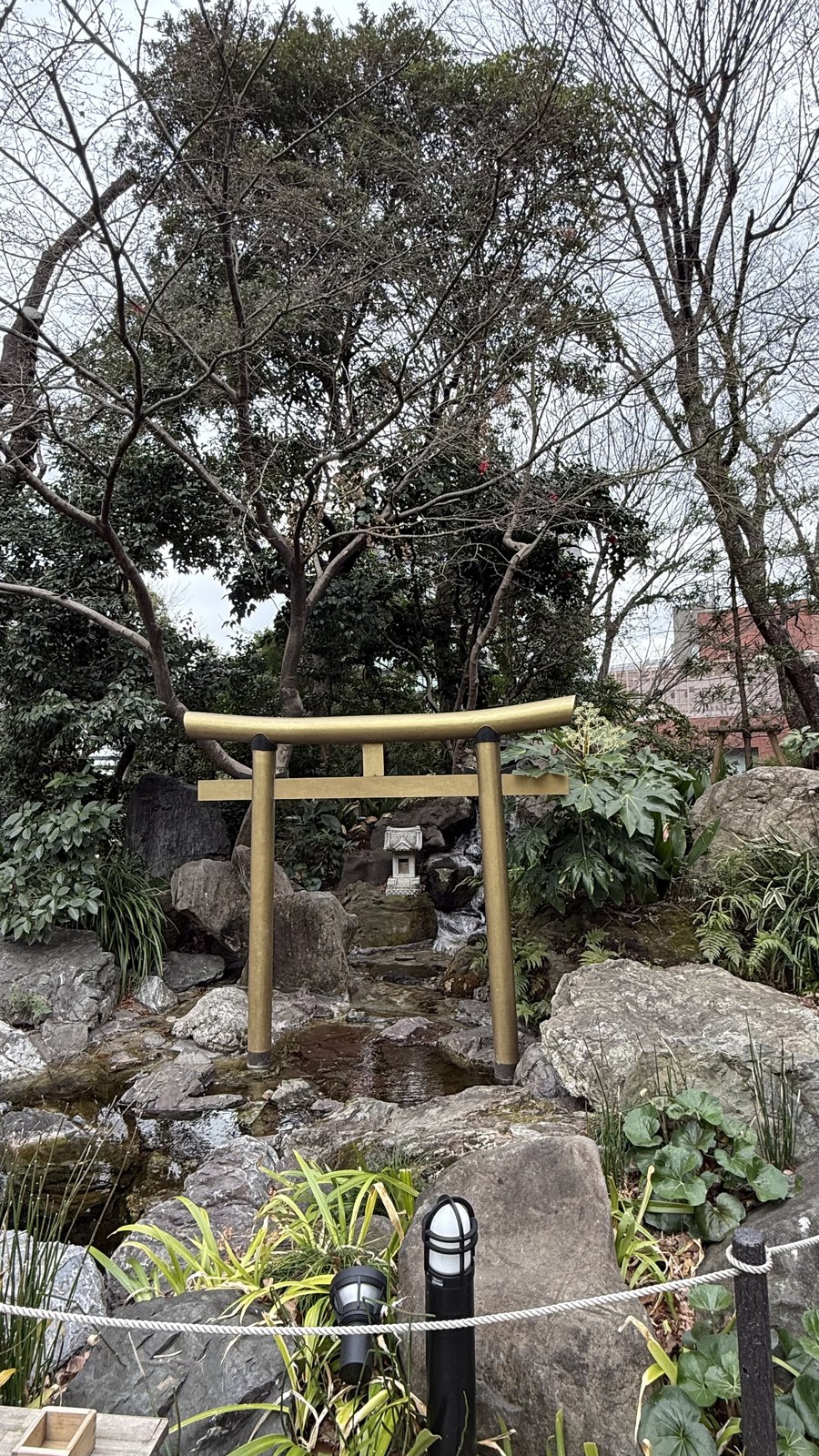
A small torii over a spring-fed pool on the grounds.
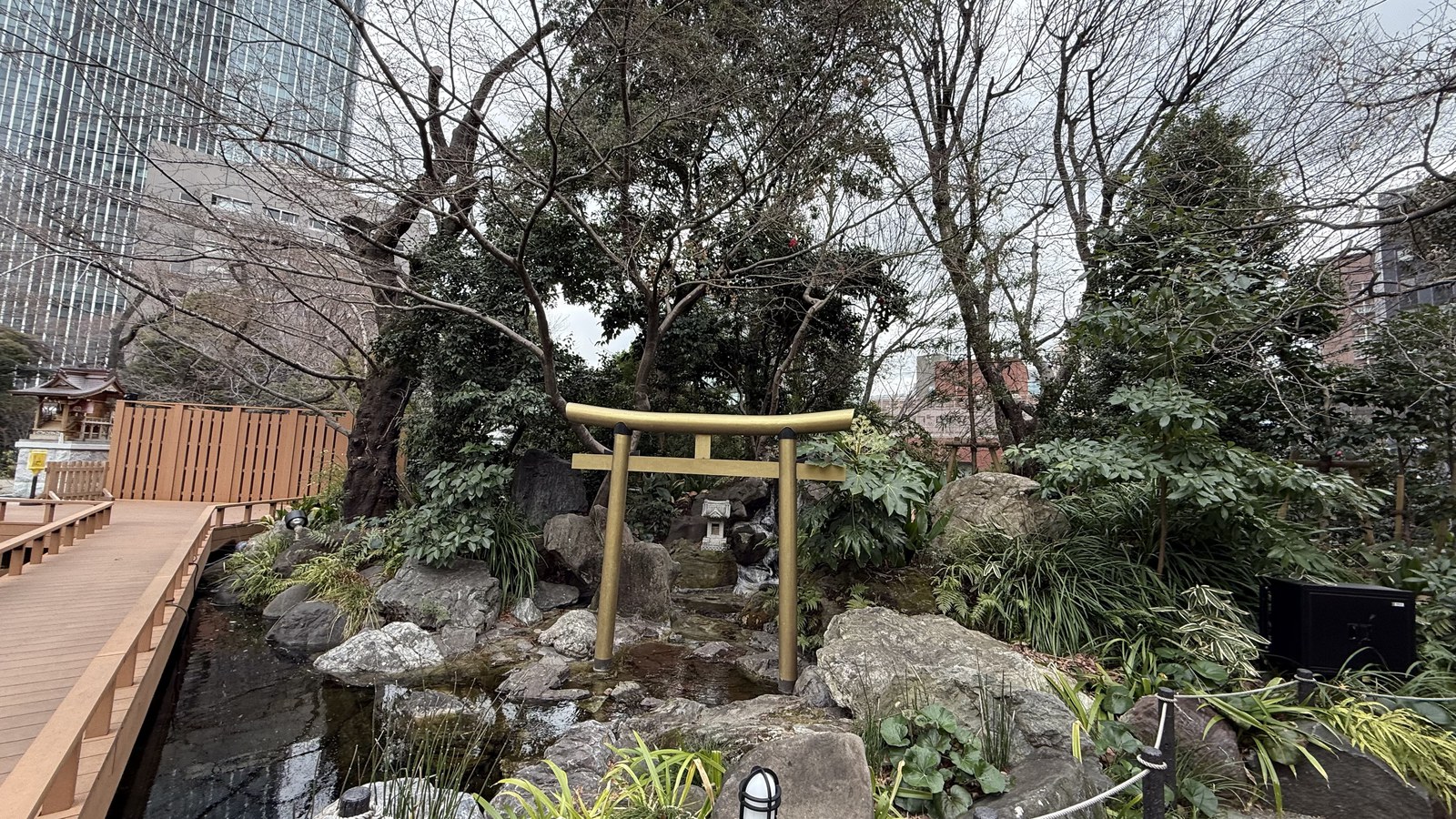
The same garden from a little further back — high-rises crowd in behind it.
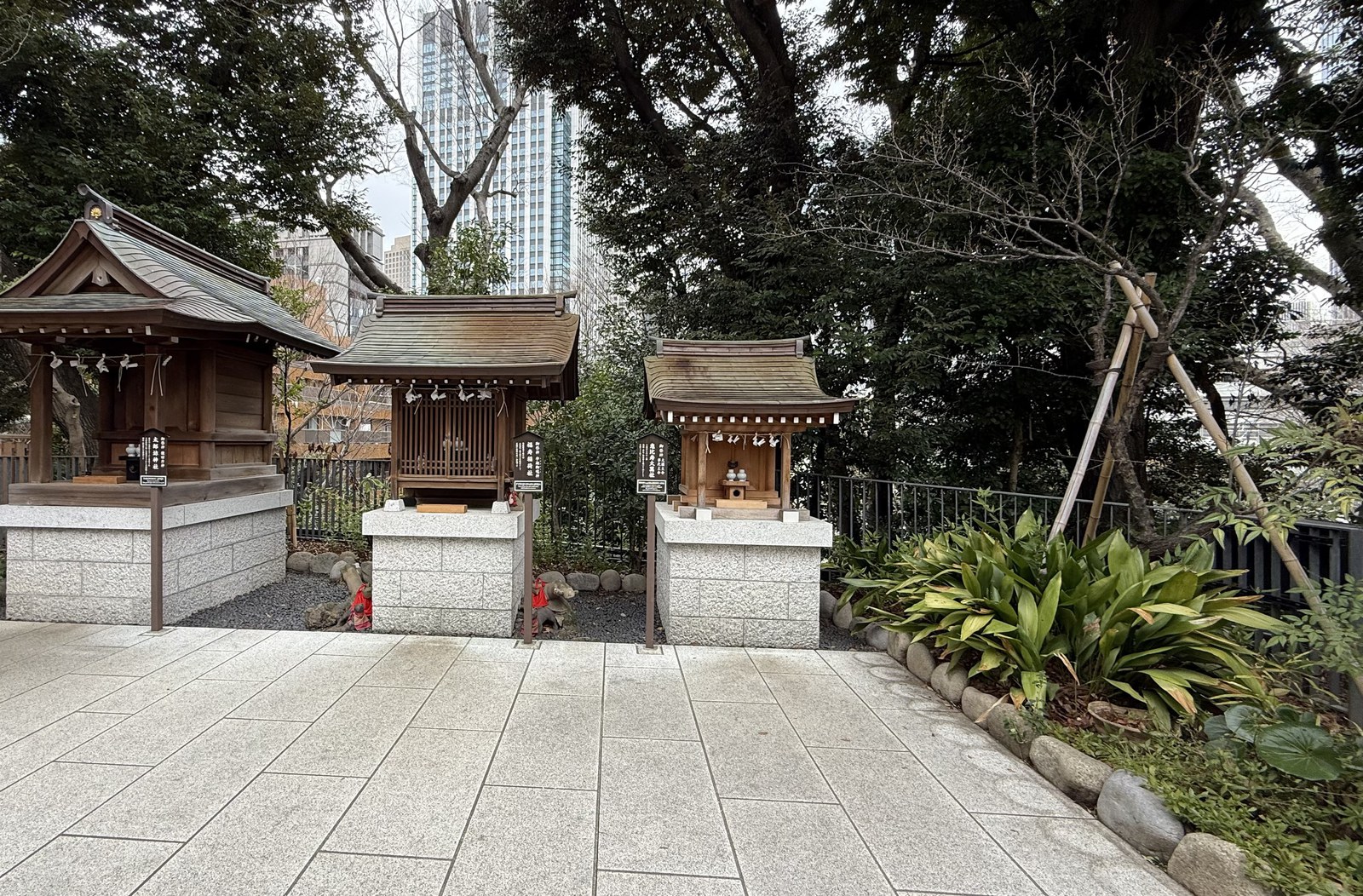
Three sub-shrines on the grounds, from left: Tarobo Jinja, Fukuju Inari-sha and Ebisu-Daikoku-sha.
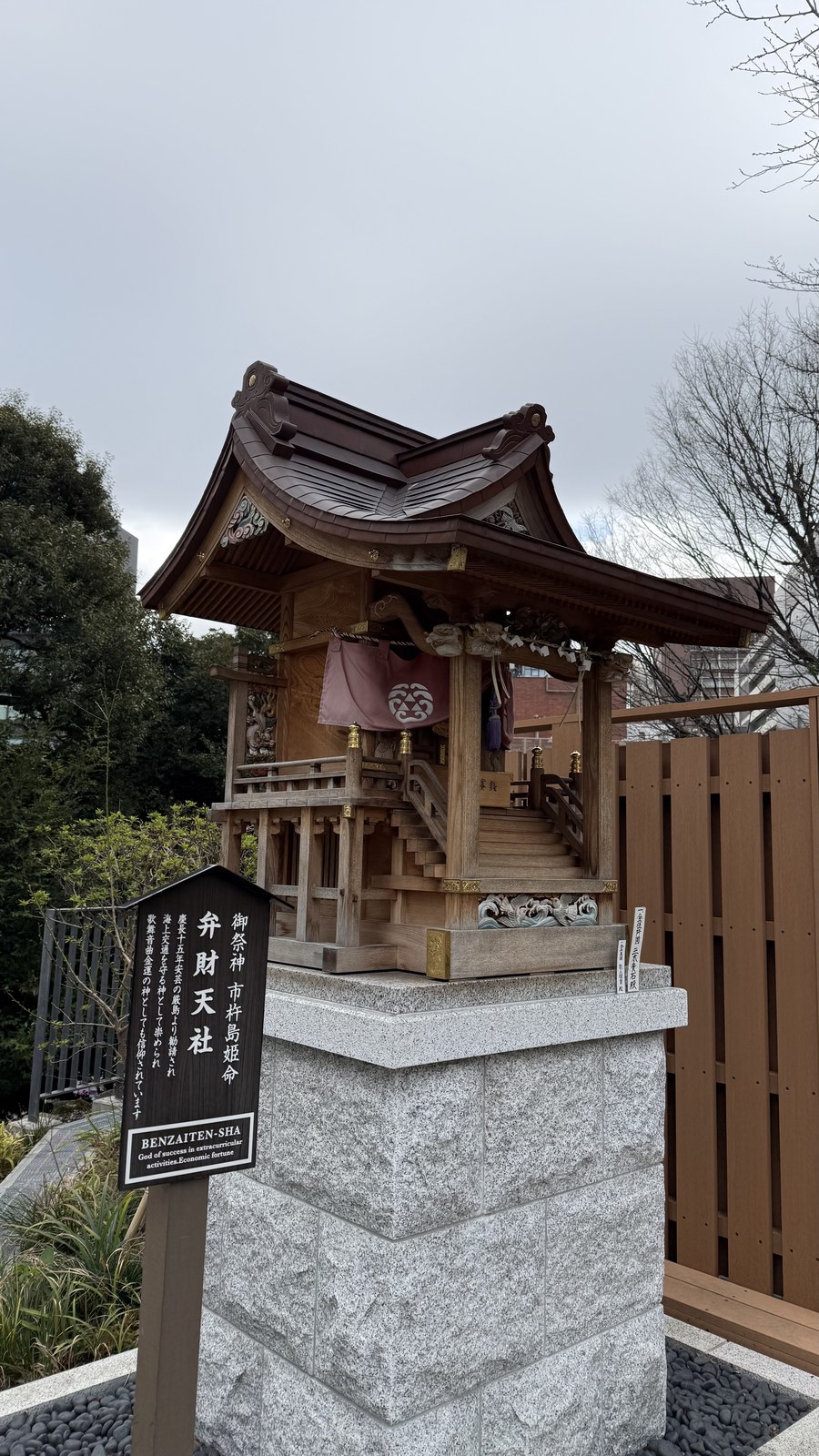
Benzaiten-sha, worshipped as the god of success in the arts and of economic fortune.
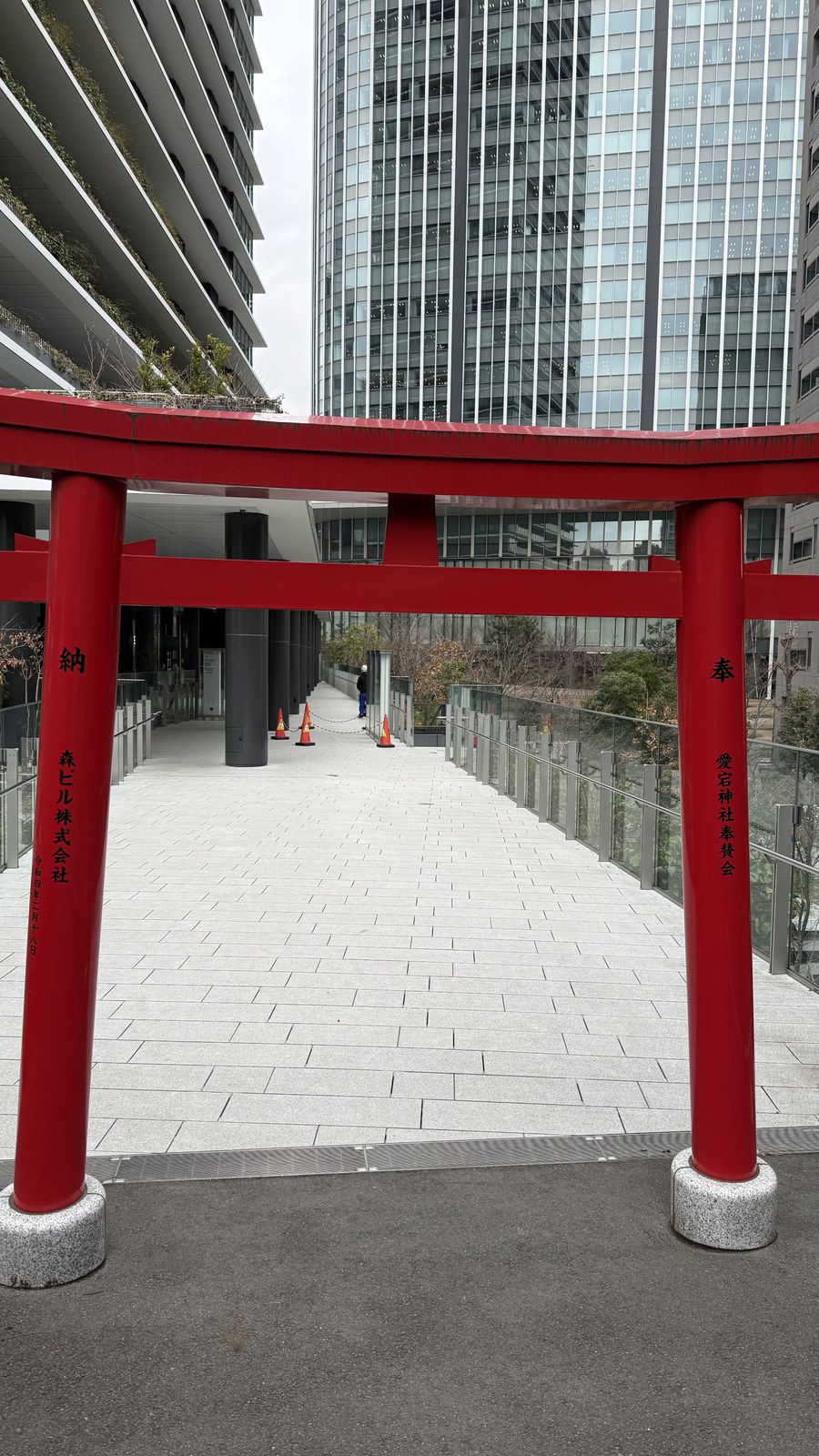
The approach from the Toranomon Hills side — an old Edo-era shrine now standing at the foot of a cluster of skyscrapers.