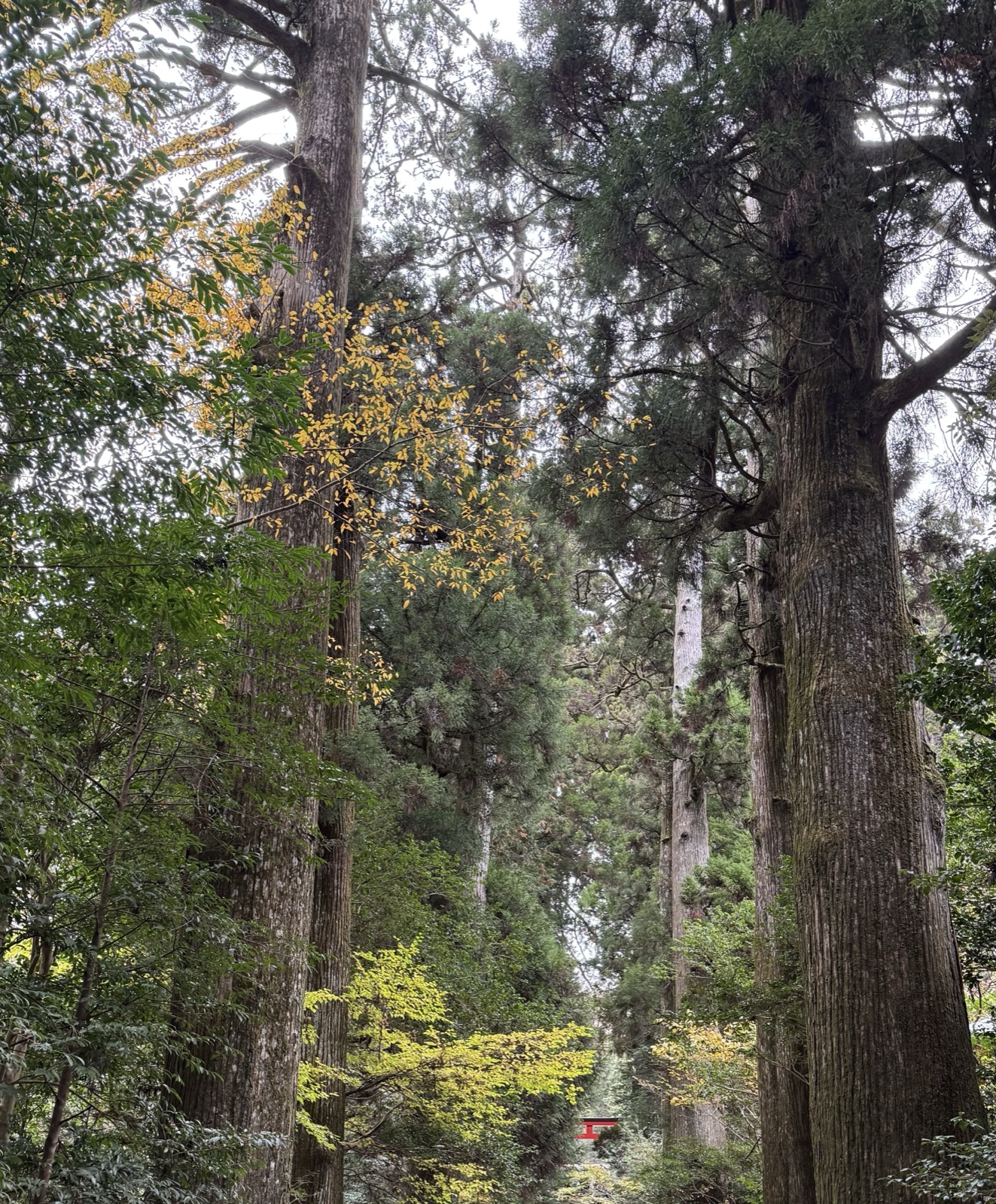
Visited in person · Original photography
Origins and founding
The enshrined deities are Ninigi no Mikoto, Konohanasakuya-hime, and Hikohohodemi no Mikoto, together known as the Hakone Okami. Tradition holds that the priest Mangan established a shrine on the shore of Lake Ashi in 757, during the Nara period.
Even before that, Mount Hakone (Komagatake) itself was already an object of mountain worship. Through the medieval period the shrine was known as Hakone Gongen, a syncretic site where Shinto and Buddhism were fused, becoming today's Hakone Jinja after the Meiji-era separation of kami and buddhas.
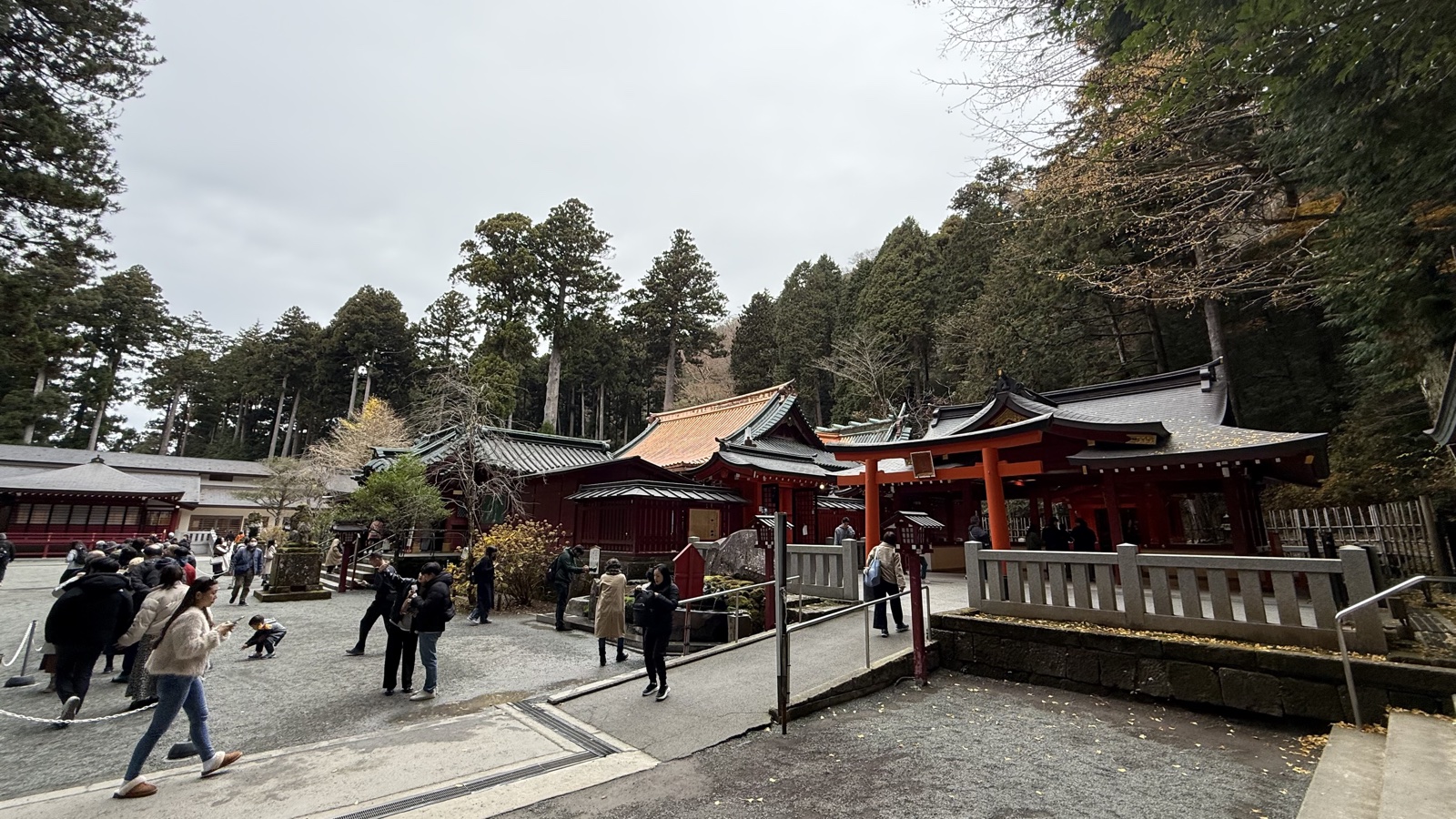
The shrine buildings nestled among cedar trees — the setting of an ancient shrine founded on the shore of Lake Ashi.
What to see
The Heiwa no Torii ("Peace Gate"), a vermilion torii standing out in Lake Ashi, is the shrine's best-known sight — visitors regularly queue to photograph it.
Within the grounds, Kuzuryu Jinja (the New Shrine) enshrines the dragon god of Lake Ashi, tracing back to a legend in which the priest Mangan subdued a venomous dragon in the lake and turned it into a guardian deity. The nearest stop is Moto-Hakone, also the pier for the Lake Ashi sightseeing boats.
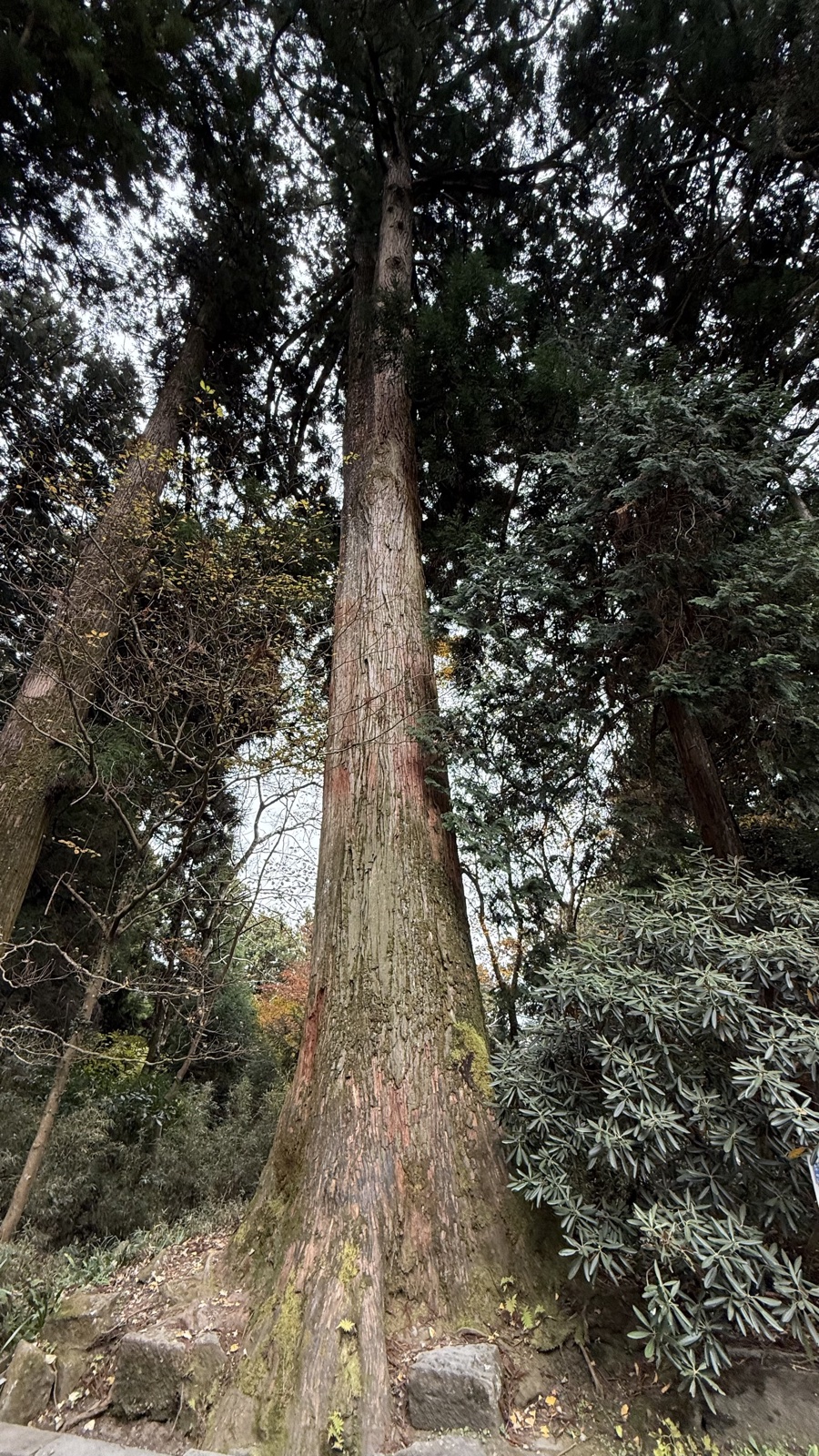
The cedar-lined approach — trunks thickened by centuries, reaching toward the sky.
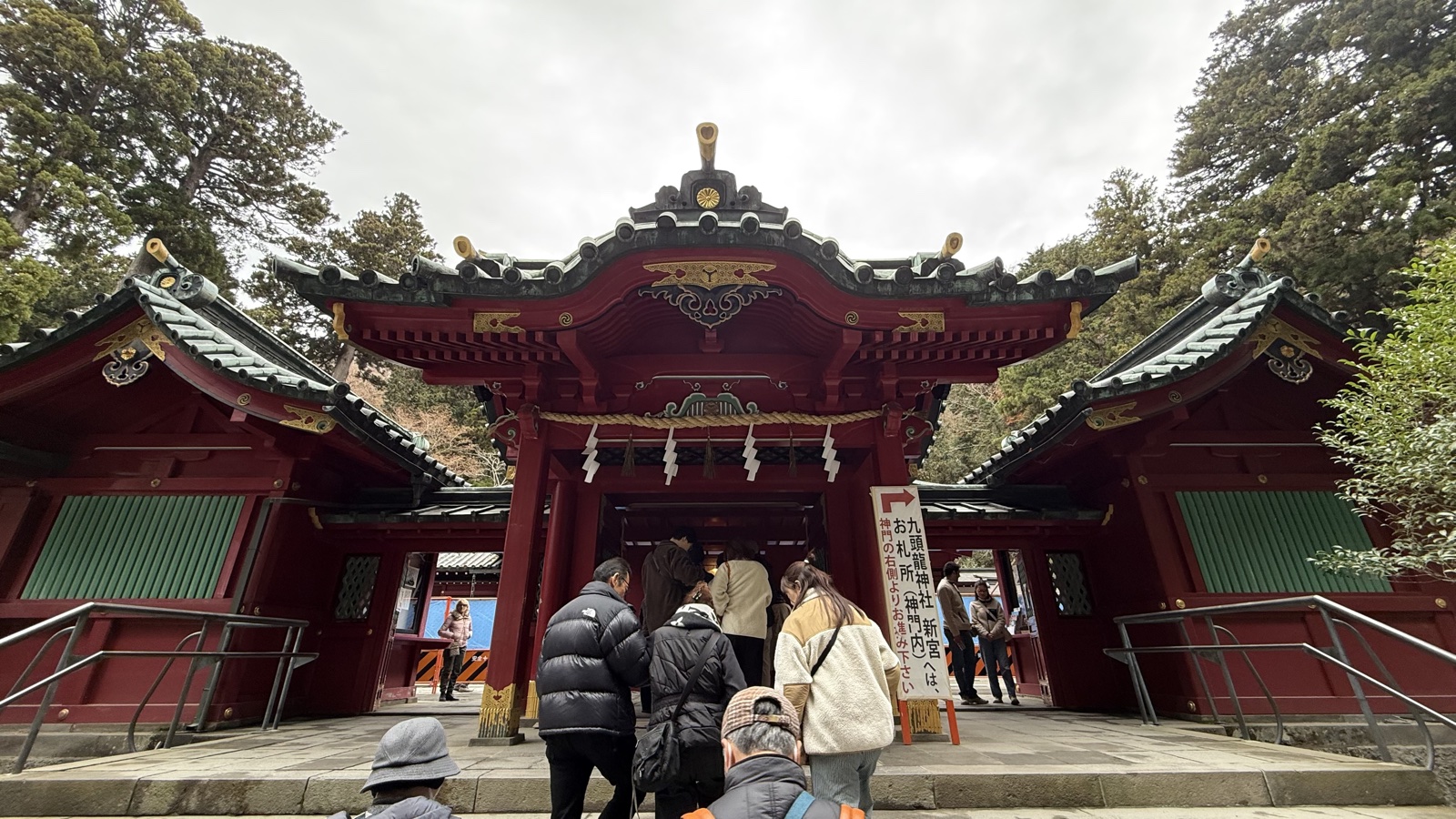
The gate to Kuzuryu Jinja (the New Shrine) within the grounds, enshrining the dragon god of Lake Ashi — tracing back to the legend of the priest Mangan subduing a venomous dragon in the lake.
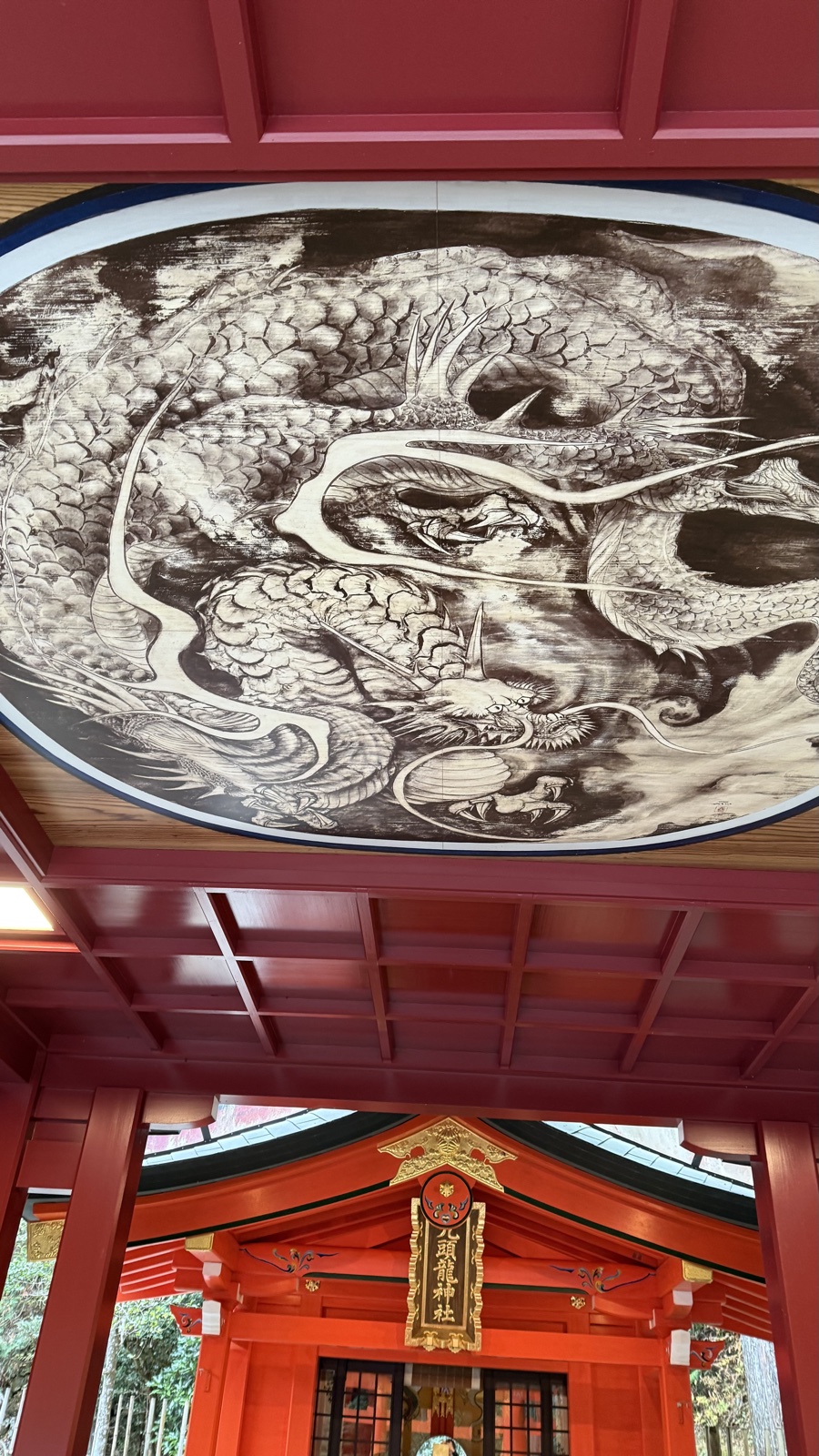
A dragon painted on the ceiling of the Kuzuryu Jinja sanctuary.
Cultural context
The shrine was venerated as a protector of the warrior class, and Minamoto no Yoritomo in particular was a devoted worshipper.
It became customary for the shoguns of Kamakura to visit both Izusan Jinja and Hakone Jinja together, a pilgrimage known as the Nisho-mode — a single figure, Yoritomo, linking Hakone to Tsurugaoka Hachimangu in Kamakura within this same tier of shrines.